Quick EV battery health benchmarks
Top electric car battery degradation signs
So what does battery aging actually feel like from the driver’s seat? The pack doesn’t normally “die” overnight; it fades. Here are the main electric car battery degradation signs you’re likely to notice, especially in the second half of the car’s life.
Primary signs your EV battery is degrading
These are the big ones to watch for over months, not just one weird trip.
1. Noticeable, lasting range loss
Your full‑charge range keeps shrinking in mild weather, even on familiar routes. Maybe the EPA rating was 250 miles, and for the first few years you comfortably saw 220. Now, under the same conditions, 180 is the new normal, and it’s not bouncing back.
A one‑off bad day in winter doesn’t count; a pattern over seasons does.
2. Slower charging than it used to be
At the same charger you’ve always used, the car takes noticeably longer to reach the same state of charge. Or it no longer hits the peak fast‑charge rates it once did, even when the battery is warm and at a low state of charge.
Charging curves naturally taper as a pack fills, but a global slowdown can point to aging cells or a pack that’s protecting itself.
3. Reduced performance or “sluggish” feel
One of the joys of EVs is instant torque. When the battery is tired or heavily degraded, the car’s software may limit power to protect it. The result: softer launches, slower passing, or a car that feels like it’s perpetually in eco mode.
4. Battery or powertrain warning messages
Modern EVs are drama queens, in a good way. They’ll light the dash or push app notifications if they sense cell imbalances, overheating, or other battery issues. Intermittent battery, HV system, or reduced power warnings that repeat over time shouldn’t be ignored.
5. State of charge swings and weird range predictions
The gauge jumps from 20% to 5% in a few miles, or the car promises 200 miles at 80% but delivers far less, consistently. Some of this is software estimation; sometimes it’s the pack struggling to accurately report its remaining energy.
6. Chronic overheating or aggressive thermal management
If the cooling fans and pumps run loudly and often, or the car frequently limits DC fast‑charging due to temperature, the battery may be working harder than it once did, even under similar conditions.
When signs combine, act quickly
Degradation vs. temporary range loss: don’t confuse the two
Before you panic about every dip in range, separate permanent degradation from temporary range loss. EVs are sensitive instruments; they reflect everything from weather to driving style. Not every bad day at the charger means the battery is aging badly.
Is it real degradation or just a bad day?
Use this comparison to sanity‑check what you’re seeing.
| Symptom | Likely Temporary Cause | Likely Degradation Sign |
|---|---|---|
| Range drops 15–25% in winter | Cold battery, cabin heating, denser air | Range stays low in mild weather across seasons |
| Slower charging on a busy travel weekend | Shared chargers limiting power, cold pack | Consistently low charge speeds at the same station in similar conditions |
| Battery at 100% but range estimate seems lower | Software recalculating based on recent driving style | Maximum range at 100% keeps shrinking over many months |
| One‑time warning light that clears and never returns | Transient sensor glitch, brief over‑temperature event | Recurring HV battery warnings or limp‑mode events |
| Car feels sluggish on a steep mountain pass | Thermal limiting under sustained heavy load | Reduced power in normal conditions with no obvious trigger |
Patterns over months matter more than any single road trip.
Start a simple range log
How to actually check your EV’s battery health
Symptom‑spotting is useful, but if you’re buying or selling a car, or deciding whether to fight for a warranty claim, you want hard numbers. In battery land, that number is State of Health (SoH): an estimate of current usable capacity as a percentage of the original.
Ways to assess EV battery health
1. Built‑in battery or range displays
Some EVs let you see an estimated usable capacity or degradation percentage in a service menu; others indirectly reveal it via maximum rated range at 100%. Compare today’s 100% range to the car’s original rated figure, under similar conditions, for a rough sense of loss.
2. Dealer or service‑center diagnostic report
Dealers can usually pull an internal battery health report, including SoH and any stored cell‑imbalance or thermal events. This is the gold standard for <strong>warranty discussions</strong>, though access and transparency vary by brand.
3. OBD‑based apps and third‑party tools
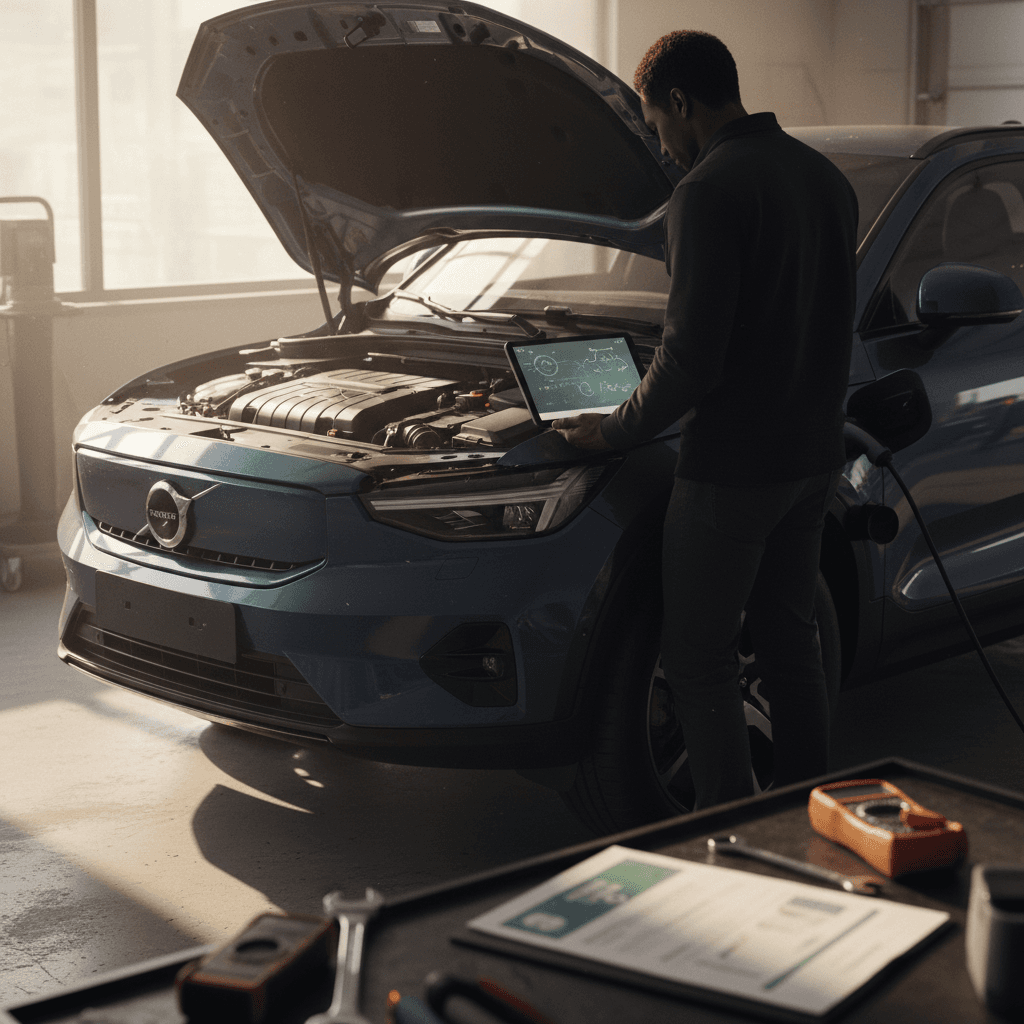
Many EVs expose detailed pack data, cell voltages, temperatures, SoH, via the OBD port. With a compatible dongle and app, you can see a deeper view of battery health. This is increasingly popular with savvy used‑EV buyers and sellers.
4. Independent reports like the Recharged Score
When you shop on Recharged, every used EV comes with a <strong>Recharged Score Report</strong> that includes verified battery health data, pricing aligned to that SoH, and expert guidance. It’s essentially a pre‑purchase battery inspection baked into the car’s listing.
Why objective data beats guesswork
Ready to find your next EV?
Browse VehiclesWhen to worry, and what it means for resale value
Not every percentage point of capacity loss is worth losing sleep over. The trick is knowing when you’ve crossed from normal aging into “this will materially affect my life or wallet” territory.
Battery health: green, yellow, red
Rough ranges to help you interpret State of Health numbers.
Green zone: 90–100% SoH
- Typical for newer EVs and lightly‑used 3–5‑year‑old cars.
- Range and performance feel essentially like new.
- Excellent resale; no special pricing adjustment needed.
Yellow zone: 80–90% SoH
- Normal for older EVs or higher‑mileage cars.
- Range loss is noticeable but manageable for most daily use.
- Used prices should reflect SoH vs. similar cars with healthier packs.
Red zone: below ~80% SoH
- Range constraints start to shape where and how you drive.
- Warranty may kick in if below the brand’s coverage threshold (often 70%).
- Resale value takes a meaningful hit; buyers will expect discounts or replacement discussions.
Don’t ignore model‑specific quirks
Habits that slow battery degradation
You can’t stop chemistry, but you can nudge it in your favor. The same habits that help an EV battery age gracefully also make the car easier to sell later. Think of them as good battery hygiene, boring, unsexy, very effective.
- Avoid living at the extremes: When possible, keep day‑to‑day charging between about 20% and 80% instead of yo‑yoing from 0 to 100%.
- Treat 100% as a special occasion: It’s fine to fast‑charge to full before a road trip, but don’t park the car at 100% for days on end.
- Go easy on fast charging: DC fast chargers are invaluable tools, not a lifestyle. Rely on Level 2 home or workplace charging for most energy and save high‑power sessions for travel or emergencies.
- Mind the heat: High pack temperatures accelerate aging. If you live in a hot climate, favor shaded parking and avoid repeated back‑to‑back fast charges in summer.
- Keep software updated: Automakers routinely tweak charging curves and battery management strategies. Updates can improve both longevity and real‑world range.
- Drive like a human, not a launch video: Spirited driving is fine; constant max‑power launches plus hard fast‑charge use is simply harder on the pack over years.
Think like a long‑term owner, even if you’re not
Buying a used EV? Why independent battery data matters
Shopping for a used EV without seeing battery data is like buying a gas car without ever opening the hood. Sure, you can take a test drive and peek at the range estimate, but that doesn’t tell you how the pack has been treated over tens of thousands of miles.
The usual used‑EV blind spots
- Listings rarely include verified State of Health.
- Sellers may not know (or may not share) how the car was charged.
- Two identical‑looking cars can have very different remaining range.
How Recharged changes the game
- Every vehicle comes with a Recharged Score Report that includes detailed battery health diagnostics.
- Pricing is aligned with actual battery condition, not just model year and mileage.
- EV specialists walk you through what that SoH means for your commute and road‑trip plans.
- Nationwide delivery and digital paperwork make the whole process less of a chore.
Battery transparency is the new Carfax
Frequently asked questions about EV battery degradation signs
EV battery degradation: your questions answered
Battery degradation is inevitable, but catastrophe is not. Modern packs are holding up better than early skeptics predicted, and most signs of trouble emerge slowly and predictably. If you pay attention to the classic electric car battery degradation signs, shrinking range in good weather, slower charging, performance limits, recurring warnings, and back that up with objective health data, you can drive, buy, and sell EVs with your eyes open. That’s exactly why Recharged puts verified battery health at the center of every used‑EV listing: so the most important part of the car isn’t left to guesswork.