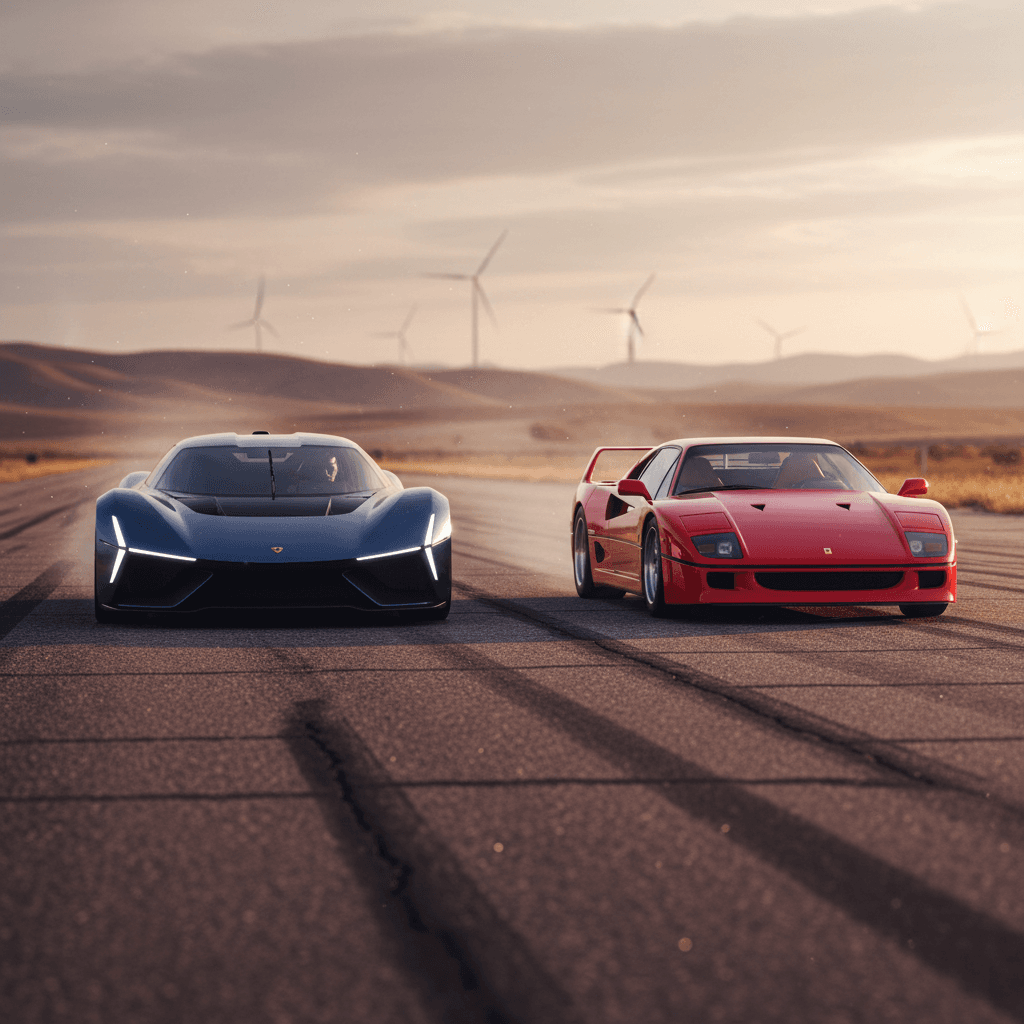
If you’ve watched any drag race videos lately, you’ve probably seen family-size electric crossovers embarrassing traditional sports cars off the line. The phrase “electric car acceleration vs sports car” has gone from a theoretical debate to a daily reality on highways and at stoplights. But what’s actually going on, and how should you think about performance if you’re considering a used EV?
Key takeaway up front
Why acceleration feels different in electric cars
On paper, some electric cars and sports cars have similar 0–60 mph times, yet the EV often feels quicker. That comes down to how each powertrain delivers torque, how many gears it uses, and how smoothly it can put power to the pavement.
How electric and gasoline cars make power
Same goal, very different feel from the driver’s seat
Electric car acceleration
- Instant torque: Electric motors deliver maximum torque from 0 rpm, so acceleration hits you the moment you press the pedal.
- Single-speed gearing: Most EVs have a single gear, so there’s no shift delay, just one smooth surge.
- Fine traction control: Software can meter power to each wheel in milliseconds, reducing wheelspin.
Sports car (gas) acceleration
- Rising torque: Gas engines build power as rpm climbs; you often need to downshift and rev to feel the punch.
- Multi-speed transmissions: Manual or automatic shifts interrupt acceleration slightly and add complexity for the driver.
- Mechanical traction limits: Stability control helps, but power is less precisely managed than a motor’s instant response.
Why EVs feel so “effortless”
Acceleration benchmarks: electric vs traditional sports cars
Headline numbers: 0–60 mph and quarter-mile times
When people argue about electric car acceleration vs sports car, they usually quote 0–60 mph times. It’s a useful benchmark, but it doesn’t tell the whole story, and it can be measured under very specific conditions that you may never reproduce on the street.
Illustrative 0–60 mph performance tiers
These are representative ranges for modern vehicles, not official specs for any one model, but a way to visualize where EVs and sports cars overlap.
| Vehicle type | Typical powertrain | Approx. 0–60 mph | Typical use case |
|---|---|---|---|
| Everyday compact EV | Single motor, FWD or RWD | 6.5 – 7.5 sec | City and suburban commuting |
| Performance EV sedan/crossover | Dual motor, AWD | 3.0 – 4.0 sec | Highway merging, spirited driving |
| Entry sports coupe | Turbo 4 / V6, RWD | 5.0 – 6.0 sec | Weekend fun, daily use |
| High-performance sports car | V8 or turbocharged, RWD/AWD | 3.0 – 4.0 sec | Track days, serious enthusiasts |
Many mainstream EVs now play in the same 0–60 mph ballpark as dedicated sports cars.
Beware of “perfect” test conditions
Where EVs shine is repeatability from a stop light to normal speeds. You don’t need launch control, a perfect clutch drop, or the exact right gear. Just lean into the pedal and most performance-oriented EVs will give you the same hard shove, run after run, at least until the battery and motor heat up.
Launch control, traction, and real-world speed
Classic sports cars make you work for a perfect launch. Too much throttle and you spin the tires; too little and you bog. Electric cars move a lot of that decision-making into software, which changes how fast you can really go when the light turns green.
EV launches: software does the heavy lifting
- Fine-grained torque control: The inverter and traction software can millisecond-by-millisecond adjust output so wheels hook up instead of spin.
- AWD advantage: Dual‑motor EVs can send power front and rear independently, helping them claw forward even on imperfect pavement.
- Easy to repeat: Just press the pedal; you don’t have to balance clutch, throttle, and wheelspin.
Sports car launches: more art, less science
- Driver skill matters: Manual transmissions require a perfect blend of clutch and throttle for a quick but clean start.
- Traction limitations: High‑power rear‑drive cars can overwhelm their rear tires, especially on street surfaces.
- Launch modes help, but not every sports car has them, and they can be finicky about temps and conditions.
Where EVs win most traffic-light sprints
Everyday driving: electric car vs sports car
Raw numbers are one thing. Living with a car day in and day out is another. For most drivers, the bigger question isn’t “What’s the absolute quickest car I can buy?” It’s “What kind of performance do I actually enjoy, and pay for, every day?”
Daily performance: how EVs and sports cars compare
Think about the drives you actually take, not just the spec sheet.
City acceleration
EVs usually feel quicker in short bursts, instant torque, no downshifts, and quiet operation. You jump into gaps in traffic with less planning.
Highway passing
Strong sports cars and performance EVs both shine here. Gas engines may need a downshift; EVs respond instantly but can see power taper at higher speeds.
Noise and comfort
Sports cars trade comfort for engagement, firmer suspensions and more cabin noise. EVs are generally quieter and smoother, especially in stop‑and‑go traffic.
Sound vs speed
Track performance and acceleration fade
Short bursts are one thing; sustained high‑speed driving is another. Here’s where gasoline sports cars can still hold an edge, especially for track days and extended mountain runs.
- Heat management: Continuous hard acceleration and high speed generate a lot of heat in electric motors and batteries. Many EVs will reduce power once temperatures exceed ideal limits.
- Battery state of charge: EVs typically accelerate hardest when the battery is well above empty. As state of charge drops, available power can taper, especially near the bottom of the pack.
- Weight and feel: Batteries are heavy. While they’re usually mounted low in the chassis, that mass still affects how a car behaves after repeated hard braking and cornering.
- Refueling vs recharging: A sports car can be back on track in minutes after a fill‑up. An EV may need a longer fast‑charge session between sessions.
Pay attention to thermal limits
The cost of speed: EVs vs sports cars
Speed has never been more affordable in terms of outright acceleration. But the way you pay for that performance over time differs between an electric car and a traditional sports car, and that’s crucial if you’re shopping used.
Owning a fast EV vs a fast sports car
High-level view of costs that come with chasing quick acceleration.
| Factor | Performance EV | Gas sports car |
|---|---|---|
| Fuel/energy | Lower per mile in most regions; home charging can be inexpensive off-peak | Higher per mile; premium fuel often required |
| Maintenance | Fewer moving parts; no oil changes, fewer wear items, but tires can be expensive | Regular engine/transmission service, fluids, more wear items |
| Brakes | Regenerative braking reduces pad wear in daily driving | More frequent pad/rotor replacements if driven hard |
| Insurance | Can be higher due to vehicle value and repair complexity | Performance cars also carry higher premiums; varies by model |
| Depreciation | Early EVs depreciated quickly; newer models are stabilizing as demand grows | Sports cars with strong enthusiast followings may hold value better over time |
Fast cars are never truly cheap, but EVs change which costs matter most.
Use performance where it pays off
How to read electric car acceleration specs
Spec sheets can be misleading if you don’t know how to interpret them. When you’re comparing electric car acceleration vs a sports car, focus on how each number relates to the driving you actually do.
Key performance specs to pay attention to
1. 0–60 mph time
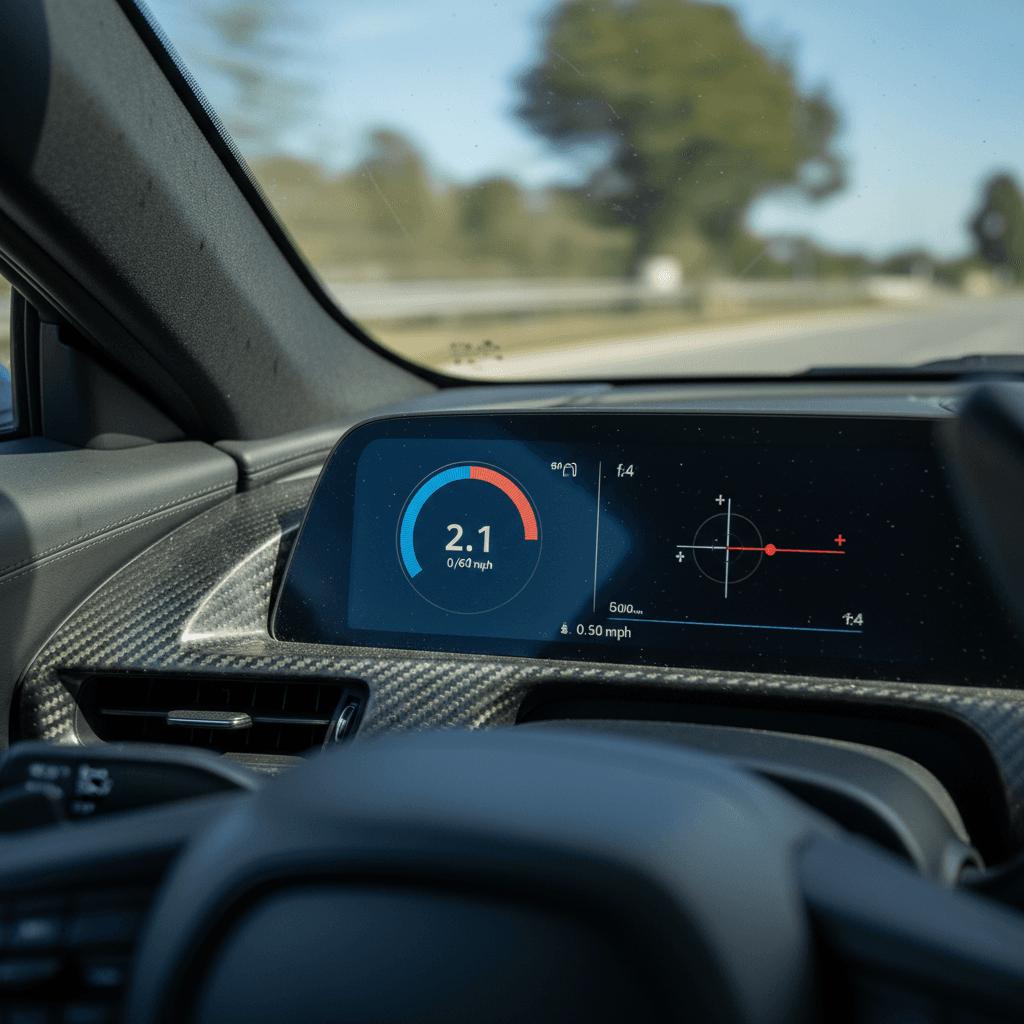
Still the most common benchmark. Anything around 7 seconds feels lively; 5 seconds feels properly quick; near 3 seconds is supercar‑level punch.
2. Passing power (30–50 / 50–70 mph)
Some manufacturers or reviewers quote these figures. They’re extremely relevant for highway safety and feel, especially if you do a lot of merging or overtaking.
3. Drive layout (FWD, RWD, AWD)
Rear‑drive and all‑wheel drive EVs usually put power down more cleanly than front‑drive cars. Dual‑motor setups also add traction in bad weather.
4. Tire type and size
Eco‑focused low‑rolling‑resistance tires can blunt acceleration feel. Performance tires improve grip and response, but can reduce range and wear faster.
5. Weight and battery size
Bigger batteries can support more power but also add mass. If you care about nimble feel as much as straight‑line speed, don’t ignore curb weight.
Choosing a used EV if you care about performance
If you’re performance-minded and shopping the used market, you have more choices than ever. Many early adopters are trading out of quick EVs, which puts serious acceleration within reach, if you know what to look for beyond a simple 0–60 figure.
What matters most for a fun, fast used EV
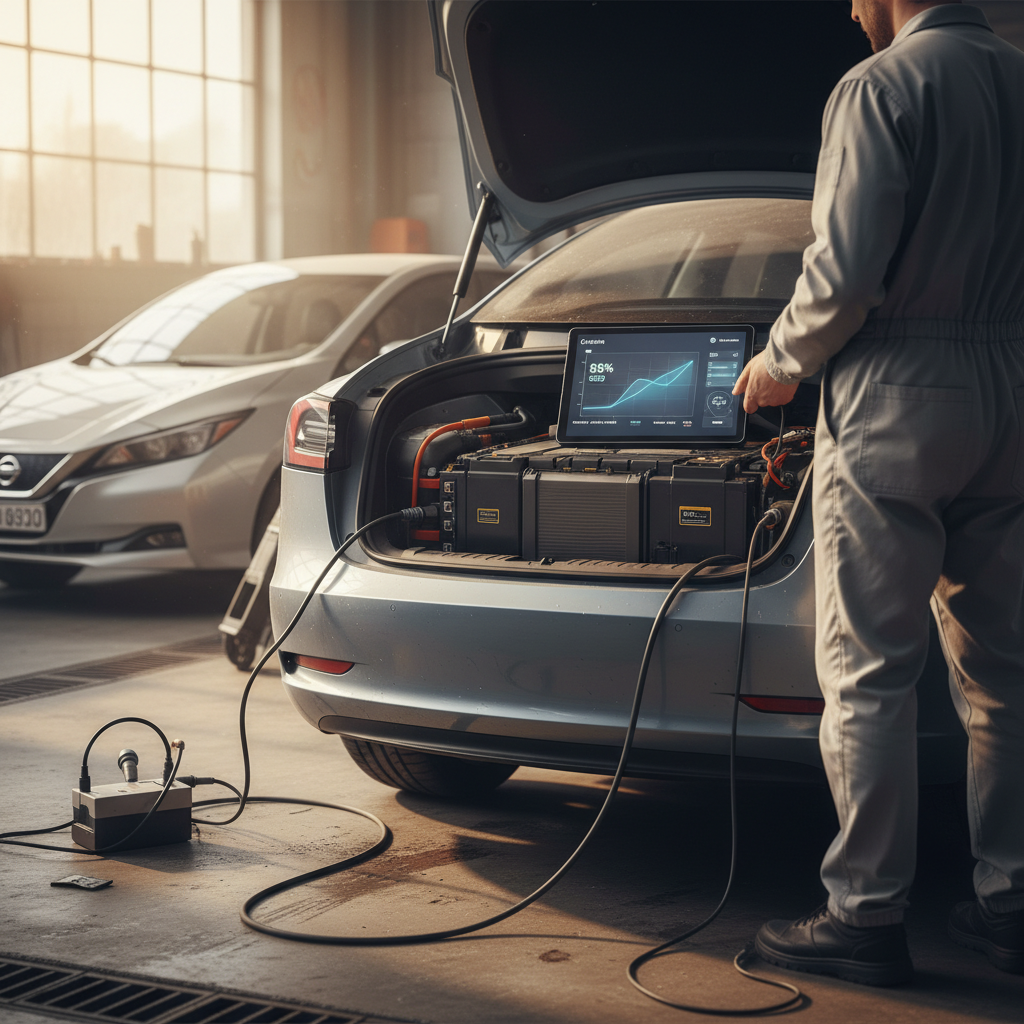
- Battery health: A tired pack can reduce available power as well as range. Look for objective battery diagnostics, not just a dash estimate.
- Motor configuration: Dual‑motor cars typically provide more punch and all‑weather traction than single‑motor versions of the same model.
- Software history: Some manufacturers alter performance with over‑the‑air updates; understanding build and software versions can matter.
How Recharged can help
Every vehicle listed on Recharged includes a Recharged Score Report with verified battery health and pricing transparency. If you’re cross‑shopping a quick electric sedan against a traditional sports coupe, our EV specialists can walk you through how each will feel in the real world, and which one matches your priorities.
You can browse, finance, arrange trade‑in, and schedule nationwide delivery entirely online, or visit our Experience Center in Richmond, VA if you prefer an in‑person test drive.
Pro move for enthusiasts
FAQ: Electric car acceleration vs sports car
Frequently asked questions
Bottom line: which feels faster, EV or sports car?
If your idea of speed is effortless thrust from every stop and confident passing without drama, an electric car often feels faster than an equivalent sports car, especially in the 0–60 mph window where most of your driving happens. If you live for redline pulls, exhaust notes bouncing off a tunnel wall, and long days at the track, a traditional sports car still has plenty to offer.
The smart move is to be honest about how you drive. Let the numbers guide you, but lean on real‑world impressions and objective checks like battery health, traction setup, and braking. If you’re looking at used options, Recharged can help you compare electric car acceleration vs sports car choices with clear data and no guesswork, so the car you take home feels just as quick as you imagined the first time you floor it.