If you’re hearing the term e‑car more than “electric vehicle” these days, that’s just the internet doing what it does best: shortening everything. Call it an e‑car, EV, or electric car, what matters is that in 2025 these vehicles have moved from curiosity to mainstream. And if you’re thinking about buying one, especially a used electric car, the stakes are real: money, convenience, and how you live with a car day‑to‑day.
What this guide covers
What is an e‑car, really?
An e‑car is simply a passenger car that runs primarily or entirely on electricity stored in a battery. In everyday speech people usually mean a battery‑electric vehicle (BEV) when they say e‑car, but you’ll also see the term tossed around for plug‑in hybrids. To keep things clean, this guide focuses on full battery‑electric cars, models like the Tesla Model 3, Chevy Bolt EUV, Hyundai Ioniq 5, or Ford Mustang Mach‑E.
- BEV (Battery‑Electric Vehicle): Runs only on electricity; no gas tank, no tailpipe.
- PHEV (Plug‑in Hybrid): Has both a battery you can charge and a gas engine; can drive some miles on electricity, then switches to gas.
- HEV (Hybrid): Can’t be plugged in; uses a small battery and gasoline engine together. Not what most people mean by e‑car.
Terminology shortcut
Why e‑cars are taking over the market
E‑cars by the numbers
The e‑car boom isn’t happening because people suddenly fell in love with silent torque, though that part is addictive. It’s happening because running costs, performance, and regulation are all lining up in electricity’s favor. Batteries have gotten cheaper, charging infrastructure keeps expanding, and many cities and countries are nudging, or shoving, buyers away from tailpipes with emissions rules and incentives.
Four big reasons drivers switch to e‑cars
Underneath the headlines, these are the things people feel in their wallets and everyday use.
Lower running costs
You typically spend less per mile on electricity than gasoline, especially if you can charge at home off‑peak. Maintenance is cheaper too, no oil changes, fewer moving parts, and regenerative braking that baby‑sits your brake pads.
Serious performance
E‑cars deliver instant torque. Even modest models feel quick in city traffic, and many mainstream EVs now rival yesterday’s performance cars in 0–60 times.
Cleaner tailpipe (none)
There’s no local exhaust. Your climate impact depends on your grid, but globally EVs are already cutting millions of barrels of oil demand and tons of CO₂ each year.
Future‑proofing
As emissions standards tighten, gas cars will feel increasingly out of step. Driving an e‑car now means you’re aligned with where policy and automakers are headed.
How an e‑car works in plain English
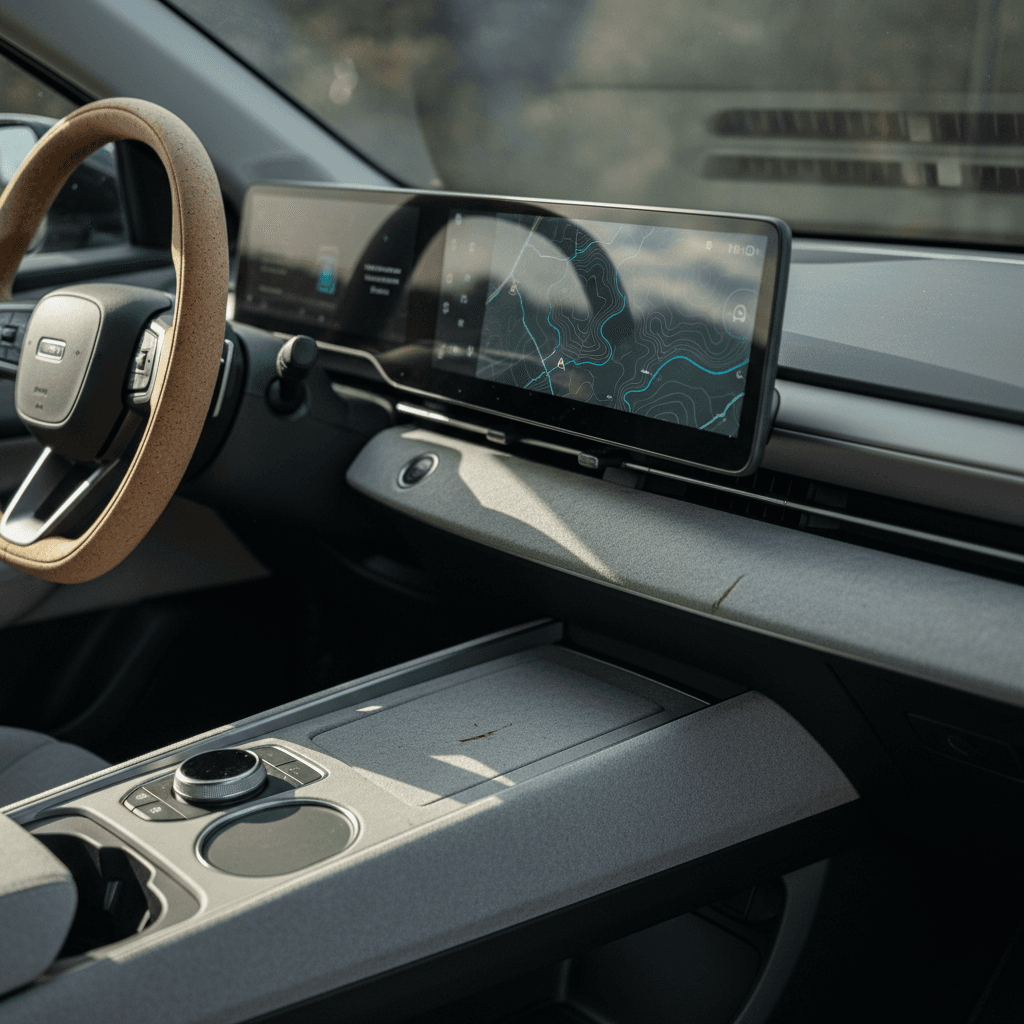
A modern e‑car is essentially a laptop on wheels: a big battery pack in the floor, an electric motor (or two) between the axles, and a computer orchestrating it all. Instead of burning fuel and turning that heat into motion, you skip straight to moving electrons.
Key parts of an e‑car
- Battery pack – Stores energy in kilowatt‑hours (kWh). Bigger pack, more range, more weight.
- Electric motor(s) – Convert electrical energy into motion. Compact, efficient, and brutally simple compared with a gas engine.
- Inverter – Turns the battery’s DC power into AC power the motor can use.
- Onboard charger – Handles AC charging from your home or workplace.
- Thermal management – Keeps the battery at a happy temperature, which matters for range and lifespan.
How charging really works
- Level 1 (120V) – A regular household outlet; slow but fine for low‑mileage drivers.
- Level 2 (240V) – The sweet spot for home charging; adds roughly 20–40 miles of range per hour, depending on the car.
- DC fast charging – High‑power roadside stations for road trips; some modern e‑cars can add 150–200 miles in 20–30 minutes under ideal conditions.
An e‑car’s software manages charge rate, protects the battery, and even preconditions it so fast chargers work properly.
Don’t obsess over peak kW
What an e‑car really costs vs a gas car
Sticker price is only the opening bid. The reason e‑cars are winning the long game is total cost of ownership: fuel, maintenance, and resale value. Let’s sketch the economics in practical terms for a US driver.
Five‑year cost snapshot: e‑car vs comparable gas car
Illustrative example for a compact crossover driven 12,000 miles per year in the US. Actual numbers vary by state, electricity rate, gas price, and model.
| Category | Modern e‑car | Comparable gas SUV |
|---|---|---|
| Energy/fuel | ~$600/year (home charging mix) | ~$1,800/year (at $3.50/gal) |
| Maintenance | Lower: no oil change, less brake wear | Higher: oil, filters, transmission, exhaust |
| Tax incentives | Federal and/or state rebates may apply | Limited to specific hybrids, usually none |
| Depreciation | Depends heavily on battery health and brand | Depends on fuel prices and market taste |
The numbers below are ballpark, not a quote, but they show why many households see an e‑car pay off over time.
Where used e‑cars shine
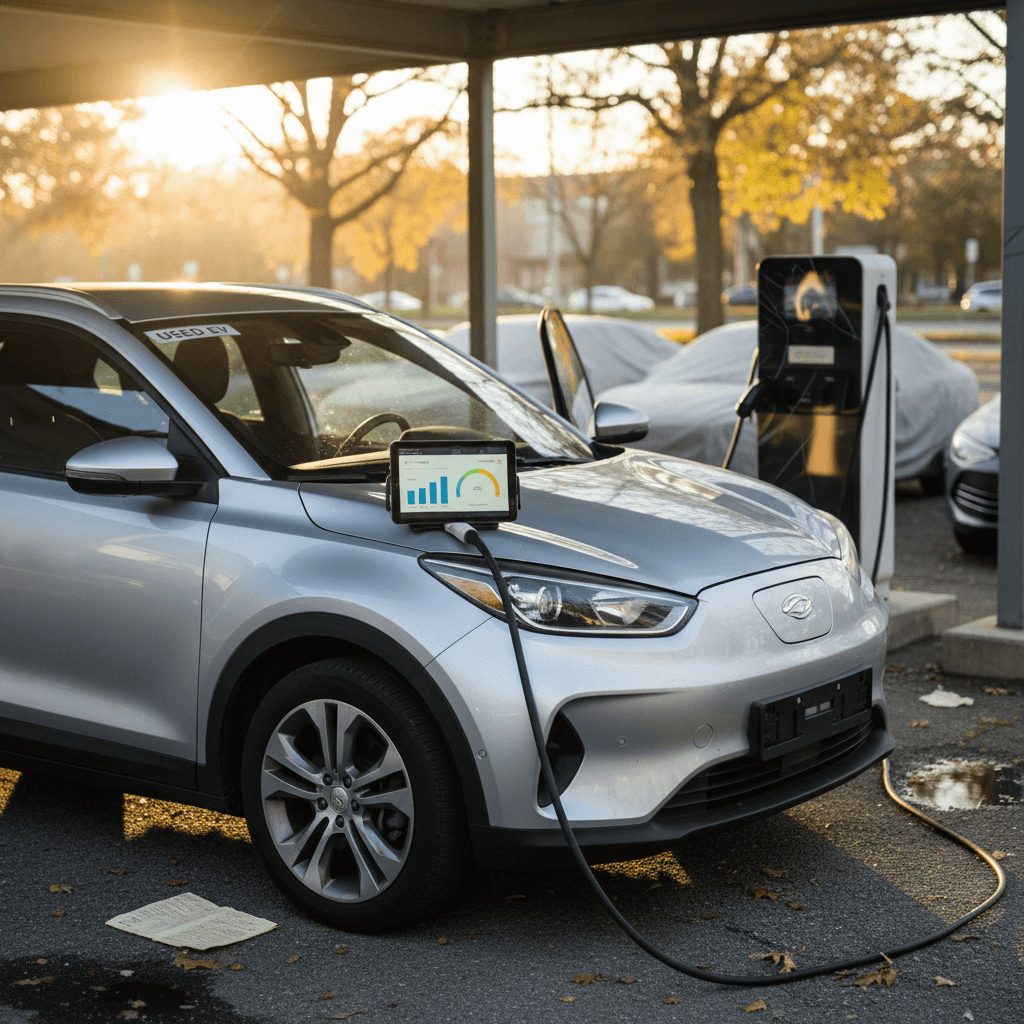
Battery health is the big variable. Two identical‑year e‑cars can have very different real‑world range depending on how they were driven and charged. That’s why Recharged bakes a Recharged Score and verified battery diagnostics into every used EV listing, so you’re not guessing at the most expensive component on the car.
Charging an e‑car: home, work, and road trips
The first time you plug in an e‑car at home, you realize the secret: most charging is gloriously boring. The car charges while you sleep, and you wake up with a “full tank” every morning. Road trips and apartment living add complexity, but it’s manageable once you understand your options.
Three main ways you’ll charge an e‑car
And what each one means for your daily life.
Home charging
Best case. A Level 2 (240V) charger in your garage or driveway turns your house into your fuel station. You control when you charge and can time it for lower electricity rates.
Workplace charging
If your employer offers charging, it can cover most of your weekly miles. That’s especially helpful if you live in an apartment or park on‑street.
Public & fast charging
For road trips and apartment dwellers, public networks and DC fast chargers do the heavy lifting. Reliability and pricing vary, so planning and good apps matter.
Charging reality check: questions to ask yourself
1. Where will the car sleep?
Garage, driveway, or street parking? If you can install a Level 2 charger at home, your e‑car life gets dramatically simpler.
2. What’s your daily mileage?
If you drive under 40–50 miles a day on average, even a modest‑range e‑car will feel easy to live with, as long as you can plug in regularly.
3. Do you road‑trip often?
If you’re doing 400‑mile weekends twice a month, prioritize an e‑car with strong fast‑charging performance and good network coverage along your usual routes.
4. Who controls your electricity rates?
Check whether your utility offers off‑peak or EV‑specific rates. Charging overnight on a cheaper rate plan is one of the biggest advantages of owning an e‑car.
Apartment and street‑parking reality
Buying a used e‑car without getting burned
The used e‑car market has grown up fast. Early‑generation EVs are showing their age, while newer models deliver more range, better charging, and improved battery management. The catch? A used e‑car isn’t like a used Civic. You’re evaluating a rolling smartphone with a battery worth five figures.
Essential checklist for buying a used e‑car
1. Start with your use case
How many miles do you really drive? Where will you charge? Answer those first, then shop range and charging speed that fits your reality, not the marketing brochure.
2. Demand real battery health data
Don’t settle for a guess based on mileage. Look for <strong>verified state‑of‑health (SoH)</strong> measurements and detailed battery reports, like the Recharged Score that comes with every vehicle on <a href="/">Recharged</a>.
3. Check charging history and limits
Cars that lived on fast chargers 24/7 may age differently than those mostly charged at home. A good report will highlight charging patterns and any limits on DC fast charging.
4. Inspect software and features
Make sure key features, driver‑assist, infotainment, mobile app connectivity, still work and are up to date. Over‑the‑air updates can transform how an e‑car behaves.
5. Look at warranty status
Many e‑cars carry 8‑year battery and electric‑drive warranties, often with mileage limits. Know what’s still covered and for how long.
6. Compare price to remaining range
Two similar‑priced cars can offer very different usable range if one battery is healthier. Think in dollars <em>per mile of real range</em>, not just dollars per car.
Where Recharged fits in
Ready to find your next EV?
Browse VehiclesBattery health, range, and real‑world degradation
If an e‑car has a soul, it lives in the battery pack. Range, performance, and resale value all orbit around how that pack has aged. The good news: modern packs are holding up better than many skeptics predicted. The less‑good news: abuse and neglect still leave scars.
Three truths about e‑car batteries
What matters most when you’re buying used.
Some fade is normal
Most e‑cars lose a slice of range in the first few years, then degrade more slowly. Seeing 5–10% loss on a 5‑year‑old car is not unusual, depending on use.
Heat is the enemy
High temperatures and repeated fast charging can accelerate wear. Cars with active thermal management tend to protect the pack better over time.
Data beats guesswork
Real state‑of‑health readings, fast‑charging performance, and range tests tell you more than odometer numbers. That’s exactly what specialized battery reports aim to show.
Red flags on a used e‑car
Is an e‑car right for you? Quick decision guide
Great candidates for an e‑car
- You drive under ~60 miles most days and can charge at home or work.
- You like tech, appreciate quiet, and don’t mind learning a new routine.
- You’re willing to spend a bit of time planning road‑trip charging stops.
- You’re shopping in the used market and want lower running costs long‑term.
Maybe not right now if…
- You can’t charge at home or work and public chargers near you are scarce or unreliable.
- You frequently tow heavy loads long distances and time is more important than money.
- You live in an area with very high electricity prices and cheap gasoline.
- You simply don’t want to think about charging or apps at all, yet.
Try before you commit
E‑car FAQ
Frequently asked questions about e‑cars
The bottom line on e‑cars in 2025
The word “e‑car” might sound casual, but the shift behind it is anything but. Electric cars have moved from experiment to default consideration, especially as the used market matures and battery tech proves itself in the real world. For the right driver, someone with predictable mileage and a place to plug in, an e‑car is quieter, cleaner, and often cheaper to run than the gas equivalent.
The key is not to treat all e‑cars as interchangeable gadgets. Look closely at how you’ll charge, what range you actually need, and above all, the health of the battery in any used car you’re considering. Tools like the Recharged Score, combined with transparent pricing and EV‑savvy support, turn what could be a leap of faith into a rational, data‑backed decision. Get those pieces right, and an e‑car stops being a science project and becomes what it should have been all along: a better car, just with a plug instead of a tailpipe.