If you’ve just moved into an electric vehicle or hybrid, you’ve probably heard that regenerative braking can make your brake pads last “forever.” Then you hear the opposite: that regen is bad for pads because they don’t get used. So what’s actually happening? And does regenerative braking use brake pads at all?
Short version
Quick answer: Does regenerative braking use brake pads?
- No, regenerative braking doesn’t use brake pads directly. It slows the car by turning the drive motor into a generator, creating drag and charging the battery.
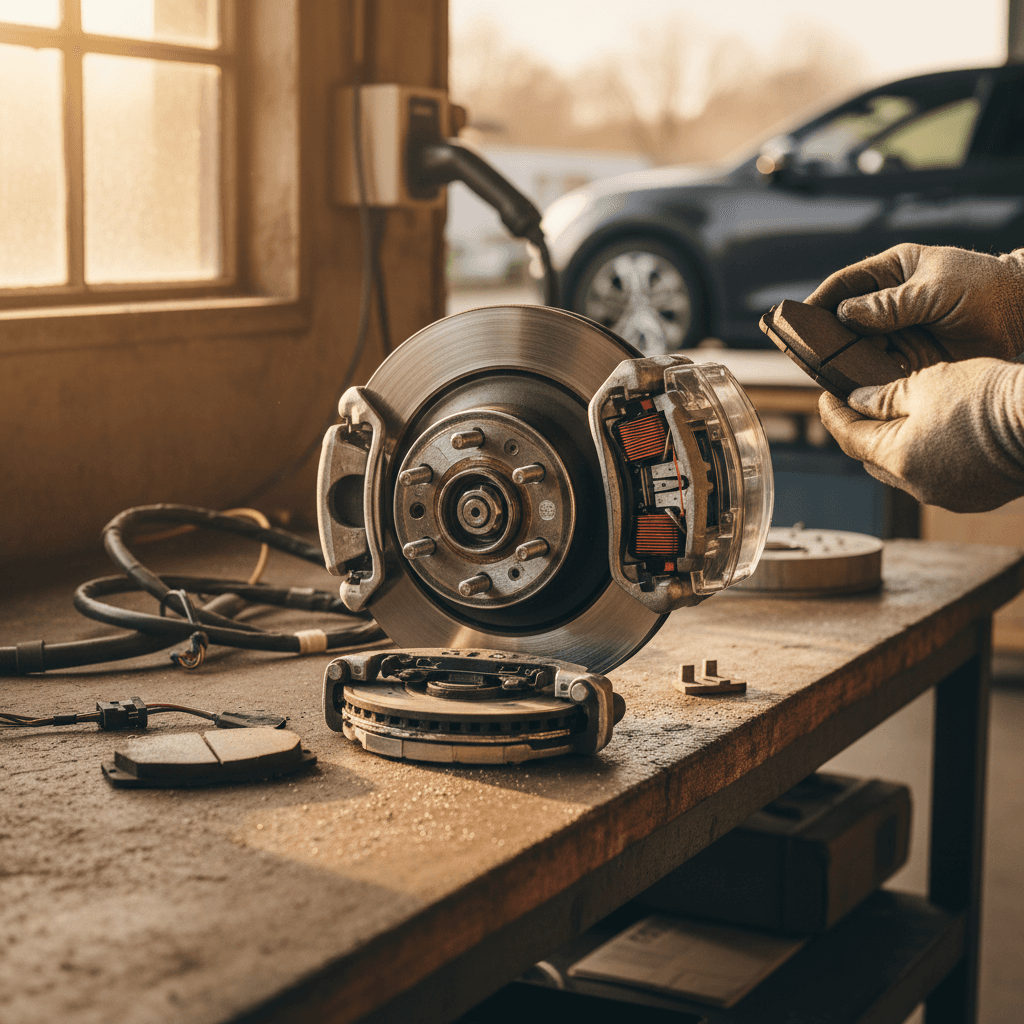
- Your EV still has a full set of hydraulic brakes with pads and rotors. Those come into play for hard stops, emergency braking, high-speed braking, and final stopping at low speeds.
- Most modern EVs and hybrids use brake blending: the pedal first commands maximum regen, then adds friction braking as needed. You usually feel just one smooth deceleration, even though two systems are working behind the scenes.
Good news for your wallet
How regenerative braking works in EVs and hybrids
To understand why regenerative braking doesn’t use brake pads, it helps to picture what’s happening at the wheels when you lift off the accelerator in an EV or hybrid.
Two braking systems working together
Regen handles everyday slowing; friction brakes are your backup muscle
Regenerative (motor) braking
- The drive motor switches from pushing the car to acting as a generator.
- As the wheels turn the motor, it produces electricity and sends it back to the high-voltage battery.
- The generator’s resistance creates a dragging force that slows the car.
- No pads, no rotors, and no hydraulic fluid are involved in this part.
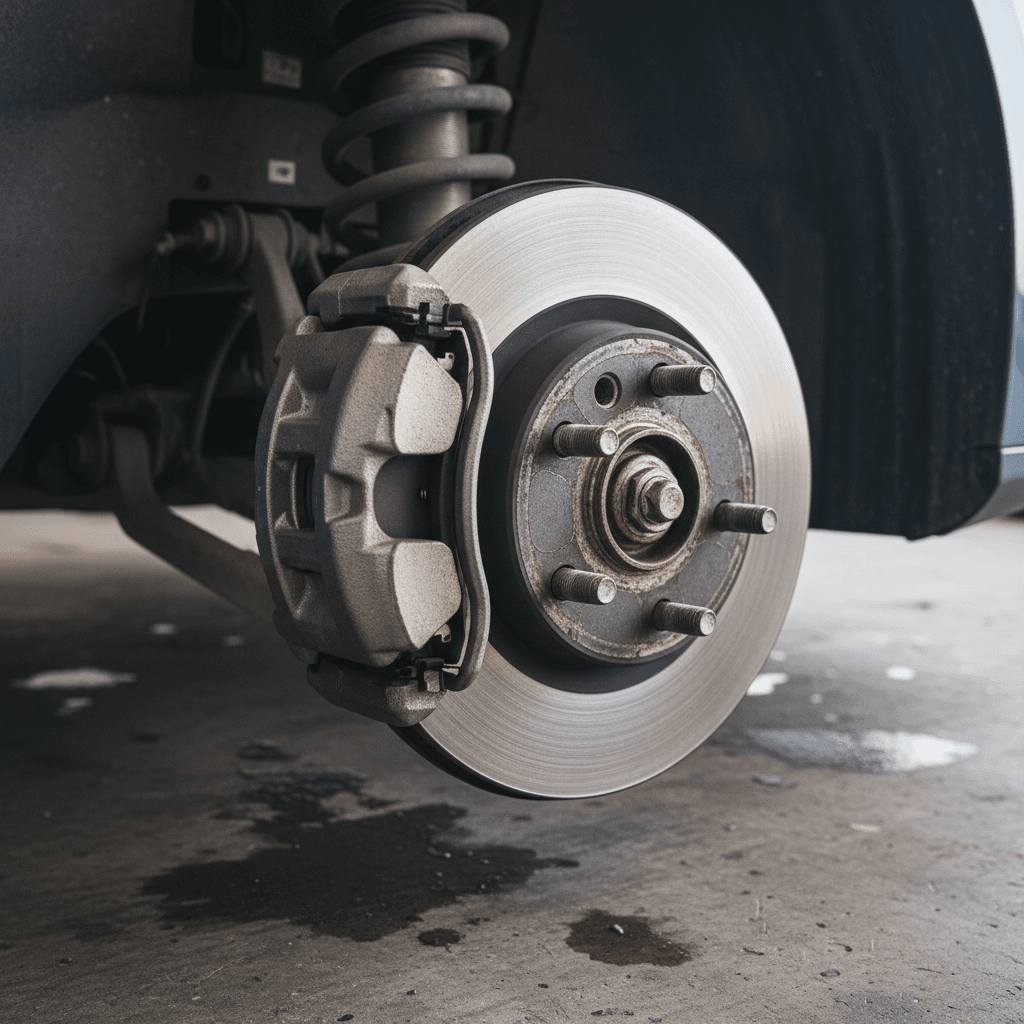
Friction (hydraulic) braking
- Your brake pedal press builds hydraulic pressure in brake lines.
- Calipers squeeze the brake pads against metal discs (rotors) attached to each wheel.
- Friction converts kinetic energy into heat and slows or stops the car.
- This works just like a conventional gasoline car’s braking system.
Think of regen as engine braking on steroids
When do brake pads actually engage?
You rarely get a dashboard light that says, “Now using brake pads.” Instead, the car’s control system quietly decides when to add friction braking on top of regen. In most modern EVs and hybrids, brake pads typically engage in four situations:
- Hard or emergency braking. If you really stand on the pedal, the car will use full regenerative braking and immediately add friction brakes to deliver maximum stopping power.
- High-speed braking. At highway speeds, regen alone often isn’t strong enough for a quick stop. The system blends in the pad-and-rotor brakes to shorten stopping distance.
- Very low speeds and final stop. Regen becomes less effective as the vehicle’s speed approaches zero. That last little “grab” as you come to a halt is usually the friction brakes finishing the job.
- When the battery is full or cold. A full or very cold battery can’t accept much charging current. In those situations your EV will rely more on the conventional brakes, and you may feel less regen than usual.
Why the brake pedal still matters
Brake blending, paddles, and one-pedal driving
Automakers don’t expect you to manage two braking systems manually. Instead, they use software to deliver one smooth response from your right foot. That’s where brake blending and different regen controls come in.
Brake blending via the pedal
In most current EVs and hybrids, pressing the brake pedal first commands maximum regenerative braking. As you push harder, the system progressively blends in the friction brakes.
- Light to moderate pedal: mostly regen, minimal pad use.
- Firm pedal: regen plus significant friction braking.
- Panic stop: friction brakes do most of the work, with regen assisting.
The software is tuned so you feel a single, linear response, not a handoff between two systems.
Paddles and one-pedal modes
Many EVs and hybrids give you extra control over regen strength:
- Steering-wheel paddles (common on hybrids) often adjust regen level or trigger extra regen without touching the brake pedal.
- One-pedal driving modes increase regen so much that simply lifting off the accelerator can bring you all the way to a stop in normal traffic.
In both cases, the goal is to maximize regeneration first and only use brake pads when the system decides they’re needed for safety or stopping distance.
Why it can feel “different”
How much longer do brake pads last with regen?
Typical brake pad life on EVs and hybrids
Because regenerative braking handles most everyday slowing, your pads see much less friction and heat than in a conventional car. That’s why some owners report going well beyond 100,000 miles before a pad replacement. The exact number depends on:
- How aggressively you drive and how often you brake hard.
- Whether you mostly drive in stop‑and‑go city traffic (where regen shines) or on open highways.
- How strong your car’s default regen setting is and whether you use one-pedal modes.
- Local climate and road conditions (salt, moisture, and dust still affect brake hardware).
Let the car do the work
Hidden downside: pads can age even when you barely use them
There is a catch: less use doesn’t automatically mean less maintenance. Because regenerative braking lets your pads sit idle much of the time, they can develop their own set of issues.
What can go wrong when pads don’t get used much
Common brake issues on low‑wear EVs and hybrids
Corrosion buildup
Uneven wear patterns
Glazing & contamination
Don’t skip brake inspections
How to brake to get the most from regeneration
You don’t need to drive like an engineer to take advantage of regen, but a few habits can boost efficiency and still keep your pads healthy.
Smart braking habits for EV and hybrid drivers
1. Look far ahead and plan your stops
Lift off the accelerator earlier and let <strong>regen do most of the work</strong> instead of racing to the next stoplight and hitting the pedal hard.
2. Use higher regen settings in traffic
If your car lets you choose regen levels, a higher setting in city driving recovers more energy and reduces pad use, making one‑pedal driving easier.
3. Avoid unnecessary panic stops
Hard, last‑second braking forces the system to lean on friction brakes. Smooth, progressive pressure gives the car time to maximize regen first.
4. Let the car roll occasionally
On longer highway runs or in low‑traffic areas, a few gentle brake applications now and then can help <strong>wipe corrosion</strong> off pads and rotors.
5. Watch for changes in brake feel
A soft pedal, grinding noise, or pulsing sensation under braking in an EV is a sign to <strong>get the brakes inspected</strong>, even if they supposedly have plenty of life left.
6. Use one-pedal driving wisely
One‑pedal modes are great for efficiency and comfort, but remember your conventional brakes are still there. Practice a few firm stops now and then so you know how the system feels when friction brakes kick in.
What this means when you’re shopping for a used EV
If you’re considering a used EV or plug‑in hybrid, the combination of regenerative braking and friction brakes is one more reason to look for a transparent condition report instead of relying on guesses at the lot.
Questions to ask about the brakes
- When were the brake pads and rotors last inspected or replaced?
- Has the car lived in a rust-prone climate (snow belt, coastal city)?
- Are there any records of sticking calipers, ABS faults, or brake warning lights?
- Has the car mainly done city commuting, highway miles, or a mix?
How Recharged helps clarify the picture
Every vehicle listed on Recharged includes a detailed Recharged Score Report with battery health diagnostics and a transparent look at vehicle condition. Our EV‑specialist team can help you interpret brake and battery reports, estimate upcoming maintenance, and compare options before you buy.
If you’re trading in a hybrid or EV, that same transparency helps you understand how your regen system and brake wear affect value.
Leverage long brake life when you buy used
Ready to find your next EV?
Browse VehiclesFAQ: Regenerative braking and brake pads
Frequently asked questions
Key takeaways for everyday driving
Regenerative braking is one of the big reasons EVs and hybrids feel so smooth and efficient in daily driving. It does not use your brake pads directly, your motor is doing the heavy lifting, but those pads are still there as a crucial backup, stepping in for hard stops, low‑speed maneuvers, and situations where the battery can’t accept more charge.
- Drive smoothly, anticipate stops, and let regen slow the car as much as possible to extend pad life and gain range.
- Don’t assume “no wear” means “no maintenance”, time, corrosion, and contamination can affect pads and rotors even when regen is doing most of the braking.
- If you’re shopping for a used EV, look for clear brake and battery health information, like the Recharged Score Report, instead of relying solely on a quick test drive.
- Keep up with regular inspections, and your regen system and friction brakes will work together to give you confident, low‑cost stopping for years.