Do electric vehicles need special tires? In one sense, no: your EV can physically roll on any tire that fits the size and meets the load and speed rating. But if you care about range, safety, tire life, and cabin quiet, the real-world answer is a strong “usually, yes.” EV-specific tires exist because EVs stress tires in different ways than gasoline cars do.
EV tires in one sentence
Do EVs need special tires? The short answer
You don’t need some magic “EV-only” tire label, but you do need tires that are rated and tuned for what an electric car does all day: carry extra weight, deliver instant torque, and glide along quietly. That’s why most factory EV tires are XL (extra load) or HL (high load) rated, use low-rolling-resistance compounds, and often include noise-dampening features in the tread design or even foam inside the carcass.
- You must match or exceed your EV’s required load index and speed rating.
- You’ll get the best results from tires designed for low rolling resistance and high torque.
- You can use non-EV-branded tires if they meet those specs, but expect trade-offs in range, wear, and noise.
Don’t ignore load rating
Why electric vehicles are harder on tires
To understand why EV tires are different, look at how the vehicles themselves are built. The typical EV battery pack adds roughly 1,000 pounds to the car compared with a similar gasoline model, and some long-range packs can be closer to 2,000 pounds. That extra mass, combined with the way an electric motor delivers power, changes what the tire has to do.
Three reasons EVs are rougher on tires
Same road, very different job for the rubber
Extra weight
Instant torque
Quieter cabins
What the studies show
What makes an EV tire different from a regular tire
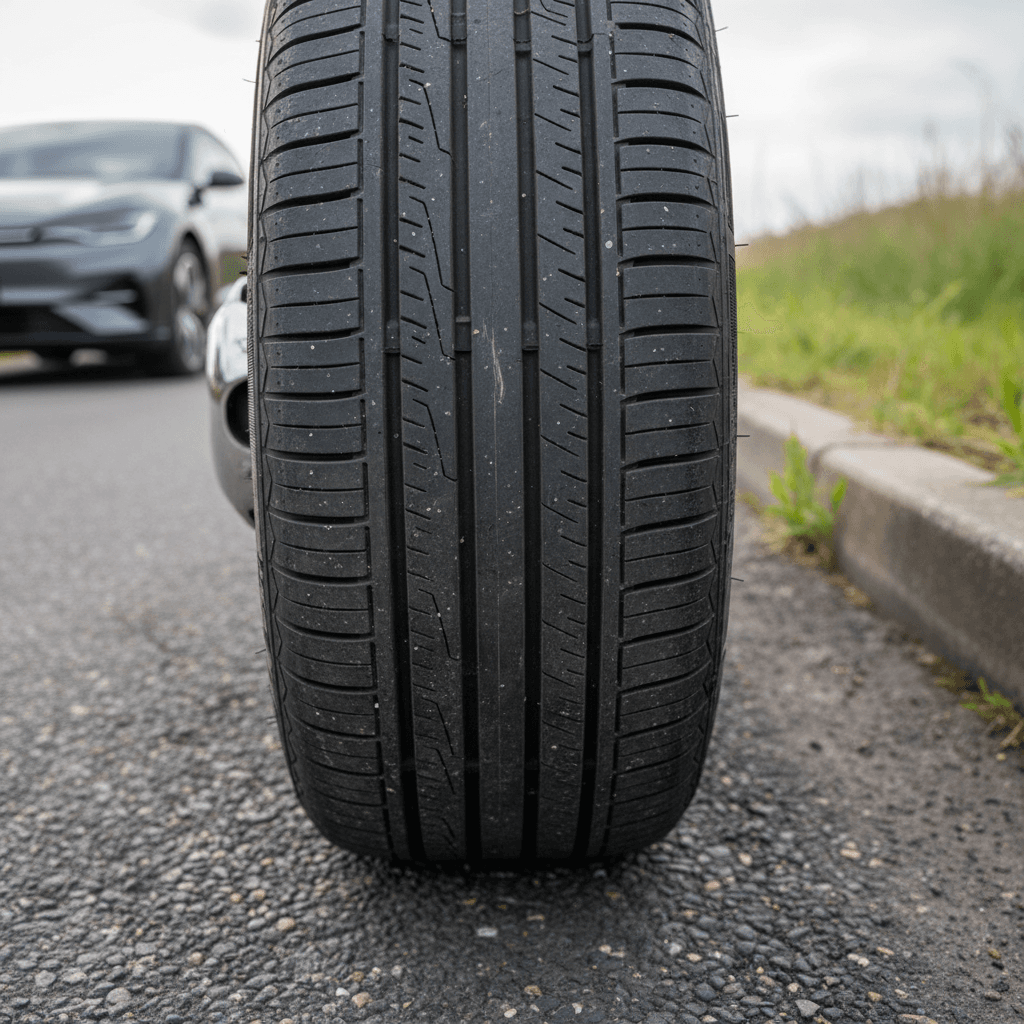
If you line up an EV-specific tire next to its gas-car cousin, they might look nearly identical. The differences are mostly in the construction, rubber compound, and tread design, the stuff you feel from behind the wheel but don’t necessarily see.
EV-specific tires vs. standard all-season tires
How EV-focused tires typically differ from conventional designs.
| Feature | EV-focused tire | Conventional tire |
|---|---|---|
| Load rating | XL/HL to carry heavier EVs | Standard load for lighter ICE cars |
| Rolling resistance | Optimized for efficiency and range | Balanced with less emphasis on efficiency |
| Rubber compound | Formulated to handle instant torque and extra weight | Formulated for broader vehicle mix |
| Noise control | Tread patterns and sometimes foam inserts to cut cabin noise | Standard noise tuning, engine hides more road noise |
| Tread pattern | Often stiffer center rib, reinforced shoulders for traction and wear | More generalized pattern for comfort and grip |
| Sidewall design | Reinforced to reduce flex under heavy load | Standard stiffness for lighter vehicles |
Not every EV tire will have every feature, but these trends are common across brands.
Examples you’ll see on tire shopping sites
Can you use regular tires on an electric car?
Technically, yes. If a tire matches your EV’s size, load index, and speed rating, your vehicle can run on it. But there are trade-offs, and a few non-negotiables you should know before you just grab the cheapest set in stock.
When regular tires can work
- You find a quality touring tire with the correct or higher load index and speed rating.
- You drive mostly short, low-speed trips and prioritize comfort over maximum range.
- You’re willing to accept somewhat shorter tread life in exchange for a lower purchase price.
What you give up
- Range may drop because of higher rolling resistance.
- You may notice more road noise, especially on coarse pavement.
- Standard compounds can wear 5–20% faster on heavy, high-torque EVs.
- Choosing a tire below spec on load or speed rating can create real safety and warranty issues.
Watch the fine print
How EV tires affect range, noise, and safety
On an EV, tires aren’t just a wear item, they’re part of the energy system. Rolling resistance, tread pattern, and rubber compound all change how far you go on a charge, how the car feels at the limit, and how quiet the cabin is at highway speeds.
Why tire choice matters more on an EV
- Range: Efficient tires reduce the energy it takes to keep your EV rolling, which can translate into a few to a few dozen extra miles of range depending on your driving.
- Safety: Tires tuned for EV weight and torque can maintain better grip in wet conditions and during hard acceleration, especially on powerful dual-motor models.
- Comfort and noise: If your EV is whisper-quiet around town but boomy on the freeway, a more EV-focused tire can transform your daily drive.
How long do EV tires last, and what do they cost?
Tire life on an electric vehicle varies with driving style, climate, and alignment, but it’s fair to expect shorter life than on an equivalent gas car. Many EV owners see first sets of tires wearing out around 20,000–30,000 miles if they drive aggressively or skip rotations, while gentle drivers can see 35,000–40,000 miles from well-chosen touring EV tires.
Typical EV tire life and cost ranges (2025, U.S.)
Real-world expectations for mainstream EVs on quality tires.
| Category | What to expect |
|---|---|
| Tread life on factory performance tires | ~18,000–28,000 miles with mixed driving |
| Tread life on EV-tuned touring tires | ~30,000–45,000 miles with regular rotations |
| Installed price for a quality EV tire (per tire) | Roughly $200–$350 for common 18–20" sizes |
| Installed price for budget-oriented tires | Around $140–$200, often with shorter tread life |
Exact numbers vary by vehicle and brand, but this gives you a reasonable planning range.
EVs don’t “eat tires”, bad setups do
Maintenance tips to make EV tires last longer
The maintenance routine for EV tires looks a lot like what you’d do for a gas car, just a bit more important because of the weight and torque involved. A little attention here pays off in range, safety, and reduced running costs.
Simple steps to extend EV tire life
1. Check tire pressure monthly
EVs are sensitive to underinflation, which increases rolling resistance and wear. Use the pressures shown on the driver’s door sticker and adjust for heavy loads or long trips.
2. Rotate every 5,000–7,500 miles
Front and rear tires wear differently, especially on heavy EVs. Regular rotations keep wear even and help you hit the upper end of the expected mileage range.
3. Get an alignment check yearly
Hitting potholes or curbs can knock alignment out, causing rapid shoulder wear. An annual alignment check, or anytime you notice uneven wear, can save a set of tires.
4. Ease off full-throttle launches
Instant torque is fun but hard on tread blocks. Backing off just a bit from full-power starts can noticeably extend your tire life without making the car feel slow.
5. Watch tread depth, not just time
Use a tread gauge or the built-in wear bars. For most EV owners, replacing around 3/32"–4/32" remaining tread is smart for wet-weather safety, even if the tires look “fine.”
Bundle with other service
Choosing the right tires for your electric vehicle
Shopping for EV tires can feel like alphabet soup: XL, HL, EV, Elect, iON, range, quiet, sport. The key is to match the tire to how and where you actually drive, not just the maximum performance number on the brochure.
Match your EV tires to your driving style
Pick the column that sounds most like you
Max range commuter
- Prioritize low rolling resistance and long tread life.
- Look for EV-optimized touring tires with strong wet grip ratings.
- Accept that ultimate cornering grip may be lower.
Enthusiast driver
- Choose performance-oriented EV or "EV-ready" tires.
- Expect shorter tread life in exchange for sharper handling.
- Check that the load index is sufficient for your EV’s weight.
All-weather family driver
- Consider all-weather or all-season EV tires with good snow scores.
- Range and noise still matter, but wet and light-snow traction are the priority.
- If you live in real winter country, budget for separate winter tires.
What about winter tires on an EV?
EV tires and buying a used electric vehicle
Tires are also a smart lens for judging how a used EV was treated. Uneven wear, mismatched brands, or budget tires with borderline load ratings can tell you a lot about prior ownership and upcoming costs, especially if you’re about to finance the car.
Good signs
- A matched set of quality tires with proper load ratings.
- Even wear across the tread, with rotation history on service records.
- Reasonable tread depth remaining given the mileage on the odometer.
Red flags
- Cheap, mismatched, or underspecified tires on a powerful EV.
- Cupping or heavily worn edges that hint at alignment or suspension issues.
- Tires already near the wear bars on a car you’re stretching to afford.
How Recharged helps here
Ready to find your next EV?
Browse VehiclesEV tire questions, answered
Frequently asked questions about EV tires
The bottom line on “special” EV tires
So, do electric vehicles need special tires? They need the right tires, built to carry the weight, handle the torque, and keep your efficient, quiet car feeling that way for years. EV-specific tires make it easier to hit that target, but smart choices and good maintenance matter just as much as the EV badge on the sidewall.
If you’re shopping for your next electric car, or your next set of tires, treat the rubber as part of the EV system, not an afterthought. And if you’re considering a used EV, a platform like Recharged can help you understand both battery health and upcoming tire costs before you buy, so you know exactly what you’re getting into for the next 30,000 miles.