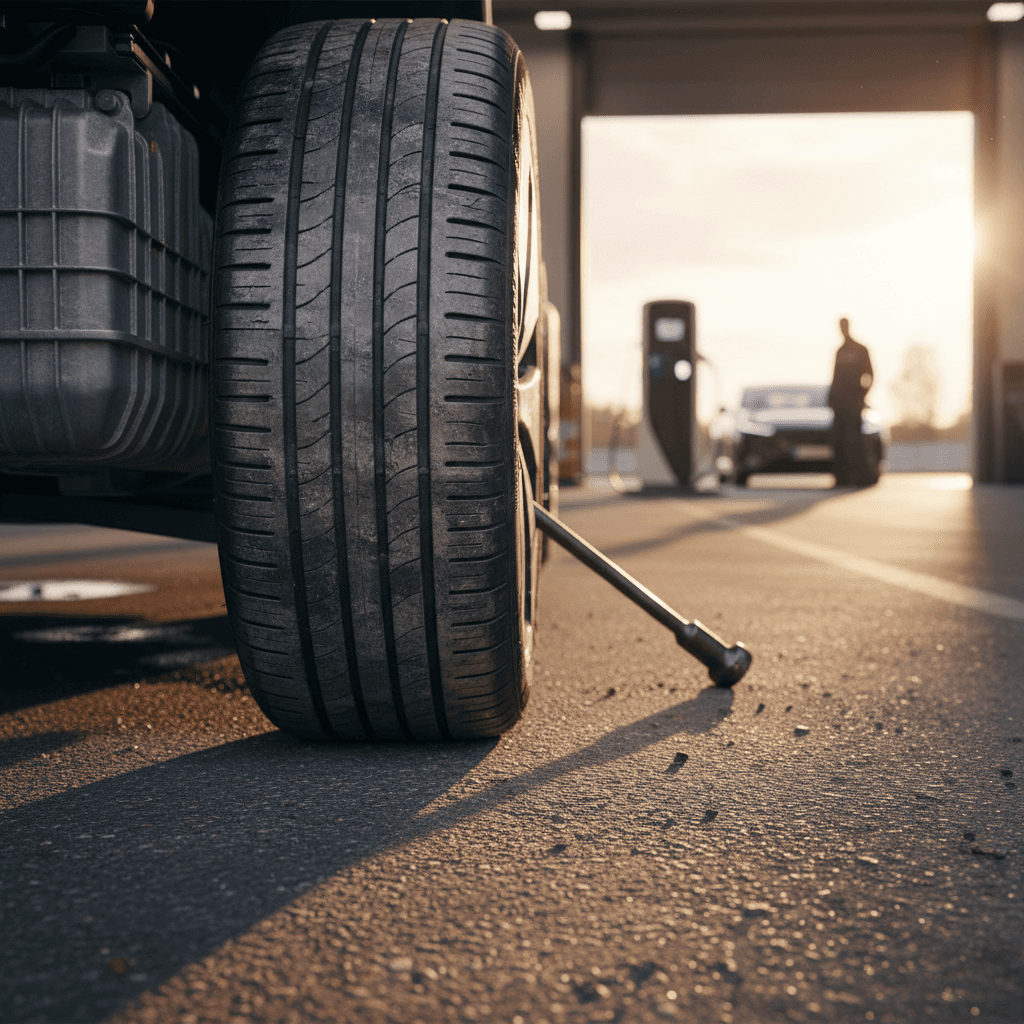
If you’ve heard that electric cars wear out tires faster, you’re not imagining things. For many models, tires do wear out sooner than on a comparable gas car, but how much faster, and is it a dealbreaker for EV ownership? Let’s break down the data, the reasons, and what you can do to keep costs under control.
Key takeaway
Short answer: yes, most EVs do wear out tires faster
Across multiple studies and fleet analyses, the pattern is consistent: EV tires don’t usually last as long as tires on comparable gasoline cars. Industry and government studies typically land in this range:
How much quicker do EV tires wear?
Those are averages. A heavy, high‑performance EV driven hard can shred tires far sooner. A modest EV on efficient tires, driven calmly and maintained properly, can get close to gas‑car tire life.
How much faster do EV tires wear out?
Different sources quote different numbers, but they tend to cluster together:
- Several tire makers and independent studies report 15–20% shorter tire life on EVs versus similar gas cars.
- Some analyses of heavier or performance EVs point to 20–30% faster wear in real‑world use.
- A few high‑power models (think dual‑motor performance trims on sticky tires) can see 40%+ shorter life if driven aggressively.
In plain English: if your gas compact SUV usually gets 35,000 miles out of a set of tires, the equivalent EV might see 24,000–30,000 miles under similar driving. For most everyday drivers, that means you’ll replace tires one or two times more over the life of the car than you would have in a comparable gas vehicle.
City drivers, take note
Why electric cars can chew through tires
Three main traits make EVs tougher on rubber than their gasoline counterparts: weight, instant torque, and braking behavior. Tire design and driver behavior add another layer.
The 4 big reasons EVs wear tires faster
It’s not just the battery, it’s how the whole car behaves.
1. Extra weight from the battery
EV battery packs can add hundreds of pounds compared with a similar gas car. That extra mass pushes down on the tires every mile you drive.
- More weight = higher load on each tire.
- Heavier vehicles scrub tread faster in corners and under braking.
- Many EVs are 10–20% heavier than comparable gas models.
2. Instant torque at low speed
Electric motors deliver maximum torque almost instantly. That’s why even a family EV can feel quick off the line.
- Hard launches can spin or scrub the front tires.
- Performance modes amplify this effect.
- Even normal driving with quick getaways adds up over time.
3. Regenerative braking patterns
Regen shifts a lot of braking work to the electric motor, especially on the driven axle.
- Front tires on FWD or AWD EVs often handle more braking load.
- That can create uneven wear front-to-rear.
- It also changes how tread blocks flex versus a gas car.
4. Tire design & compound
Many EVs ship on tires tuned for low rolling resistance, quiet cabins, and strong grip.
- Softer or stickier compounds can trade life for grip.
- EV-specific tires must carry higher loads and stay efficient.
- Some include foam liners for noise, which can affect heat management.
Driver behavior matters most
How long do electric car tires actually last?
Real‑world reports and service data suggest a wide range, but these are ballpark figures many owners see:
Typical tire life: EV vs. gas car
Approximate tread life in everyday use, assuming mainstream all‑season tires and mixed city/highway driving.
| Vehicle type | Typical first set tire life | Careful driver | Aggressive driver |
|---|---|---|---|
| Compact or midsize gas car | 25,000–40,000 miles | Up to ~45,000 miles | As low as ~20,000 miles |
| Similar-size EV | 15,000–30,000 miles | Up to low‑30,000s | As low as ~15,000 miles |
| High‑performance gas car | 20,000–30,000 miles | Low‑30,000s | Under 20,000 miles |
| High‑performance EV | 12,000–25,000 miles | Mid‑20,000s | Sometimes under 15,000 miles |
Your results will vary based on driving style, climate, roads, and how often you rotate tires.
Side note: brakes last longer
EV-specific tires vs. regular tires
If you’ve ever priced replacement tires for an EV, you’ve probably noticed the “EV” badges and higher price tags. They aren’t just a marketing trick, there are real design differences, though they don’t magically erase all extra wear.
What makes an EV tire different?
- Higher load index: Built to safely carry the extra weight of a battery pack.
- Reinforced structure: Stiffer sidewalls to control the mass and improve handling.
- Low rolling resistance: Tread patterns and compounds tuned to stretch range.
- Noise control: Many use special tread designs or foam liners for quieter cabins.
What happens if I use standard tires?
- They may wear 5–20% faster on an EV than EV‑specific tires.
- You can lose a few percent of range because of higher rolling resistance.
- Ride and noise may change in noticeable ways.
- On some high‑performance EVs, non‑EV tires can feel vague or under‑matched.
For most mainstream EVs, choosing a tire with the correct load rating and a decent treadwear warranty can be a smart middle ground if an OEM‑branded EV tire is too pricey.
Good news for 2025+ EV shoppers
7 ways to make your EV tires last longer
You can’t change physics, your EV is still heavy and torquey, but you can absolutely change how quickly it chews through rubber. Here’s where to focus.
Practical steps to extend EV tire life
1. Take it easy off the line
Use “Chill” or eco drive modes when you can, and save full‑throttle launches for special occasions. Smoother starts dramatically cut front‑tire scrubbing in city driving.
2. Rotate tires every 5,000–7,500 miles
EVs are hard on front tires in particular. Follow the rotation schedule in your owner’s manual, many recommend intervals similar to your service reminders.
3. Watch tire pressures monthly
Under‑inflated tires wear faster at the edges and waste energy. Check pressures at least once a month and before road trips, ideally when the tires are cold.
4. Get alignments checked after impacts
Hit a big pothole or curb? If the car pulls, the steering wheel sits off‑center, or you see uneven wear, get an alignment. Misalignment can destroy an EV tire in surprisingly few miles.
5. Mind your wheel size and tire choice
Huge 20–22 inch wheels with ultra‑low‑profile tires look great but usually wear faster and cost more. If range and running costs matter, consider more modest wheel sizes when you order or replace tires.
6. Avoid constant full regen in bad conditions
In heavy rain or snow, a strong regen setting can load the driven wheels abruptly. Dial it back if your EV allows, and brake smoothly to reduce localized tread wear.
7. Don’t ignore tire age
Even if you don’t drive much, rubber ages. Once tires are 6–8 years old, have a shop inspect them, even if the tread still looks decent.
What faster tire wear means for your wallet
Tires are easy to overlook when you’re comparing EVs to gas cars on fuel and maintenance costs. But over 8–10 years of ownership, the difference in tire wear does show up on a spreadsheet.
Sample cost comparison
Imagine two similar compact SUVs, one gas, one electric, over 100,000 miles:
- Gas SUV: 3 sets of tires at ~$800 per set = about $2,400.
- EV SUV: 4 sets of tires at ~$900 per set (EV-rated, larger wheels) = about $3,600.
That’s roughly $1,200 extra in tire costs for the EV over the long haul.
Where EVs win it back
- Lower fueling costs per mile compared with gasoline.
- Fewer oil changes and engine-related services.
- Less frequent brake pad and rotor replacements because of regen.
When you zoom out, the EV’s total running costs often still come out ahead, just make sure your budget and expectations include more frequent tire replacement.
Leasing or financing? Check tire terms
Buying a used EV? Tire checks you can’t skip
With tire wear running a bit higher on many EVs, tire condition is a bigger part of the story when you’re shopping used. A clean Carfax and low odometer reading are great, but worn or mismatched tires can easily add four‑figure costs right after you sign paperwork.
Used EV tire checklist before you buy
Check tread depth on all four tires
Use a gauge or the built‑in wear bars. Anything under 4/32" means you’re fairly close to replacement, especially in wet or snowy climates.
Look for uneven wear patterns
Feathering, cupping, or one shoulder worn down faster suggests alignment issues or hard cornering, both common on powerful EVs.
Confirm tire type and load rating
Make sure the tires meet or exceed the EV’s specified load index. Cheaper, under‑rated tires can wear quickly and compromise safety.
Check manufacturing date codes
On the sidewall, the 4‑digit DOT code shows week and year. For example, 4024 means week 40 of 2024. Be cautious with tires older than ~6 years, even with good tread.
Ask for rotation and alignment records
Regular rotations every 5,000–7,500 miles and periodic alignments are good signs that the previous owner took tire wear seriously.
Factor tires into the deal
If a car needs a full set soon, that’s negotiating leverage. A complete EV-friendly tire swap can easily run $800–$1,500 depending on wheel size.
How Recharged helps on the used side
Ready to find your next EV?
Browse VehiclesFAQ: EV tire wear questions answered
Frequently asked questions about EV tire wear
Electric cars do tend to wear out tires faster, but it’s not a mystery cost hiding in the fine print. It’s physics, and it’s manageable. Understand how weight and torque affect your tread, choose the right tires, and stay on top of rotations, alignment, and pressure, and you can keep tire bills from overshadowing the fuel and maintenance savings that drew you to an EV in the first place.
If you’re thinking about a used EV, a platform like Recharged can take a lot of the guesswork out. You get verified battery health, a transparent condition report, and expert EV support from first click to final delivery, so those tires, and everything riding on them, are less of a question mark and more of a known quantity.