If you’re hunting for a used electric vehicle and wondering what credit score is needed for a used EV loan, you’re really asking two questions: “Can I get approved?” and “What will it cost me every month?” In 2026, lenders are pickier than they were a few years ago, but approvals are still very possible across a wide range of scores, especially if you understand how the system works and shop smart.
Quick answer
How your credit score affects a used EV loan
Your credit score is basically a shorthand risk label for lenders. For an auto loan, they’re asking one blunt question: How likely are you to pay this bill on time for the next 4–7 years? Because used cars, and used EVs in particular, are harder to resell if you default, lenders tend to price in extra caution.
- A higher score usually means easier approval, lower interest, and more lender options.
- A middling score (say, 600–660) can still get you approved, but rates jump fast and lenders may cap how much you can borrow.
- A low score below ~580 pushes you into subprime territory, where approvals get harder and interest can turn a reasonably priced EV into a budget-buster.
Don’t fixate on one number
What credit score is needed for a used EV loan?
Auto lenders in the U.S. typically group borrowers into tiers. Exact cutoffs vary a little by bank or credit union, but they generally look like this for FICO scores:
Common auto loan credit score tiers
These tiers are typical for auto lending in 2025–2026 and apply to most used EV loans.
| Tier | FICO range | How lenders see you | Approval odds for used EV |
|---|---|---|---|
| Super prime | 781–850 | Lowest risk | Very strong, best rates and terms |
| Prime | 661–780 | Good risk | Strong approval odds with competitive rates |
| Near-prime | 601–660 | Medium risk | Often approved, but rates jump |
| Subprime | 501–600 | High risk | Selective approvals; expensive loans |
| Deep subprime | 300–500 | Very high risk | Approvals rare and often costly |
Your tier helps determine both approval odds and interest rates on a used EV loan.
Comfort zone for most lenders
In 2026, most mainstream lenders are most comfortable approving used car loans, including used EVs, when your score is at least in the mid‑600s. Around 661+ is where you start to see solid approval odds and rates that feel fair rather than predatory.
Realistic minimums
If your score is in the 580–640 range, you can still often get a used EV loan, especially if you:
- Have stable income and low other debts
- Put 10–20% down
- Choose a reasonably priced EV with good resale appeal
Below ~580 is tough
Typical used EV loan rates by credit score range
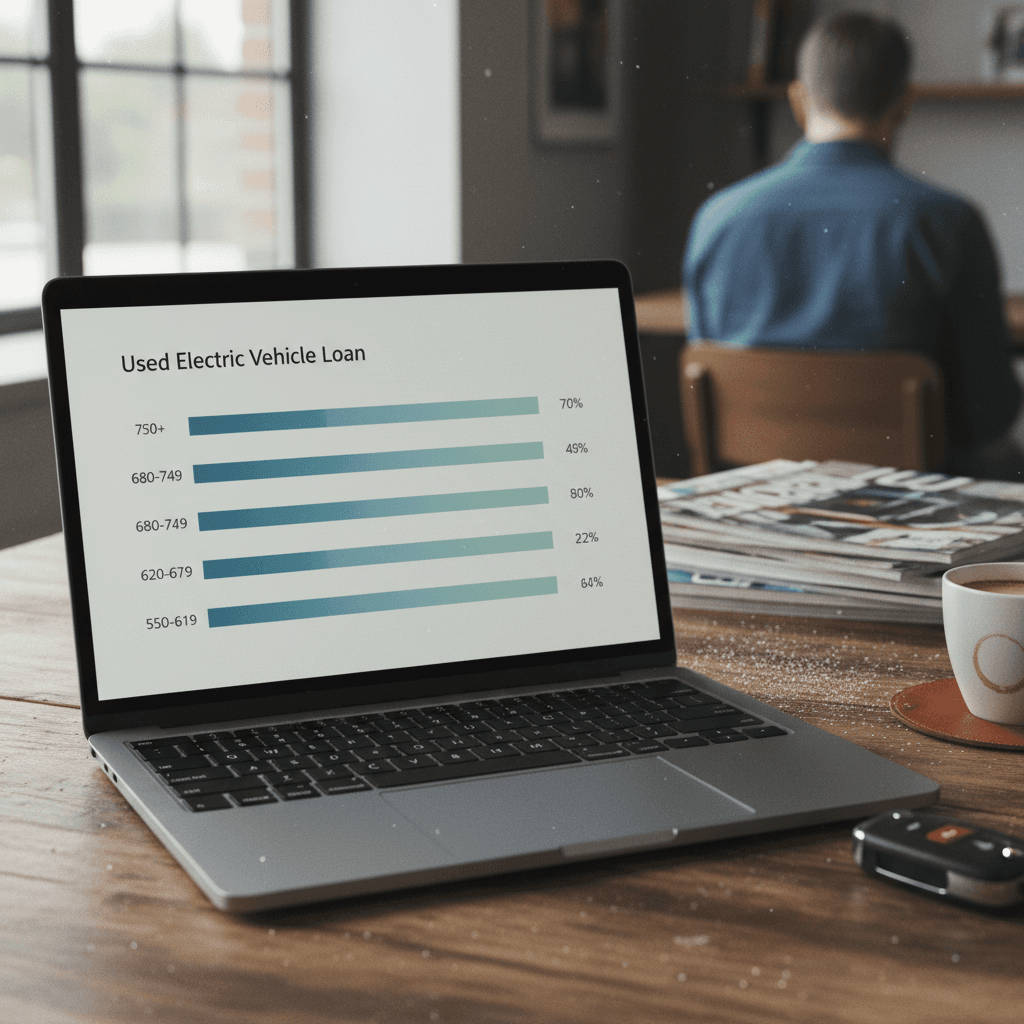
The rate you pay matters as much as the approval. Recent Experian-based data for 2025 suggests that used auto loan APRs commonly fall into something like this pattern:
Approximate used auto APRs by score tier (2025–2026)
Now put that into real money. Imagine a $28,000 used EV financed for 72 months with little money down:
How credit score changes a used EV payment
Illustrative payments on a $28,000 used EV loan for 72 months (rounded for clarity).
| Borrower type | APR | Approx. monthly | Total interest paid |
|---|---|---|---|
| Prime (720+) | 9% | $505 | ≈$8,300 |
| Near-prime (~630) | 14% | $572 | ≈$13,200 |
| Subprime (~560) | 20% | $621 | ≈$16,700 |
Even a few percentage points of APR can add thousands in interest over the life of a used EV loan.
Why this matters for EVs
What’s different about financing a used EV?
Underwriting a used EV isn’t exactly like underwriting a used gas sedan. Lenders know that EV values can move quickly, and they pay attention to a few extra details when deciding whether to approve your loan and what rate to offer.
EV-specific things lenders notice
These can help, or hurt, you, regardless of your credit score.
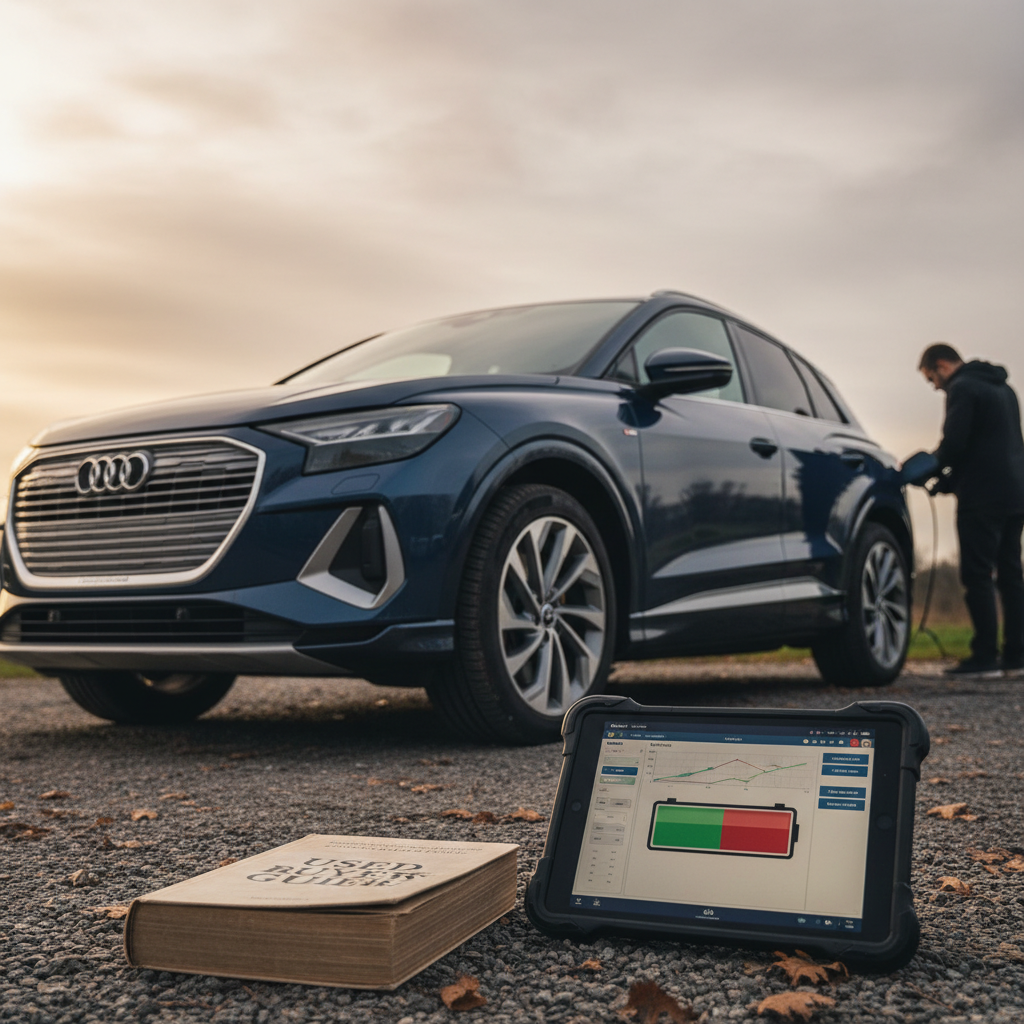
Battery health
Because the battery pack is the most expensive part of the car, lenders care about its condition and expected remaining life. A documented battery health report can make a used EV feel safer to finance.
Resale stability
Some models (popular Teslas, mainstream crossovers) have deeper used markets than niche EVs. A car that will be easy to resell if you default is easier to approve.
Total monthly load
Lenders look at your debt-to-income ratio. Lower fuel and maintenance costs help, but they’ll still weigh your EV payment alongside housing, cards, and other loans.
Where Recharged fits in
Ready to find your next EV?
Browse Vehicles5 ways to improve your odds (fast)
You don’t need to spend years rebuilding credit before you can buy a used EV, small moves in the weeks before you apply can make a real difference, especially if you’re on the edge between tiers.
Quick tune‑ups for your used EV loan application
1. Pull your real scores
Check your <strong>FICO</strong> (or, better, your FICO Auto Score if your bank offers it). Many free apps show VantageScore, which is fine for direction but not always what auto lenders use.
2. Drop utilization below 30%
Pay down credit card balances so that your <strong>reported utilization</strong> is under 30% of your limits, under 10% is even better. This is one of the fastest levers you can pull to bump your score a few points.
3. Clean up easy dings
Fix obvious errors, add missing on‑time payments if you can, and bring any recent late payments current. Even one 30‑day late in the last 12 months can spook an underwriter.
4. Right‑size your budget
Before you shop cars, shop <strong>payments</strong>. Use a calculator and decide what you can realistically handle every month, then work backward to a price range and down payment that fit your income.
5. Get pre‑approved with 1–2 lenders
A pre‑approval from a credit union, bank, or online lender gives you a target rate and helps you avoid dealer markups. When you buy through Recharged, our team can help you compare multiple offers with <strong>one application</strong> in many cases.
Timing tip
Can you get a used EV loan with bad credit?
Yes, but this is where you need to be brutally honest about risk. Subprime auto loans are still being written in 2026, but lenders have generally tightened standards. If your score is under about 600, here’s what the landscape really looks like.
If you’re around 580–600
- You may qualify with some banks, online lenders, or credit unions, especially if you have steady income and a clean recent payment history.
- Expect double‑digit APRs, often 15–20%, and a requirement for a meaningful down payment.
- Shorter terms (48–60 months) may help with approval but raise the payment; longer terms lower the payment but inflate total interest.
If you’re below 580
- Approvals on used EVs are rarer; many lenders simply won’t touch this band for electric vehicles.
- Specialized subprime dealers might finance you, but rates can be punishing and the contract terms unforgiving.
- Often, the smarter move is to buy something cheaper or delay the purchase a few months to rebuild your score.
Beware “anyone approved” offers
Choosing the right lender for a used EV
Once your credit score and budget are dialed in, the next big decision is where you actually get the money. Different lender types treat used EVs, and non‑perfect credit, very differently.
Common lender options for used EV buyers
Pros and cons if your credit isn’t perfect.
Credit unions
Often the best combo of rates and flexibility, especially for members with fair credit. Many are comfortable financing popular used EVs and will talk through edge‑case situations.
Banks & captives
Big banks and automaker‑affiliated lenders tend to prefer higher scores and newer vehicles. Great if you’re prime; more rigid if you’re not.
Online lenders & marketplaces
Can be useful for rate‑shopping and pre‑approvals, but you’ll want to watch origination fees and confirm they’re EV‑friendly.
If you buy a used EV through a digital retailer like Recharged, you’re effectively getting a shortcut: our team works with a network of lenders, including EV‑savvy credit unions, to match the car, your profile, and the right financing partner in one workflow instead of making you start from scratch with each bank.
How Recharged helps you line up financing
Recharged was built to make used EV ownership feel less like a blind date and more like a well‑planned introduction, including the money side. When it’s time to finance, we focus on three things: transparency, fit, and simplicity.
Financing a used EV through Recharged
Transparent vehicle reports
Every car comes with a <strong>Recharged Score Report</strong> that includes verified battery health and fair‑market pricing. That documentation can help lenders understand what they’re financing, and help you feel comfortable with the numbers.
Multiple lender options in one place
Instead of walking into three different branches, you can get help comparing offers from banks, credit unions, and other partners that are comfortable with used EVs, often with a <strong>single digital application</strong>.
Support if your credit is still a work in progress
If your score isn’t where you’d like it to be, our EV‑specialist team can help you explore realistic options: adjusting your budget, choosing a model that’s easier to finance, or timing your purchase after a quick round of credit clean‑up.
End‑to‑end online, with humans on standby
Browse, get a trade‑in offer, line up financing, and arrange nationwide delivery without stepping into a showroom. Prefer to talk it through? Our Experience Center team in Richmond, VA can walk you through the details.
No‑pressure pre‑qualification
FAQ: Credit scores and used EV loans
Frequently asked questions
The credit score you need for a used EV loan isn’t a brick wall, it’s a sliding scale: the higher your score, the easier the approval and the cheaper the car feels over time. Above the mid‑600s, you’re shopping mostly on price and preference. In the low‑600s and below, you’re negotiating with risk, yours and the lender’s. If taking on a high‑APR subprime loan would put your budget on a knife edge, the most EV‑friendly move may be to pause, tune up your credit, and try again in a few months. And when you’re ready, pairing a well‑vetted used EV and transparent battery health with smart, pre‑qualified financing, through a platform like Recharged, can turn the numbers back in your favor.