When people ask about the cost of an electric vehicle, they’re rarely just thinking about the sticker price. You care about the monthly payment, what you’ll spend to charge it, how much maintenance really costs, and whether an EV still makes sense now that some federal tax credits have changed. Let’s walk through the numbers so you can decide, with clear eyes, whether an EV fits your budget, especially if you’re considering a used one.
Why total cost of ownership matters
How Much Do Electric Vehicles Cost Today?
Snapshot: What EVs Cost in 2025 (U.S.)
On average, new electric vehicles still carry a higher purchase price than comparable gasoline models, but their costs have been trending downward as more mainstream models enter the market and automakers discount inventory. Where the story flips is in day‑to‑day running costs: electricity is usually cheaper than gasoline, and EVs have fewer moving parts to service, which can reduce maintenance spending over time.
Think like a fleet manager
Upfront Cost: New vs Used EV
New Electric Vehicles
New EVs give you the latest tech, long warranties, and the peace of mind of being the first owner. But in 2025 they still tend to cost several thousand dollars more than similar gas vehicles, even after dealer discounts.
- Average new EV price around the high‑$50k range.
- Best for drivers who want the latest range and features.
- Federal tax credits for purchases ended for vehicles acquired after Sept. 30, 2025, which removes a big upfront discount.
Used Electric Vehicles
Used EVs compress years of depreciation into a much lower purchase price. In many cases you can buy a 2–4‑year‑old electric car for the cost of a well‑equipped compact gas model.
- Lower cash price and potentially lower monthly payment.
- Previous owner already absorbed steep early depreciation.
- Battery condition and charging history become critical, this is exactly what the Recharged Score is built to clarify.
Watch that depreciation curve
EV Charging Costs: Home vs Public
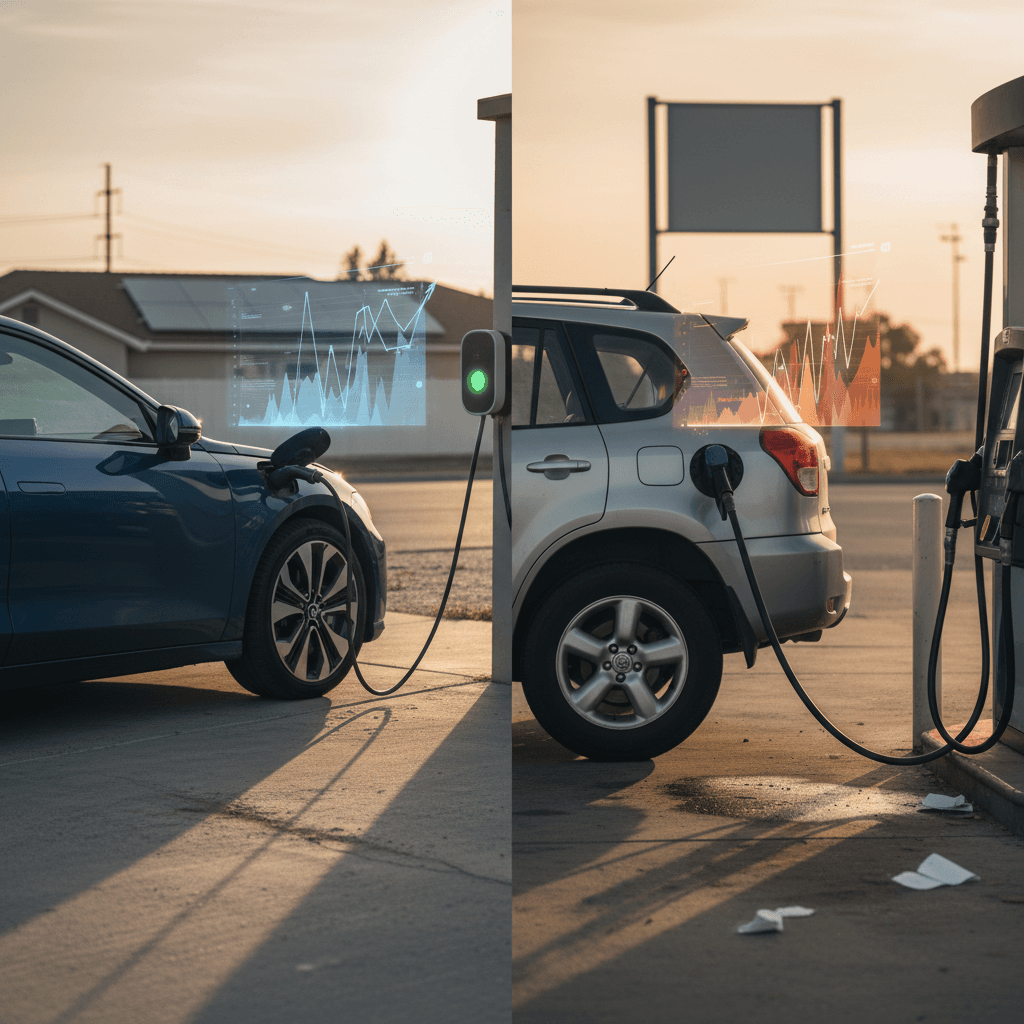
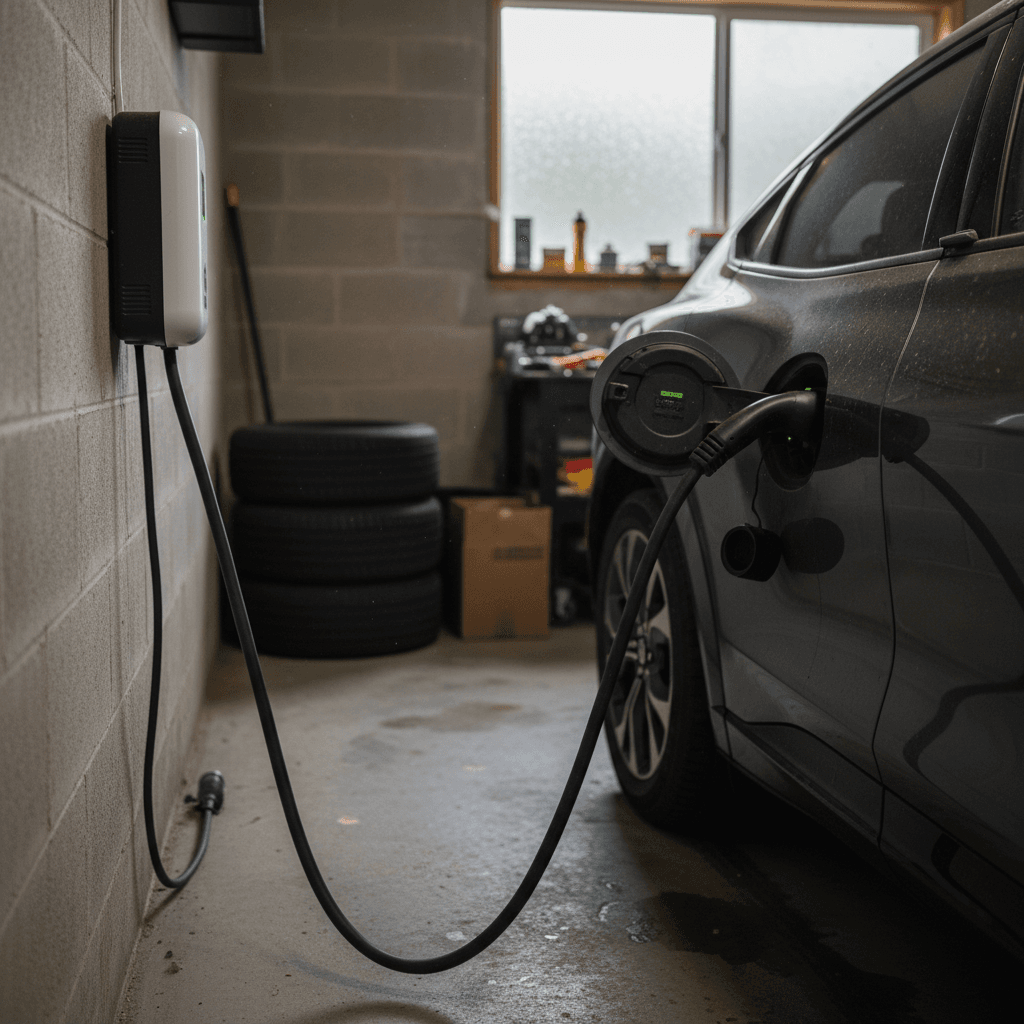
Charging is where many drivers either fall in love with EV ownership or get frustrated with surprise costs. The big divide is simple: home charging is usually cheap and predictable, while public fast charging is convenient but can approach gasoline‑like costs per mile if you rely on it heavily.
Typical U.S. Charging Costs in 2025
Approximate national averages based on 2024–2025 electricity and charging price data. Your actual cost depends on your local utility rates and the networks you use.
| Charging Location | Average Energy Price | Example Full Charge* | Annual Cost (12,000–13,500 miles) | Notes |
|---|---|---|---|---|
| Home (Level 2) | ~16–17¢ per kWh | About $15–$20 | Roughly $600–$700 | Set‑and‑forget overnight charging at home is usually the lowest‑cost option. |
| Public Level 2 | ~30–35¢ per kWh | About $30–$35 | Roughly $1,000–$1,300 | More expensive than home, but still reasonable for occasional use. |
| DC Fast Charging | Often 35–45¢+ per kWh | $35–$50+ depending on session fees | Can rival gas costs if used heavily | Great for road trips and emergencies, but expensive as a primary fuel source. |
Home charging keeps per‑mile costs low; public fast charging trades money for time.
A quick rule of thumb
Public charging is improving, but it’s priced for convenience, not frugality. AAA and other analyses in 2025 show public/commercial charging in the mid‑30‑cents‑per‑kWh range on average, sometimes far higher in certain states. Use those stations the way you’d use airport food: they’re there when you need them, but you don’t build your monthly budget around them.
Maintenance and Repairs: Where EVs Save You Money
An electric vehicle has no engine oil, spark plugs, timing belts, or exhaust system. Over thousands of miles, that simplicity adds up. Industry cost studies consistently find that EVs spend less time and money in the service bay than comparable gas vehicles, especially in the first 5–8 years.
EV vs Gas: Typical Maintenance Differences
What disappears, what stays, and what’s new with an electric drivetrain
What you skip
- Oil and filter changes
- Engine air filters, spark plugs
- Exhaust system repairs
- Transmission fluid service (for most EVs)
What stays the same
- Tires and alignments
- Brake fluid and pads (often less often thanks to regen)
- Cabin air filters
- Suspension components
What’s unique to EVs
- Battery thermal management checks
- Coolant service for battery/inverter
- Occasional software updates
- Out‑of‑warranty battery or module repair (rare but costly)
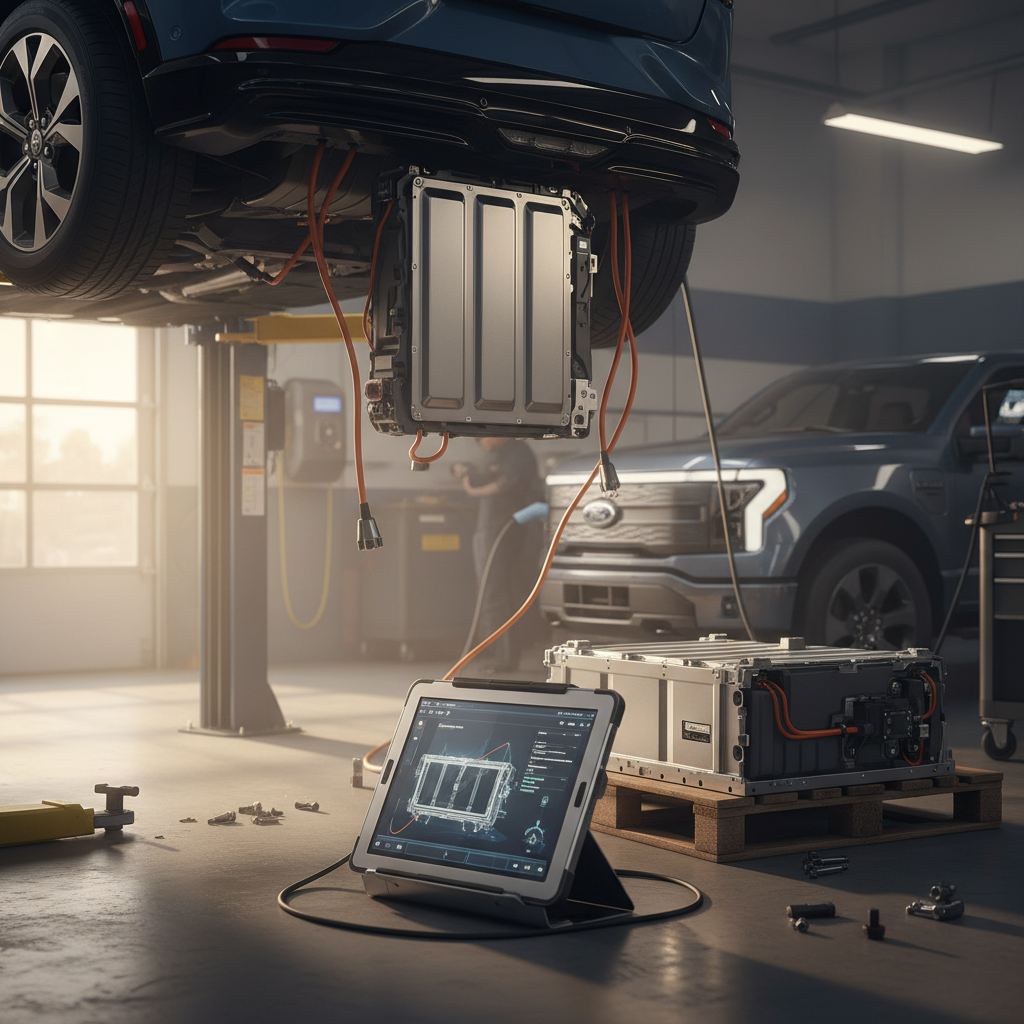
Battery replacement: rare, but budget for the risk
Insurance, Registration, and Other Fees
Insurance and registration are the quiet line items that can tilt the total cost of ownership one way or another. In many U.S. states, EVs cost a bit more to insure than similar gas cars today, largely because of higher vehicle values and expensive components like battery packs and advanced driver‑assistance systems. Some states also add annual EV fees to make up for lost gasoline tax revenue.
- Expect insurance quotes for an EV to be slightly higher than a comparable gas car, all else equal, though safe driving history and shopping around can narrow the gap.
- A handful of states assess extra annual registration fees for EVs, often in the $100–$250 range, to replace fuel‑tax revenue.
- On the flip side, some regions offer reduced registration fees, HOV lane access, or local rebates that help offset these costs.
Don’t skip the insurance quote step
Tax Credits and Incentives After the 2025 Changes
For years, federal tax credits helped narrow the price gap between EVs and gasoline vehicles. That landscape shifted in 2025. Under recently passed legislation, federal clean vehicle credits for consumer purchases end for vehicles acquired after September 30, 2025. Some automakers are temporarily using lease structures and commercial‑vehicle rules to keep offering incentives, but those are more limited and may change.
Where help still exists
- Manufacturer rebates or lease cash on new EVs
- Dealer discounts on in‑stock inventory
- State or local incentives for EVs or home chargers
If you’re shopping used, federal incentives are now limited and time‑sensitive as well. The practical takeaway: don’t build your whole affordability plan around tax credits. Treat them as a bonus. Focus on price, payment, and operating costs you can control, especially critical with used EVs, where the right car at the right price can deliver excellent value without any help from Washington.
EV vs Gas: Total Cost of Ownership
How EVs and Gas Cars Compare Over Time (Typical Scenario)
Think of an EV like a house with higher rent but utilities included at a discount. If you drive a lot and can charge at home, the fuel and maintenance savings can outweigh the higher payment. If you drive very little or rely on expensive public fast charging, a hybrid or efficient gas car might pencil out better.
Drivers who often come out ahead with EVs
- Commute 30–70 miles a day and can charge at home overnight.
- Live where electricity is reasonably priced and gasoline is not.
- Plan to keep the car at least 5–7 years.
- Choose a used EV with solid battery health instead of paying for the newest badge.
Drivers who might not
- Depend heavily on public DC fast charging.
- Drive very few miles per year, so savings accumulate slowly.
- Face very high electricity rates with no off‑peak options.
- Change vehicles every 2–3 years, absorbing more depreciation.
How Buying a Used EV With Verified Battery Health Helps
The battery is the heart of an EV and the most expensive component to replace. That’s why the cost of an electric vehicle, especially a used one, depends so heavily on battery health and how honestly it’s represented by the seller.
How Recharged Helps You Control EV Ownership Costs
Lower upfront price, clearer battery data, and EV‑savvy guidance
Transparent pricing
Recharged Score battery report
EV‑specialist support
Ready to find your next EV?
Browse VehiclesWhy this matters for your wallet
Budgeting Checklist for Your First EV
Run These Numbers Before You Buy
1. Compare real monthly payments
Include principal, interest, taxes, and any protection products you actually plan to buy. If you’re financing through Recharged, ask our team to show you multiple term and down‑payment scenarios.
2. Estimate your annual miles
Look at the last year of your driving: commute, kids’ activities, road trips. The more you drive, the more potential savings an efficient EV offers, especially with home charging.
3. Model your charging mix
Roughly what percentage of your charging will be at home, work, or public stations? Plug in local electricity rates and typical public‑charging prices to estimate monthly energy costs.
4. Get insurance quotes for specific cars
Use real VINs for 2–3 candidate vehicles, new and used, to see how insurance changes with value, trim, and safety features.
5. Check incentives and local programs
Search your state and utility websites for EV or charger rebates, off‑peak rates, or special tariffs. Treat any savings as icing on the cake, not the foundation of your budget.
6. Plan for long‑term maintenance
Ask about warranty coverage on the battery and electric drive components. With a Recharged vehicle, review the Recharged Score Report to understand battery health and likely future performance.
Frequently Asked Questions About EV Costs
EV Cost FAQs
Key Takeaways on the Cost of Owning an EV
When you look beyond the sticker, the real cost of an electric vehicle comes down to a few key levers: how much you pay up front, where you charge, how many miles you drive, and how healthy the battery is. For the right driver, especially someone who can charge at home and is open to a well‑vetted used EV, those levers can tilt sharply in your favor.
If you’re ready to run the numbers on a specific car, consider starting with a used EV backed by a Recharged Score Report. You’ll see verified battery health, fair market pricing, and financing options in one place, plus EV‑savvy guidance from the first question to the final signature. That’s how you turn EV ownership from a question mark into a confident, well‑priced move.