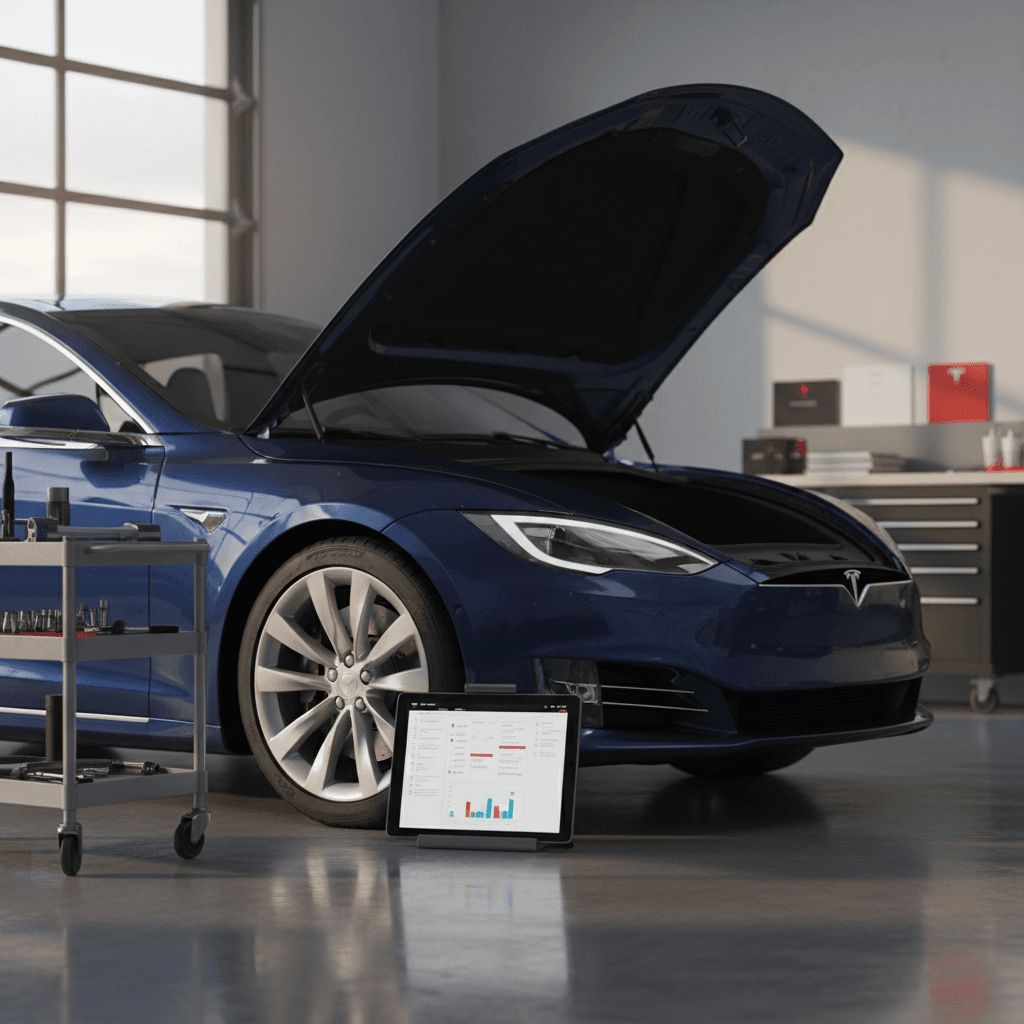
If you’re coming from a gas car, the Tesla Model S maintenance schedule looks almost suspiciously light, no oil changes, no timing belts, no transmission services. Tesla says most items are “as needed,” but that doesn’t mean you can ignore maintenance and hope Autopilot will save you. Especially if you’re shopping used, understanding what really needs attention, and when, can save you thousands.
Important context for 2026 and beyond
Why the Model S maintenance schedule looks so strange
Tesla’s official stance is that Model S maintenance is largely condition‑based, not tied to strict mileage like a traditional service book. The result is a short list of recurring items, brake fluid checks, cabin filters, tire rotations, brake caliper lubrication, and a long list of things you’ll never see again, like oil changes and exhaust work.
What your Model S doesn’t need
- No engine oil or oil filter changes
- No spark plugs, coils, or fuel system service
- No transmission fluid changes on a fixed schedule
- No smog checks or emissions equipment service
- No timing belt/chain replacements
What still matters a lot
- Tires and alignment – heavy EV, high torque
- Brakes – especially calipers in salty climates
- Cabin air & HEPA filters
- Suspension and steering components
- Software, sensors and high‑voltage safety checks
Think like an airline, not a tuner shop
Official Tesla Model S maintenance intervals
Tesla’s current Model S Owner’s Manual boils the recurring maintenance items down to a surprisingly short list. For modern Model S vehicles, Tesla recommends:
Core Tesla Model S service intervals
High‑level maintenance intervals from Tesla guidance, applicable to most late‑model Model S vehicles. Always verify specifics in your in‑car manual or app.
| Item | Recommended interval | Notes |
|---|---|---|
| Brake fluid health check | Every 4 years | Test and replace only if needed; hard driving or hot climates may justify sooner checks. |
| Cabin air filter | Every 3 years (recent S) | Earlier Model S generations often used a 2‑year interval; many owners still follow 2–3 years. |
| HEPA / Bioweapon Defense filters (if equipped) | Every 3 years | Applies to cars with the HEPA package. |
| Wiper blades | Every 1 year | Or whenever streaking, chatter, or cracked rubber appears. |
| Clean & lubricate brake calipers | Every 12 months or 12,500 miles in salted‑road regions | Crucial for owners in the Northeast, Midwest, Canada, etc. |
| Tire rotation | Around every 6,250 miles (10,000 km) or when tread difference is ≥ 2/32 in | Some manuals show only a km interval; Tesla’s support guidance also cites ~6,250‑mile rotations. |
Tesla can update these recommendations over time, so treat this as a framework, not religious doctrine.
Check your specific car’s manual
Model S maintenance schedule by year and mileage
To make Tesla’s minimalistic schedule more practical, here’s how those items translate into a simple, real‑world maintenance plan. This applies whether you go to Tesla, a trusted EV‑savvy shop, or a mix of both.
Year 1 / ~10,000–12,500 miles
Tire rotation and tread inspection
Have your Model S tires rotated roughly every 6,000–7,000 miles, or whenever the tread depth differs by 2/32 inch or more. This helps tame the inner‑edge wear that haunts many heavy EVs.
Basic brake and suspension check
Ask the shop to inspect pads, rotors, calipers, and suspension joints. Regenerative braking saves pads, but calipers can still seize in salty climates.
Wiper blades and washer system
Replace the wiper blades annually, especially if you live where sun or ice is harsh on rubber. Top up washer fluid as needed.
Software and alerts review
Make a habit of actually reading your Tesla app notifications and in‑car alerts. Many emerging issues, 12V battery, tire pressure, sensors, show up here first.
Year 2 / ~20,000–25,000 miles
Repeat Year‑1 checks
Rotate tires again, inspect brakes and suspension, check wipers and washers, and review alerts.
Consider early cabin air filter replacement
If you drive in dusty, urban, or smoky areas, do the cabin filter at 2 years instead of waiting for 3.
Alignment check (especially if you see uneven wear)
A mild pull, crooked steering wheel, or uneven tire wear is your clue to get an alignment.
Year 3 / ~30,000–37,500 miles
Cabin air filter replacement
By year 3, almost every Model S should have its cabin filter replaced. Many independent shops and some owners handle this themselves.
HEPA filter service (if equipped)
If your car has the big HEPA filter, plan on replacing it around year 3 as well.
Brake inspection with an eye on calipers
If you’re in a winter‑salt region and haven’t yet done a caliper clean/lube, now is the time.
Year 4 / ~40,000–50,000 miles
Brake fluid health check
Tesla recommends testing the brake fluid at 4 years and replacing it only if necessary. Many owners simply replace it on schedule because the cost is modest and the stakes, your braking system, are high.
Comprehensive suspension and steering inspection
By 40,000–50,000 miles, heavy EVs can begin to show wear in control arms, bushings, and links. Catching play or torn bushings early can save tires and alignments.
High‑voltage and charging hardware inspection
Have Tesla or an EV‑specialist shop inspect the charge port, high‑voltage cables, and underbody shielding for damage, especially if you’ve had curb or debris encounters.
Beyond year 4, the pattern mostly repeats: rotate tires regularly, inspect brakes and suspension at least annually, swap filters every few years, and test brake fluid on that 4‑year rhythm. The big battery and drive unit are designed to be largely hands‑off, while software keeps watch in the background.
What you should check more often than Tesla says
Tesla’s minimalism is refreshing, but in the real world, potholes, winter salt, performance launches, there are items savvy Model S owners watch more closely than the official schedule suggests.
High‑attention items for long‑term Model S ownership
These don’t always have officially short intervals, but they can make or break your ownership experience.
Tires and alignment
The Model S is heavy and quick. Inner‑edge wear is common, especially on performance or low‑profile tires. Check tread depth across the width at least every 3,000–4,000 miles.
12V (or low‑voltage) battery
Early Model S cars used a traditional 12V battery that can fail around the 4–6‑year mark. Newer cars use a low‑voltage lithium pack. In both cases, don’t ignore warnings, replace proactively.
Brakes & calipers in salty regions
In the Northeast and Midwest, annual caliper cleaning and lubrication is cheap insurance against seized hardware and ugly brake noise.
Charging port & cable
Inspect the charge port door, contacts, and your home charging cable regularly. Look for heat discoloration, cracks, or intermittent connections.
Door handles & seals (early cars)
Older retractable door handles are notorious for intermittent failures. Listen for struggling motors, and check for water leaks or wind noise around seals.
Underbody and battery tray
After any big impact, curb, debris, deep pothole, have the underbody inspected. The battery pack is tough, but you don’t want a mystery gouge living under a six‑figure car.
Don’t open the battery coolant system
Typical Tesla Model S maintenance costs
Tesla estimates annual maintenance costs for the Model S in roughly the mid‑hundreds of dollars, depending on mileage and driving style. In practice, costs tend to cluster around tires, brakes, and the occasional suspension component, not routine engine service like a gas sedan.
Model S maintenance cost snapshot (typical U.S. owner)
Tires are usually the big ticket. A Model S on 19‑inch wheels can get decent life from touring tires if you rotate on schedule; 21‑inch performance rubber will cost more and wear faster. Factor a full set of tires into your 2–3‑year budget, especially if you drive aggressively.
The quiet payoff vs. a gas luxury sedan
Maintenance red flags when buying a used Model S
If you’re shopping used, especially as Tesla winds down new Model S production, maintenance history becomes part of the car’s DNA. Here’s what to look for before you fall for the big screen and the launch mode party trick.
Used Model S: service red flags to investigate
A clean Carfax is not the same thing as a healthy, low‑stress car.
Sparse or missing service records
A Model S doesn’t need a stamped booklet, but you should see some evidence of tire rotations, brake checks, and basic inspections. A total blank is a conversation you want to have before you buy.
Uneven or extreme tire wear
Inner‑edge cords showing, cupping, or mismatched tires can hint at alignment issues, bent components, or just a hard‑driven life.
Brake fluid never tested or changed
On a 6‑ to 8‑year‑old car, no mention of brake fluid service is a yellow flag. It’s not a dealbreaker by itself, but plan to address it immediately.
Persistent warnings in the instrument cluster
Anything high‑voltage, battery, or drive‑unit related deserves careful diagnosis. Occasional sensor quirks are one thing; repeated power‑train alerts are another.
Home‑brew high‑voltage or body repairs
Enthusiasts can safely handle filters, wipers, and cosmetic work. Battery pack openings, charge‑port rewiring, or DIY collision repairs around the pack are serious red flags.
Noticeable suspension clunks or steering play
On a test drive, listen for front‑end clunks over bumps and feel for looseness in the steering. A quiet cabin makes any bad noise stand out.
How Recharged de‑risks used Model S purchases
DIY vs Tesla service: what owners can safely handle
One perk of the Model S is that some maintenance tasks are genuinely approachable for an engaged owner with basic tools. Others belong firmly in the “do not touch” category unless you enjoy expensive cautionary tales.
Reasonable DIY tasks
- Tire pressure checks and visual tread inspections
- Wiper blade replacement
- Cabin air filter replacement (if you’re comfortable removing trim panels)
- Washer fluid top‑ups and basic detailing
- Checking for play in door handles, latches, and seals
If you’re using jack stands and rotating tires yourself, learn the correct Tesla jack pad locations first, damaging the battery pack is not a DIY rite of passage.
Leave these to Tesla or an EV specialist
- High‑voltage battery, coolant, and contactor work
- Drive unit repairs or inverter issues
- Charge port and high‑voltage cabling
- Structural body repairs near the battery pack
- Advanced diagnostics for repeated power‑train or Autopilot warnings
In these areas, Tesla’s experience (or a dedicated EV shop’s) is worth more than the labor rate you’re trying to save.
The invisible danger: voltage and amperage
How Recharged evaluates Model S maintenance and battery health
With Model S moving into its mature, mostly‑used phase, the difference between a great car and a ticking time bomb is history and diagnostics. That’s where a structured evaluation is worth more than a quick spin around the block.
- Battery and charging health: We look at usable capacity, charge behavior, and any history of DC fast‑charging abuse or high‑voltage system alerts.
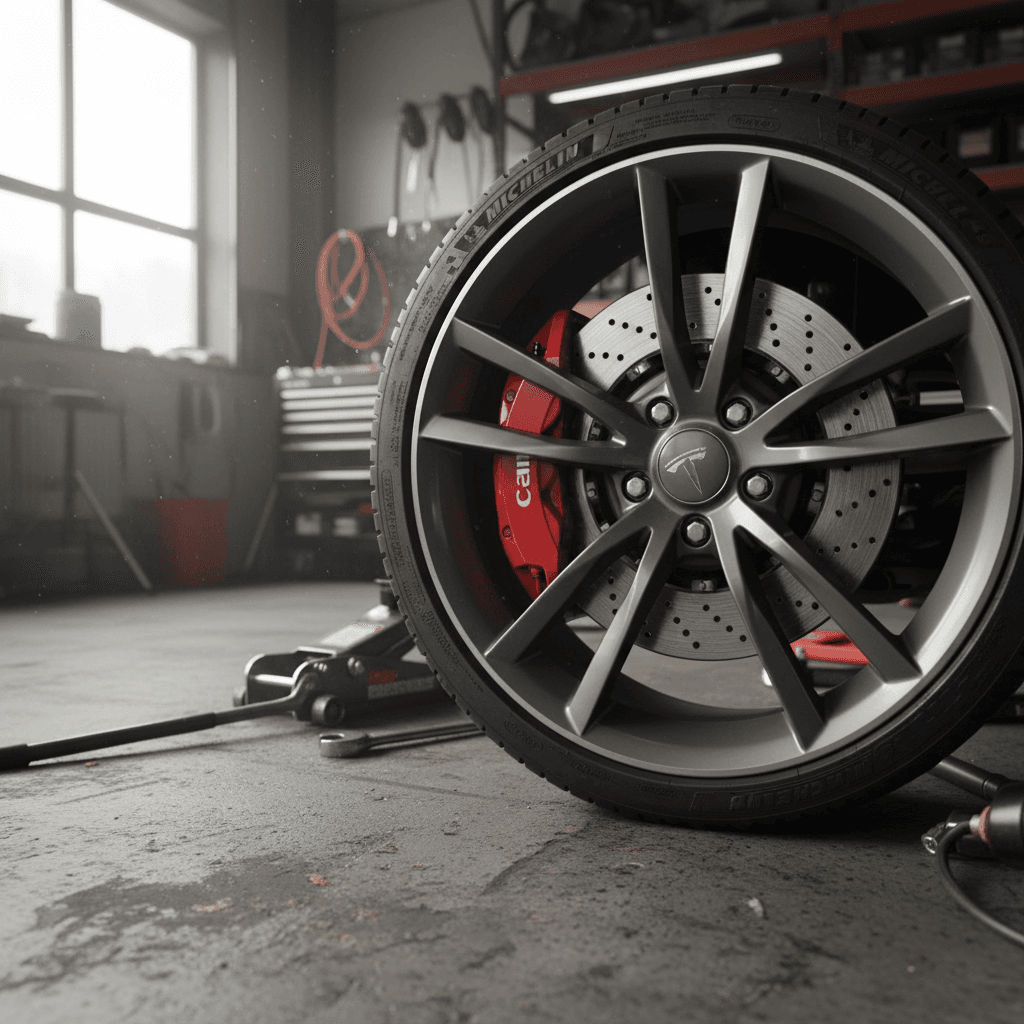
- Brake and tire condition: Tread depth across the full width, sidewall condition, rotor wear, and caliper operation, especially on cars from salty states.
- Suspension & steering: Signs of worn arms, bushings, or shocks that could hint at hard use or neglected roads.
- Software and recall status: Making sure critical updates and campaigns have been addressed.
- Service history sanity‑check: We look for logical patterns of tire, brake, and filter service that match the car’s age and mileage.
All of that rolls into the Recharged Score Report that comes with every vehicle we sell. For a Model S shopper, it’s essentially a cheat sheet for, “Is this one of the good ones?”
Tesla Model S maintenance FAQ
Frequently asked questions about Model S maintenance
Bottom line on the Model S maintenance schedule
The Tesla Model S maintenance schedule is short on line items but long on consequences if you ignore the few things that matter: tires, brakes, suspensions, filters, and software. Do those on time, and the big‑ticket hardware, the motor and battery, tends to fade into the background, doing anonymous, electric work for years at a stretch.
If you already own a Model S, use the intervals in this guide as a practical checklist and let your in‑car alerts fill in the gaps. If you’re shopping for one, especially used, look for a car whose history makes sense, and don’t be afraid to walk away from something that feels like a performance demo car in retirement. And if you’d prefer a shortcut, every used Model S at Recharged comes with a Recharged Score Report, expert EV guidance, and nationwide delivery, so the only maintenance you have to worry about on day one is deciding where your first road trip will be.