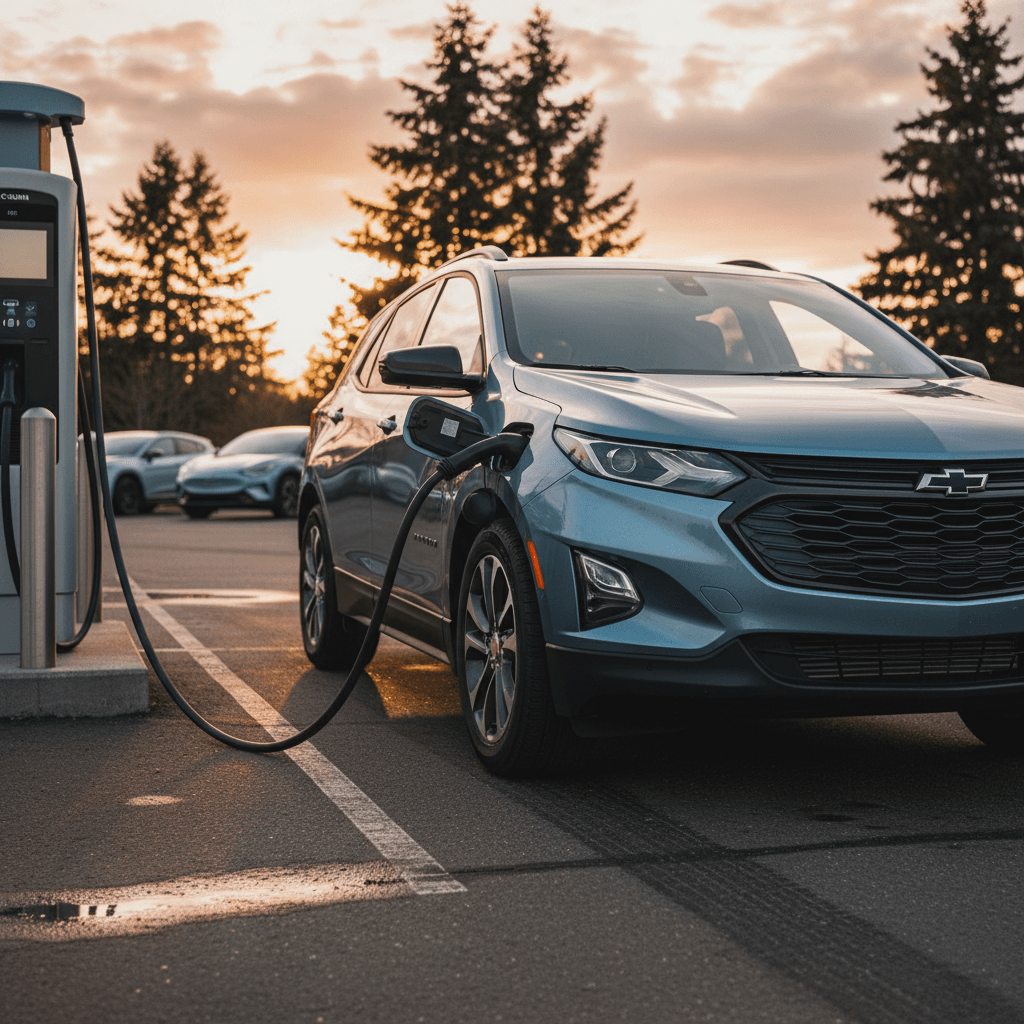
If you’re cross-shopping compact electric SUVs, you’ve probably seen Chevy’s claim that the Equinox EV can add around 70–80 miles of range in 10 minutes on a DC fast charger. For shoppers, that’s just marketing. A Chevy Equinox EV charging speed test is what actually matters, how quickly it really goes from low state of charge to road‑trip ready, and what you should expect if you buy one new or used.
Quick takeaway
Chevy Equinox EV charging overview
Every Equinox EV, front‑wheel drive or all‑wheel drive, uses roughly an 85 kWh Ultium battery pack. Chevy advertises up to 319 miles of range for FWD models and 285 miles for eAWD, with standard DC fast‑charging capability and an 11.5 kW onboard AC charger for Level 2 at home or public stations.
Headline Equinox EV charging numbers
Those numbers put the Equinox EV squarely in the middle of the compact‑SUV pack. It’s nowhere near the ultra‑fast 250 kW+ league, but if you plan charging sessions smartly, targeting about 10–80%, you can still road‑trip comfortably and keep daily charging simple.
Battery size and charging hardware explained
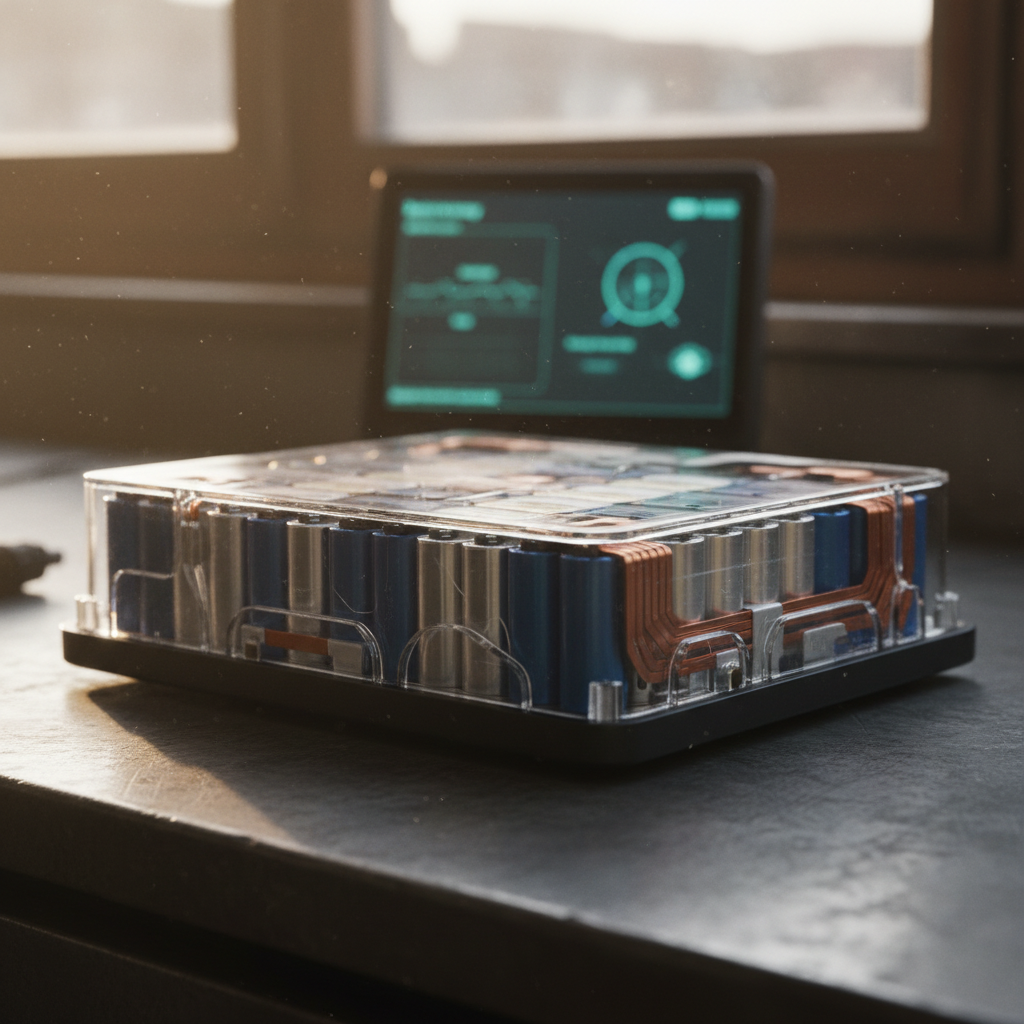
Under the floor, the Equinox EV carries an approximate 85.0 kWh battery and rides on GM’s Ultium platform. Both FWD and AWD models use the same pack, so charging behavior is broadly similar across trims. Where things diverge is the onboard AC charger and maximum DC rating.
Chevy Equinox EV charging specs at a glance
Key battery and charging hardware specs that drive real‑world speed test results.
| Item | Spec (most trims) | What it means for you |
|---|---|---|
| Battery capacity | ~85 kWh gross Ultium pack | Large enough to support 285–319 miles of rated range. |
| Standard DC fast‑charge peak | 150 kW (Chevy quotes up to ~150 kW) | Peak rate you’ll briefly see between roughly 10–40% SOC in good conditions. |
| Real‑world DC fast average | About 94 kW (10–90% test) | Average output for a full 10–90% session, including tapering at higher SOC. |
| Level 2 onboard AC | 11.5 kW (optional 19.2 kW on some 3RS eAWD models) | At home, expect roughly 30–36 miles of range per hour at 11.5 kW. |
| EPA range (FWD) | Up to 319 miles | Plan DC fast stops roughly every 180–220 highway miles for comfort. |
| EPA range (AWD) | Around 285 miles | Slightly shorter legs, especially with larger wheels and winter temps. |
Most U.S. models share the same 85 kWh pack and 150 kW DC fast‑charge peak; a 19.2 kW AC option appears on select high‑trim AWD versions.
Pro tip for home charging
DC fast charging speed test: 10–90% results
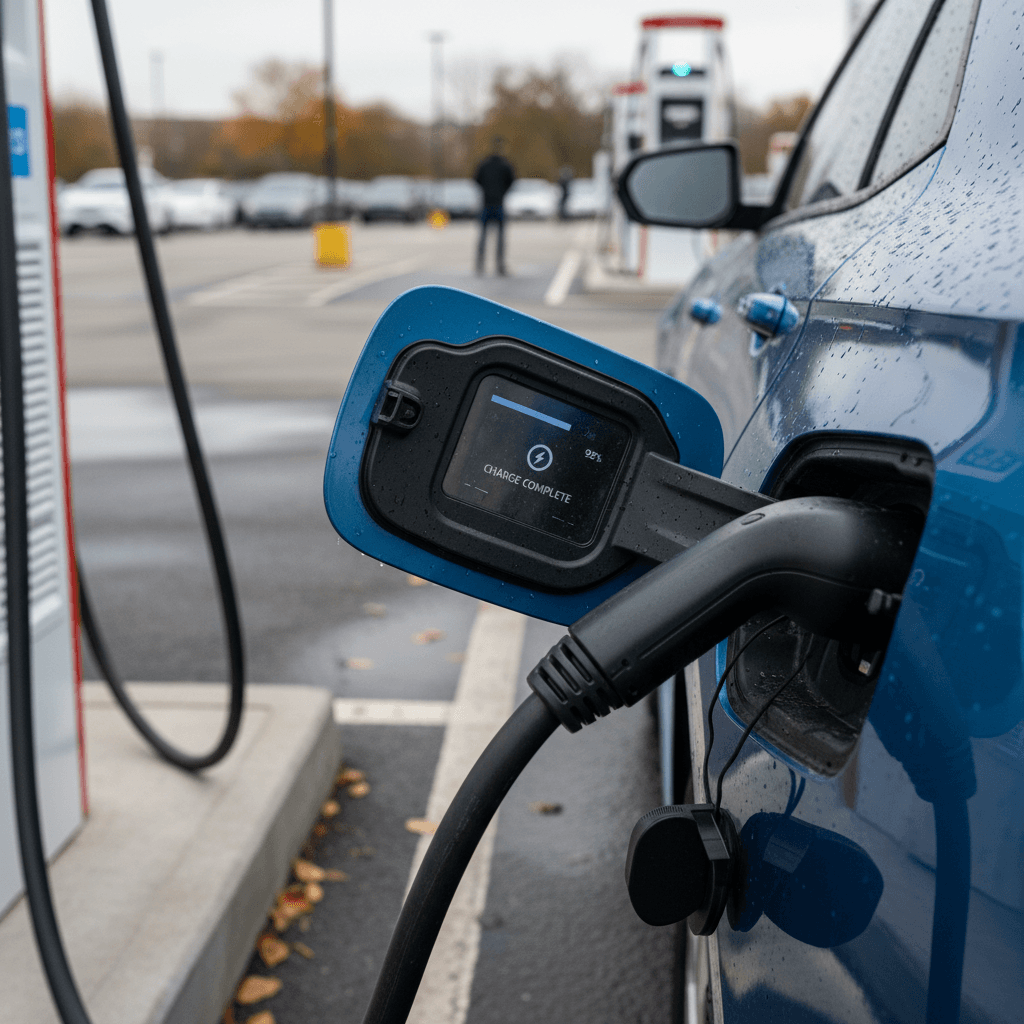
On paper, Chevy says the Equinox EV can add around 70–80 miles of range in about 10 minutes on a DC fast charger. Independent instrumented testing backs up the spirit of that claim, while revealing what actually happens over a full session from low to near‑full state of charge.
Real‑world DC charging test: what happened
Here’s how an instrumented 10–90% session on a 150 kW DC fast charger played out.
10–40% SOC
Peak power: Brief spikes around the 150 kW mark before settling slightly lower.
What you feel: Charge % climbs quickly; this is the sweet spot for road‑trip top‑ups.
40–80% SOC
Average power: Gradual taper from triple‑digit kW into the 80–90 kW range.
Range added: In one test, the Equinox EV added roughly 100 miles of highway range in the first 17 minutes.
80–90% SOC
Strong taper: Power falls further as the battery fills to protect longevity.
Time cost: Stretching from 80% to 90% makes the session feel slower, worth it only if your next leg is long.
Across the full 10–90% window, one well‑documented test recorded an average charge rate around 94 kW and a total session time of about 51 minutes. That’s not segment‑leading, but it’s consistent and predictable, two things that matter more than a flashy peak number the car can only hold for a few seconds.
Why 10–80% is the smart target
Level 2 home charging: how long for a full charge?
For most owners, daily life happens on Level 2. With the 11.5 kW onboard charger, the Equinox EV can add roughly 30–36 miles of range per hour when connected to a properly wired 240‑volt circuit and an 11.5 kW‑capable wallbox. If you’re coming from a plug‑in hybrid or a slower EV, that feels genuinely quick.
What Level 2 charging looks like in real life
1. Overnight from low to full
Arrive home around 15–20% after a long day, plug into a 40–48 amp wallbox around 6 p.m., and you’ll typically wake up to 80–100% before breakfast.
2. Top‑ups during the week
For a 30–40 mile daily commute, you might only need 1–2 hours of Level 2 every few nights. The car barely dips below 50–60% SOC in normal use.
3. Optional 19.2 kW upgrade
Select high‑trim AWD models offer a 19.2 kW AC charger. On the right circuit and wallbox, that can add roughly 50+ miles of range per hour, overkill for many homes, but future‑proof if your panel can support it.
4. Apartment or workplace charging
On a 7.7 kW shared charger, expect something like 20–22 miles of range per hour. That’s still enough to refill a typical day’s driving during a work shift.
Level 1 still has a role
How the Equinox EV’s charging compares to rivals
If you’re weighing an Equinox EV against other compact electric SUVs, charging performance is one of the biggest real‑world differentiators. The Equinox EV sits in a “solid middle” band: much quicker than older 50 kW‑limited models like the outgoing Bolt, but behind the newest 800‑volt platforms that can take 200–350 kW.
Where the Equinox EV does well
- Consistency: Its ~94 kW average DC rate from 10–90% is respectable and predictable.
- Battery size: The 85 kWh pack means you add a meaningful chunk of range with each stop.
- Daily convenience: 11.5 kW Level 2 makes overnight full charges easy on a standard 50‑amp circuit.
Where it lags faster rivals
- Peak power: Stopping at 150 kW means it can’t match ultra‑fast 230–350 kW systems.
- Voltage: Its relatively low pack voltage limits total power versus similarly sized competitors.
- High‑SOC speed: Above ~80%, the taper becomes pronounced, common in the segment, but still noticeable.
Big picture vs. road‑trip reality
5 factors that slow your Equinox EV charging
Even with good hardware, real‑world results from any Chevy Equinox EV charging speed test will swing up or down depending on conditions. If your times don’t match what others report, one or more of these factors is usually to blame.
- Battery temperature: Fast‑charging works best when the pack is warm but not overheated. After a long highway stint, you’ll see better numbers than if you plug in after the car sat in sub‑freezing temps.
- Starting state of charge (SOC): The closer you start to 0–20%, the more time the charger spends at high power before tapering. Starting a session at 40–50% shortens your peak‑power window.
- Charger capability: A 62 kW DC unit can’t deliver 150 kW, no matter what your car can accept. Always check the station’s max power rating in the app.
- Other site users: Multi‑stall sites sometimes share power between plugs. If every stall is full, your Equinox EV may not see the advertised peak, even on a “150 kW” unit.
- Software limits and updates: Automakers sometimes adjust charging curves over the air for longevity. If your results differ from older tests, your car may be running newer software that favors battery health.
Don’t chase 0%
How to get faster, cheaper charges in daily use
Whether you own an Equinox EV already or are considering a new or used one, a few smart habits can shave minutes off each stop and keep your electric fuel bill in check. This is where real‑world testing meets everyday ownership.
Charging strategies that work for Equinox EV owners
Apply these in your own routine to mirror the best test results.
Make home Level 2 your default
Use DC fast charging as a road‑trip tool, not your daily diet. Overnight 11.5 kW Level 2 is cheaper and gentler on the pack.
Schedule charging off‑peak
Many utilities offer lower overnight rates. Use the car’s charge scheduling to start after your off‑peak window begins.
Plan road‑trip stops by time, not 100%
Target roughly 15–30 minute stops from 10–80% SOC instead of pushing to full. You’ll spend less time staring at the progress bar.
Before you plug into a DC fast charger, check:
Station power rating
Confirm the site or stall can actually deliver 150 kW or more if possible. Many older units top out at 50–62 kW.
Pricing model
Some networks bill per kWh, others per minute. On slower chargers, per‑minute pricing can get expensive fast.
Next leg distance
If your next leg is only 120 miles, stopping at 80% instead of 95% can save 10+ minutes with no impact on comfort.
Amenities and safety
Especially at night, prioritize well‑lit stations near restrooms or food. A slightly slower but safer stop is usually worth it.
What charging speed tells you about a used Equinox EV
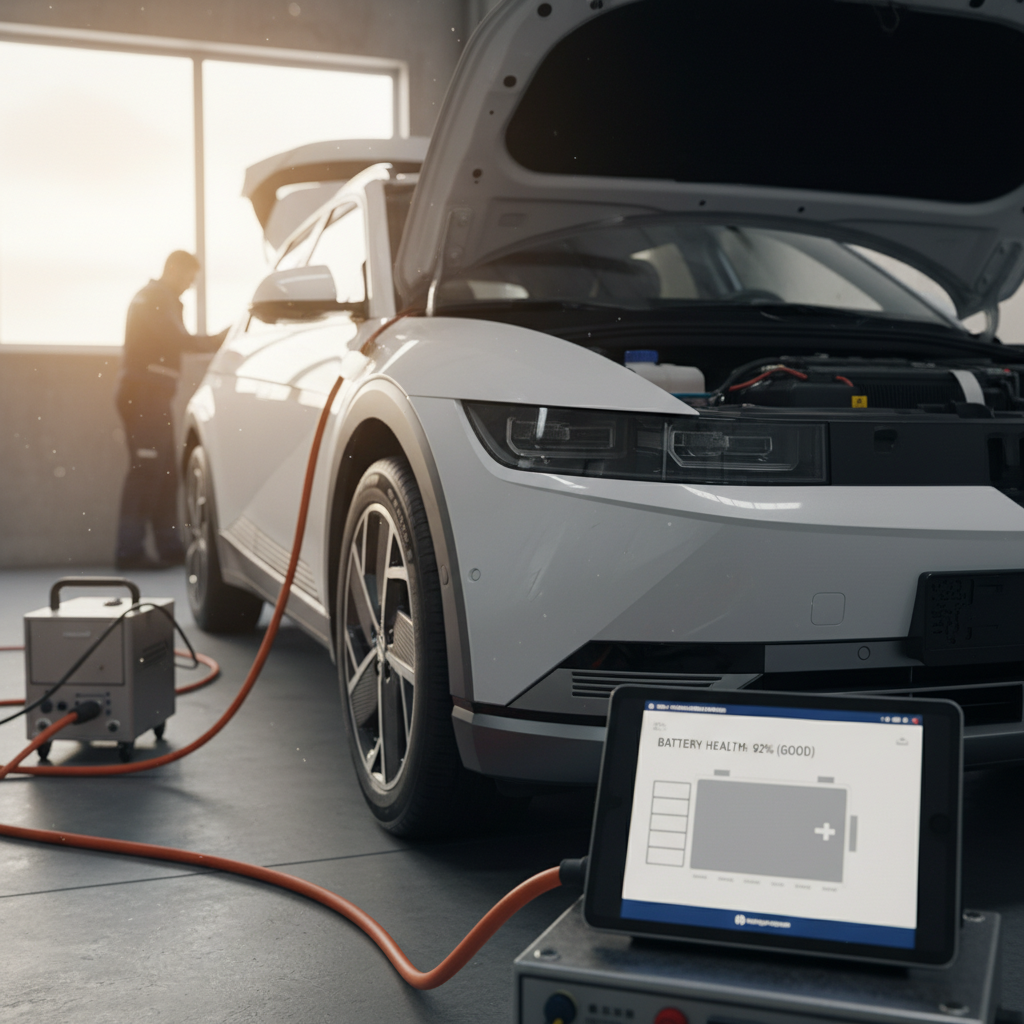
If you’re shopping the Equinox EV on the used market, charging behavior is more than a convenience stat, it’s a window into the health of the battery and how the previous owner used the car. Consistently sluggish charging on good hardware can hint at problems that deserve a closer look.
Healthy used Equinox EV signs
- On a known 150 kW fast charger, the car briefly peaks near triple‑digit kW when starting around 10–20% SOC.
- On Level 2 at home or in tests, it draws close to the expected 11.5 kW (within local voltage limits).
- Real‑world range still lands reasonably close to the original 285–319 mile estimates in mild weather.
Potential red flags
- Even on high‑power DC units, it never breaks out of the 40–60 kW range with a warm battery.
- Charging stops unexpectedly or the car throws repeated charging‑system errors.
- Range estimate seems dramatically low versus comparable models and test reports.
How Recharged can help
If you already own an Equinox EV and your DC sessions suddenly feel slower than they used to, it’s worth trying a different station brand and starting at a lower SOC. If things still look off, a dealer visit or third‑party diagnostic can confirm whether there’s a hardware issue or just an especially conservative software update at play.
Chevy Equinox EV charging speed test FAQ
Frequently asked questions about Equinox EV charging
Bottom line: Is the Equinox EV fast enough to live with?
If you’re expecting Taycan‑level charging fireworks, the Chevy Equinox EV isn’t that story. But that’s not its mission. The Ultium pack, 150 kW DC peak, and 11.5 kW Level 2 setup add up to a compact SUV that’s easy to live with, especially if you plug in at home and treat DC fast chargers as road‑trip tools rather than daily fuel pumps.
Real‑world Equinox EV charging speed tests show a crossover that can add 70–80 miles of range in about 10 minutes at its best, average around 94 kW over a 10–90% DC session, and refill overnight without drama on Level 2. For most drivers, that’s more than enough to cover commuting, weekend getaways, and the occasional 600‑mile day, particularly if you’re thoughtful about when you stop and how long you stay plugged in.
If you’re exploring a used Chevy Equinox EV, pairing those charging expectations with a verified battery‑health snapshot is the smartest way to shop. That’s exactly what you get with Recharged’s Recharged Score Report, plus fair‑market pricing, financing options, trade‑in support, and even nationwide delivery, so your next EV already charges the way you expect before it ever hits your driveway.