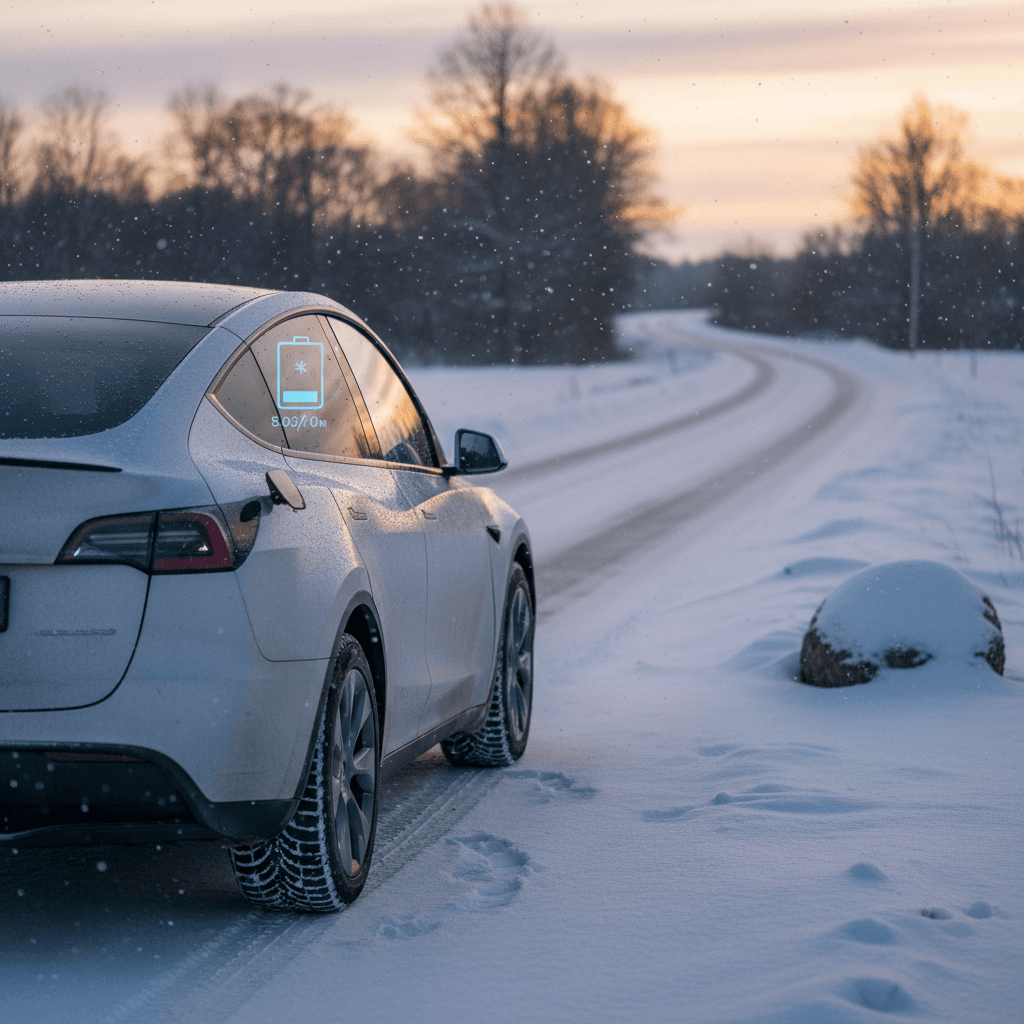
If you own, or are eyeing, a Chevy Bolt EV, you’ve probably heard the horror stories about winter range loss. The truth is less dramatic but very real: in cold weather, a Bolt can easily lose 30–40% of its rated range, especially if you’re cranking the heat on the highway. The good news is that once you understand why Chevy Bolt EV winter range loss happens, you can plan around it and claw a surprising amount of that range back.
Cold Isn’t Just “Bad for Batteries”
Why the Chevy Bolt EV Loses Range in Winter
Three main forces gang up on your Bolt’s range when temperatures drop: the chemistry inside the battery slows down, the air outside gets thicker, and you start burning electrons to stay warm. For the 2017–2023 Bolt EV and EUV, that last one is the ring leader: a resistive cabin heater that can pull several kilowatts just to keep things toasty.
What’s Stealing Your Winter Range?
Most Bolt drivers can blame heat, speed, and physics, not a “bad battery.”
Cold Battery Chemistry
At low temps, lithium ions move more slowly inside the cells. That means lower efficiency and reduced usable capacity until the pack warms up from driving or preconditioning.
Thicker Winter Air
Cold air is denser. At 65–75 mph, your Bolt is pushing through a heavier wall of air, so aero drag spikes and highway range falls faster than in summer.
Hungry Cabin Heater
Most Bolts rely on a resistive heater, basically an electric space heater on wheels. It can easily draw 3–5 kW, rivaling the power needed to move the car at city speeds.
Don’t Confuse Winter Loss With Battery Degradation
How Much Chevy Bolt EV Winter Range Loss to Expect
Let’s put some numbers on this. A 2020–2023 Chevy Bolt EV has an EPA-rated range of 259 miles. In real-world winter driving, most owners see somewhere between 30% and 40% range loss in sustained cold, with bigger hits in deep-freeze conditions or at sustained highway speeds.
Chevy Bolt EV Winter Range: Realistic Expectations
Approximate real-world ranges for a 259‑mile EPA-rated Bolt EV. Your results will vary based on speed, terrain, wind, and how warm you keep the cabin.
| Condition | Typical Temperature | Driving Mix | Estimated Range | Approx. Loss vs. 259‑mile EPA |
|---|---|---|---|---|
| Cool fall day | 45–55°F | Mixed city/highway | 210–230 miles | 10–20% |
| Normal winter | 25–35°F | Mixed city/highway | 160–190 miles | 25–35% |
| Cold snap | 10–25°F | Mostly highway, heater on | 140–170 miles | 35–45% |
| Deep freeze | 0°F or below | Highway, strong heat/defrost | 110–140 miles | 45–55% |
Use these numbers for trip-planning ballparks, not guarantees.
Those ranges match what many Bolt drivers report in cold-weather states: seeing the Guess-O-Meter (GOM) drop from summer estimates of 240–260 miles down to 160–190 miles in winter, and sometimes closer to 120–150 miles when it’s truly bitter out and you’re running full heat.
The GOM Is Learning, Not Lying
City vs. Highway: Why Your Winter Range Varies So Much
One of the first winter surprises for new Bolt owners is that city driving can be your friend. On surface streets, you’re moving slower, aero drag is lower, and you have more opportunities for regenerative braking. On the interstate at 70 mph in 20°F air, you’re burning energy to shove the car through dense air while the heater runs flat-out.
City & Suburban Driving
- Lower speeds mean less aero drag.
- Frequent stops let regen recapture energy.
- Once the cabin is warm, heater demand can drop a bit.
- Shorter trips still hurt efficiency though, because you keep reheating a cold cabin.
Highway Driving
- High speeds magnify aero losses in cold, dense air.
- Continuous heater use can draw several kW for hours.
- Battery may stay cold if you start from a cold soak and hit the road immediately.
- Expect the biggest percentage losses on long, fast winter runs.
Winter Road-Trip Rule of Thumb
Charging Your Chevy Bolt EV in the Cold
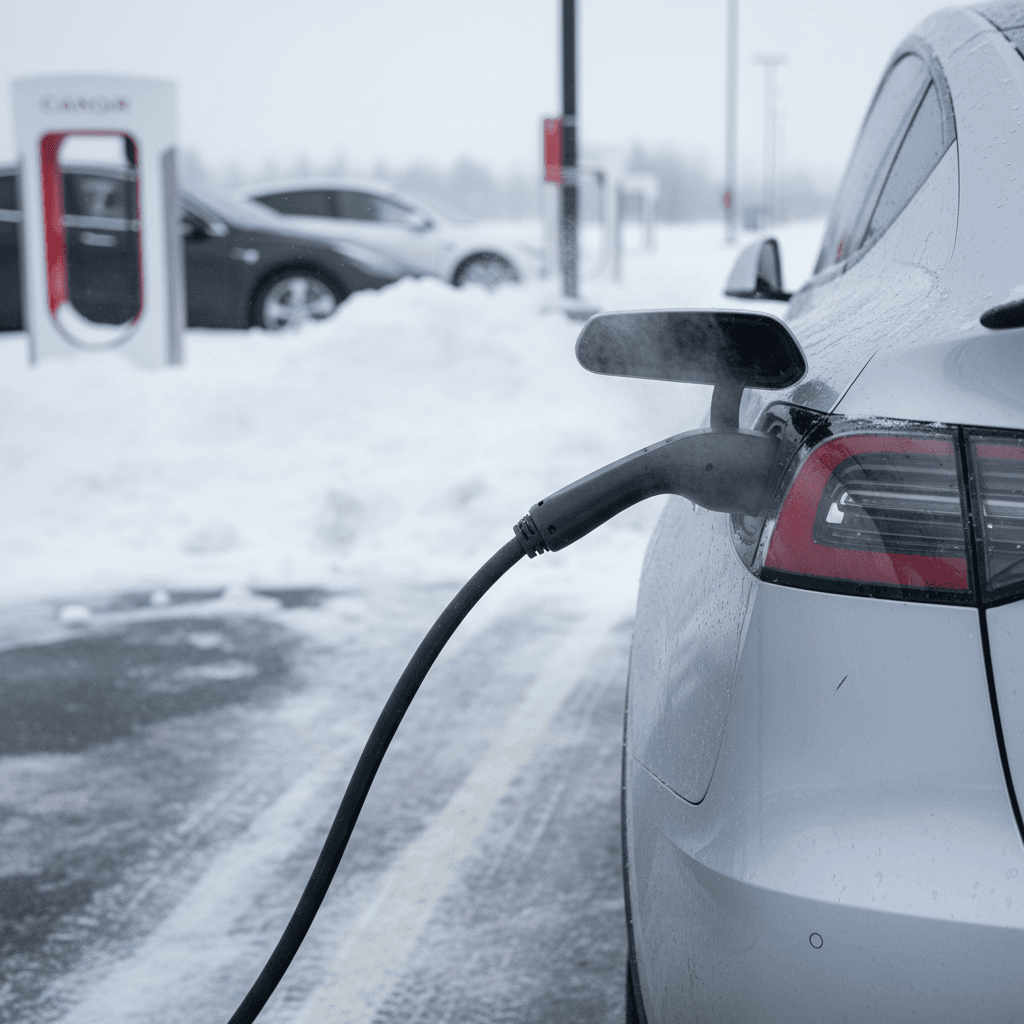
Cold doesn’t just shrink your driving range; it also slows charging. When the Bolt’s battery is cold-soaked, the car limits how much power it will accept to protect the cells. On DC fast chargers, that means you may see slower rates than the 55 kW peak you’re used to in warmer weather, and the taper can start earlier.
- Level 1 (120V) charging becomes even slower in winter because some of the energy goes into gently warming the pack.
- Level 2 (240V) at home is ideal: it lets you finish charging close to departure time and use scheduled preconditioning.
- DC fast charging works fine, but expect lower peak speeds and longer sessions unless the battery is already warm from driving.
Watch Out for Cold-Soaked Fast Charging
10 Ways to Reduce Chevy Bolt EV Winter Range Loss
You can’t beat physics, but you can stack the deck in your favor. With a few habits and a couple of smart upgrades, it’s realistic to claw back a big chunk of the winter range you’d otherwise lose.
Winter Range Playbook for Bolt Drivers
1. Precondition While Plugged In
Use the myChevrolet app or the key fob to preheat the cabin while the car is plugged in. That way, grid power, not your battery, does the heavy lifting to warm the cabin and, indirectly, the pack.
2. Time Charging to Finish Before Departure
On Level 2, set a departure time so the car completes charging shortly before you leave. A battery that just finished charging is warmer and more efficient than one that sat full all night in the cold.
3. Lean on Heated Seats and Steering Wheel
The heated seats and wheel in the Bolt sip energy compared with the cabin heater. Turn them on and try dropping the cabin setpoint a few degrees; most drivers find they stay comfortable while saving miles.
4. Trim Your Speed on the Highway
Dropping from 75 mph to 65 mph has an outsized effect on winter range. On a frigid day, that 10‑mph change can be worth dozens of miles over a long leg.
5. Use Eco Settings for Climate
Set the climate control to Eco (if available) so the car moderates fan speed and heater output. It may take a bit longer to warm up, but it reduces peak draw from the resistive heater.
6. Avoid Short, Back-to-Back Cold Starts
Five 3‑mile trips are harder on range than one 15‑mile run. When possible, combine errands so you aren’t repeatedly heating a cold cabin and cold battery.
7. Keep Tires Properly Inflated
Cold air drops tire pressure. A few PSI low adds rolling resistance and eats into already limited winter range. Check pressures regularly and use the door-jamb spec, not the max on the sidewall.
8. Use Garage or Covered Parking
Even an unheated garage is warmer than the open air. Parking inside reduces how cold-soaked the pack and cabin get overnight, improving both efficiency and charging performance.
9. Keep the Pack in a Comfortable State of Charge
In stretch-cold conditions, try to start the day above 60–70% if you have any highway miles planned. It gives you room for the extra consumption winter throws at you.
10. Update Your Navigation and Apps
If you’re relying on public charging, keep your apps (GM, PlugShare, Electrify America, etc.) up to date and add a winter buffer to every leg. Plan for more frequent, shorter stops rather than trying to run the pack close to empty.
Planning Winter Trips With a Chevy Bolt EV
Once you know your personal winter consumption, trip planning gets a lot less stressful. The key is to base your plan on what your car actually does in your conditions, not just the EPA sticker.
Two Mindsets: Commuting vs. Road-Tripping
Your strategy should change with your day.
Daily Commute & Errands
- Track your winter Wh/mi over a week and use that as your baseline.
- Make sure you can comfortably do your round trip using no more than 60–70% of the battery.
- Plug in every night in deep winter, even if you don’t strictly need the miles.
Weekend Getaways & Road Trips
- Plan legs so you arrive at chargers with 20–30% remaining, not 5%.
- Favor chargers near services so you can combine pack warm-up, charging, and your rest break.
- On brutal days, assume you have roughly half your summer highway range between fast-charging stops.
When Winter Driving Just Works
Buying a Used Chevy Bolt EV for Winter Driving
Shopping for a used Bolt in a cold-weather state raises a different kind of question: not just "What’s the range in winter?" but "How much range will this specific car have when it’s 15°F and snowing sideways?" That comes down to battery health, software updates, and how the previous owner treated the car.
What to Look For
- Verified battery health so you’re not guessing about capacity before winter hits.
- Evidence of software updates and recall work, including the battery recall on older Bolts.
- Features that matter in the cold: heated seats and wheel, remote start, and DC fast‑charge capability.
How Recharged Helps
- Every Bolt we sell includes a Recharged Score Report with a battery health assessment, so you know what you’re starting with.
- Our EV specialists can talk through realistic winter range for the exact car you’re considering, based on its test data and your driving pattern.
- If you’re not near our Experience Center in Richmond, VA, we offer nationwide delivery and a fully digital buying process.
Winter Question to Ask Any Seller
Chevy Bolt EV Winter Range FAQ
Frequently Asked Questions About Chevy Bolt EV Winter Range
Bottom Line: The Bolt EV Can Be a Great Winter Companion
Winter exposes every EV’s weaknesses, and the Chevy Bolt EV is no exception. Its efficient little hatchback body and eager motor are paired with a not‑so‑efficient cabin heater, so when the mercury drops, your range does too, often by 30–40%. But that doesn’t make the Bolt a bad winter car. It just means you need to think like an EV driver: precondition while plugged in, lean on heated seats, slow down a bit on the highway, and plan your charging with a winter buffer in mind.
If you’re considering a used Chevy Bolt EV, especially in a cold‑weather state, the key is understanding the specific car’s battery health and your own driving pattern. That’s exactly what the Recharged Score Report is built to do, so you can head into winter knowing what kind of range to expect on your worst weather days, not just your best. With the right expectations and a few smart habits, a Bolt can be one of the most affordable, confidence-inspiring EVs you can drive through the snow.