If you own or are shopping for a Chevy Bolt EV or Bolt EUV, the single biggest long‑term question is the high‑voltage battery. That makes understanding Chevy Bolt EV battery warranty details absolutely essential, especially now that many Bolts on the road are a few years old and thousands are entering the used market.
Key takeaway
Chevy Bolt EV battery warranty at a glance
Chevy Bolt EV & EUV battery warranty snapshot
Every Bolt EV and Bolt EUV sold in the U.S. includes a separate high‑voltage battery warranty in addition to the basic bumper‑to‑bumper coverage. While the exact language can vary by model year and state, the broad picture is consistent: Chevy is on the hook for defects in materials or workmanship that cause the battery to fail or lose an abnormal amount of capacity during the coverage period.
How long the Chevy Bolt EV battery warranty lasts
Let’s start with the headline everyone cares about: years and miles. For the vast majority of Chevy Bolt EV and Bolt EUV models sold in the United States, the high‑voltage battery is covered for:
- 8 years or 100,000 miles, whichever comes first, from the in‑service date (when the vehicle was first sold or leased new).
- Coverage applies to defects in materials or workmanship for the battery pack and related high‑voltage components.
- If the battery must be replaced under warranty, Chevy will typically install a new or remanufactured pack and restart coverage only for the remaining time/miles of the original warranty (it doesn’t reset to a fresh 8 years/100,000 miles).
Longer coverage in some states
The clock starts on the original in‑service date, not when you buy a used Bolt. So if you’re looking at a 2019 Bolt that went into service in March 2019, its 8‑year battery warranty runs to March 2027 (or 100,000 miles), regardless of whether you’re the first or third owner.
What the Bolt battery warranty actually covers
Chevy’s language centers on “defects in materials or workmanship” for the high‑voltage battery pack and related components. In plain English, that means if something in the battery system was built wrong, fails prematurely, or loses an abnormal amount of capacity, the warranty should step in.
Covered: high‑voltage battery and related components
What’s generally protected by the Chevy Bolt EV battery warranty
High‑voltage battery pack
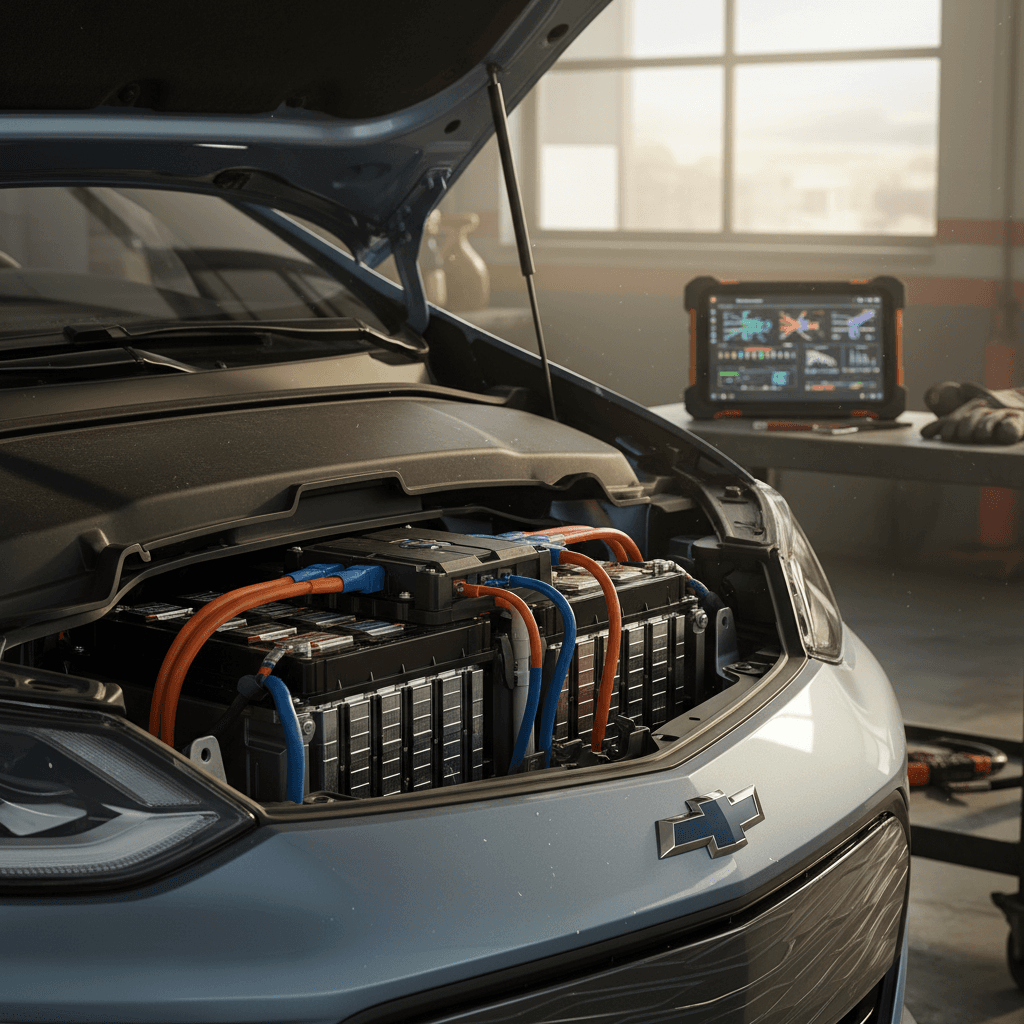
The main Bolt EV or EUV battery pack, including modules and internal components. If a cell issue or manufacturing defect causes failure or major loss of usable capacity, it’s typically a warranty item during the coverage period.
Battery management & high‑voltage hardware
Associated high‑voltage parts like the battery energy control module (BECM), high‑voltage wiring, junction boxes, and related controllers are commonly covered as part of the electric propulsion system warranty.
Complete pack replacement when required
If the pack can’t be repaired to meet GM’s standards, Chevy may replace the entire battery with a new or remanufactured unit at no charge to you while under warranty.
Defects, not wear‑and‑tear
The key concept is defect‑based coverage. Normal aging and some capacity loss are expected; sudden or severe issues due to manufacturing problems are what the warranty is designed to address.
Good news for Bolt owners
What’s not covered under the Chevy Bolt battery warranty
As robust as the coverage is, the Chevy Bolt EV battery warranty doesn’t cover everything that can happen to a high‑voltage pack. You’ll find a familiar list of exclusions that mirror other GM warranties and most other automakers’ EV policies.
- Normal deterioration of battery capacity and driving range over time.
- Damage caused by accidents, collisions, or road hazards.
- Damage from improper use or modifications (aftermarket tuning, unauthorized repairs, tampering with high‑voltage systems).
- Using the vehicle in racing, competition, or commercial abuse beyond normal use parameters.
- Failure to follow the maintenance and charging recommendations in the owner’s manual.
- Environmental damage: flooding, fire, extreme weather, or exposure to corrosive chemicals.
Warranty doesn’t cover every range drop
Battery degradation: when is a Bolt pack considered defective?
One of the murkiest parts of any EV battery warranty is the line between “normal aging” and a warrantable defect. Chevy’s Bolt EV battery warranty, like most, doesn’t promise that your pack will retain a specific exact percentage of capacity. Instead, it uses internal diagnostic thresholds and engineering standards.
What you should expect
Under typical use, it’s reasonable to see a small range reduction in the first few years of Bolt ownership, followed by a slower decline. Climate, fast‑charging habits, and total mileage all play a role. A few miles of lost range in the first couple of years is usually considered normal and won’t trigger warranty coverage.
When GM may step in
If your Bolt EV or EUV suffers a rapid, severe capacity drop, for example, suddenly losing a large chunk of usable range over a relatively short period, the dealer can perform a battery health test. If the results show capacity below GM’s internal minimum threshold, the company can authorize repair or full pack replacement under warranty.
Track your range over time
Bolt battery fire recalls and full pack replacements
You can’t talk about Chevy Bolt EV battery warranty details without addressing the high‑profile battery‑fire recalls. Multiple model years of the Bolt EV and early Bolt EUV were recalled after GM and LG Energy Solution identified rare manufacturing defects that could, in certain circumstances, lead to fires.
How the Bolt battery recall affected real owners
Why the recall matters when you’re shopping used
Free pack replacements
Many affected Bolt owners received an entirely new battery pack under the recall campaign at no cost. In effect, that gave the car “zero‑mile” battery age from the replacement date.
Fresh battery, same warranty clock
The recall replacement doesn’t restart the 8‑year/100,000‑mile warranty clock, but you get the benefit of a younger battery with updated chemistry and safety controls.
Documentation is crucial
If you’re buying a used Bolt, ask for written proof of any recall work: dealer service invoices, GM recall completion letters, or records in the vehicle history report.
Don’t ignore open recalls
Used Chevy Bolt EV: how much battery warranty is left?
The Bolt EV’s generous battery warranty is a huge reason the car is so attractive on the used market. But that benefit only matters if you know how much coverage you’re actually getting with a specific car.
Checklist: estimating remaining Bolt battery warranty
1. Find the original in‑service date
This is the day the car was first sold or leased new. You can get it from a Chevy dealer using the VIN, from service records, or sometimes from a vehicle history report. Subtract that date from today to see how many of the 8 (or 10) years have been used.
2. Check current odometer mileage
Because the warranty is years or miles, whichever comes first, a high‑mileage Bolt could run out of coverage before the calendar date. If a car is already near 100,000 miles, the high‑voltage battery warranty is essentially exhausted.
3. Ask about recall battery replacement
If the car received a new pack under the battery‑fire recall, note the replacement date and keep documentation. While the official warranty term doesn’t reset, a newer pack is a material benefit for you as a used buyer.
4. Verify warranty status with a dealer
Before you sign, call a Chevy dealer with the VIN and ask them to confirm the high‑voltage battery warranty expiration date and mileage, plus any open recalls. This takes a few minutes and can save you headaches later.
5. Review battery health documentation
For extra peace of mind, look for third‑party battery health reports. With Recharged, every used EV includes a Recharged Score Report with verified battery diagnostics, so you can see how the pack is performing versus peers.
How Recharged helps with used Bolts
Ready to find your next EV?
Browse VehiclesHow the Bolt battery warranty stacks up to other EVs
On paper, the Chevy Bolt EV’s battery warranty is right in line with, or slightly better than, many mainstream EV rivals. The bare numbers don’t tell the whole story, but they’re a good starting point if you’re cross‑shopping brands.
EV battery warranty comparison (typical U.S. coverage)
Approximate high‑voltage battery warranties for popular EVs. Always verify specifics for your model year and state.
| Model | Typical battery warranty | Capacity guarantee* | Notes |
|---|---|---|---|
| Chevy Bolt EV / EUV | 8 yrs / 100,000 mi | >~70% implied | Many recalled cars received new packs |
| Nissan Leaf | 8 yrs / 100,000 mi | 9 of 12 bars | Older models had shorter coverage |
| Hyundai Kona EV / Ioniq 5 | 10 yrs / 100,000 mi | >70% | Longer term, strong coverage |
| Tesla Model 3 RWD | 8 yrs / 100,000 mi | >70% | Higher‑trim Teslas have higher mileage caps |
| VW ID.4 | 8 yrs / 100,000 mi | >70% | Similar to GM and Tesla |
Chevy’s 8‑year/100,000‑mile Bolt battery warranty holds its own against other major EV brands.
About capacity guarantees
How to protect your Chevy Bolt EV battery warranty
Warranty coverage is only as good as your ability to use it. A few simple habits will not only help your Bolt’s battery stay healthy but also make any future warranty claims easier and more successful.
Owner habits that support your Bolt’s battery warranty
Follow the charging recommendations
Use Level 2 charging at home when possible, avoid letting the battery sit at 0% or 100% for long stretches, and follow any DC fast‑charging guidance in the owner’s manual.
Keep software up to date
Chevy has issued multiple software updates for the Bolt’s battery and charging behavior. Make sure recall and software campaigns are completed; they can improve safety, longevity, and your standing in a future warranty evaluation.
Document any sudden range loss
If you see an abrupt drop in range or can no longer complete routes you routinely drive, keep notes and screenshots. This helps distinguish a true failure from seasonal or driving‑style changes.
Use authorized service providers
High‑voltage battery work should be performed by GM‑trained technicians. Unauthorized modifications or repairs can jeopardize your battery warranty and create safety risks.
Save all service and recall records
Maintain a simple folder, digital or paper, with every invoice, recall letter, and dealer visit summary. This documentation can be invaluable if you need to escalate a warranty concern or sell the car later.
Don’t ignore warning lights
FAQ: Chevy Bolt EV & EUV battery warranty
Frequently asked questions about Chevy Bolt battery coverage
Bottom line: is the Chevy Bolt battery warranty strong enough?
When you look at the numbers and the real‑world track record, the Chevy Bolt EV and EUV battery warranty holds up well. Eight years or 100,000 miles is fully competitive with other mainstream EVs, and the recall campaigns that led to full pack replacements have actually left many used Bolts with younger‑than‑average batteries in cars that are a few years old.
Still, the warranty is only part of the story. For shoppers and owners, what matters most is actual battery health today and how much coverage remains on a specific VIN. That’s why we emphasize independent diagnostics and clear documentation. With tools like the Recharged Score Report, you can see how a Bolt’s battery is performing, match that to the remaining factory warranty, and decide whether the price, range, and peace of mind line up for you.
If you’re considering a Chevy Bolt EV or EUV, whether you’re a first‑time EV buyer or adding another electric car to the garage, the right combination of warranty knowledge, battery data, and fair pricing is what turns a good deal into a great one. That’s exactly what Recharged was built to deliver.