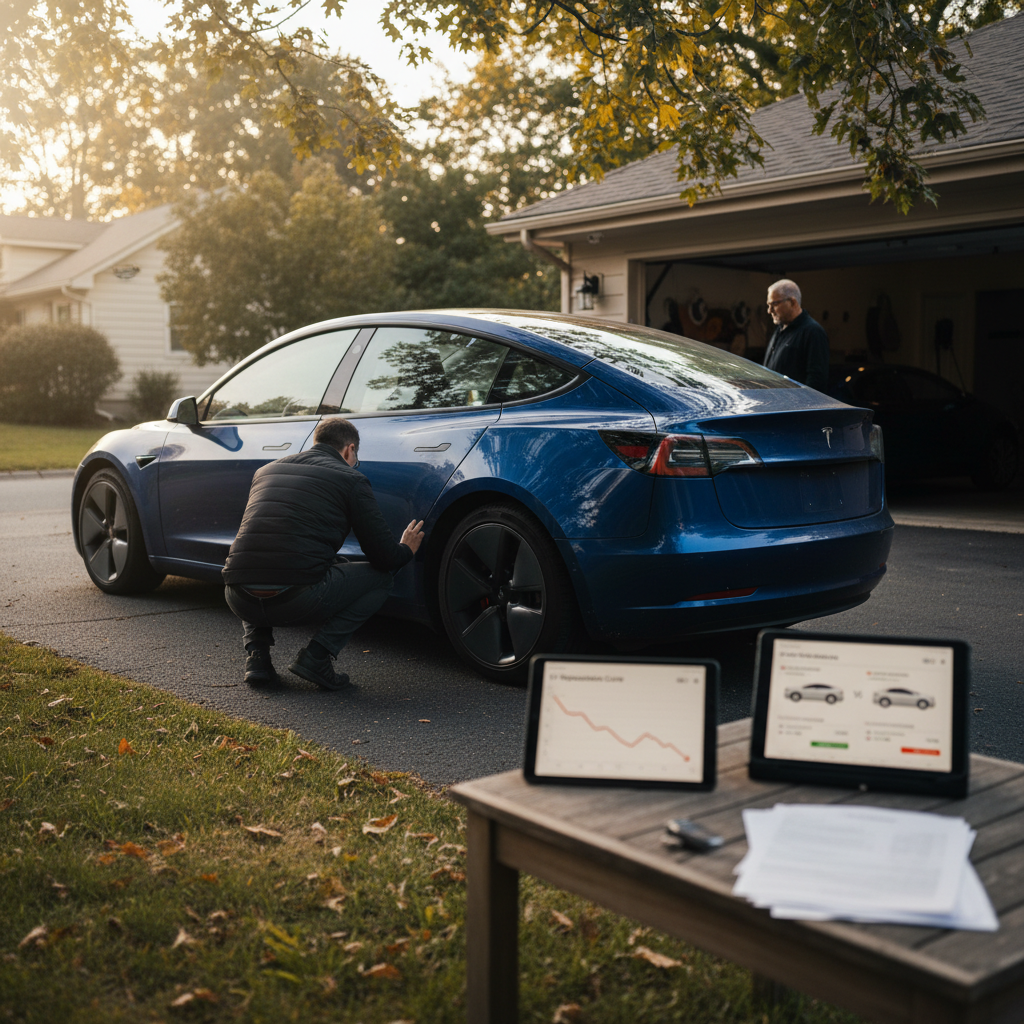
If you’re trying to pin down Chevy Bolt EUV resale value in 2025, you’re not alone. The Bolt EUV sits in a strange spot: it’s discontinued, it had a major battery recall, but it’s also one of the most affordable long-range EVs you can buy used. That combination creates real opportunity for buyers, and a few surprises for sellers.
Key context for 2025
Chevy Bolt EUV resale value in 2025: quick overview
Bolt EUV resale value snapshot for 2025
Across the U.S. used‑EV market in early 2025, the Chevy Bolt EUV generally lands in the “strong value, moderate resale” camp. It doesn’t hold value as fiercely as a Tesla Model 3, but it depreciates less harshly than many luxury EVs. For shoppers, that means a lot of EV for the money; for sellers, it means pricing realistically and highlighting battery health is critical.
Rule of thumb
What used Chevy Bolt EUVs are actually selling for in 2025
List prices move week to week, but multiple data sources plus live listings paint a consistent picture for the Chevy Bolt EUV in 2025. Here’s where values tend to shake out for typical retail transactions, not fire‑sale deals and not pie‑in‑the‑sky asking prices.
Typical Chevy Bolt EUV asking prices in 2025
Approximate retail price bands for used Bolt EUVs sold by dealers in the U.S. Your local market, mileage, and condition can nudge these up or down.
| Model year | Typical mileage in 2025 | Common price band (dealer retail) | Notes |
|---|---|---|---|
| 2022 Bolt EUV | 25,000–55,000 miles | $18,000–$24,000 | Early facelift cars; pricing varies a lot with fast‑charge option and recall history. |
| 2023 Bolt EUV | 10,000–45,000 miles | $21,000–$28,000 | Last model‑year of this generation; often at the top of the Bolt/Bolt EUV price range. |
| Older Bolt EV (2017–2021) | 40,000–90,000 miles | $13,000–$22,000 | Not the EUV, but sits just below it in the market; good reference for shoppers cross‑shopping both. |
Price ranges assume clean title, no open recalls, and normal wear for mileage.
Third‑party valuation tools show 2022 Bolt EUV LT models with typical mileage trading in the mid‑teens to low‑$20,000s, while 2023 cars, especially Premier trims, can reach into the high‑$20,000s at retail. Real‑world listings regularly show 2022–2023 EUVs in the high‑teens if miles are higher or equipment is sparse, and in the mid‑$20,000s when mileage is low and options are strong.
Private party vs. dealer pricing
How much has the Chevy Bolt EUV depreciated?
When you look at resale value, you’re really asking how much the car has depreciated from its original sticker. The Bolt EUV launched with MSRPs in the low‑$30,000s to low‑$40,000s, depending on trim and options, then saw aggressive price cuts in 2022 and 2023. By now, most first‑gen Bolt EUVs have taken their biggest hit.
- A typical 2022 Bolt EUV that originally stickered in the low‑ to mid‑$30,000s often retails in the high‑teens to low‑$20,000s in 2025.
- A well‑equipped 2023 Premier or Redline Edition that listed around the low‑$30,000s when new can easily sit in the low‑ to high‑$20,000s today, depending on miles and condition.
- Across the broader Bolt/Bolt EUV family, many owners have seen roughly 30–40% depreciation from original MSRP after a few years on the road.
How Bolt EUV resale compares to other EVs
5 big factors that move Chevy Bolt EUV resale value
Every individual Bolt EUV has its own story, but five factors consistently move the needle on what your car is worth: model year, mileage, battery health, equipment, and how clean its history is. Understanding these levers helps you price a car you’re selling, or evaluate whether a listing you’re eyeing is fairly priced.
What most affects Bolt EUV value?
Five levers buyers and sellers should pay attention to.
1. Model year
2. Mileage
3. Battery health
4. Charging & options
5. History & recalls
6. Local demand
Use multiple data points, not just one
Battery health, recalls, and how they impact value
The Bolt EUV story can’t be told without the battery recall. GM replaced or repaired packs in large numbers of Bolt and Bolt EUV vehicles after fire‑risk concerns. In 2025, most cars in the market have already been addressed, but buyers still ask about it, and documentation of completed recall work directly affects resale value.
What buyers want to see
- Recall proof: Service paperwork from a Chevy dealer confirming battery recall work is completed.
- Battery health report: A third‑party or dealer report that quantifies usable capacity rather than just showing a graphic on the dash.
- Normal degradation: A car that still delivers range close to its original EPA estimate in mixed driving.
What hurts value
- Open recalls: A seller who can’t prove the recall has been done will see less interest and lower offers.
- Unexplained range loss: A Bolt EUV whose real‑world range has dropped significantly below expectations raises red flags.
- Poor charging behavior: Sluggish DC fast‑charge rates or frequent charge‑limit warnings can scare off informed buyers.
How Recharged helps de‑risk battery questions
Ready to find your next EV?
Browse VehiclesSelling a Chevy Bolt EUV in 2025: how to get top dollar
If you’re on the selling side, think like a skeptical buyer. They’re worried about range, charging, and repair history. Your job is to answer those doubts before they ask, and to position your car so it stands out from dozens of other Bolt EUV listings that all look similar on paper.
Selling your Bolt EUV: prep checklist
1. Gather battery and recall records
Print or download service invoices that prove recall work is complete and show any battery‑related checks. If you have a third‑party battery test or Recharged Score Report, put it front and center in your listing.
2. Highlight charging capabilities
Make it clear whether your Bolt EUV has DC fast charging and include photos of the charge port. Mention any home charging equipment you’re including in the sale.
3. Document software and feature status
Note whether Super Cruise, driver‑assist features, or over‑the‑air updates are active. Buyers like to know they’re getting the latest firmware where applicable.
4. Recondition the basics
A detailed interior, fresh windshield wipers, and recent tire rotation don’t move book value, but they help your car justify the upper end of the price range.
5. Set price based on your market, not averages
Start by checking price bands, then narrow down to comparables in your region with similar mileage and equipment. Overpricing by even $1,500 can cause a listing to sit.
6. Consider professional help
If you don’t want to manage photos, test drives, and negotiation, look at EV‑specialist marketplaces like Recharged that offer <strong>instant offers, trade‑ins, or consignment</strong> with nationwide reach.
Avoid these common seller mistakes
Buying a used Bolt EUV in 2025: smart shopper checklist
From the buyer’s side, the Chevy Bolt EUV in 2025 can be one of the best value plays in the EV market, if you focus on the right car, not just the lowest price. Here’s how to separate solid long‑term bets from question marks.
Must‑do checks before you buy
1. Verify recall completion by VIN
Run the VIN with a Chevy dealer or reputable marketplace to confirm all battery recalls and safety campaigns are complete. Walk away from cars with open high‑voltage battery recalls unless you’re fully comfortable navigating the repair process.
2. Get objective battery health data
Don’t rely on a screenshot of the range estimate alone. Ask for a third‑party battery report, capacity estimate, or a Recharged Score Report that quantifies battery health.
3. Test both Level 2 and fast charging
If possible, plug into a Level 2 charger and a DC fast charger before you sign. You want to see normal charge rates and no unexpected warnings on the dash.
4. Check for DC fast‑charge hardware
Not every early Bolt had DC fast‑charging capability standard. Confirm your EUV has the hardware if frequent road trips are in your plan.
5. Evaluate total cost of ownership
Combine purchase price with insurance, local electricity rates, and potential tax credits or state rebates on used EVs. A slightly higher price for a healthier battery can still be the cheaper car over time.
6. Use EV‑savvy inspection and financing
Use services that understand EVs. Recharged, for example, offers EV‑specialist support, financing options, and battery‑focused inspections designed specifically for used electric vehicles.
Leverage used‑EV incentives where available
Future outlook: will Bolt EUV values hold up?
Looking ahead from 2025, the Bolt EUV sits at an inflection point. The first‑generation Bolt EV and EUV are out of production, and GM has already previewed a next‑generation Bolt built on its Ultium platform with faster charging, NACS ports, and updated tech. That future product will eventually put some downward pressure on today’s cars, but the timing and magnitude of that impact are nuanced.
For current owners
- Short term (2025–2026): Expect fairly stable values with normal EV depreciation, as demand for affordable EVs remains strong and many buyers prioritize price over the latest tech.
- Medium term: As the next‑gen Bolt with Ultium batteries and NACS access reaches volume, older Bolt EUVs may see a second step‑down in value, especially high‑mileage examples.
- Upside scenario: If new‑EV prices stay high and charging infrastructure continues to improve, clean, low‑mile Bolt EUVs could hold a solid floor as the "budget long‑range" option.
For shoppers in 2025
- Great timing for value: The largest depreciation hit is largely behind these cars, which means you’re less exposed to big percentage drops, especially if you buy carefully.
- Think exit strategy: If you plan to own the car 3–5 years, favor lower‑mileage, well‑optioned examples with clean battery reports, they’ll be easier to resell.
- Watch new‑model timing: If you’re price‑sensitive, keep an eye on when the redesigned Bolt hits showrooms; that’s often when used values adjust.
Where Recharged fits into the picture
Chevy Bolt EUV resale value 2025: FAQ
Frequently asked questions about Bolt EUV resale in 2025
The bottom line for Chevy Bolt EUV resale value in 2025 is simple: this isn’t a speculative collector car, but it is one of the most rational plays in the used‑EV space. Depreciation has made it accessible, yet demand for practical, affordable EVs keeps a firm floor under clean, well‑documented examples. If you treat battery health and recall history as first‑class priorities, whether you’re buying or selling, you can come out ahead of the broader market. And if you’d rather not navigate that process alone, Recharged is built to do the heavy lifting, from valuation to battery diagnostics to delivery.