If you’re looking at a Chevy Bolt EUV, you’ve probably seen the 247‑mile EPA rating and wondered what that really means at 70 mph in the right lane with the cruise set. On the highway, **real‑world range** is always lower than the sticker, and understanding how much lower, and why, lets you decide whether a Bolt EUV fits your daily commute or your next road trip.
Quick answer: real-world highway range
Chevy Bolt EUV range basics: EPA vs reality
The Chevy Bolt EUV uses a **65 kWh battery pack** (about 61–62 kWh usable) and carries an **EPA combined range rating of 247 miles**. That number is based on a mix of city and highway driving under controlled test conditions, not a sustained 70–75 mph cruise.
Chevy Bolt EUV key range and efficiency numbers
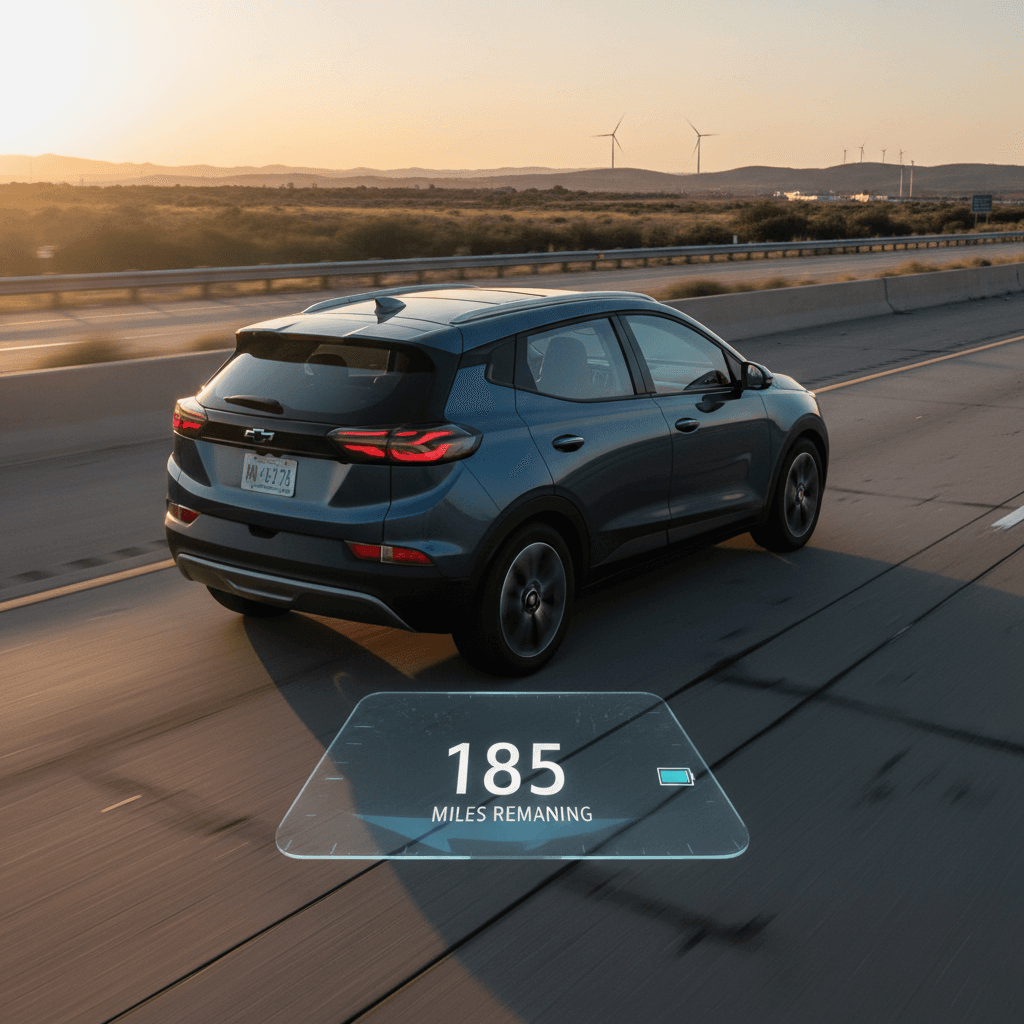
In independent testing, a Bolt EUV managed around **190 miles in a 75‑mph highway loop** from 100% down to near empty. That’s roughly a **23% drop vs the 247‑mile EPA rating**, which is right in line with what many EVs experience at true highway speeds.
Why highway range is lower than the EPA number
Real-world Chevy Bolt EUV highway range at 65–75 mph
Put the numbers aside for a minute and think like an owner. You leave home at 100%, you get on the interstate, you set the cruise control, and you want to know: **How far can I comfortably go before I need to stop?** Here’s a realistic way to think about Chevy Bolt EUV real-world range on the highway.
Estimated Chevy Bolt EUV highway range by speed (mild weather, new battery)
These are practical, real-world planning numbers based on reported energy use and independent range tests, starting near 100% charge and arriving close to empty.
| Cruising speed | Typical efficiency (mi/kWh) | Approx. usable energy | Estimated highway range |
|---|---|---|---|
| 60 mph | 4.0–4.2 | ~61 kWh | 240–255 miles |
| 65 mph | 3.6–3.9 | ~61 kWh | 220–235 miles |
| 70 mph | 3.1–3.5 | ~61 kWh | 190–215 miles |
| 75 mph | 2.9–3.2 | ~61 kWh | 175–195 miles |
Use the conservative end of each range band for trip planning, especially in unfamiliar conditions.
Owner reality check
Remember that you rarely want to run from 100% all the way to 0% on a road trip. If you plan around **80% of the battery (say 10–90%)**, at 70 mph you’re usually looking at something like **150–170 comfortable highway miles between fast‑charge stops** in good conditions.
How weather, terrain, and cargo change your highway range
Speed is only half the story. The Chevy Bolt EUV is efficient, but like every EV, its **real‑world highway range** swings noticeably with weather, elevation, and how much you’re hauling. That’s especially true if you live in the northern half of the U.S.
Biggest factors that change your Chevy Bolt EUV highway range
Same car, same route, very different numbers depending on conditions.
Temperature
Mild weather (60–75°F) is where the Bolt EUV shines. Cabin heat and A/C draw very little, and the battery is in its comfort zone.
In winter below freezing, the cabin heater and battery warming can easily eat 10–25% of your highway range, sometimes more on short hops.
Terrain & wind
Long, steady climbs at 70 mph can chew through range quickly; you’ll win some of it back downhill, but not all.
Headwinds behave just like adding speed. A 20 mph headwind at 65 mph is a lot like driving 75+ mph in still air.
Weight & roof loads
Fully loaded with passengers and cargo? Expect a modest range hit.
Roof boxes and bike racks are worse than weight alone because they add drag. On a tall hatch like the EUV, you can give up another 5–15% on the highway.
Cold-weather highway reality
Example: Mild-weather highway run
You start at 95% on a 65°F day, set cruise at 70 mph, and drive on mostly flat interstate.
- Efficiency: around 3.3 mi/kWh
- Usable pack: ~61 kWh
- Estimated range: ~200 miles from near full to very low
Plan conservative legs of 150–170 miles, and you’ll arrive with a comfortable buffer.
Example: Cold, windy day
Same route, but it’s 25°F with a stiff headwind.
- Efficiency can fall to 2.3–2.7 mi/kWh
- Estimated range: maybe 140–165 miles 100–0%
- 10–90% usable window: 110–130 miles between fast charges
On a cold‑weather road trip, more frequent, shorter charging stops are often the smarter play.
Battery age, degradation, and used Bolt EUV highway range
If you’re shopping for a **used Chevy Bolt EUV**, you’re right to ask how battery age and mileage change real‑world highway range. The good news: modern EV packs, including the Bolt EUV’s, tend to lose range **slowly, often just a few percent in the first several years** when cared for reasonably well.
What to expect from an older Bolt EUV battery
Approximate, real-world patterns, not guarantees, for highway range over time.
0–3 years, low miles
Many Bolt EUVs in their first few years still behave very close to new.
- Typical loss: roughly 0–5% total range
- Highway legs at 70 mph drop from ~200 to ~190–195 miles full‑to‑empty
3–6 years, moderate miles
Well‑used cars that see daily driving may show a more noticeable but still manageable drop.
- Typical loss: around 5–10% in many cases
- That 70‑mph leg might look more like 175–190 miles
Warranty safety net
The Bolt EUV battery carries an 8‑year/100,000‑mile warranty from new. If a pack has abnormal degradation or defects, it may qualify for repair or replacement under that coverage.
Why used Bolt EUV range varies so much
If you’re comparing used Bolt EUVs, look for **hard data** instead of guessing. That’s exactly why Recharged includes a Recharged Score battery health report with every vehicle we sell, it uses diagnostics to show you estimated usable capacity and range so you know whether that car will still deliver the highway legs you need.
Planning a highway road trip in a Bolt EUV
The Chevy Bolt EUV wasn’t built to be a cross‑continent cruiser like a big‑battery luxury EV, but it can absolutely handle long highway trips if you plan with its **real‑world range and charging speed** in mind.
A note on DC fast charging speed
Step-by-step: planning a realistic Bolt EUV highway route
1. Start with conservative range assumptions
For 70–75 mph driving in fair weather, plan legs of **140–160 miles** using about 70–80% of the pack. In winter or heavy rain, shorten that to 100–130 miles until you see what your car is really doing.
2. Use EV‑aware route planners
Apps like PlugShare, A Better Routeplanner, and most in‑car navigation systems can estimate consumption and find DC fast chargers along your route. Plug in a **Chevy Bolt EUV profile** and set your preferred arrival buffer (often 10–15%).
3. Prioritize reliable networks and 50 kW+ chargers
Because your max DC rate is modest, you want **dependable 50 kW or faster stations**. In many parts of the U.S., that means targeting well‑maintained networks and avoiding old, low‑power equipment when you can.
4. Plan around food and rest breaks
Instead of treating charging as dead time, align it with meals, coffee stops, and stretch breaks. A **35–45 minute 10–80% session** can line up perfectly with lunch and turn a limitation into a non‑issue.
5. Add extra margin in bad weather
If a leg looks tight on a cold or stormy day, don’t be a hero. Either slow down 5 mph, add an intermediate stop, or both. The Bolt EUV will reward your caution with a less stressful drive.
6. Test your route locally first
Before a big trip, try a **mini‑road trip** on a familiar corridor. Start at 80–90%, drive 80–100 highway miles, and see what the car reports for remaining range and mi/kWh. Use that as your personal baseline.
Practical ways to stretch Bolt EUV range on the highway
You don’t have to crawl in the slow lane to get decent range out of a Chevy Bolt EUV on the highway. Small, sensible changes can buy you another **10–30 miles** per charge, enough to skip a stop or arrive with a healthy buffer.
Five simple ways to improve Chevy Bolt EUV highway range
None of these require hypermiling, just a little attention and a light touch.
Use cruise control smartly
On flat ground and in light traffic, cruise control keeps speed and energy use steady. In heavy traffic or rolling hills, it can overreact and waste energy, so sometimes it’s better to drive manually and anticipate changes.
Dial back your speed a bit
Dropping from **75 to 68–70 mph** is often worth 10–20 extra miles of range. On a long day, that can turn three charging stops into two or keep you from rolling in on fumes.
Be smart with climate control
Use the **seat and steering‑wheel heaters** first, which sip power, and set cabin temp a few degrees cooler in winter or warmer in summer. Preheat or precool while plugged in so the battery doesn’t have to do the hardest work on the highway.
Watch the energy screen
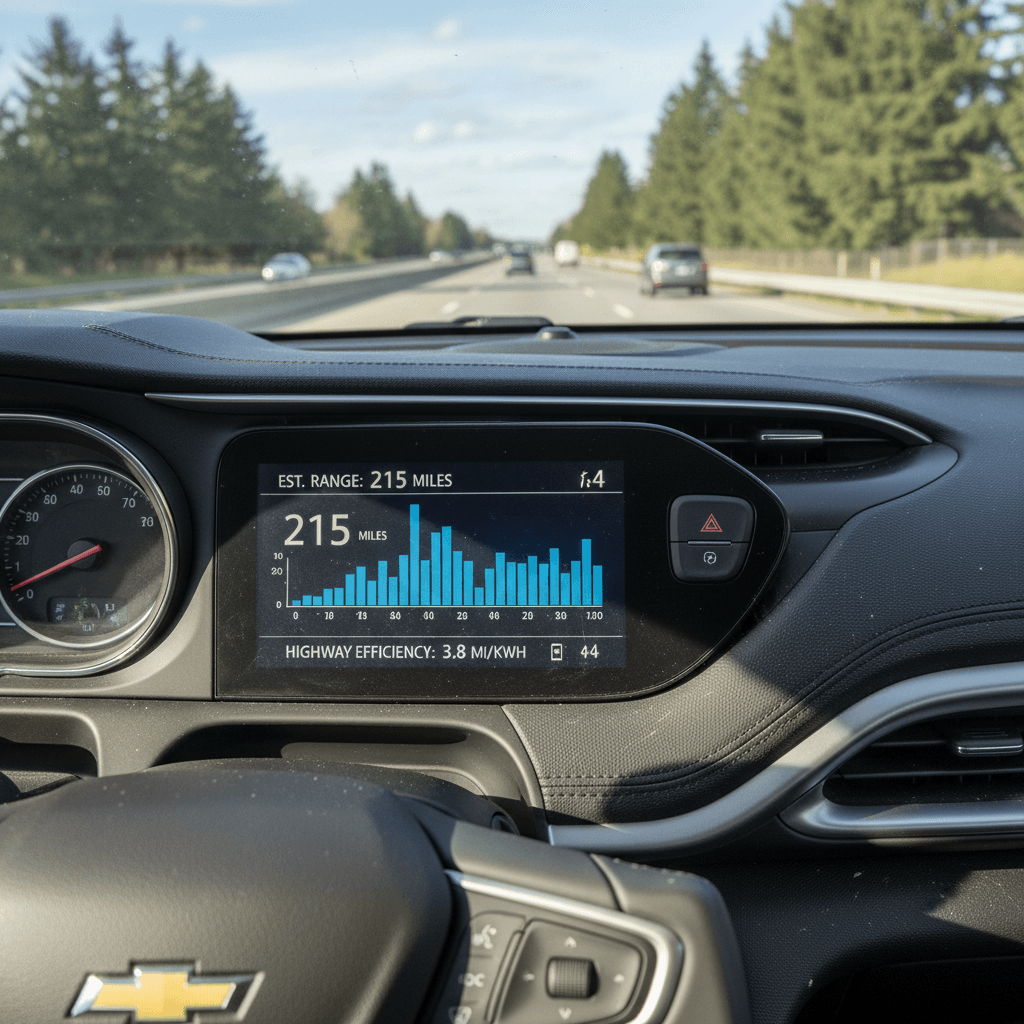
Keep an eye on your live **mi/kWh readout**. If it’s sagging below your target, back off the speed a touch or tuck in behind slower traffic. You’ll learn quickly how the car responds to different conditions.
Mind roof racks and cargo
Take off empty roof boxes and racks when you’re not using them. On a tall profile like the Bolt EUV, they can cost you a surprising amount of range at 70 mph.
Aim for “shorter but slower”
Sometimes a slightly slower route with more 55–65 mph stretches beats a higher‑speed interstate in overall time, because you’ll need fewer or shorter charging stops.
Good news for everyday driving
Is the Chevy Bolt EUV’s highway range right for you?
Great fit if this sounds like you
- You typically drive under 60–80 highway miles a day and charge at home.
- Your longer trips are occasional weekends, not weekly epic drives.
- You don’t mind planning **140–160‑mile legs** and taking 35–45 minute breaks on longer journeys.
- You value an affordable EV with solid range more than blistering charging speeds.
Might not fit if this is your routine
- You regularly do **250+ highway miles in one shot** and need to minimize stops.
- You drive frequently in **extreme cold** without home charging, and range buffers are tight.
- You want to drive **80+ mph** for long stretches and still skip charger stops.
- You’re allergic to planning and just want to “set and forget” long trips like a gas car.
If your life is built around daily commuting, kid hauling, and the occasional interstate run, the Chevy Bolt EUV offers **very livable real‑world highway range**, especially for the price of a new or used example. And if you’re considering a **used Bolt EUV**, a marketplace like Recharged that provides a verified battery health report and expert EV guidance makes it much easier to know exactly what kind of range you’ll get on your own highways before you ever sign the paperwork.