If you drive, or are thinking about buying, a Chevy Bolt EUV, understanding the battery warranty isn’t just a technical detail. It’s the key to knowing your long‑term costs, how GM will stand behind the car, and what protection you still have if you’re shopping used. In this guide, we’ll break down the Chevy Bolt EUV battery warranty details in plain English so you know exactly what’s covered, for how long, and where recall batteries fit in.
Quick takeaway
Chevy Bolt EUV battery warranty at a glance
Bolt EUV core warranty numbers
For 2022–2023 Chevy Bolt EUV models sold in the U.S., GM provides an Electric Propulsion Battery Limited Warranty that runs for 8 years or 100,000 miles, whichever comes first, from the vehicle’s original in‑service date. This is separate from, and longer than, the standard 3‑year/36,000‑mile bumper‑to‑bumper coverage and the 5‑year/60,000‑mile powertrain and roadside assistance coverage that also apply to the vehicle.
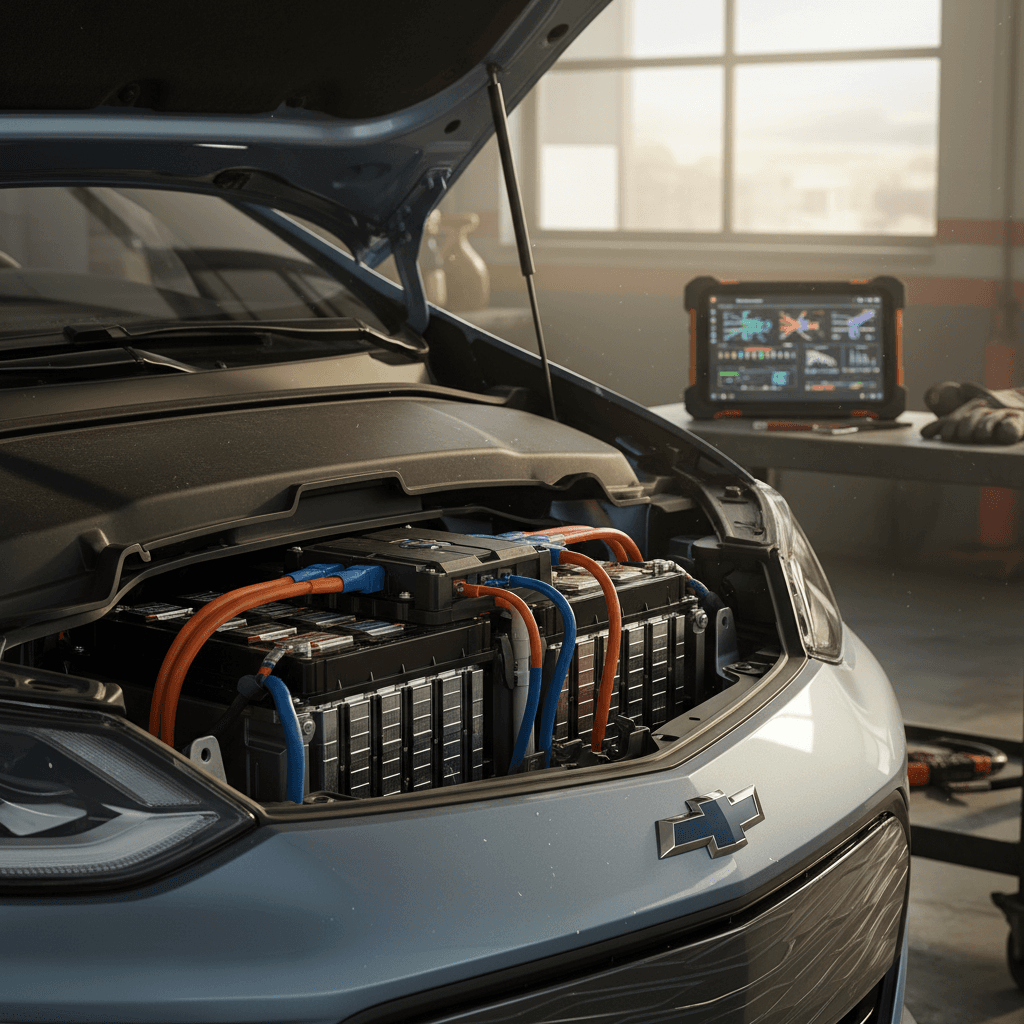
- High‑voltage battery pack (drive motor battery) and internal modules
- Battery pack control modules and high‑voltage contactors/relays
- High‑voltage charging and propulsion components that are part of the EV system
- Towing to the nearest Chevy dealer if a covered battery defect disables the vehicle (within warranty limits)
Watch the start date
What the 8‑year/100,000‑mile battery warranty actually covers
GM’s language can sound dry, but in practice the Chevy Bolt EUV battery warranty is meant to protect you from defects in materials or workmanship in the high‑voltage battery and related electric propulsion components. Here’s how that plays out in real life.
Battery warranty coverage in practical terms
Think in terms of defects, not wear‑and‑tear
What’s typically covered
- Internal cell defects that trigger warnings like “Reduced propulsion power” or prevent charging.
- Manufacturing flaws causing sudden range loss or the car refusing to go into Drive.
- Faulty high‑voltage contactors or modules inside the pack.
- Diagnostic and replacement labor when GM authorizes a repair or pack swap.
What’s usually not covered
- Damage from collisions, flooding, or other accidents.
- Owner modifications to the battery or high‑voltage system.
- Improper use of the vehicle, such as track abuse outside its design intent.
- Normal battery capacity loss over many years, unless GM specifies otherwise in writing.
If an authorized Chevy dealer confirms a warrantable battery defect within the 8‑year/100,000‑mile window, GM will typically either repair the pack or replace modules or the entire battery at no charge, including labor. In many Bolt EUV cases, especially when recall‑related or involving serious internal faults, owners have received full pack replacements rather than small repairs.
Document your symptoms
How Bolt EUV coverage fits into Chevy’s overall EV warranty
Core Chevy EV warranties
- 3 yr / 36,000 mi Bumper‑to‑Bumper – Covers nearly everything on the car for defects, including tech features and interior components.
- 5 yr / 60,000 mi Powertrain & Roadside Assistance – For EVs, this supports the electric drive system and includes roadside help.
- 8 yr / 100,000 mi Propulsion Battery – Longest‑running coverage focused on the high‑voltage battery and key EV components.
What this means for you
- In the first 3 years/36,000 miles, almost any defect, from a bad screen to a battery fault, is usually under the umbrella of the bumper‑to‑bumper warranty.
- From years 4–8, coverage narrows; most cosmetic or electronic issues are out of warranty, but the high‑voltage battery is still protected against qualifying defects.
- If you’re buying used, you’re usually relying primarily on that remaining battery warranty plus any extended service contracts.
Check the fine print
Does the Bolt EUV battery warranty cover degradation?
One of the most common questions around Chevy Bolt EUV battery warranty details is whether GM guarantees a certain percentage of battery capacity, similar to how some other automakers promise that the pack won’t fall below 70% within the warranty period. As of early 2026, Chevy’s Bolt EV and Bolt EUV documentation in the U.S. emphasizes coverage for defects, not a hard minimum capacity number.
- Chevy does not publish a simple, across‑the‑board “70% capacity” promise for Bolt EUV batteries in the U.S.
- Gradual range loss over many years is treated as normal wear, like tire tread or brake pads wearing down.
- Severe, sudden, or early‑life range loss may be investigated as a defect, especially when accompanied by fault codes or warning messages.
Set expectations on range
Recall battery replacements and when the warranty “resets”
The Bolt EV and EUV battery recall created understandable confusion about warranty coverage. It’s important to separate recall‑driven replacements from ordinary warranty repairs because the warranty treatment can be different.
How recall vs. standard warranty battery replacements differ
High‑level summary for Bolt EV/EUV owners and used buyers
| Replacement type | Typical situation | Battery warranty impact | What to check |
|---|---|---|---|
| Recall replacement | Battery replaced under GM’s safety recall campaigns on earlier Bolt EV/EUV vehicles | Often received a new 8‑year/100,000‑mile warranty on the replacement pack as a GM Service Replacement Parts Limited Warranty | GM owner site or dealer warranty screen should show a later battery warranty expiration date tied to the replacement |
| Standard warranty replacement | Battery replaced because of a fault detected during normal 8‑yr/100k coverage, not under recall | Usually inherits the remainder of the original battery warranty, or a short additional parts warranty | Warranty look‑up will typically still show the original 8‑year/100k window from the vehicle’s in‑service date |
| Out‑of‑pocket replacement | Battery purchased and installed after the original warranty has expired | Covered under GM’s parts warranty terms (often shorter, e.g., 3 years) rather than a full new 8‑year vehicle battery warranty | Work order invoice and parts warranty documentation from the installing dealer |
Policy details are ultimately controlled by GM; always verify by VIN for a specific car.
VIN is your best friend
Real‑world scenarios: what is and isn’t covered
Common Bolt EUV scenarios and likely coverage
1. “Reduced propulsion power” message at 60,000 miles
If diagnostics point to an internal battery fault and you’re within 8 years/100,000 miles, this is <strong>exactly</strong> the type of issue the battery warranty is meant to cover. Owners in this situation have often received full pack replacements once GM confirms the problem.
2. Slow, gradual range loss over 7–8 years
If your Bolt EUV slowly drifts from, say, 247 miles of EPA‑rated range to something moderately lower with no warning lights, GM is likely to treat this as <strong>normal degradation</strong>. The warranty is less likely to apply unless diagnostics show a defect.
3. Battery issues after flood or collision damage
If a flood, deep water, or crash damages the pack, that’s generally handled by <strong>insurance</strong>, not the battery warranty. GM can deny coverage for damage caused by external events, even if the car is still within the 8‑year/100k window.
4. “Check engine” light after aftermarket modifications
Modifications to high‑voltage wiring, non‑approved battery work, or other significant alterations can give GM grounds to <strong>deny battery‑related warranty claims</strong>. Cosmetic mods are usually fine, but anything that touches the HV system is risky for warranty coverage.
5. Out‑of‑warranty owner sees sudden failure
Once you’re beyond <strong>both</strong> 8 years and 100,000 miles, the factory battery warranty is over. GM occasionally offers goodwill assistance case‑by‑case, but there’s no guarantee, assume you’re on the hook unless you have an extended service contract that explicitly covers the battery.
Don’t skip dealer diagnostics
Used Bolt EUV buyers: how to check remaining battery warranty
If you’re shopping a used Bolt EUV, especially a 2022 or 2023 model, you’re buying into the remaining portion of that 8‑year/100,000‑mile battery warranty. Done right, this can be a huge value because you get modern EV tech with years of coverage still on the clock.
Used Bolt EUV battery‑warranty due diligence
1. Find the original in‑service date
Ask the seller or a Chevy dealer for the vehicle’s <strong>in‑service date</strong> (sometimes called “warranty start date”). Subtract that from today to see how much of the 8 years remain.
2. Confirm current mileage
Battery coverage runs to <strong>100,000 miles</strong>. A 2022 Bolt EUV with 72,000 miles has 28,000 miles of battery warranty left, even if it still has several years on the calendar.
3. Run the VIN through GM owner tools
Have the seller show you the warranty screen from GM’s online owner portal or ask a Chevy service advisor to print the <strong>Applicable Warranties</strong> page. Look for any note about a <strong>replacement battery warranty</strong> and its expiration.
4. Ask specifically about recall work
Find out whether the car ever had battery recall work or pack replacement, and request service records. This can clarify whether the car has a <strong>restarted 8‑year/100k battery warranty</strong> tied to a recall pack, or just the original coverage.
5. Test‑drive and charge
Start with a reasonably high state of charge and take a meaningful drive, then charge the car (Level 2 or DC fast if possible). Look for any charging problems, unusual noises from the pack area, or warning messages.
6. Get an independent EV‑focused evaluation
If you’re not buying from a specialist, consider a <strong>third‑party EV inspection</strong> or a seller like <strong>Recharged</strong> that provides a battery health report. For many used‑EV shoppers, this is the single most important data point.
How Recharged handles Bolt EUVs
Ready to find your next EV?
Browse VehiclesHow to protect your Bolt EUV battery (and its warranty)
The best battery warranty is the one you never have to use. Day‑to‑day habits can’t eliminate degradation, but they can slow it, and they help keep you clearly inside GM’s recommended use patterns if you ever need to make a claim.
Bolt EUV battery care best practices
Good for range, good for peace of mind
Avoid 0% & 100% extremes daily
Use DC fast charging strategically
Be kind in extreme temps
Keep software up‑to‑date
Drive smoothly when possible
Stick to the manual
Planning to store the car?
How Recharged helps you shop Bolt EUVs with confidence
Battery questions are the number‑one reason many shoppers hesitate on a used EV. That’s exactly why Recharged was built, to make the used EV buying process transparent, especially for models like the Chevy Bolt EUV that depend heavily on a healthy pack and solid warranty coverage.
- Every vehicle on Recharged includes a Recharged Score Report with objective battery‑health diagnostics, not just a guess at “good” or “bad.”
- We verify factory warranty status where available, including remaining battery warranty and any recall‑related replacements shown in GM’s systems or service history.
- EV‑specialist advisors can explain what an 8‑year/100,000‑mile battery warranty really means in your situation and help you compare a Bolt EUV against other EVs in your budget.
- Financing, trade‑in, and nationwide delivery are built around a fully digital buying experience, with an Experience Center in Richmond, VA if you’d like to see select vehicles in person.
Thinking about a Bolt EUV?
Chevy Bolt EUV battery warranty FAQs
Frequently asked questions
The Bolt EUV’s 8‑year/100,000‑mile battery warranty is one of the biggest reasons it’s such a compelling EV, new or used. But to really benefit from it, you need to understand what it covers, how recall replacements are treated, and how much protection is left on any specific car you’re considering. With clear warranty details, solid battery‑care habits, and objective health data, like the Recharged Score Report, you can shop, buy, and drive a Chevy Bolt EUV with the kind of confidence most used‑car shoppers never get.