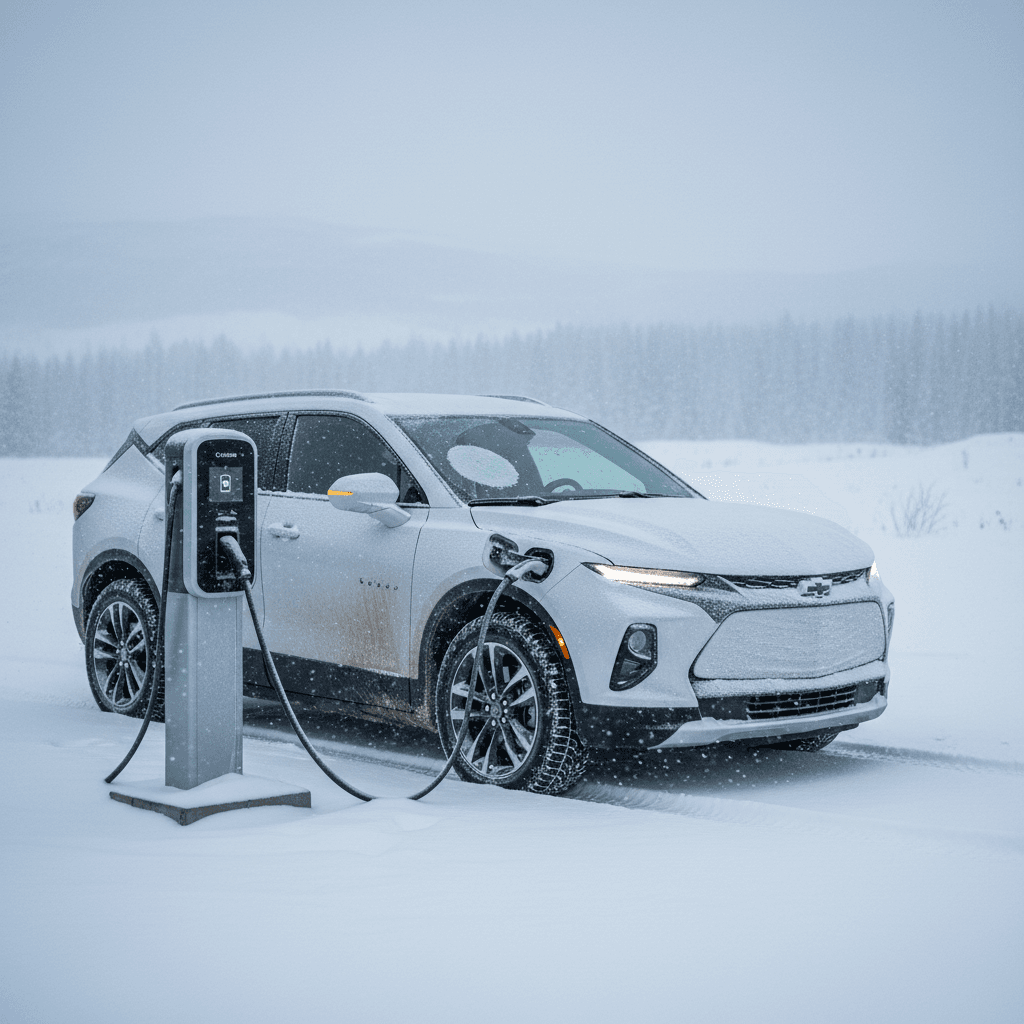
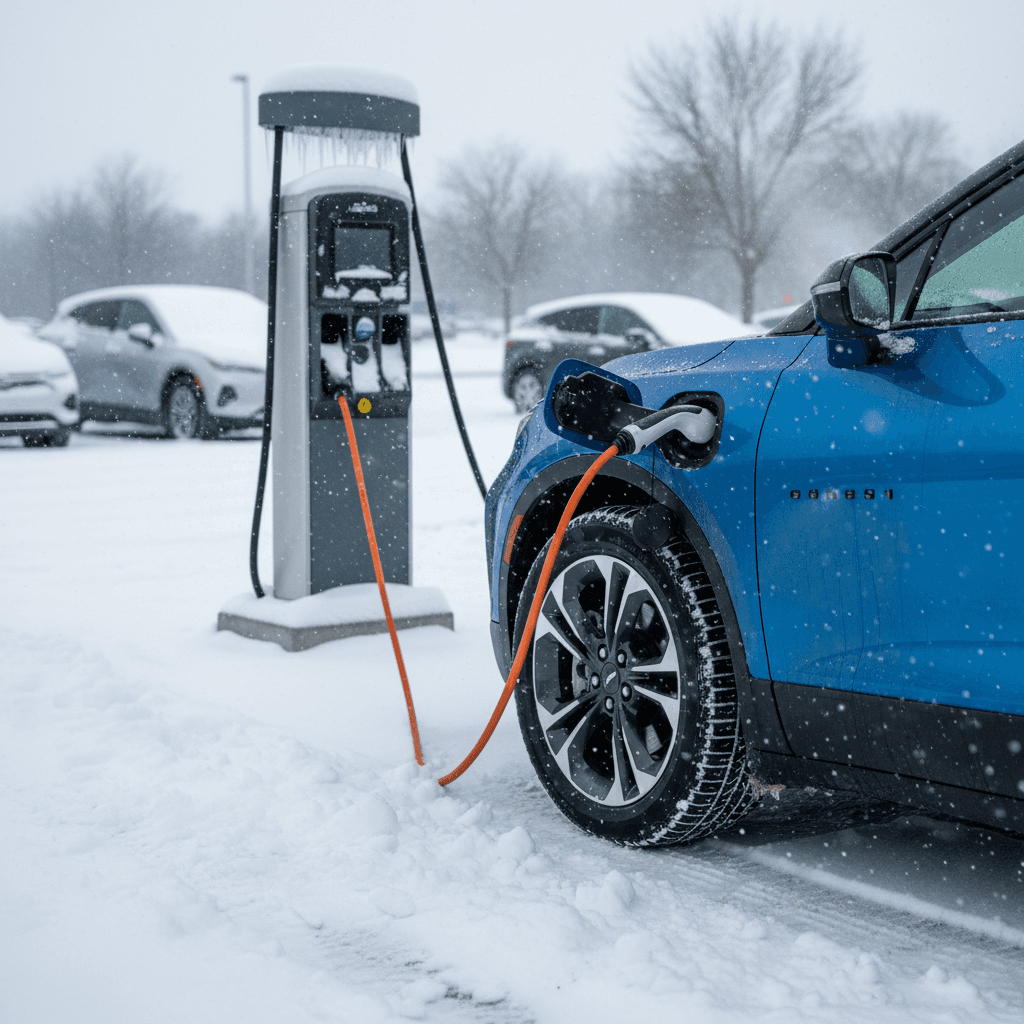
If you own or are eyeing a Chevy Blazer EV, you’ve probably heard that cold weather can hammer EV range. Chevy Blazer EV winter range loss is real, but it’s also predictable and manageable once you understand what’s happening and how to drive around it, literally.
Quick context
Chevy Blazer EV winter range loss at a glance
Blazer EV range: lab vs. winter reality
Real owners report that their Blazer EV AWD can often match or even slightly exceed EPA range in mild weather at moderate speeds. In winter, especially below freezing and at 65–75 mph, many see roughly a quarter to a third of their rated range disappear until conditions improve.
Don’t compare EPA to January at 75 mph
EPA range vs. real-world Blazer EV winter range
First, it helps to anchor on what the Blazer EV is rated to do when conditions are friendly. Exact numbers vary by year and trim, but the broad picture is similar:
Chevy Blazer EV EPA-rated range by configuration
Representative EPA range figures for recent Blazer EV model years. Always check the window sticker or EPA label for the exact vehicle you’re looking at.
| Model year & trim | Drive type | EPA combined range | Notes |
|---|---|---|---|
| 2024 Blazer EV RS | AWD | ~279 miles | Ultium platform, strong performance focus |
| 2024 Blazer EV LT | AWD | ~279 miles | Similar pack, more efficiency-oriented tuning |
| 2024 Blazer EV RS | RWD | ~320–324 miles | Highest EPA range in early lineup |
| 2025–2026 Blazer EV LT/RS | FWD | Up to ~312 miles | Chevy cites 312 miles with FWD in latest marketing |
| 2025–2026 Blazer EV SS | AWD | ~302–303 miles | Performance variant, slightly lower range than FWD trims |
These are official ratings under standardized conditions, not guaranteed real-world numbers, especially in winter.
Independent instrumented testing of a 2024 Blazer EV RS AWD returned about 200 miles of highway range at a steady 75 mph in mild conditions, roughly 70% of its EPA score. That’s a useful benchmark for what fast highway driving does even before you add freezing temperatures into the mix.
Owner reports add more color. Some LT and RS AWD drivers see 300+ miles indicated in summer at a full charge with typical mixed driving. In deep winter, that same vehicle might only show an estimated 180–220 miles, with actual usable range tracking that estimate fairly closely on longer drives.
A simple rule of thumb
Why the Blazer EV loses range in cold weather
The Blazer EV sits on GM’s Ultium platform, but it follows the same physics as every other EV when temperatures fall. Winter range loss comes from three big buckets: chemistry, comfort, and conditions.
Three main drivers of Blazer EV winter range loss
Chemistry, comfort, and conditions all take a bite out of your miles.
1. Cold battery chemistry
2. Cabin heating & comfort
3. Air density & rolling losses
Ultium specifics
How much winter range loss to expect in a Blazer EV
Real‑world owner stories and testing paint a consistent picture. While exact numbers vary, most Blazer EV drivers will see a noticeable but manageable hit in light winter, and a much bigger one in deep cold, especially at highway speeds.
Typical Chevy Blazer EV winter range loss scenarios
Approximate, directional guidance based on owner feedback and EV testing norms, your numbers will vary.
| Conditions | Example outside temp & driving | Approx. range impact vs EPA | What it feels like |
|---|---|---|---|
| Cool shoulder season | 40–55°F, mixed city/highway, light heat | −10% to −15% | You still get close to sticker range unless you push highway speeds. |
| Typical winter day | 20–35°F, mix of city/highway, normal cabin heat | −20% to −30% | You notice the loss; a 300‑mile EPA Blazer feels more like a 210–240‑mile SUV. |
| Cold highway trip | 10–25°F, mostly 70–75 mph highway, steady heat | −30% to −35% | Highway legs feel shorter; you may be planning around ~200 miles from full to low SOC. |
| Deep freeze | 0°F and below, 70–75 mph highway, strong heat/defrost | −35% to −40% or worse | Range can nearly be cut in half; short city hops with lots of warm‑ups feel especially inefficient. |
These are estimates, not guarantees, but they give you a realistic planning baseline.
One Canadian Blazer EV owner reported seeing about 36% range loss at roughly −22°F to −30°F on the highway, even while trying to limit cabin heat. That’s extreme, but consistent with what we see across modern EVs in deep cold.
Beware short, cold city trips
Driving and charging strategies to cut winter range loss
You can’t change the weather, but you can make your Blazer EV behave much better in it. A few habits can easily claw back 10–20% of the winter penalty.
Practical ways to reduce Blazer EV winter range loss
1. Precondition while plugged in
Use the myChevrolet app or in‑car settings to pre‑heat the cabin and battery while the Blazer EV is still on the charger. That way, <strong>grid power does the heavy lifting</strong> instead of your battery, preserving more range for driving.
2. Lean on seat and wheel heaters
Seat and steering‑wheel heaters use far less energy than blasting cabin heat. You can usually run the cabin a bit cooler if you stay warm via direct contact heating, improving efficiency without sacrificing comfort.
3. Moderate your highway speed
Aerodynamic drag climbs quickly above 65 mph. Dropping from 75 to 65 mph on a cold‑weather highway leg can save <strong>tens of miles of range</strong> over a full charge while barely changing travel time on shorter hops.
4. Avoid repeated short trips from a cold soak
If possible, batch errands into a single longer outing so the cabin and pack only need to warm up once. That’s far more efficient than several short, cold‑start drives spaced out across the day.
5. Use Eco/efficiency modes
If your Blazer EV trim offers selectable drive modes, use the most efficient map in winter. Softer throttle mapping and reduced climate output can trim energy use without making the vehicle feel sluggish.
6. Check tire pressure often
Cold air drops tire pressure, increasing rolling resistance. Keep your Blazer EV’s tires at the recommended PSI, typically listed on the driver’s door jamb, to avoid throwing away range to under‑inflated tires.
Home charging helps a lot
Planning winter road trips in a Blazer EV
The Blazer EV’s DC fast‑charging capability, up to roughly 190 kW on newer trims, helps offset winter range loss, but trip planning in January should be more conservative than your summer approach.
1. Use a winter baseline, not EPA
For multi‑stop highway trips in winter, plan with a realistic baseline like 60–70% of EPA range as your maximum leg length. For an EPA‑rated 300‑mile Blazer EV, that means planning around 180–210‑mile hops between fast chargers.
2. Target 10–80% state of charge
The Blazer EV, like most EVs, charges fastest between about 10% and 60–80% state of charge (SOC). In winter, it’s smart to arrive with 10–20% and depart around 70–80%, rather than waiting for a slow crawl to 100% at every stop.
Winter road trip tactics for Blazer EV drivers
Small adjustments that make cold‑weather EV travel much less stressful.
Route around reliable fast chargers
Add slack to your arrival SOC
Consider road and wind conditions
Pre‑condition before DC fast charging
Winter range loss vs. long‑term battery health
It’s easy to worry that a winter drop in displayed range means your battery is permanently damaged. In most cases, winter range loss in a Blazer EV is temporary and largely reversible.
- Cold temperatures temporarily limit how much energy the pack can deliver, but that capacity usually returns as the pack warms up in spring.
- The Blazer EV’s battery management system (BMS) is conservative about protecting the Ultium pack from fast charging when it’s very cold, which may show up as slower charging but helps preserve longevity.
- What you see as a “range hit” in January is mostly higher consumption, not a shrinking battery, your miles per kWh drop, so you go fewer miles on the same usable capacity.
What actually helps your Ultium pack last
If you’re evaluating a used Blazer EV, a proper battery health report is far more informative than a single winter test drive when the guess‑o‑meter looks pessimistic.
Shopping used: evaluating a Blazer EV for winter driving
For shoppers in northern climates, the question isn’t just “What’s the EPA range?” but “How will this specific Blazer EV behave in my winters?” Here’s how to look at a used example with cold weather in mind.
Winter‑focused checks when buying a used Blazer EV
1. Look at trim, drive type, and wheel size
AWD Blazer EVs offer better traction in snow but typically a bit less EPA range than FWD/RWD versions. Larger wheels and performance tires can also nibble away at winter efficiency.
2. Get an independent battery health report
A high‑quality diagnostic (like the <strong>Recharged Score battery health report</strong>) reveals how much capacity the pack has actually lost over time, separate from temporary winter effects.
3. Test drive in realistic conditions
If possible, drive the vehicle on a cold day with the cabin set the way you’d actually use it. Watch the projected range vs. your planned trips, and pay attention to how quickly miles count down at your typical speeds.
4. Ask about charging habits
Previous owners who frequently fast‑charged from very low to 100% may have accelerated degradation. Those who mostly used Level 2, charged to 70–80%, and preconditioned while plugged in likely treated the pack more gently.
5. Confirm heat pump and comfort features
Some EVs rely primarily on resistance heat, which is less efficient. Check what climate hardware your Blazer EV trim has and confirm that seat and steering‑wheel heaters work properly, they’re your best friends in winter.
How Recharged can help with winter‑ready used EVs
Chevy Blazer EV winter range loss: FAQ
Common questions about Blazer EV winter range
Key takeaways for Blazer EV owners in winter
Chevy Blazer EV winter range loss isn’t a defect, it’s a predictable side effect of battery chemistry, cold air, and the energy it takes to keep you warm. If you plan around 20–30% less range in normal winter driving and closer to 30–40% less for fast highway trips in deep cold, you’ll avoid surprises.
Use preconditioning while plugged in, lean on seat heaters, and be a bit more conservative with your speed and charging stops, and your Blazer EV will handle winter far better than the horror stories suggest. And if you’re shopping for a used Blazer EV, or any EV, to tackle snowy commutes, a verified battery health report and honest winter‑range expectations will matter far more than the number printed on a new‑car window sticker.