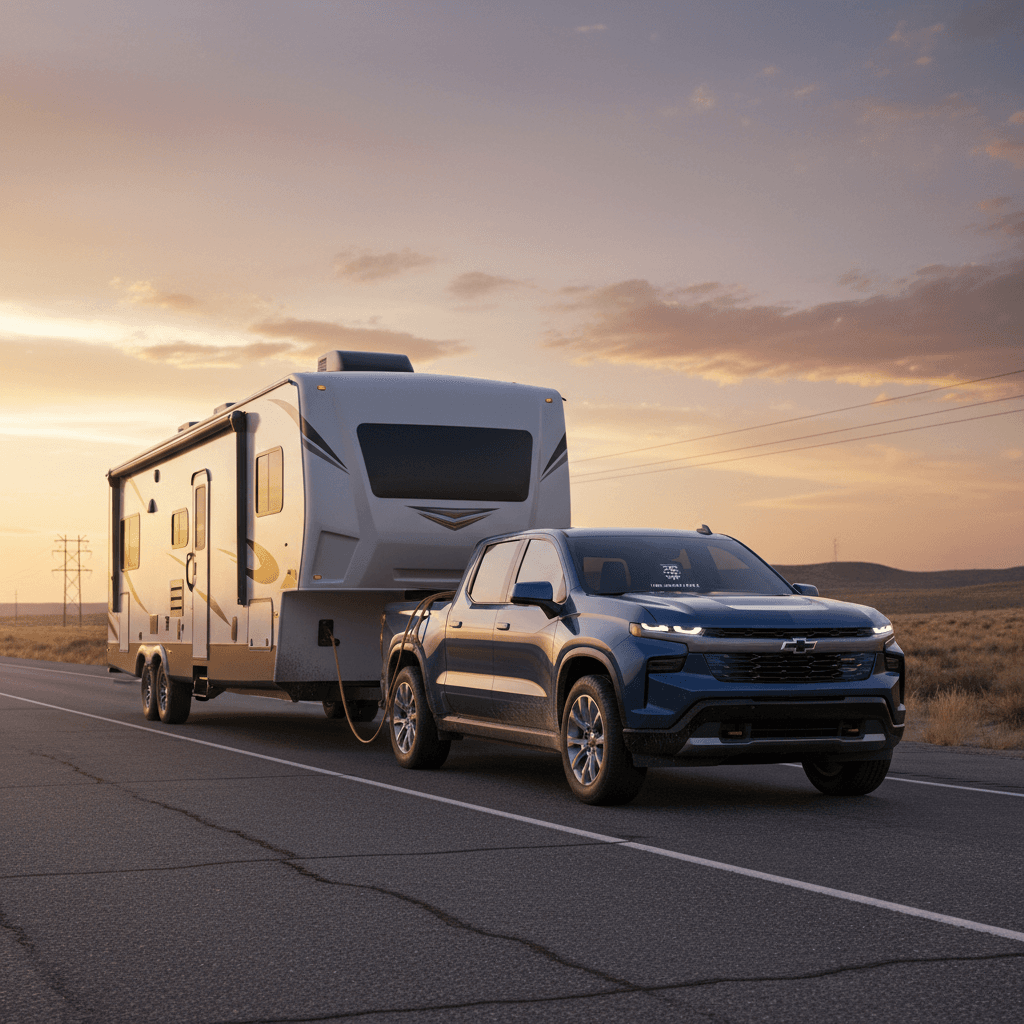
If you’re eyeing a Chevrolet Silverado EV as a tow rig, you’re probably trying to answer one blunt question: can this thing pull like a real truck without stranding you at a charger with a camper in tow? The official specs look heroic, but the story on towing capacity and range loss is more complicated, and more interesting, once you get into the real world.
TL;DR on Silverado EV towing
Silverado EV towing basics: what the numbers really say
On paper, the Silverado EV is a flex. GM’s Ultium platform gives the truck a huge battery pack, well north of 200 kWh in the big-range versions, plus an 800‑volt architecture that allows DC fast charging up to 350 kW. Chevy quotes up to 450 miles of range for the 4WT work truck and about 440 miles for the RST First Edition on a full charge, depending on configuration. That’s more headline range than any other electric pickup currently sold in the U.S.
Headline Silverado EV specs that matter for towing
Those numbers sound like a magic trick until you hang a trailer off the hitch. Aerodynamic drag goes up, weight climbs, software switches into Tow/Haul mode, and the truck’s vaunted range melts like ice cream on a July tailgate. That isn’t a Silverado EV problem; it’s a physics problem. The Silverado simply has more battery to spend than most.
Don’t confuse range with tow rating
Chevrolet Silverado EV tow ratings by trim
Chevy has already shuffled trims and specs a few times, and more variants are coming for 2025–2026. But the pattern is clear: almost every Silverado EV is designed to tow like a proper half-ton, at least on paper.
Approximate Silverado EV towing capacities by trim (U.S. market)
Always check the specific trailering label on your truck’s B‑pillar; actual ratings can vary by options, axle ratio, and payload.
| Trim | Battery/Range (GM-est.) | Max Conventional Tow Rating | Notes |
|---|---|---|---|
| Work Truck 3WT | ~393 mi | ~8,000–10,000 lb | Shorter-range fleet‑focused model; still a serious tow rating for a light-duty truck. |
| Work Truck 4WT | ~450 mi | ~10,000 lb | Long-range WT that impressed early testers with its combination of range and capability. |
| RST First Edition | ~440 mi | 10,000 lb | Luxury‑leaning model with four‑wheel steering and big wheels; same ballpark tow rating. |
| Future Trail Boss / Max Tow configs | TBD (similar) | 10,000–12,500+ lb (est.) | Off‑road and max‑tow variants push ratings higher but may sacrifice some range or payload. |
These numbers are typical published tow ratings for early Silverado EV models; later years and special packages may differ.
Why ratings vary truck to truck
How much range you actually lose when towing
Chevy doesn’t publish a neat, official chart saying, “Tow X pounds, lose Y percent of range.” Instead, you have to triangulate from GM’s internal guidance for fleet buyers, early instrumented tests, and what owners have been reporting since 2024. The consistent theme: budget on losing roughly half your range when you’re towing something tall and not particularly aerodynamic at freeway speeds.
What really kills your towing range
- Aero drag, not just weight: A tall, blunt camper or car hauler punches an ugly hole in the air. That eats energy far faster than a low utility trailer of the same weight.
- Speed: Range loss rises dramatically above 65 mph. The difference between 65 and 75 can be the difference between a 40% and a 60% hit.
- Headwinds and elevation: A 20 mph headwind or a steady climb will make any EV look bad on the consumption readout.
What matters less than you think
- Moderate extra weight: Going from a 3,000‑ to 4,500‑lb trailer matters, but not as much as going from a single‑axle low trailer to a tall RV box.
- Short, stop‑and‑go trips: At low speeds, aero drag is lower and regen can claw back some energy, useful if you’re just hauling a skid-steer around town.
- Battery size: Bigger packs don’t lose a smaller percentage of range; they just give you more absolute miles to burn.
A quick mental rule for planning
Real-world Silverado EV towing scenarios
Numbers are one thing. The better question is: what does living with a Silverado EV look like when you’re actually working it, towing boats to the lake, campers into the mountains, or equipment between jobsites?
What to expect from Silverado EV towing range in common scenarios
These are realistic ballpark ranges based on early testing and owner experiences, assuming a long‑range Silverado EV and mild conditions.
1. Low boat trailer to the lake
Think a 3,000–4,000 lb fiberglass boat on a relatively low-profile trailer.
- Typical range loss: 30–40%
- Highway towing range: roughly 250–300 mi from a 440–450‑mi truck.
- Often a one‑charge weekend: leave full, return home to charge overnight.
2. Mid-size travel trailer or toy hauler
A 20–26 ft boxy RV or enclosed trailer in the 5,000–7,500 lb range.
- Typical range loss: 50–60%
- Highway towing range: think 175–225 mi.
- You’re now stopping every 2–3 hours for a fast charge on road trips.
3. Maxed-out work trailer near tow rating
Heavy equipment, a tall gooseneck, or anything pushing the higher end of the rating.
- Typical range loss: 60%+ if it’s big and boxy.
- Practical range: often 150–180 mi per full charge, sometimes less in bad weather.
- Better suited to regional work with known charger stops than cross-country hauls.
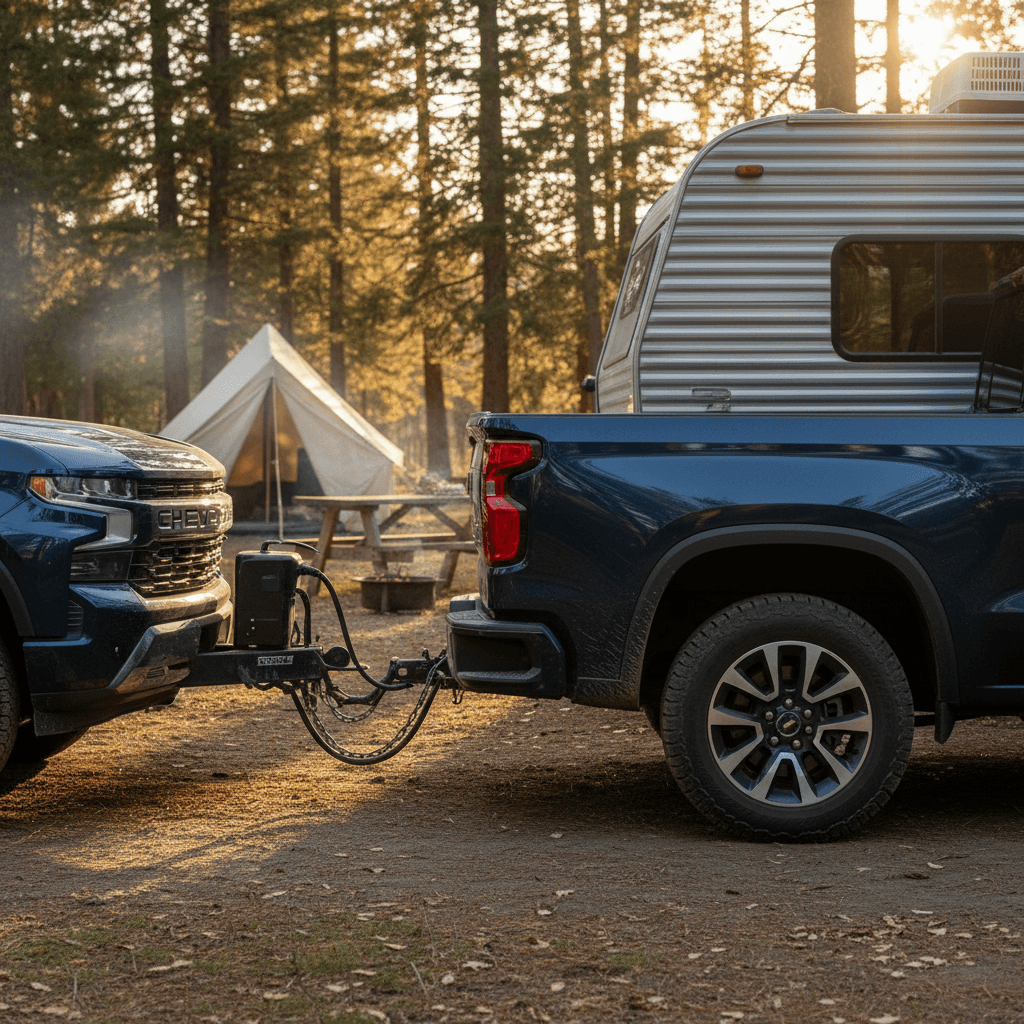
The hard limit: charger layout
Planning trips and work days around towing range loss
If you’re coming from a diesel 2500, the adjustment isn’t the Silverado EV’s power, it’s the planning. Torque is instant and ludicrous; consumption is what you have to manage. The upside is that once you build a mental model for what your trailer does to your range, you can tow confidently without white‑knuckling the battery gauge.
Checklist: how to plan a towing day in a Silverado EV
1. Start with the worst-case range
Take your truck’s rated range, cut it in half, then subtract another 10–15% for headwinds, cold weather, or mountain grades. Use that number as your planning baseline, not the EPA figure.
2. Map DC fast chargers with trailer access
Use apps that show charger layout in photos and reviews. Look for pull‑through stalls, edge spots you can back into, or sites large enough to drop a trailer without drama.
3. Precondition while plugged in
Before you leave, heat or cool the cabin and battery while still on shore power. That keeps more usable energy in the pack for moving the trailer, not the HVAC system.
4. Drive slower than you would in a diesel
In an EV truck, 70 vs 75 mph can change your stopping pattern. Knock 5–10 mph off your usual cruise speed and watch your projected range stabilize.
5. Keep the trailer as clean and low as practical
Roof racks, lifted trailers, and tall front profiles are the difference between a 40% and a 60% range hit. If you can, choose a lower, more aerodynamic trailer.
6. Have a Plan B and Plan C
Especially in rural areas, plan alternate chargers along the route. If one station is full or broken, you don’t want to be improvising with 8% battery and 6,000 lb of camper.
Where the Silverado EV actually shines
Silverado EV towing vs gas and diesel trucks
The annoying truth for traditionalists is that, from the driver’s seat, the Silverado EV makes towing feel easier than most gas trucks. You’ve got instant torque, a low center of gravity, and whisper‑quiet power. What it doesn’t give you, for now, is the ability to drag 10,000 pounds across three states in a single day without making charging strategy your side hustle.
Where the Silverado EV beats a gas truck
- Pulling power: With 600+ hp and huge torque available in some trims, the Silverado EV shrugs off moderate trailers, especially from a dead stop or merging.
- Stability and control: The heavy battery pack slung low in the chassis calms down trailer wag, and four‑wheel steering (where equipped) makes tight maneuvers eerily easy.
- Operating cost: If you can charge mostly at home or cheap commercial rates, energy cost per mile, even while towing, can undercut gas or diesel by a wide margin.
- Stop‑and‑go comfort: Around town with a trailer, one‑pedal driving and regen braking are addictive; you’re not riding the brake pedal down every off‑ramp.
Where a gas/diesel still has the edge
- Cross‑country towing: If your lifestyle is 800‑mile days with a fifth‑wheel, the charging network and charger layouts are not yet your friends.
- Refueling speed with trailer attached: Pulling into a truck stop and filling diesel in five minutes with the trailer still hitched is a level of convenience EVs can’t match, yet.
- Variety of tow ratings: HD gas and diesel trucks still own the world above light‑duty ratings, and the Silverado EV is fundamentally a half‑ton rival, not a 3500 dually.
- Cold‑weather flexibility: In brutal winters, EVs see additional range loss; diesels don’t care as much, assuming you keep the fuel from gelling.
Think in use cases, not ideologies
Towing tech that helps (and what it can’t fix)
Chevy didn’t just bolt a battery under a Silverado and call it done. The EV gets a suite of hardware and software to make towing less fraught, even for drivers who don’t live on truck forums.
Key Silverado EV towing features you should know
Some of these feel like party tricks in the showroom; on a dark ramp with a boat or a tight jobsite, they’re worth their weight in electrons.
Four-Wheel Steer
Available on upper trims, this tightens the turning circle dramatically. Backing a trailer into a cramped driveway or campsite feels more like driving a midsize SUV than a full-size truck.
Tow/Haul mode & range estimates
Engage Tow/Haul and the truck recalibrates throttle, cooling, and regeneration. It also learns your typical trailer and adjusts range predictions, so the dash estimate becomes less of a wild guess over time.
Trailer views & guidance
Multiple camera angles, hitch guidance lines, and integrated trailer brake control are baked in. That’s table stakes now, but with the EV’s quiet drivetrain it’s easier to hear what the trailer’s doing, too.
What tech can’t change
Buying a used Silverado EV for towing
As more early WTs and RSTs come off lease or out of fleet service, they’ll start appearing on the used market. That’s where a truck like this gets interesting: the upfront depreciation has already hit, but you still get that massive battery and modern tow tech. The catch is understanding how the battery has aged, and how that affects your practical towing range.
- Ask for a battery health report, not just a generic inspection. Recharged’s Recharged Score includes verified battery diagnostics, so you know how much usable capacity is left before you hitch up a 7,000‑lb trailer.
- Look at how the truck was used. A former fleet WT that towed heavy every day and fast‑charged constantly will age differently than a suburban RST that mostly did school runs.
- Do a test drive with a trailer, if possible. Even a 3,000‑lb utility trailer will show you how the truck updates range estimates and how confident you feel behind the wheel.
- Check payload stickers and axle ratings. Fancy wheels, big accessories or a heavy topper can quietly eat into payload, which matters when you’re carrying tongue weight and gear.
Where Recharged fits in
Chevrolet Silverado EV towing & range FAQ
Frequently asked questions about Silverado EV towing and range loss
Is the Silverado EV the right tow rig for you?
The Chevrolet Silverado EV is not a science project. It’s a brutally capable electric truck that can tow like a traditional half‑ton and, in many everyday scenarios, feel better doing it, quieter, smoother, and far cheaper to feed if you charge at home. But it also makes you live in the real world of aerodynamics and charging infrastructure, where a big, blunt trailer can turn 440 miles of rated range into 190 miles of reality.
If your life is built around regional towing, boats, campers, equipment within a few hundred miles, the Silverado EV belongs on your short list, especially as used examples start to hit the market. That’s where a platform like Recharged earns its keep: pairing you with a truck whose battery health, pricing, and towing reality are all out on the table. Run the numbers for your own routes, be honest about your expectations, and you’ll know quickly whether this electric Silverado is your next workhorse or a fascinating truck for someone else.