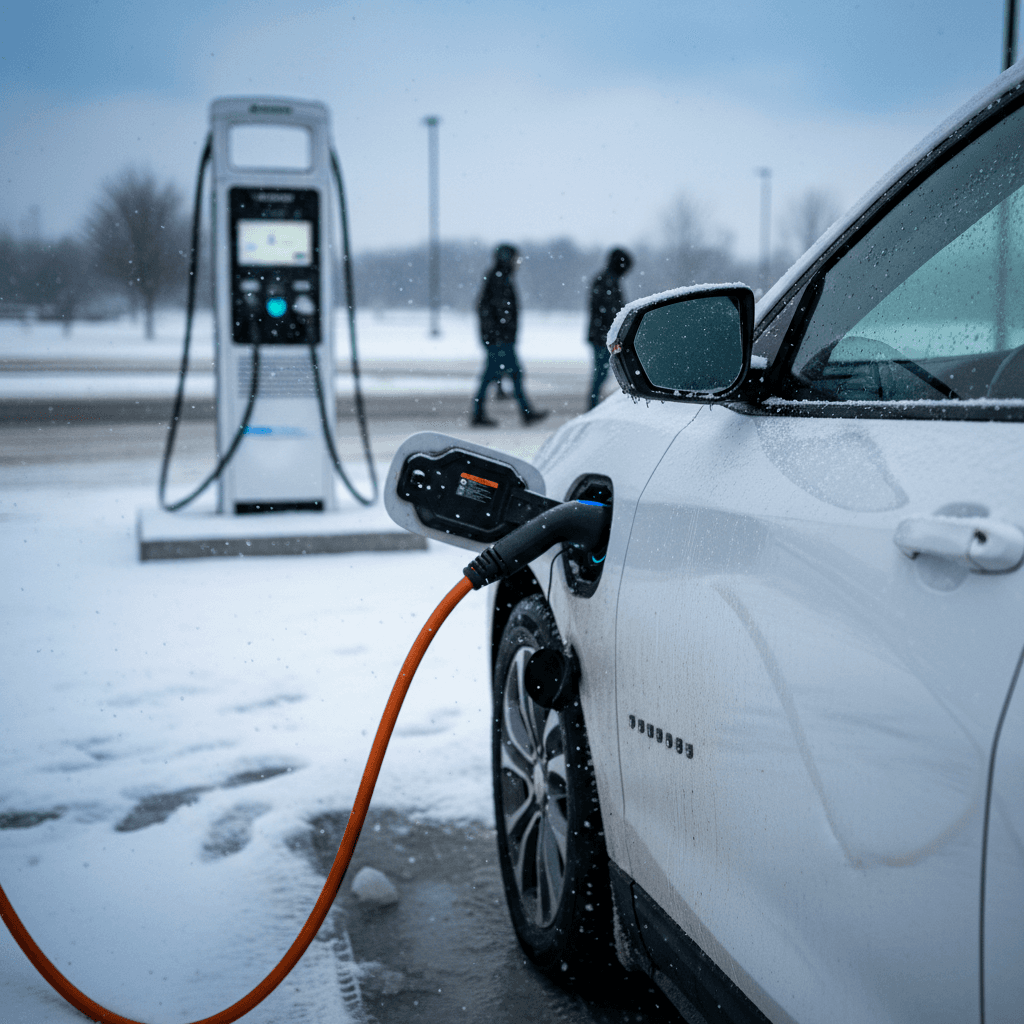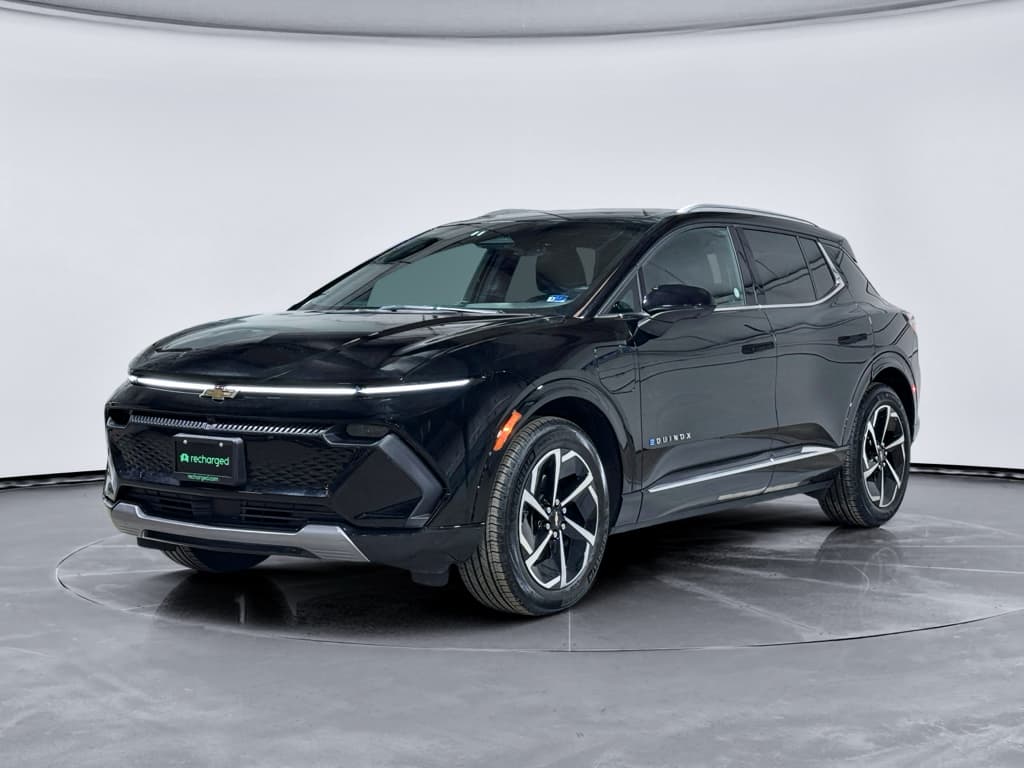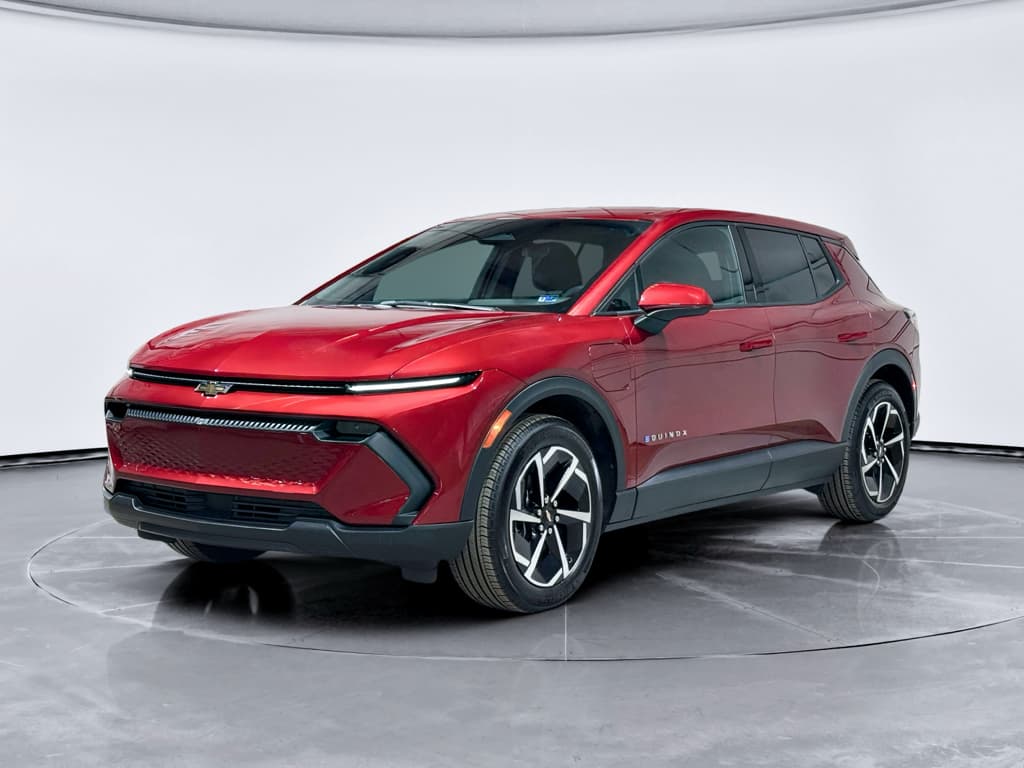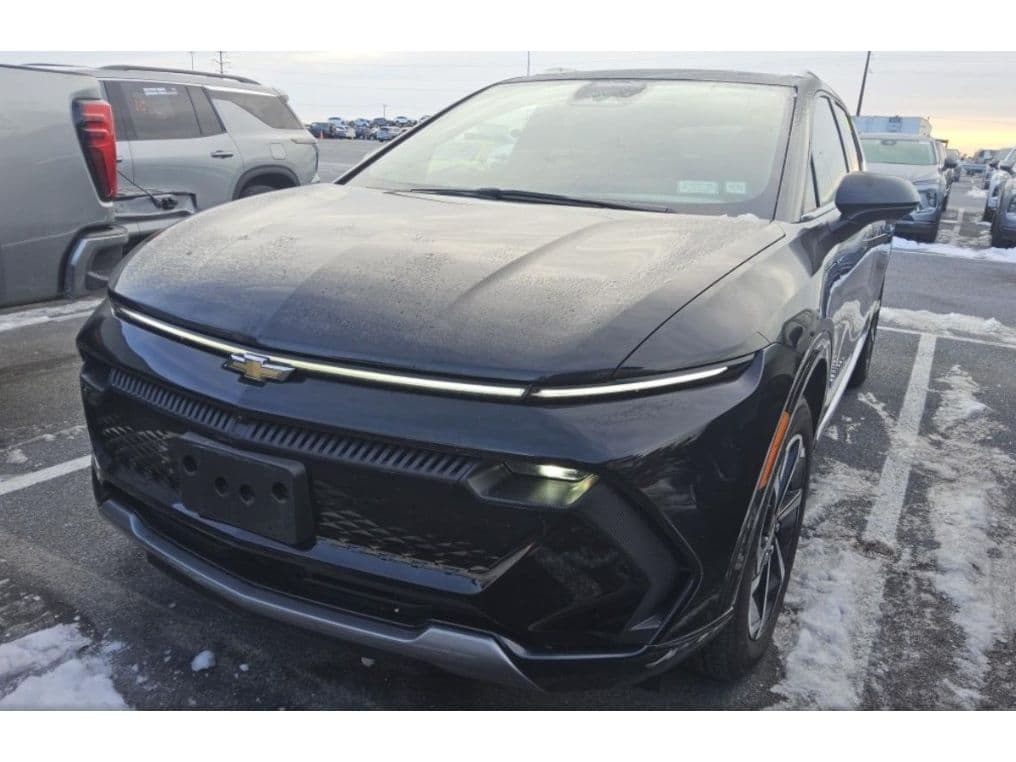
If you live where snow sticks and the roads turn white for months, the question isn’t just “What’s the range?”, it’s **“What’s the Chevrolet Equinox EV winter range when it’s actually cold?”** The EPA’s 300‑plus‑mile number looks great on a window sticker, but January has a way of rewriting the story. Let’s talk about what Equinox EV drivers are seeing in real life, why winter chops range down, and how you can get as many of those miles back as possible.
Quick answer: Equinox EV winter range in one glance
Chevrolet Equinox EV range basics: FWD vs AWD
Before you dig into winter behavior, it helps to know what the Equinox EV is capable of in ideal conditions. The Ultium-based compact SUV launched with strong EPA estimates that make it one of the more efficient family-sized EVs on sale.
EPA-rated range for Chevrolet Equinox EV (recent model years)
Official EPA estimates give you the starting point before winter temperatures take their cut.
| Model year | Drivetrain | EPA-estimated range | Battery / notes |
|---|---|---|---|
| 2024–2025 | FWD (all trims) | ≈319 miles | Ultium pack, single motor |
| 2024 | eAWD | ≈285 miles | Dual motors, more traction less range |
| 2025+ | eAWD | ≈300–307 miles | Software and efficiency updates |
EPA numbers are your baseline; winter driving usually trims a noticeable slice of this range.
Rated vs. real-world range
Independent highway tests have already shown that in mild weather, an Equinox EV FWD can **match or even exceed** its EPA rating on steady highway runs, while the AWD versions land a bit closer to their official numbers. That’s good news, it means cold weather penalties aren’t starting from a weak baseline. But in winter, every EV has to fight the same physics.
How much winter range does the Equinox EV actually lose?
Typical Chevrolet Equinox EV winter range loss
Recent cold‑weather comparison testing and aggregated owner data put the **Equinox EV’s winter range loss at roughly one‑third of its EPA rating** in sustained freezing conditions. In plain English: if your FWD Equinox EV is rated at 319 miles, a bitter winter day may give you **around 210 miles** of practical highway range, sometimes a bit more in calmer conditions and a bit less in deep cold or high winds.
Short trips hurt more than road trips
Real-world owner examples of Equinox EV winter range
Numbers on a chart are one thing; an icy morning commute is another. Early Equinox EV owners in cold‑weather regions have started sharing their experiences, and a few patterns show up over and over.
- In **moderate winters** (around 25–35°F) with mostly highway driving at 65–70 mph, many FWD owners report **comfortably getting 220–250 miles** from 100% to low state of charge when they precondition and drive smoothly.
- In **colder snaps** (0–20°F) with snow tires, cabin heat cranked and higher speeds, some report seeing their **effective range dip closer to 180–200 miles**, especially in eAWD models.
- On **short, repeated trips** around town at low speeds with no preconditioning, the percentage loss can *feel* huge, because a lot of the energy goes to warming the cabin and battery instead of moving the car. The distance is short, so the math looks harsh.
"My experience is the EPA rating is pretty accurate if you live somewhere with four seasons and the winters aren't terrible. When it drops deep below freezing and you don’t precondition, then you really start to see the hit."
The good news about winter range
Why cold weather hits Equinox EV range so hard
The Equinox EV rides on GM’s latest **Ultium platform** and uses a modern heat‑pump‑based HVAC system. That’s good news; cars without heat pumps usually do even worse in the cold. But even with that tech, winter is doing three things to your range all at once.
Three main reasons your Equinox EV loses range in winter
Understanding the physics makes it easier to fight back.
1. Colder battery chemistry
Li‑ion batteries **don’t like the cold**. At low temperatures, their internal resistance goes up and they can’t accept or deliver energy as efficiently.
Result: you use more kWh per mile, and DC fast charging slows down until the pack warms up.
2. Cabin heating load
An EV has no free waste heat from a gasoline engine, so your Equinox EV uses **battery power to run the heat pump and resistive elements** when it’s really cold.
That comfort energy comes straight out of your driving range, especially on short trips.
3. Winter driving conditions
Cold air is **denser**, so there’s more aerodynamic drag at highway speeds. Add **snow tires, slush and headwinds**, and you’re pushing harder just to maintain speed.
Higher rolling resistance + more drag = fewer miles per kWh.
Ultium’s ace in the hole: preconditioning
How to plan winter trips in a Chevrolet Equinox EV
Here’s how to translate those percentages into something you can actually plan around. Let’s take a typical FWD Equinox EV with a **319‑mile EPA rating** and put it on a real winter road.
Scenario A: Mild winter highway drive
• Outside temp: 30–35°F
• Speed: mostly 65 mph
• Car preconditioned on Level 2 at home
• Heat set to 68°F with seat and wheel heaters on
• Dry roads, no major wind
In this scenario, many drivers report **about a 20–25% loss**. That turns 319 miles into something like **240–255 miles** of realistic usable range.
Scenario B: Deep winter, long highway run
• Outside temp: 5–20°F
• Speed: 70–75 mph
• Limited preconditioning, car sits outside
• Heat higher, maybe 70–72°F
• Snow tires and some slush on the road
Here you’re in the **30–35% loss zone**. Your comfortable planning number might drop to **200–220 miles** before you really need to think about charging.
Build in a winter buffer
Ten ways to protect Equinox EV range in winter
Practical Equinox EV winter range tips
1. Always precondition while plugged in
Use the Equinox EV’s **preconditioning feature** before you leave, especially on Level 2 at home. That lets the car warm the battery and cabin from the grid, saving precious energy for driving instead of thawing.
2. Use seat and wheel heaters first
Heated seats and steering wheels use far less energy than blasting cabin heat. Set the cabin temperature a little lower, say 66–68°F, and let the **seat and wheel heaters do the heavy lifting**.
3. Plan a conservative range target
In deep winter, plan trips around **⅔ of the EPA number** instead of the full rating, about 210 miles for FWD, a bit under 200 for AWD. If you arrive with more left, you’ve just bought yourself peace of mind.
4. Keep tires properly inflated
Cold air drops tire pressure. Low pressure increases rolling resistance and hurts range. Check your **tire pressures at least once a month in winter** and set them to the door‑jamb spec when the tires are cold.
5. Use Eco or normal drive modes
Sportier modes may feel great, but they often sharpen throttle response and encourage wasteful accelerations. In winter, stick with **normal or eco modes** and drive smoothly to stretch every kWh.
6. Avoid repeated short trips with a cold car
If you can string errands together into **one longer drive** instead of several cold starts, do it. Warming the battery and cabin once is much cheaper than doing it five times in one day.
7. Park indoors or out of the wind
A simple garage, even an unheated one, can keep the car significantly warmer than street parking. Shielding your Equinox EV from overnight wind and cold **reduces how hard it has to work to heat up again**.
8. Watch your speed on the highway
Aerodynamic drag rises quickly with speed, and dense cold air makes it worse. Dropping from **75 mph to 65 mph** can easily save you 10–15% energy use, which is like growing your battery mid‑trip.
9. Pre‑warm while DC fast charging
If you’re making a long trip, **use the charging stop to warm the cabin and pack**. Crank the heat while you’re on the DC fast charger so you need less power from the battery once you pull out.
10. Keep software up to date
GM has already tweaked efficiency and charging behavior via over‑the‑air updates on Ultium vehicles. Make sure your Equinox EV is **fully up to date** before winter so you benefit from the latest optimizations.
Equinox EV FWD vs AWD: Which is better in winter?
The Equinox EV gives you a classic winter‑driver dilemma: do you choose **front‑wheel drive for maximum range** or **eAWD for more confident traction**? In cold weather, both come with tradeoffs.
Front-wheel drive (FWD)
- Pros: Highest EPA range, less weight and complexity, generally the best choice for long winter road trips when you’re sticking to plowed highways.
- Cons: In really slick conditions or deep snow, front‑drive traction and stability can’t quite match a good AWD system on proper winter tires.
If most of your winter miles are on main roads that get cleared quickly, **FWD plus quality winter tires** is often the most efficient and cost‑effective combo.
Electric all-wheel drive (eAWD)
- Pros: Much better **launch traction, stability and confidence** in snow, on ice and on unplowed side streets. Great for hilly or rural areas.
- Cons: Lower EPA range out of the box and a bit more winter loss, because you’re powering two motors and carrying extra hardware.
If you regularly deal with unplowed roads, steep driveways or heavy snow, **eAWD may be worth the range penalty** for the control it provides.
Tires matter as much as drivetrain
Charging your Equinox EV when it’s cold
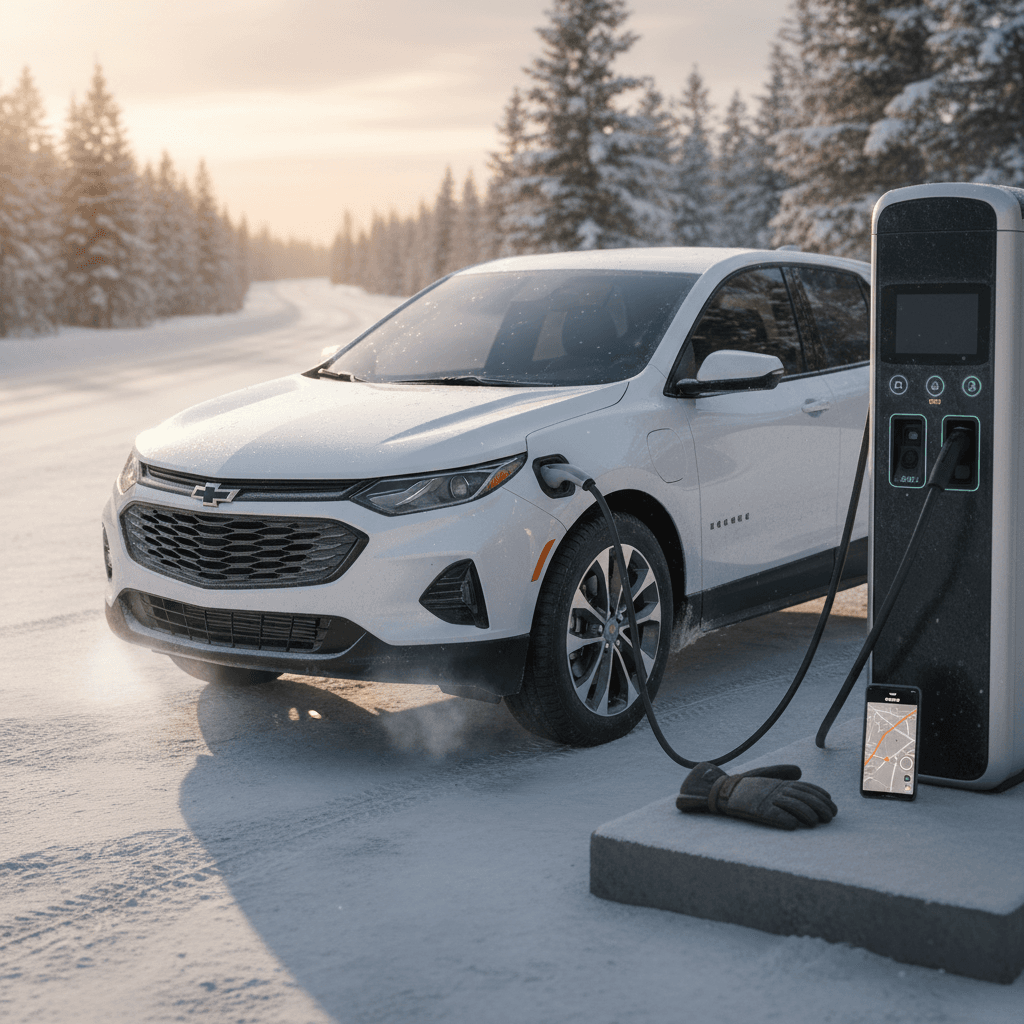
Winter doesn’t just affect how far you can go; it changes how you charge, too. The Equinox EV’s Ultium battery has built‑in thermal management, but you’ll still see different behavior from **Level 2 home charging** and **DC fast charging** when the mercury drops.
What to expect when charging an Equinox EV in winter
The same temperatures that shrink your range can also slow charging, unless you plan ahead.
Level 2 at home
At 240V, your Equinox EV will usually reach your overnight charge target just fine, even in the cold. The car may draw a bit more power initially to warm the battery.
Tip: Set a scheduled departure so the pack is warm and full right when you plan to leave.
DC fast charging
On a very cold battery, your first DC fast charge of the day can be noticeably slower. The car has to warm the pack before it can take high power.
Plan to **arrive with 10–20%** remaining and, if possible, drive a bit before the fast‑charge stop to get the pack up to temperature.
Preconditioning for fast chargers
As GM expands route‑planning and preconditioning features, use them. When your Equinox EV knows you’re headed to a DC fast charger, it can **warm the pack on the way**, cutting down on that initial slow‑charging period.
Don’t skip warm‑up in sub‑freezing temps
Shopping a used Equinox EV for cold climates
If you’re eyeing a **used Chevrolet Equinox EV** and you know winter range matters, there are a few smart checks that go beyond kicking the tires and scrolling the infotainment screens.
Cold‑climate checklist for a used Equinox EV
Confirm FWD vs eAWD and EPA rating
Make sure you know whether you’re looking at a **FWD or eAWD** Equinox EV, and look up the official EPA range for that exact year and trim. Your winter planning numbers are all built on that starting point.
Ask about winter usage history
Has the car spent its life in a warm state or in the upper Midwest? Year‑round cold doesn’t necessarily ruin a pack, but it can change how you interpret early range behavior and charging speed in your own winters.
Review battery health, not just guess‑o‑meter
Look for a **structured battery‑health report** instead of relying on the in‑car range estimate alone. Tools like the Recharged Score analyze real pack data so you know how much usable capacity you’re actually buying.
Check for software updates and TSBs
GM has issued updates affecting charging behavior and winter drivability on Ultium models. Verify that the used Equinox EV is **fully up to date**, and ask if any cold‑weather service bulletins have been addressed.
Inspect tires and wheels for winter duty
Budget for **quality winter tires** if the car doesn’t include them. A great EV on lousy rubber is still a lousy winter car, and can use more energy if it’s constantly spinning and hunting for grip.
Plan your charging life
Before you sign papers, map out **where you’ll charge in winter**, home Level 2, workplace, public DC fast chargers. A car that feels tight on range in January can feel effortless if you have predictable places to plug in.
How Recharged helps winter shoppers
Ready to find your next EV?
Browse VehiclesChevrolet Equinox EV winter range: FAQ
Frequently asked questions about Equinox EV winter range
Bottom line: Is the Equinox EV a good winter EV?
If you walk into Equinox EV ownership expecting to see the full **319‑mile EPA rating** on a blustery February day, you’ll be disappointed. But if you go in knowing that winter will usually trim you back to **roughly 200–240 miles** on a full charge, and you use the tools Chevy gives you to fight back, the Equinox EV turns out to be a **very livable winter companion**.
The Ultium platform, heat pump, and strong baseline efficiency mean you’re starting from a good place. Pair that with smart habits, preconditioning, careful speed, good tires, and realistic planning, and the **Chevrolet Equinox EV winter range** stops being a mystery and becomes something you can confidently manage. And if you’re shopping used, a battery‑health‑verified Equinox EV from Recharged can give you the extra reassurance that those winter miles will still be there, year after year.