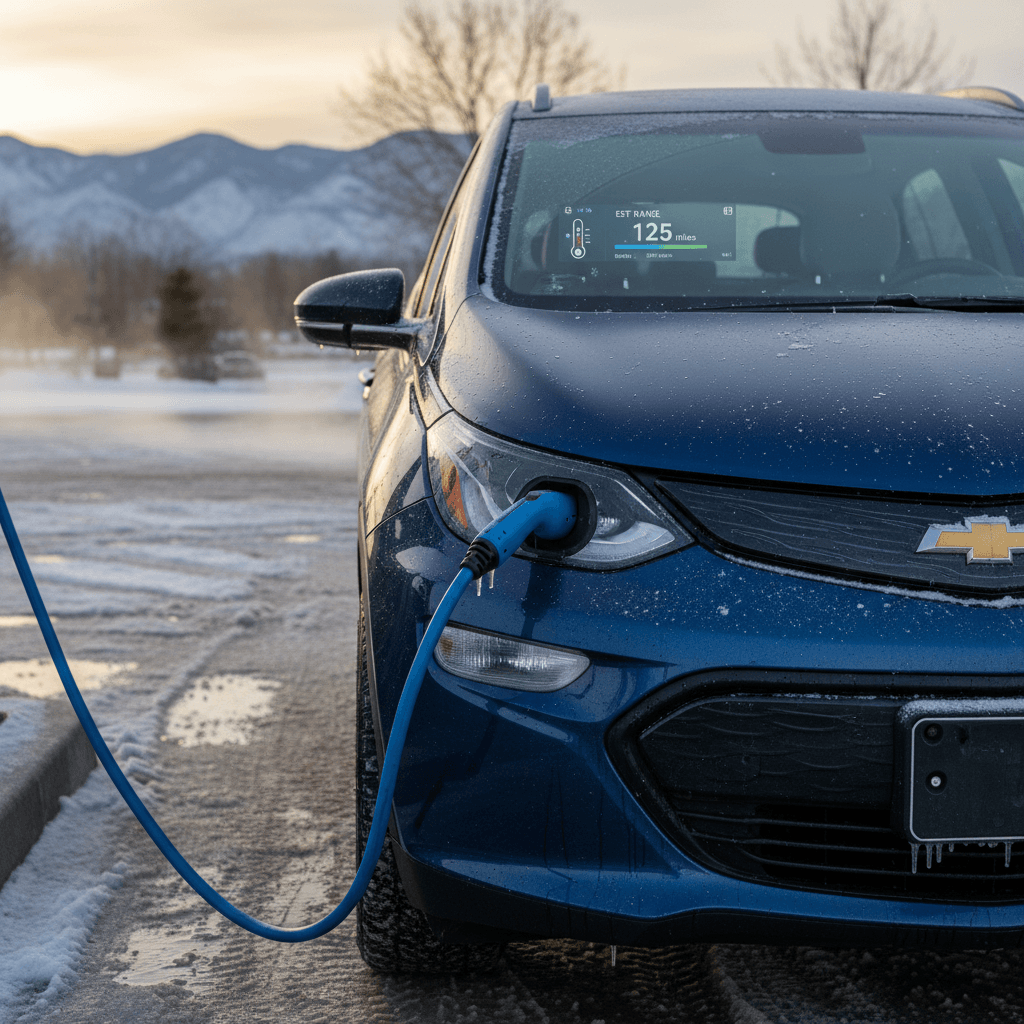
You don’t need to spend long in a Chevy dealership to hear the quiet confession: the Chevrolet Bolt EV winter range loss percentage can be ugly. When the temperature plunges, the Bolt’s friendly dashboard number shrinks, and that tidy EPA rating starts to feel like fiction. The good news is that once you understand what’s normal, and what you can actually control, you can plan around winter and still enjoy Bolt-level efficiency the rest of the year.
Key takeaway up front
Overview: Chevy Bolt EV winter range loss percentage
Let’s frame the problem. A modern Bolt EV (2020–2023) carries a 65 kWh pack and an EPA combined range of 259 miles. Owners in mild weather often beat that in city driving. But when winter arrives, particularly in northern U.S. and Canadian climates, Bolt drivers routinely report losing about a third of that range, sometimes more, especially on fast, heater‑blasting highway runs.
Chevy Bolt EV winter range loss at a glance
That spread, roughly 25% to 55% winter range loss depending on conditions, is broader than many newer EVs with heat pumps. The Bolt isn’t uniquely bad, but it does sit on the wrong side of average in cold‑weather efficiency, mostly because of its resistive heater and lack of active battery preconditioning for DC fast charging.
How much winter range loss to expect in a Chevrolet Bolt EV
Numbers help more than folklore, so let’s put realistic brackets around the Chevrolet Bolt EV winter range loss percentage. We’ll use a 259‑mile EPA Bolt EV as the reference point. Your local weather, speed, elevation, tire choice, and how warm you like your toes will all move the needle, but these ranges are grounded in data and real‑world owner reports.
Chevy Bolt EV winter range estimates vs. EPA
Approximate real‑world winter ranges for a 259‑mile EPA‑rated Chevy Bolt EV. These are planning ballparks, not guarantees.
| Condition | Outside temperature | Driving mix & HVAC | Estimated range (mi) | Approx. range loss |
|---|---|---|---|---|
| Cool fall day | 45–55°F | Mixed city/highway, light heat | 210–230 | 10–20% |
| Normal winter | 25–35°F | Mixed city/highway, moderate heat | 160–190 | 25–35% |
| Cold snap | 10–25°F | Mostly highway, heater set to 70–72°F | 140–170 | 35–45% |
| Deep freeze | 0°F or below | 70–75 mph highway, strong heat/defrost, snow/slush | 110–140 | 45–55% |
As temperatures drop and speeds climb, winter range loss on the Chevy Bolt EV escalates quickly, especially with generous cabin heat.
Don’t plan off the EPA number in winter
How the Bolt EV compares to other EVs in winter
Across large winter‑range studies, EVs tend to lose about 20–30% of their range around freezing when driven in mixed conditions with the heat on. The Chevy Bolt EV and its EUV sibling commonly land near the upper end of that band, low‑30s, sometimes high‑30s percent loss, while some newer EVs with heat pumps manage mid‑teens to low‑20s.
Bolt EV vs. typical EV winter range loss
Approximate real‑world losses around 20–30°F, mixed driving with heat on
Chevy Bolt EV / EUV
≈30–35% loss in normal winter conditions, with many owners reporting about a third off the EPA figure.
Deep cold highway use can push losses into the low‑40% range.
Average modern EV
≈20–30% loss is typical around freezing for many heat‑pump‑equipped EVs (Hyundai, Kia, Tesla, etc.).
More efficient thermal systems mean less energy wasted on heat.
Least & most efficient
Best cases (Polestar 2, some Teslas) can lose only mid‑teens percent.
Worst cases (older Leafs, early CCS cars) can lose 35–40% or more, especially with short trips and high heat.
So if you feel like your Bolt EV is falling 30% short of its sticker range in January, you’re not being singled out by the laws of physics. You’re simply driving an efficient little hatchback that happens to carry an old‑school heater and a battery pack that doesn’t love the cold.
Why the Bolt EV loses so much range in cold weather
Winter range loss isn’t mysterious; it’s an itemized bill. For the Bolt EV, the charges come from four main culprits: the cabin heater, the cold battery, higher air density, and winter tires or messy roads. Add them up and you’re suddenly down 30–40% with no drama, no malfunction, just thermodynamics sending you a postcard.
- Cabin heat is a hog. The Bolt EV uses a resistive heater, essentially an electric space heater wired to your firewall. At full blast it can pull several kilowatts, enough to eat a big chunk of a 65 kWh pack on long drives.
- Cold batteries are sluggish. Lithium‑ion chemistry hates the cold. Below freezing, internal resistance rises, usable capacity shrinks, and the pack may run a battery heater to keep itself in a safe zone, all of which costs range.
- Cold air is thicker. At highway speeds, a lot of your energy is spent just pushing air. Denser winter air increases aerodynamic drag, which is why fast highway segments punish winter range more than slow city streets.
- Tires, snow and slush add rolling resistance. Softer winter rubber and deeper tread blocks cost efficiency, and driving through snow or slush is like rolling on sandpaper. Even all‑weather upgrades often trade some efficiency for grip.
Where the percentage loss really comes from
Real-world Chevy Bolt EV winter range scenarios
Every Bolt owner in Minnesota seems to have a story about a January drive that turned a 250‑mile car into a 130‑mile car. To make the percentages feel less abstract, here are three common scenarios and what they tend to look like in miles.
1. Suburban commute
Conditions: 25–35°F, mostly 35–50 mph, a few highway miles, cabin at 68°F, seat and wheel heaters on.
What owners see: Roughly 3.0–3.4 mi/kWh, or about 180–210 miles from a full charge.
Call it 20–30% range loss vs. the 259‑mile EPA rating, noticeable but manageable.
2. Weekend interstate run
Conditions: 20–25°F, 70–75 mph highway, cabin at 70–72°F, family on board, winter tires.
What owners see: Often around 2.3–2.6 mi/kWh, or about 150–170 miles of usable range.
That’s typically 35–40% loss, even without brutal temperatures.
3. Deep-freeze road trip
Conditions: Single digits, 65–70 mph, constant heat and defrost, maybe snow on the pavement.
What owners see: 2.0–2.3 mi/kWh isn’t unusual, which translates to 120–150 miles from full.
In the worst cases, with strong headwinds or heavy slush, drivers report 45–55% losses vs. EPA.
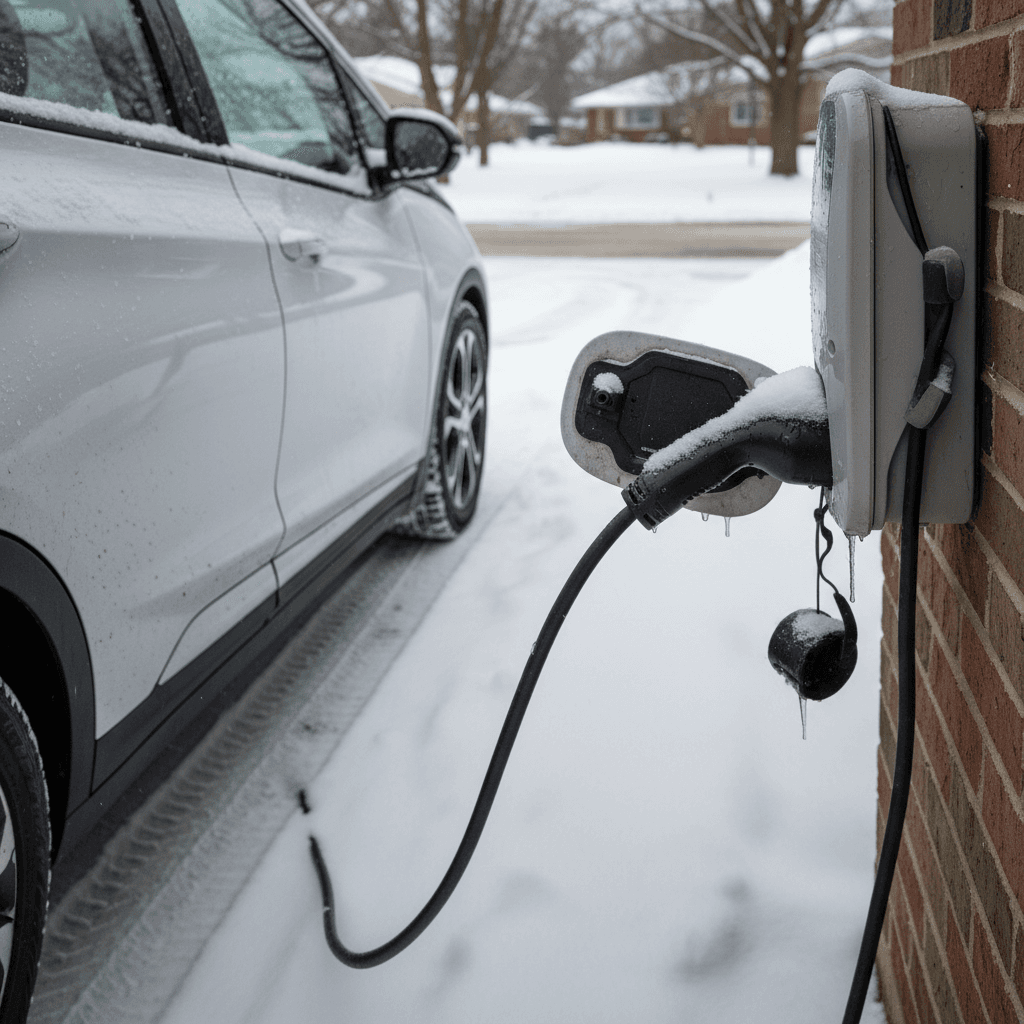
City vs. highway: Why winter hurts some Bolt EV trips more
You’ll hear Bolt owners say, “My winter range is awful on the highway, but fine around town.” They’re not imagining it. The percentage hit is very sensitive to speed.
How speed changes Chevy Bolt EV winter range loss
Same temperature, same car, very different outcomes
Urban & suburban driving
- Speeds mostly under 50 mph.
- More regenerative braking and coasting.
- HVAC load is a smaller slice of the total because you’re using fewer kW to move the car.
- Typical loss: mid‑20% to low‑30% in normal winter weather.
Highway & interstate driving
- 70+ mph multiplies aerodynamic drag.
- Cabin heat has to fight higher airflow and more leaks.
- Cold dense air and winter tires dominate the energy budget.
- Typical loss: low‑30% to mid‑40% in ordinary winter; higher in deep cold.
Simple way to protect winter range
9 ways to reduce Chevy Bolt EV winter range loss
You can’t repeal the laws of physics, but you can negotiate with them. These strategies won’t turn your Bolt into a polar‑bear‑proof Tesla Model Y, but they can move you from 40–50% losses into the saner 25–35% band.
Practical steps to cut Bolt EV winter range loss
1. Pre‑condition while plugged in
Use the myChevrolet app or the key fob to warm the cabin while the car is still charging. That way the big heater draw comes from the grid, not your battery. Even 10–15 minutes of pre‑conditioning helps a lot.
2. Rely on seat and wheel heaters
The Bolt’s seat and steering‑wheel heaters use far less energy than blasting air heat. Set the cabin a little cooler (say 66–68°F) and let the seat and wheel do the comfort work.
3. Slow down on cold highways
Knocking 5–10 mph off your cruising speed can easily claw back 10–15% of your range. In winter, aerodynamic drag is merciless, and completely under your control.
4. Avoid short, cold‑soaked hops
A bunch of 3–5 mile trips with a cold battery are the worst case for winter efficiency. Whenever you can, chain errands together so the car stays warm and the heater isn’t starting from zero each time.
5. Keep tires properly inflated
Cold weather saps tire pressure. Check and top off to the recommended PSI; under‑inflated tires quietly eat range and can add a few percentage points to your winter penalty.
6. Use Eco mode for smoother power
Eco mode dials back HVAC aggressiveness and softens throttle response. It won’t magically fix physics, but it nudges the car toward more efficient behavior, especially in stop‑and‑go traffic.
7. Park indoors or in the sun when possible
A garage, carport, or even a sunny spot keeps the pack and cabin a few degrees warmer. That’s free energy you don’t have to burn through the heater, or the battery heater, later.
8. Trim roof racks and heavy cargo
Roof boxes, bike racks, and a trunk full of gear hurt range in any season, but they really show up in winter when you’re already efficiency‑constrained. Strip the car back to clean aerodynamics if you can.
9. Learn your personal winter baseline
Watch your mi/kWh over a week of typical cold‑weather driving. Once you know that 2.5 mi/kWh is your January reality, you can back‑of‑the‑napkin every trip by multiplying capacity by that number.
Planning winter trips in a (used) Chevy Bolt EV
If you’re eyeing a used Bolt EV on Recharged from the comfort of a Florida zip code, the winter story may be academic. For buyers in Minnesota, Michigan, upstate New York, or Colorado, it’s central to whether the car works for your life. The trick is to plan for worst‑case winter numbers, not the hero runs some owners post in July.
Safe planning buffers for winter trips in a Chevy Bolt EV
How much margin to leave between the map distance and your Bolt EV’s indicated range in cold weather.
| Trip type | Weather & roads | Suggested planning buffer | Example on a 259‑mi Bolt EV |
|---|---|---|---|
| Daily commute | 25–35°F, clear roads, mixed driving | Use 25–30% loss vs. EPA | Plan on ~180–190 mi max between charges. |
| Weekend visit to family | 20–25°F, mostly highway | Use 35–40% loss vs. EPA | Treat 150–170 mi as your safe envelope. |
| Ski trip or deep‑cold road trip | Single digits, highway, possible snow/slush | Assume 45–50% loss vs. EPA | Plan around 130–140 mi between reliable fast chargers. |
Winter trips in a Bolt EV are very doable, as long as you plan using conservative range estimates and don’t assume summer‑style efficiency.
Don’t stretch to 0% in winter
If you’re buying through Recharged, the Recharged Score on each used Bolt EV includes a verified read on battery health, so you’re not trying to untangle winter range loss from long‑term degradation. That matters in cold climates, where a 5–10% permanent hit to capacity can stack right on top of a 40% seasonal penalty.
Winter range loss vs. long-term battery health
One of the more persistent myths in EV forums is that driving in winter somehow “destroys” your battery. The chemistry doesn’t work that way. Cold operation mostly affects short‑term range, not long‑term degradation, if anything, high temperatures are the real battery killer.
- Short‑term effect: In the cold, the Bolt’s pack can’t move ions as easily. You see less available energy and poorer efficiency until it warms up. Once spring comes, that capacity “comes back.”
- Long‑term effect: The factors that age your Bolt’s pack are high temperatures, frequent fast‑charging at high SOC, deep discharges, and calendar time, not merely operating in the cold.
- Winter fast charging is slower, not more damaging. In very low temps the Bolt will often limit DC fast‑charge speeds to protect itself. It feels inconvenient, but it’s exactly what you want for longevity.
- What to watch: If your summer range is steadily dropping year‑over‑year, that’s battery health. If it’s mainly your winter range that collapses and then recovers, that’s seasonal behavior.
How Recharged separates winter loss from degradation
Is a used Chevy Bolt EV a good choice for cold climates?
The honest answer is: it depends on your use case. The Chevrolet Bolt EV is not a winter‑range hero in the way some newer, heat‑pump‑equipped crossovers are. But for many households, especially two‑car households, it’s a fantastically cheap and efficient winter commuter, as long as you respect its limitations.
Where the Bolt EV shines in winter
- Short‑to‑medium commutes with overnight home charging.
- Households with a second long‑range or ICE vehicle for once‑a‑year road trips.
- Drivers who can pre‑condition in a garage and don’t mind dialing the cabin temp down a couple of degrees.
- Used‑EV shoppers who want long‑range capability at a comparatively low price.
Where you may want more car
- You routinely do 150–200‑mile winter highway runs with limited fast‑charging options.
- You live somewhere with prolonged sub‑zero temperatures and no garage or carport.
- You need to tow or haul lots of gear through mountain passes in winter.
- You want to set the climate to 74°F and forget about it, regardless of range.
If your winter reality is mostly school runs, work commutes, and errands inside 80 miles round‑trip, a Bolt EV is perfectly at home in the snow belt. If you dream of cross‑continent ski trips in January, you either need a very robust charging plan, or you may be happier in a longer‑range EV.
Chevy Bolt EV winter range loss: FAQs
Frequently asked questions about Chevy Bolt EV winter range loss
Bottom line on Chevy Bolt EV winter range loss percentage
Strip away the outrage headlines and the Chevrolet Bolt EV winter range story is pretty simple: expect roughly a one‑third haircut in ordinary winter, and be prepared for up to half your EPA range to disappear in deep‑cold, high‑speed scenarios with lots of heat. That sounds alarming on paper, but with realistic trip planning, home charging, and a few smart habits, pre‑conditioning, slower cruising, using seat heaters, the Bolt remains an extremely capable daily EV, even north of the snow belt.
If you’re considering a used Bolt EV, especially in a cold‑weather state, the key is understanding both the car’s battery health and your own winter driving pattern. That’s exactly what Recharged’s Recharged Score, transparent pricing, and EV‑specialist support are designed to surface. Get those two pieces aligned, and winter range loss becomes something you plan around, not something that ruins the car.