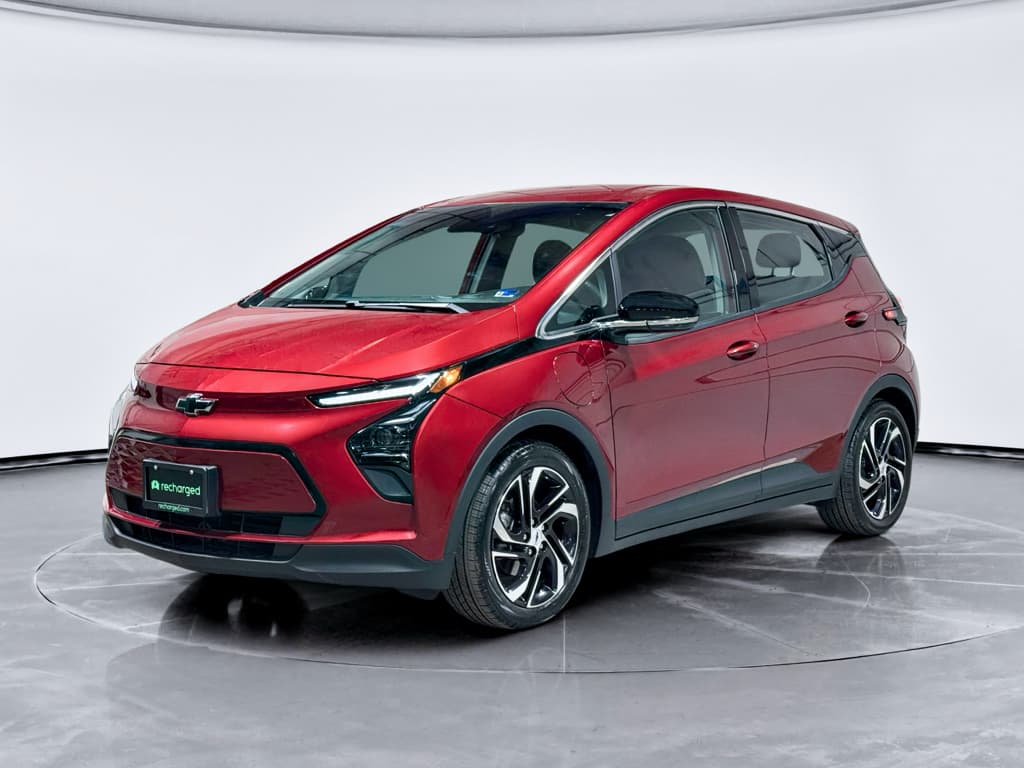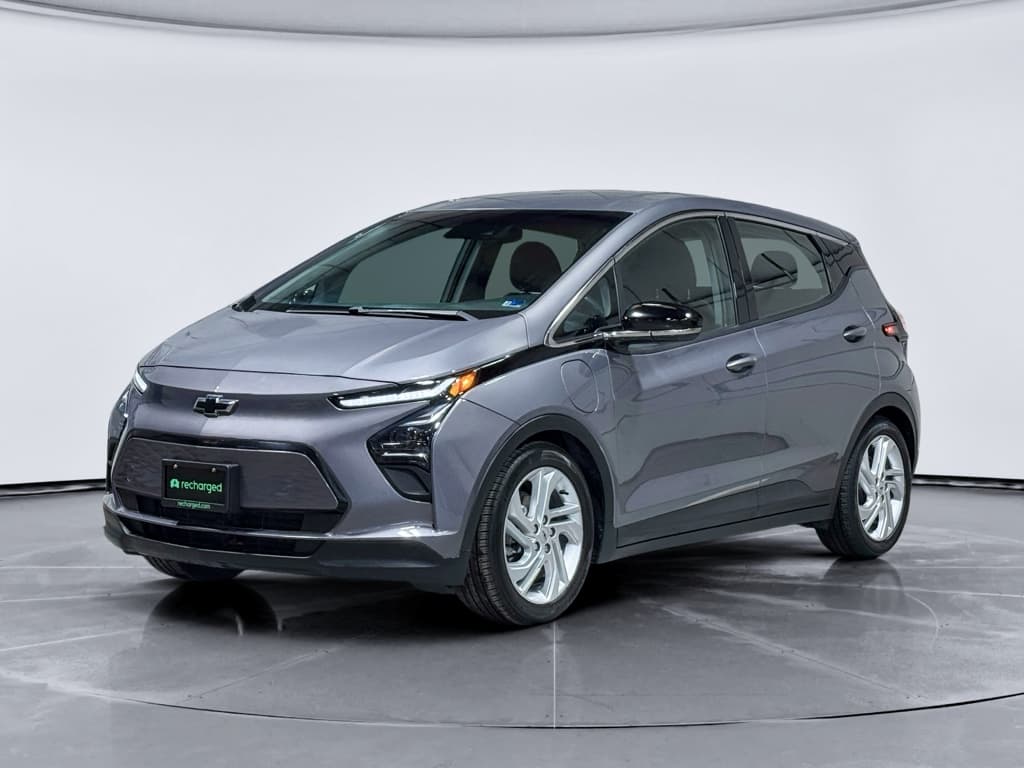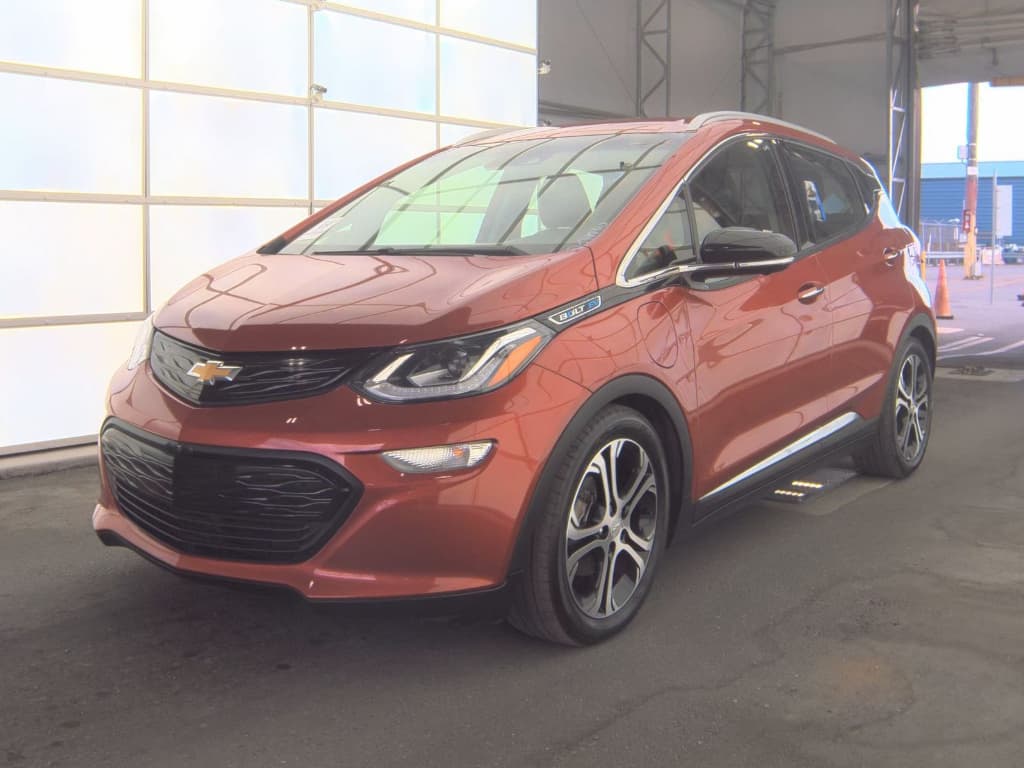
If you’re cross-shopping the Chevrolet Bolt EV and the Mini Cooper SE, you’re likely looking for a small, city-friendly EV that doesn’t destroy your budget. The question, “Chevrolet Bolt EV vs Mini Cooper SE – which is better?” really comes down to how you drive, how far you go, and how much space you need day to day.
Two generations, multiple Minis
Bolt EV vs Mini SE: who each car is for
At a glance: ideal buyer for each EV
Both are great small EVs, but they solve different problems.
Chevrolet Bolt EV: pragmatic range champ
Best if you need:
- Realistic 200+ mile highway range.
- Four real doors and adult-friendly rear seats.
- Big hatchback cargo space for Costco runs or road trips.
- Excellent value on the used market.
Mini Cooper SE: boutique city car
Best if you want:
- Premium interior and fun design.
- Sharp, go‑kart handling for urban driving.
- Shorter daily commutes and easy home/work charging.
- A second car dedicated to city life.
Quick verdict
Core specs: Chevrolet Bolt EV vs Mini Cooper SE
Key specs: Chevrolet Bolt EV vs Mini Cooper SE (U.S. market)
Approximate specs for typical U.S. models most common on the used market.
| Spec | Chevrolet Bolt EV (2017–2023) | Mini Cooper SE (2020–2024 U.S.) |
|---|---|---|
| Body style | 5‑door subcompact hatchback | 3‑door subcompact hatchback |
| Battery (usable, approx.) | ~60–66 kWh | ~32–35 kWh |
| EPA range | Up to ~259 miles (2020+ refresh) | ~114 miles |
| DC fast‑charge peak | ~55 kW | ~50 kW (small battery) |
| AC charging | Up to 7.2–11.5 kW (model‑year dependent) | ~7.4 kW |
| Horsepower | ~200 hp (150 kW) | ~181 hp (135 kW) |
| 0–60 mph (approx.) | 6.5–7.0 seconds | 6.9 seconds (varies by test) |
| Drive type | FWD | FWD |
| Rear doors | 4 | 2 (3‑door hatch) |
| Cargo space (rear seats up) | ~16.6 cu ft | ~8.7 cu ft (approx.) |
Specifications may vary slightly by model year and trim. Always verify details for the specific car you’re considering.
Don’t over‑index on horsepower
Range and efficiency: which EV goes farther?
Official range numbers (typical U.S. models)
On paper, the **Chevrolet Bolt EV clearly wins the range battle**. With roughly 60+ kWh of usable capacity and EPA estimates up to about 259 miles in later years, many drivers can do a full work week of commuting on a single charge if they plug in at home on the weekend.
By contrast, the **Mini Cooper SE’s ~114‑mile EPA range** is intentionally modest. It’s optimized as an urban runabout, not a long‑distance car. In mild weather at city speeds, plenty of owners report 120–140 miles on a charge, but high speeds, cold temperatures, and HVAC use can shrink that number quickly.
- If you regularly see **150–200 mile days** (visiting clients, regional trips, kids’ activities in multiple suburbs), the Mini SE will feel constrained very quickly.
- If your life fits into **40–60 miles per day with reliable home or workplace charging**, the Mini SE’s range is workable and the smaller pack charges quickly.
- If you do **occasional 200–300 mile road trips**, the Bolt EV’s extra capacity gives you much more buffer between fast‑charge stops.
How used batteries change the math
Charging speed and road-trip viability
Both cars support **DC fast charging**, but neither is a true long‑distance road‑trip monster like bigger, newer EVs that can sustain 150–250 kW. The difference is how that charging experience feels given each car’s battery size.
Chevrolet Bolt EV
- Peak DC power: roughly mid‑50 kW on most years.
- Real‑world highway charging: expect longer stops than new‑generation EVs because you’re filling a ~60 kWh pack through a modest pipe.
- Use case: Capable of regional road trips, but you’ll plan around 45–60 minute stops to go from low charge back to 80%.
Mini Cooper SE
- Peak DC power: around 50 kW, but on a pack about half the size of the Bolt’s.
- Reality: Even though the peak is similar, you’re adding fewer kWh, so you can go from low state‑of‑charge to 80% in roughly 30 minutes.
- Use case: Great for occasional 100–150 mile weekend trips with one quick top‑up; not ideal for 500‑mile days.
Home charging: Level 1 vs Level 2
Space, practicality, and comfort
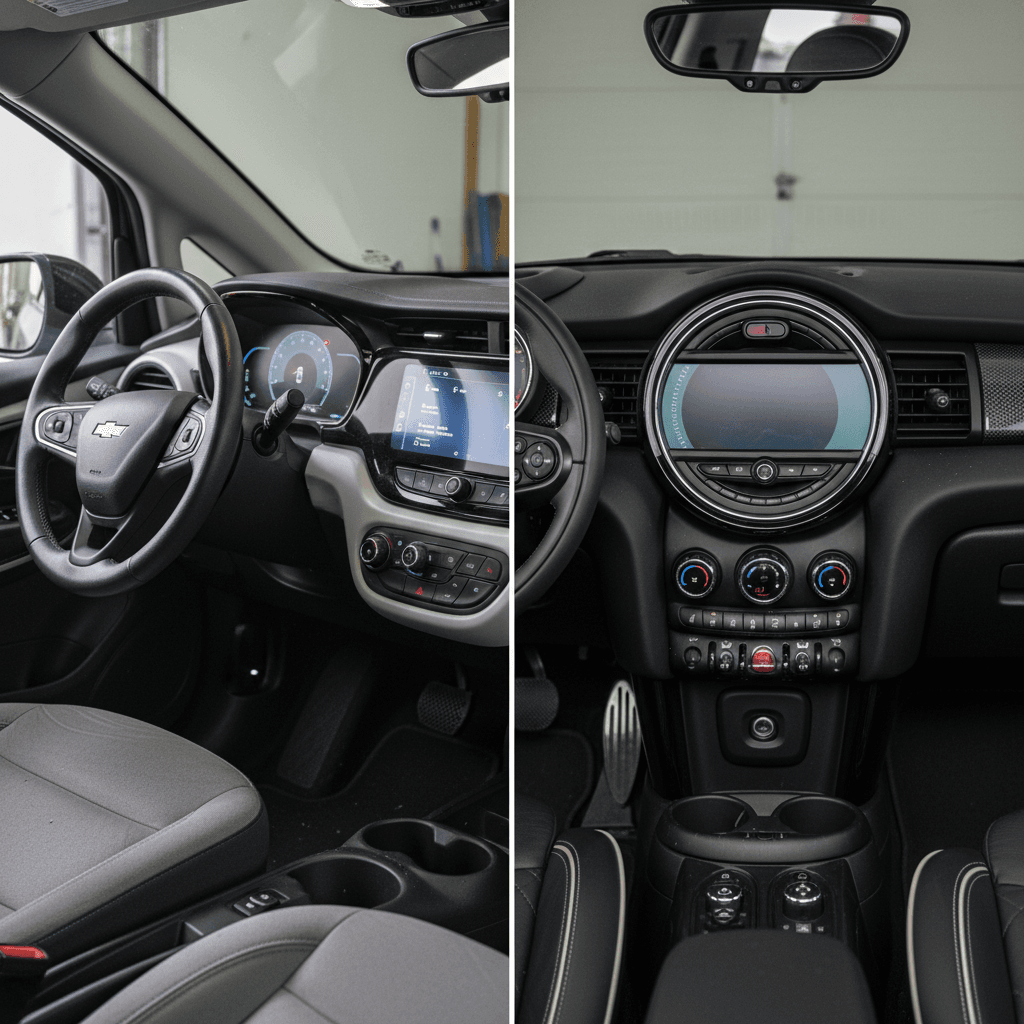
This is where the **Chevy Bolt EV pulls away for families and utility‑minded shoppers**. It’s still a subcompact car, but the tall roof, four doors, and deep cargo well give it surprising flexibility.
Practicality comparison
Room, access, and everyday usability.
Chevrolet Bolt EV
- Four doors with easier rear access for kids and adults.
- Respectable rear legroom for a subcompact.
- Split‑folding rear seats and a deep cargo floor handle bikes, luggage, or bulky groceries.
- Driving position is upright and airy, more like a small crossover.
Mini Cooper SE
- Three‑door layout makes rear seats harder to access.
- Rear space is tight for taller passengers, best for short hops.
- Trunk is fine for a couple of carry‑ons or a weekend bag, not a full family vacation.
- Cabin feels premium and stylish, but you trade practicality for personality.
Kids and car seats
Driving experience: fun vs. function
Both cars are quick and quiet off the line, but they have very different personalities. The **Mini Cooper SE leans heavily into fun**, while the **Bolt EV is tuned for efficiency and relaxed commuting**.
Mini Cooper SE: go‑kart DNA
- Short wheelbase and low center of gravity give it classic Mini "point‑and‑shoot" handling.
- Steering is quick and communicative for a modern EV; it feels eager in corners.
- Sporty interior touches and high‑quality materials make it feel more premium than its size suggests.
- Downside: firm ride on rough roads, and road noise can be noticeable on coarse pavement.
Chevrolet Bolt EV: composed commuter
- Still plenty of zip, 200 hp in a small car is no joke.
- Ride is tuned more for comfort and efficiency than canyon carving.
- Cabin design is practical and straightforward, though not as "special" as the Mini’s.
- Excellent one‑pedal driving and regen controls for smooth stop‑and‑go commuting.
Where each EV shines
Reliability, battery health, and recalls
Both the Chevrolet Bolt EV and Mini Cooper SE are relatively mature designs in the used market, which helps with parts availability and independent‑shop familiarity. But the **Bolt EV’s high‑profile battery recall** and the Mini’s tight packaging are worth understanding before you buy.
- Chevrolet Bolt EV: Early cars were affected by a widely publicized battery recall related to fire risk. Most U.S. examples on the road today have already received replacement packs or software updates through GM’s recall campaign.
- Mini Cooper SE: Fewer large‑scale recall headlines, but still subject to the usual BMW/Mini quirks (sensors, infotainment glitches, etc.). The simpler cooling demands of a smaller battery pack can be an advantage over the long term.
Always check recall and battery status
Ownership costs, insurance, and incentives
Both the Chevrolet Bolt EV and Mini Cooper SE can be **surprisingly affordable on the used market** compared with new EVs, but their cost profiles differ slightly.
Cost of ownership snapshot
How each EV hits your wallet after purchase.
Chevrolet Bolt EV costs
- Purchase price: Often among the lowest‑priced used EVs for the range you get.
- Insurance: Typically reasonable, but check quotes, some carriers price EVs differently.
- Maintenance: No engine or oil changes; expect tires, brakes (slow wear thanks to regen), and cabin filters.
- Energy: Larger battery means more miles per charge, but also more kWh per full refill.
Mini Cooper SE costs
- Purchase price: Often similar to or slightly less than a comparable‑year Bolt EV because of the shorter range.
- Insurance: Can be a bit higher because of premium branding and parts costs, get quotes.
- Maintenance: Similar EV simplicity, but BMW/Mini service rates can be higher than Chevy’s in some markets.
- Energy: Small battery means quick, cheap charges; but you’ll be plugging in more often if you drive far.
Tax credits on used EVs
Used EV shopping: how Recharged fits in
Whether you lean Bolt or Mini, buying used adds one big question: what shape is the battery really in? That’s where a specialized used‑EV retailer makes a serious difference compared with a traditional dealer or private‑party sale.
What you get with a used EV from Recharged
Verified battery health
Every car comes with a <strong>Recharged Score Report</strong> that includes detailed battery diagnostics, so you know whether that Bolt EV or Mini SE still delivers the range you’re paying for.
Fair market pricing
Recharged benchmarks real‑time market data and battery condition to price vehicles fairly, not just by odometer mileage, which is critical for EVs.
Financing and trade‑in options
You can arrange <strong>EV‑friendly financing</strong>, get an instant offer or consignment option for your current vehicle, and roll everything into a single, streamlined deal.
Nationwide delivery and EV‑savvy support
Shop fully online, lean on EV‑specialist support for questions about charging and ownership, and have your car delivered to your door. If you’re near Richmond, VA, you can also visit the Recharged Experience Center.
So which is better: Bolt EV or Mini Cooper SE?
In a straight, numbers‑only fight, range, space, flexibility, the **Chevrolet Bolt EV is objectively the stronger all‑rounder**. But if you zoom in on daily life in a dense city, with short drives and tight parking, the **Mini Cooper SE can easily feel like the “better” car** for the right owner.
Choose the Chevrolet Bolt EV if…
- You want one EV that can do everything, commuting, errands, weekend trips, and occasional long drives.
- You need usable rear seats and cargo space for family, friends, or gear.
- Range anxiety is a real concern and you’d rather over‑buy than feel limited.
- You’re watching your budget closely and want the most miles per dollar in the used EV market.
Choose the Mini Cooper SE if…
- You have **short, predictable daily mileage** and solid home or workplace charging.
- You already own a longer‑range vehicle for road trips, or you rarely leave the city.
- You value design, brand, and fun-to-drive feel as much as practicality.
- You want a compact footprint that’s easy to park and maneuver in tight neighborhoods.
The better car is the one that fits your actual miles, passengers, and parking reality, not just the spec sheet. If you’re still on the fence, browsing verified‑battery used listings for both models side by side can make the choice clearer. That’s exactly what Recharged is built for: helping you compare **real range, real condition, and real prices** so you end up with the small EV that genuinely works for your life.