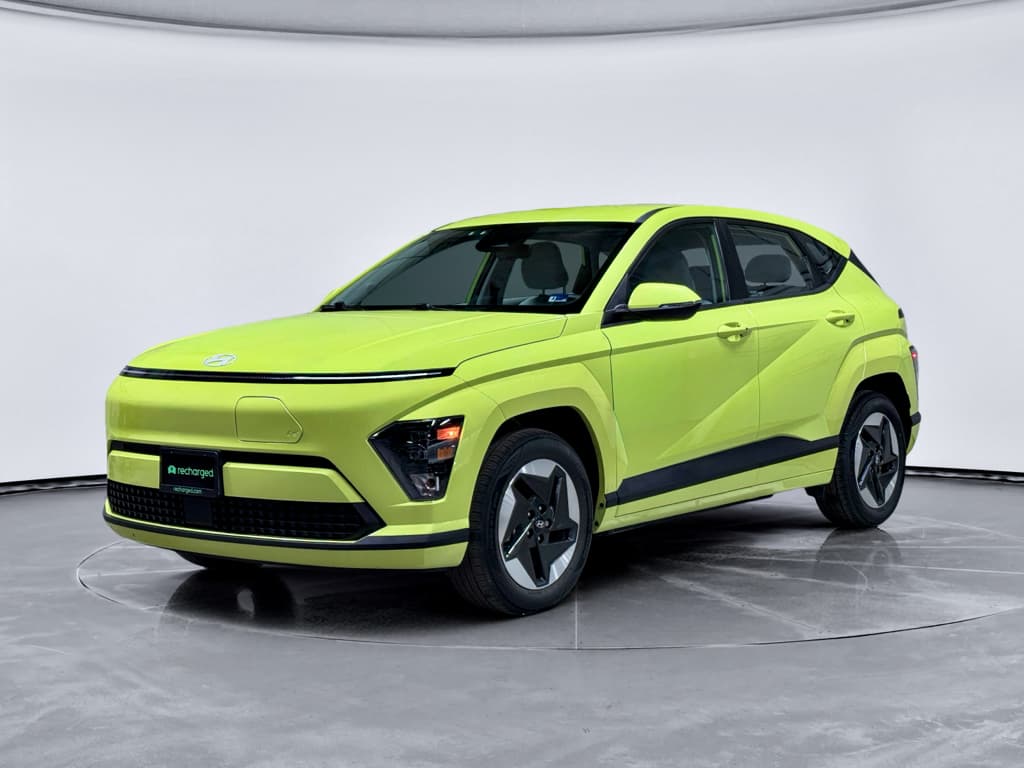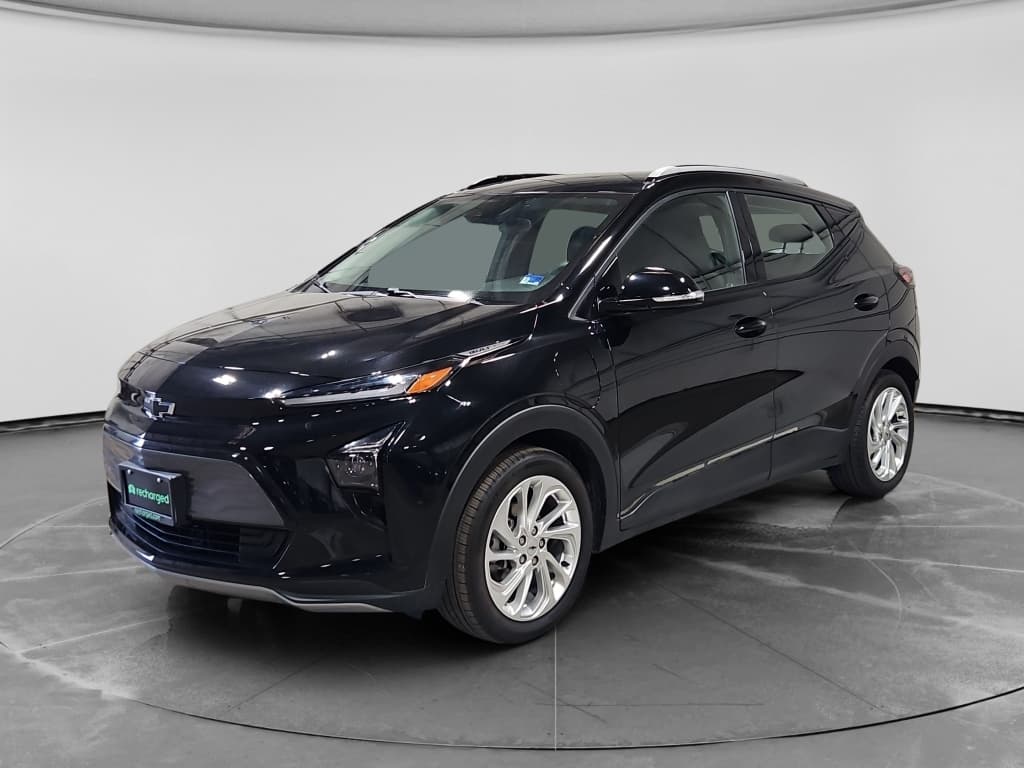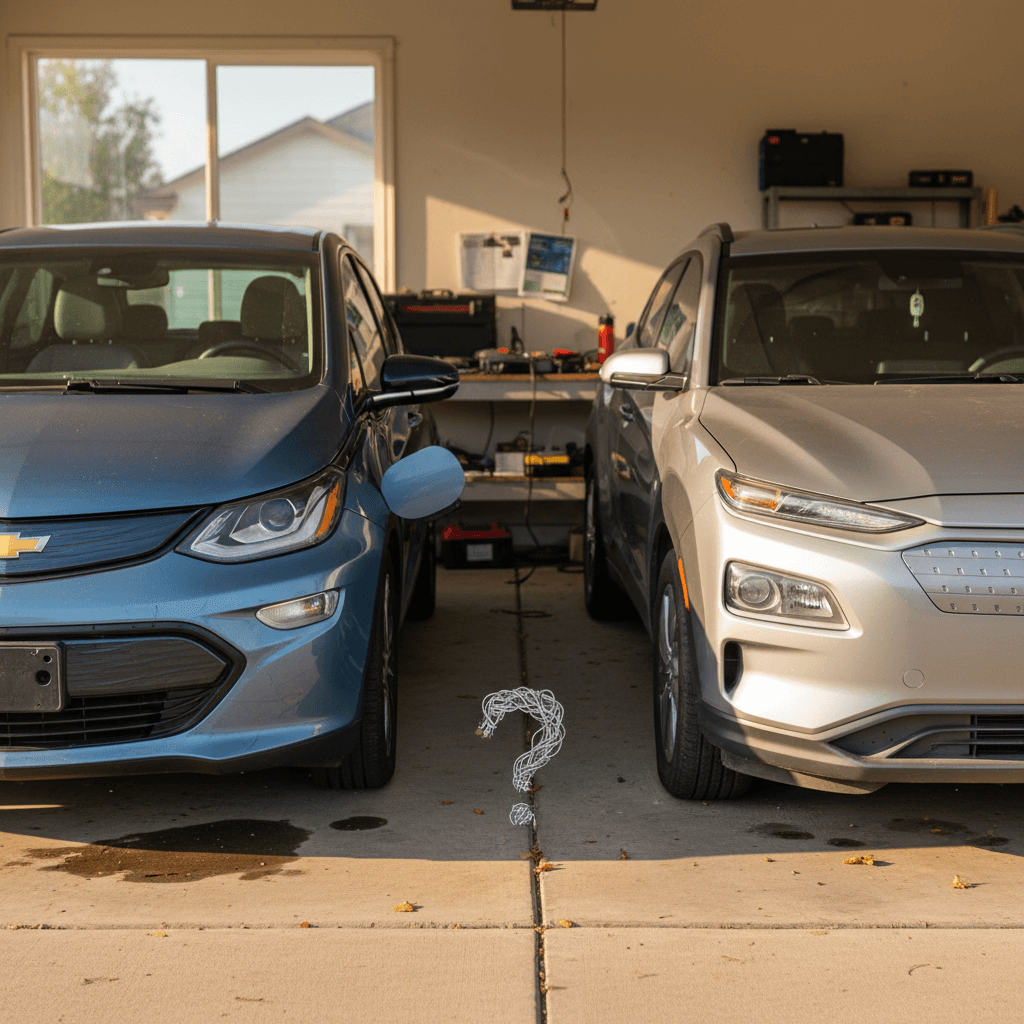
You could call the Chevrolet Bolt EV and Hyundai Kona Electric the **work boots of the EV world**, not glamorous, not TikTok famous, but relentlessly practical. If you’re cross-shopping these two as used EVs, you’re asking the right question: between the Bolt EV and Kona Electric, which actually makes your daily life easier and cheaper?
Why this comparison matters now
Chevrolet Bolt EV vs Hyundai Kona Electric: Overview
At a glance, the **Chevy Bolt EV** is a tall-ish hatchback, a city mouse with big‑battery ambitions. The **Hyundai Kona Electric** is its crossover‑ish cousin: slightly higher seating position, more conventional SUV shape, and a bit more polish inside. Both are front‑wheel‑drive, both top out around 200 hp, both were designed to democratize long‑range EVs rather than chase Teslas down the Autobahn.
Personality Snapshot: Bolt EV vs Kona Electric
Same mission, very different flavors
Chevrolet Bolt EV
- Vibe: Geeky, efficient city hatchback
- Best for: Commuters, urban/suburban drivers, value hawks
- Strengths: Excellent efficiency, tight turning radius, usually cheaper used
- Weak spots: Narrow seats, past battery recall history
Hyundai Kona Electric
- Vibe: Compact SUV with an EV heart
- Best for: Small families or anyone wanting a more SUV‑like feel
- Strengths: Strong range, better cabin ambience, long warranty
- Weak spots: Rear seat space, can be pricier on the used market
Key Specs: Bolt EV vs Kona Electric
Core Specs Comparison (Typical U.S. Models)
These are representative specs for popular model years you’ll find on the used market in the U.S.
| Spec | Chevrolet Bolt EV (2019–2023) | Hyundai Kona Electric (2019–2023 & 2024 redesign) |
|---|---|---|
| Battery size | ~66 kWh | 64–64.8 kWh (standard U.S. long‑range) |
| EPA range | Up to ~259 miles | Up to ~258–261 miles (long‑range) |
| Power | ~200 hp FWD | ~201 hp FWD |
| 0–60 mph | ~6.5–6.9 seconds | ~6.8 seconds (varies by year) |
| Onboard AC charger | 7.2–11 kW (later years higher) | 7.2–10.4 kW (depending on year) |
| DC fast‑charge peak | Around 55 kW | Around 75–100 kW (best conditions) |
| Body style | Tall hatchback | Subcompact crossover/SUV |
| Seating | 5 (tighter rear seat) | 5 (more SUV‑like, still compact) |
Exact specs vary by model year and trim. Always confirm on the specific VIN.
Specs are the start, not the end
Range and Efficiency
Range is where these two go toe‑to‑toe like seasoned middleweights. A typical **Bolt EV** from the later years (2020–2023) delivers an EPA rating around **259 miles**. A long‑range **Kona Electric** lands in the same neighborhood, roughly **258–261 miles** depending on year and trim. In actual driving, both will do 200+ miles on the highway and more in city use if you’re not hammering the accelerator.
Real‑World Range Snapshot
In practice, the **Kona Electric tends to edge out the Bolt EV in efficiency** when driven gently, especially in the latest generation, which has software‑smoothed regenerative braking and clever eco drive modes. But the difference isn’t night and day; it’s the kind of gap you’d notice only over months of commuting or on a spreadsheet, not on a single road trip.
Used‑EV range reality check
Charging Speed and Everyday Usability
Here the two diverge more clearly. The Bolt EV carries its small‑car humility into fast charging: it tops out around **55 kW** DC fast‑charging, meaning a 10–80% session can feel leisurely compared to newer EVs. It’s perfectly adequate for occasional road trips, but you’ll plan longer coffee breaks. The Kona Electric, especially in newer years, supports **higher peak DC rates (roughly 75–100 kW in ideal conditions)** and can pull off a 10–80% sprint in the ballpark of 40–45 minutes when the battery is warm and the charger is healthy.
Bolt EV: Slow and steady
- Home AC charging: With a 240‑volt Level 2 setup, many Bolt EVs refill overnight thanks to ~7.2–11 kW onboard charging in later years.
- Public DC fast charging: Peaks around 55 kW, with a fairly flat curve, so it’s predictable but not quick.
- Best use case: Plug in at home every night, treat fast charging as an occasional convenience, not a lifestyle.
Kona Electric: A bit more road‑trip friendly
- Home AC charging: Similar overnight performance; newer models offer around 10 kW onboard charging, trimming a little time.
- Public DC fast charging: Higher peak speeds make it easier to add 100+ miles during a coffee stop.
- Best use case: Commuters who also want to take a few highway trips a year without feeling like they’re camping at the charger.
Think in hours, not kilowatts
Comfort, Space, and Everyday Practicality
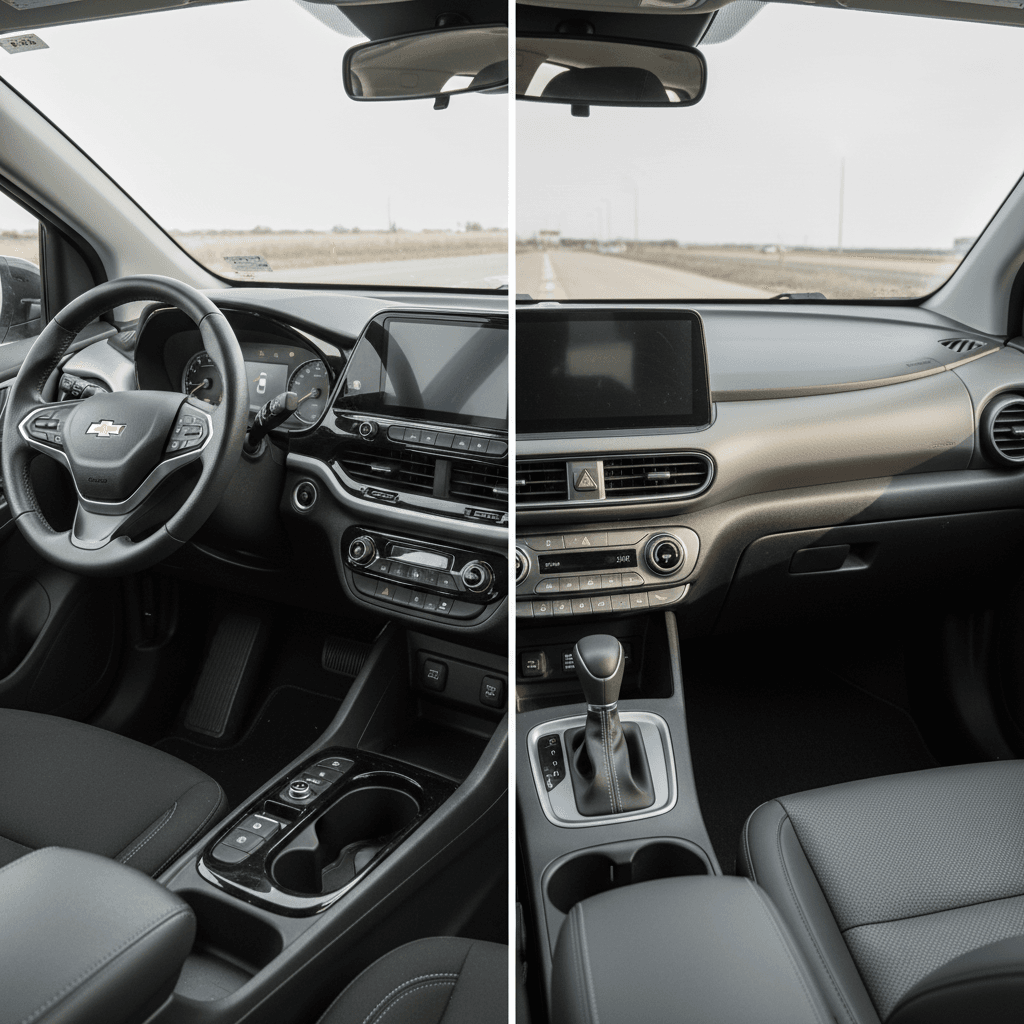
Slide into the **Bolt EV** and you’re in something that feels more like a cleverly packaged appliance than a small SUV. The seating position is upright but narrow, especially in early model years where the front seats drew complaints for being too thin. Rear legroom is adequate for adults on short trips, outstanding for kids. Cargo space is hatchback‑useful but not cavernous.
The **Kona Electric** answers that with a more conventional crossover interior. The front seats are generally plusher, the driving position more SUV‑like, and the design a bit more polished. Rear space is still compact, it’s not a family hauler, but headroom and perceived roominess feel better than the tape measure suggests. Cargo space is similar in absolute terms, but the Kona’s shape and load floor can be a bit more flexible for strollers and bulkier items.
- If you’re tall and long‑legged, the Kona’s driving position will likely feel more natural.
- If you care about maneuverability and easy parking above all, the Bolt EV’s shorter footprint and tight turning circle are hard to beat.
- If you regularly carry two adults in back, both are tight; try before you buy, or consider a larger EV.
Cabin quality nod: Kona Electric
Tech, Safety, and Driving Experience
On the road, both cars deliver that instant‑torque EV zing around town. The **Bolt EV** feels light and eager off the line; steering is quick, and the car has a faintly go‑kart sensibility. It’s great in congested city traffic, a little less serene on rough pavement where the short wheelbase can produce a choppy ride. Noise levels are acceptable but not luxury‑quiet.
The **Kona Electric** is more mature: slightly smoother ride, a bit more sound insulation, and in newer generations, very polished one‑pedal driving and adaptive regen. It feels like a regular crossover that just happens to be electric, not a lab project.
Tech and Safety Highlights
Both are well equipped, but Hyundai leans into polish and features
Driver assistance
Infotainment
Safety scores
These are not halo products or virtue signals; they’re electric workhorses, the kind of cars that quietly decapitate your fuel bill and ask for very little in return.
Reliability, Recalls, and Battery Health
Here’s where the history lesson matters, especially for the **Chevrolet Bolt EV**. Earlier Bolts were affected by a widely publicized **battery recall** related to fire risk. GM’s fix involved software updates and, in many cases, full battery pack replacements. A Bolt with a documented new pack can actually be a hidden gem: you’re effectively getting a fresher battery in an older shell. But you absolutely want paperwork confirming that the recall work has been completed and the pack replaced or cleared.
The **Hyundai Kona Electric** has also had its share of early‑generation battery recalls in some markets, though not as headline‑grabbing in the U.S. The upside for Kona buyers is Hyundai’s traditionally strong EV warranty coverage and the brand’s improving track record with electric powertrains. As with the Bolt, you want to confirm recall completion and look at battery health, not just odometer miles.
Used EV Battery Health Checklist
1. Verify recall completion
Ask for documentation showing all open recalls have been performed, especially battery‑related campaigns on Bolt EVs and early Kona Electrics.
2. Get an objective battery health score
Use tools like the <strong>Recharged Score</strong>, which analyze actual battery capacity and charging behavior on the specific car you’re considering.
3. Look at charging history
Frequent DC fast charging, especially in hot climates, can accelerate degradation. A car mostly charged at Level 2 at home is usually healthier.
4. Consider climate and storage
EVs that lived their lives in extremely hot regions or sat parked fully charged for long periods may show more degradation.
Don’t skip the recall paperwork
Ownership Costs and Resale Value
From an ownership‑cost perspective, both the Chevrolet Bolt EV and Hyundai Kona Electric are staunch allies. Electricity is dramatically cheaper per mile than gasoline, and both cars are famously efficient. Routine maintenance is light, no oil changes, fewer moving parts, regenerative braking that baby‑sits your brake pads.
Chevrolet Bolt EV: The value assassin
- Purchase price: Often among the lowest‑priced used long‑range EVs on the market.
- Depreciation: The early recall headlines and older platform tech pushed prices down, if you buy after the pain, you’re the beneficiary.
- Insurance: Varies by region, but the Bolt’s compact size and strong safety record often help.
Hyundai Kona Electric: Costs a bit more, holds a bit more
- Purchase price: Typically higher than an equivalent‑age Bolt EV, reflecting demand and perception of polish.
- Depreciation: Strong warranty coverage and crossover shape help the Kona hold value a bit better in many markets.
- Energy costs: Excellent efficiency means low electricity bills; newer Konas can be standouts here.
Total cost of ownership is where both shine
Which One Should You Buy Used?
You can’t really go wrong with either the Chevrolet Bolt EV or the Hyundai Kona Electric, but your life, your roads, and your budget will nudge you toward one.
Bolt EV vs Kona Electric: Quick Recommendations
Match the car to the life you actually live
Choose the Chevrolet Bolt EV if…
- You want the lowest possible entry price into a long‑range EV.
- You have reliable home charging and only take occasional road trips.
- You mostly drive in town or on shorter highway hops.
- You’re fine with a hatchback‑ish vibe and don’t need a crossover image.
- You’re willing to do your homework on recall history and battery health.
Choose the Hyundai Kona Electric if…
- You prefer a small SUV feel with a slightly nicer cabin.
- You plan to do more fast‑charging and want better DC performance.
- You value Hyundai’s long EV warranty and polished driver‑assist tech.
- You can stretch a bit more on price for extra refinement and road‑trip ease.
Put simply: the **Bolt EV is the bargain genius**, the kid who graduated early and now just wants a quiet desk job in your driveway. The **Kona Electric is the grown‑up**, dressed a little better, charging a little faster, asking a little more up front. The right answer is the one that lines up with your commute, your parking situation, your appetite for homework, and how much you value comfort and polish over rock‑bottom pricing.
How Recharged Simplifies Choosing a Used EV
Shopping used EVs shouldn’t feel like doing your own graduate thesis in battery chemistry. At Recharged, every Chevrolet Bolt EV and Hyundai Kona Electric listing comes with a **Recharged Score Report**, which includes verified battery health diagnostics, transparent pricing analysis, and an inspection tailored to the realities of EV ownership.
- Battery health clarity: We use advanced diagnostics to understand usable capacity and charging performance on each car, not just what the dash says.
- Fair‑market pricing: Our valuation looks at EV‑specific factors like battery health, incentives, and local demand, not just a gas‑car playbook.
- EV‑specialist support: Our team can walk you through how a Bolt EV or Kona Electric will fit your daily driving, charging options, and budget.
- Financing, trade‑in, and delivery: Set up financing, get an instant offer for your current car, and have your next EV delivered, fully online or at our Experience Center in Richmond, VA.
Try them on for size, without leaving the couch
Ready to find your next EV?
Browse Vehicles