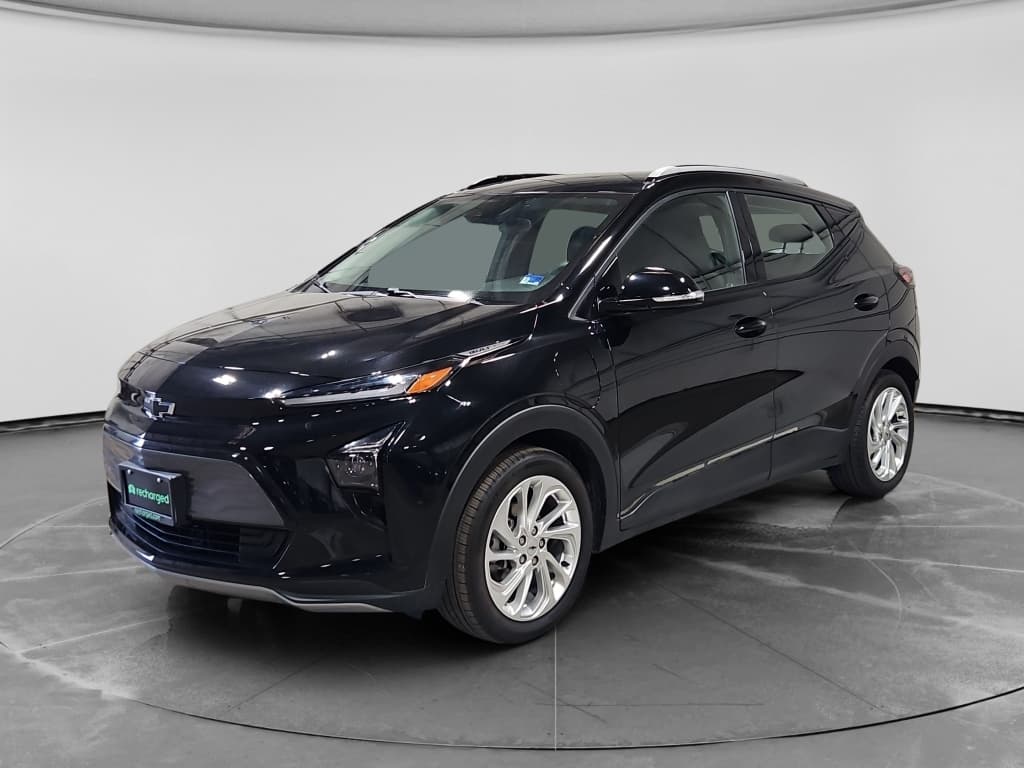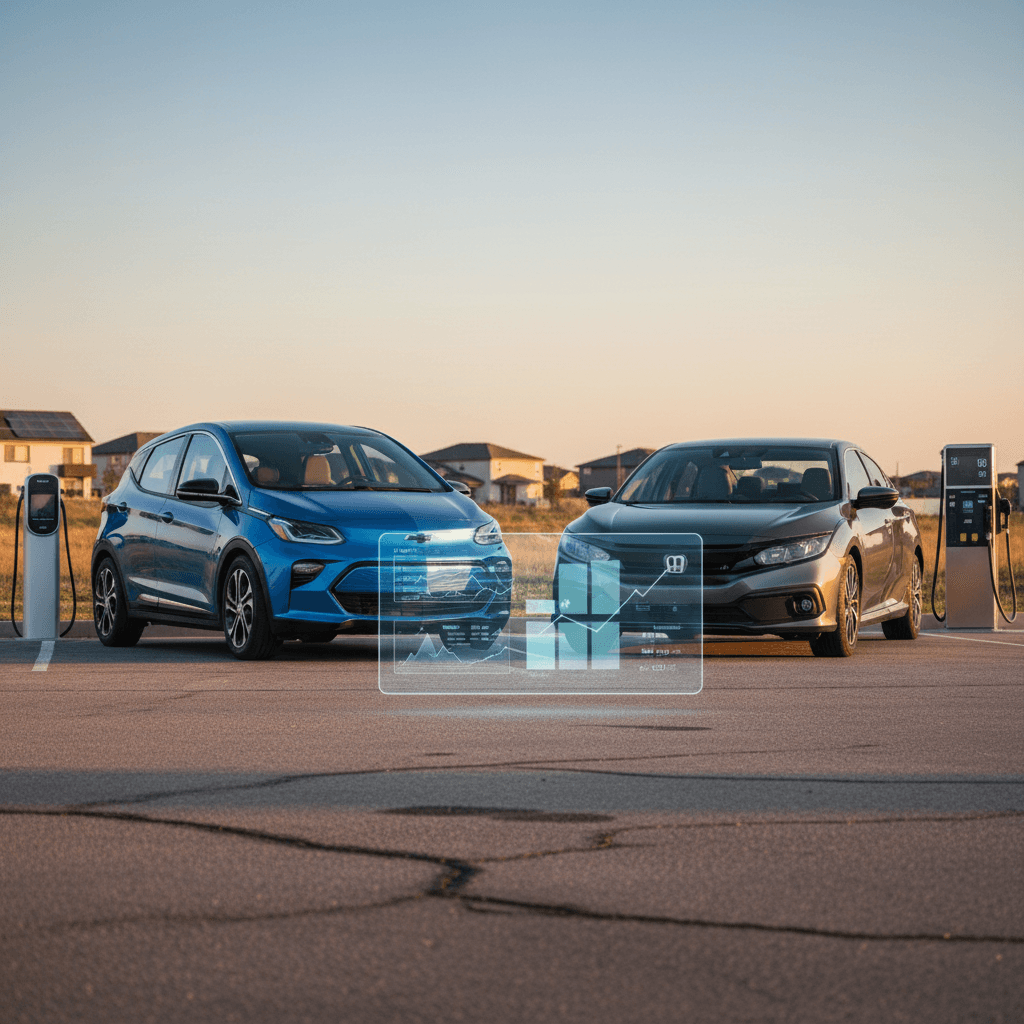
If you’ve always thought of the Honda Civic as the sensible-money compact, 2026 is the year the Chevrolet Bolt EV crashes that party. With gas still pricey and used EV deals all over the map, a lot of shoppers are asking a very specific question: in 2026, is it actually cheaper to own a Bolt EV than a Honda Civic?
What this comparison covers
Why Compare the Chevrolet Bolt EV and Honda Civic in 2026?
On paper, these two don’t look like natural rivals. The Bolt EV is a fully electric hatchback, the Civic a gasoline compact available as a sedan or hatch. But in the real world, they’re cross‑shopped constantly because they hit the same sweet spot: affordable, efficient daily transportation for people who don’t want a giant SUV or a big payment.
By April 2026, you’re not choosing between a niche EV and a mainstream gas car, you’re choosing between two mainstream answers to the same problem: “How do I move myself and maybe a couple of friends around town without lighting money on fire?” This guide assumes a U.S. buyer driving about 12,000 miles per year and comparing a reasonably equipped Civic to a Bolt EV with enough range to be your primary car.

Quick Take: Which Is Cheaper to Own?
5‑Year Cost Snapshot (Approximate, 60,000 Miles)
Run the math for an averaged‑out U.S. driver in 2026 and the Chevrolet Bolt EV usually comes out a few thousand dollars cheaper to own than a comparable Honda Civic over five years, especially if you buy the Bolt used and can tap the federal used EV tax credit.
Bottom line up front
Purchase Price & Incentives: Bolt EV vs Honda Civic
Before we talk about operating costs, you need a realistic sense of what you’ll actually pay to get each car in your driveway in 2026. New Bolt EV production paused after the 2023 model year, but there are plenty of nearly new and used Bolts on the market. The Civic, on the other hand, is widely available new and used.
Typical 2026 Transaction Prices (U.S. Averages)
Your local market may be higher or lower, but these are solid planning numbers.
Chevrolet Bolt EV (2022–2023 used)
- Typical 2026 dealer asking price: $19,000–$24,000 for a low‑mile 2022–2023 Bolt EV.
- Federal used EV tax credit: Up to $4,000 off if the car sells for $25,000 or less and you meet income limits.
- Net price for many buyers: Around $17,000–$21,000 after the used EV credit, sometimes less with local rebates.
Because Bolt EV production ended after 2023, virtually all 2026 shoppers are looking at used inventory, and that’s where the savings really kick in.
Honda Civic (2024–2025 used or 2026 new)
- Typical new 2026 Civic LX/EX MSRP: Around $26,000–$29,000 before fees and tax, depending on trim.
- Typical nearly new (1–2 year) Civic price: $22,000–$26,000 at a dealership for a mainstream trim.
- No federal tax credit: Gasoline cars don’t qualify for EV tax incentives.
You may find older Civics for less, but then you’re comparing an older gas car to a newer EV, that tends to tilt even further in the Bolt’s favor on running costs.
Don’t forget the used EV credit
If you line up a typical used 2022–2023 Bolt EV purchase against a similar‑age Civic, the out‑the‑door prices often land within a couple thousand dollars of each other, sometimes the Bolt is actually cheaper once the used EV credit is applied. That’s a huge shift from a few years ago, when EVs carried a clear sticker‑price penalty.
Fuel vs Electricity: What You’ll Spend to Drive
This is where the EV makes its money back. We’ll use friendly, round 2026 assumptions here so you can adjust them for your own commute: 12,000 miles per year, mostly mixed city/highway driving, with gas around $3.25 per gallon nationally and home electricity at roughly $0.15 per kWh.
Energy Cost Comparison: 5 Years, 60,000 Miles
Approximate fuel vs electricity costs for an averaged‑out U.S. driver in 2026.
| Chevrolet Bolt EV | Honda Civic (gas) | |
|---|---|---|
| Efficiency | ≈ 3.5 miles/kWh | ≈ 36 mpg combined |
| Energy price used | $0.15 per kWh (home charging) | $3.25 per gallon |
| Cost per mile (energy only) | ≈ $0.043/mile | ≈ $0.090/mile |
| Annual energy cost (12,000 mi) | ≈ $520 | ≈ $1,080 |
| 5‑year energy cost (60,000 mi) | ≈ $2,600 | ≈ $5,400 |
Your local prices will vary, but the gap between gas and electricity is what matters.
Public fast charging changes the math
Even with conservative assumptions, the Bolt EV typically saves $2,500–$3,000 in energy costs over five years versus a Civic driven the same distance. If gas spikes higher than our $3.25 estimate, or your utility offers off‑peak EV rates, those savings grow.
Maintenance & Repairs: Where EVs Really Win
A Civic has an excellent reputation for reliability, but it’s still a gasoline car with hundreds of moving parts under the hood. The Bolt EV doesn’t need oil changes, spark plugs, timing belts, or exhaust work. It does still need tires, cabin air filters, brake fluid, and occasional checks, just less of everything and less often.
Chevrolet Bolt EV – Typical 5‑Year Maintenance
- Cabin air filter, brake fluid, tire rotations, coolant checks.
- Average scheduled maintenance often lands around $350–$450 per year at a dealer, less at a trusted indie shop.
- Brake wear is usually low thanks to regenerative braking.
- Big battery is designed to last the life of the car; failures are rare but expensive, which is why battery health data matters when you buy used.
Honda Civic – Typical 5‑Year Maintenance
- Oil and filter changes, air filters, spark plugs (later on), transmission service, plus all the usual tires and brakes.
- Even with Honda’s efficiency, plan on $600–$800 per year average maintenance and wear over five years at a dealer.
- More moving parts mean more opportunities for leaks and wear as the miles add up.
Where Recharged can help on a used Bolt
Across 60,000 miles, it’s reasonable to estimate that the Bolt EV will save $1,000–$1,500 in maintenance versus the Civic, assuming both are serviced on schedule and not abused. You can absolutely spend more, or less, depending on how gentle you are and where you service the car, but the EV’s simpler hardware is working in your favor.
Insurance & Fees: What It Costs to Keep Them Legal
Insurance is the one place where the Bolt EV doesn’t always win. Some insurers still charge a modest premium for EVs because of higher repair costs for specialized components and bodywork, even on a relatively simple model like the Bolt.
Typical Annual Insurance & Registration Costs
U.S. national‑average style ballparks for a clean‑record driver in 2026.
| Chevrolet Bolt EV | Honda Civic | |
|---|---|---|
| Full‑coverage insurance (est.) | ≈$1,450/year | ≈$1,250/year |
| Registration & fees | Varies by state; EVs may pay extra road‑use fees | Standard registration; some states add small fees |
| 5‑year insurance total | ≈$7,250 | ≈$6,250 |
Check quotes in your ZIP code, local factors can easily swing these numbers 20% either way.
EV fees vs gas taxes
Add it up, and the Bolt EV may cost roughly $1,000 more in insurance over five years than an equivalent Civic, plus any extra EV registration fees your state tacks on. It’s not nothing, but it’s also not enough to cancel out energy and maintenance savings for most drivers.
Resale Value & Depreciation by 2031
Depreciation used to be the EV boogeyman, but by 2026 a lot of that early cliff is already behind a used Bolt EV. Most of the scary drop in value happens in the first few years, and you’re shopping on the other side of that hill.
Where Will They Likely Be in 5 Years?
Very rough, directional numbers assuming both cars are well‑maintained and around 120,000 miles by 2031.
Chevrolet Bolt EV
- Buy in 2026 at, say, $20,000.
- Reasonable expectation: worth around $9,000–$11,000 in 2031 if the battery is healthy.
- Depreciation hit: about $9,000–$11,000 over five years.
Honda Civic
- Buy in 2026 at, say, $23,000 for a similar‑age Civic.
- Reasonable expectation: worth around $10,000–$13,000 in 2031.
- Depreciation hit: about $10,000–$13,000 over five years.
Battery health is the resale swing factor
In real‑world terms, the two cars are closer on depreciation than you might expect. The Civic is the classic safe bet, but a fairly bought Bolt EV with proof of good battery health doesn’t fall off a cliff the way early EVs once did.
Side‑by‑Side 5‑Year Cost Table
Let’s put all the big buckets together. These are approximate 5‑year costs for an average U.S. driver between 2026 and 2031, assuming 60,000 miles driven, mostly home charging for the Bolt, and mainstream trims for both cars.
Approximate 5‑Year Cost of Ownership – Bought in 2026
Based on realistic, mid‑market assumptions, not the wildest deals or worst‑case scenarios.
| Cost Category | Chevrolet Bolt EV (used) | Honda Civic (new or nearly new) |
|---|---|---|
| Purchase price (after incentives) | ≈$19,000–$21,000 | ≈$22,000–$26,000 |
| 5‑year energy (fuel/electricity) | ≈$2,600 | ≈$5,400 |
| 5‑year maintenance | ≈$2,000 | ≈$3,500 |
| 5‑year insurance | ≈$7,250 | ≈$6,250 |
| Extra EV fees / gas‑related costs | ≈$600 (possible EV fees) | ≈$0–$300 (emissions/inspection fees) |
| Estimated value after 5 years | ≈$9,000–$11,000 | ≈$10,000–$13,000 |
| Net 5‑year cost (very rough) | ≈$40,000–$42,000 | ≈$43,000–$46,000 |
Use this as a framework. Plug in your own insurance quotes, local energy prices, and actual purchase offers.
How to read this table
How a Used Bolt EV Changes the Math
All of the above assumes fairly similar purchase prices. But the used market doesn’t always play fair. In some regions, you can find older Bolts for well under $20,000 before incentives. That’s where the numbers start to get lopsided, in your favor.
When a Used Bolt EV Is a Home‑Run Deal
1. Sale price at or under $25,000
That’s the ceiling for the federal used EV tax credit. If the Bolt you’re eyeing is listed above this, ask the seller what it would take to bring it under the cap and still make the deal work.
2. Eligible for the $4,000 used EV tax credit
If you qualify based on income and the car meets the IRS rules, that credit can drop your effective purchase price into solid‑used‑Civic territory, or below.
3. Clean battery health report
Look for documented battery diagnostics, not just a photo of the range display on a warm day. A platform like Recharged provides a <strong>Recharged Score battery report</strong> so you know what you’re buying.
4. You can charge at home or work
Without affordable Level 2 charging where you live or park, you give back a lot of the Bolt’s edge in energy costs. Before you shop, figure out where that power will come from.
5. You’re okay with compact‑hatchback practicality
The Bolt EV is flexible and roomy for its footprint, but it’s still a small hatch. If you regularly haul five adults plus luggage, a Civic sedan, or something larger, may make more sense.
Where Recharged fits into this decision
Ready to find your next EV?
Browse VehiclesWhich One Fits Your Life Better?
Choose the Chevrolet Bolt EV if…
- You can reliably charge at home or work and won’t live on DC fast chargers.
- Your driving is mostly commuting, errands, and the occasional weekend trip within the Bolt’s comfort zone.
- You care more about operating cost and quiet, smooth driving than about engine sound or manual transmissions.
- You like the idea of buying used to let someone else eat the steepest depreciation and still enjoy modern tech.
Stick with the Honda Civic if…
- You can’t easily install or access Level 2 charging and public charging near you is sparse or expensive.
- You do frequent very long highway trips in areas with poor fast‑charging infrastructure.
- You want maximum flexibility to fuel anywhere, anytime, with near‑zero planning.
- Your local electricity rates are high while gas is relatively cheap, narrowing or erasing the Bolt’s energy advantage.
In 2026, the Honda Civic is still the safe, familiar answer. But the numbers say the Chevrolet Bolt EV has quietly become the cheaper car to live with for a huge slice of American drivers, especially if you buy used and have a place to plug in. Run the math with your own quotes, your own utility rates, and your own driving pattern. If the Bolt EV comes out ahead for you, Recharged can help you find one with a healthy battery, fair price, and a simple, fully digital purchase process.