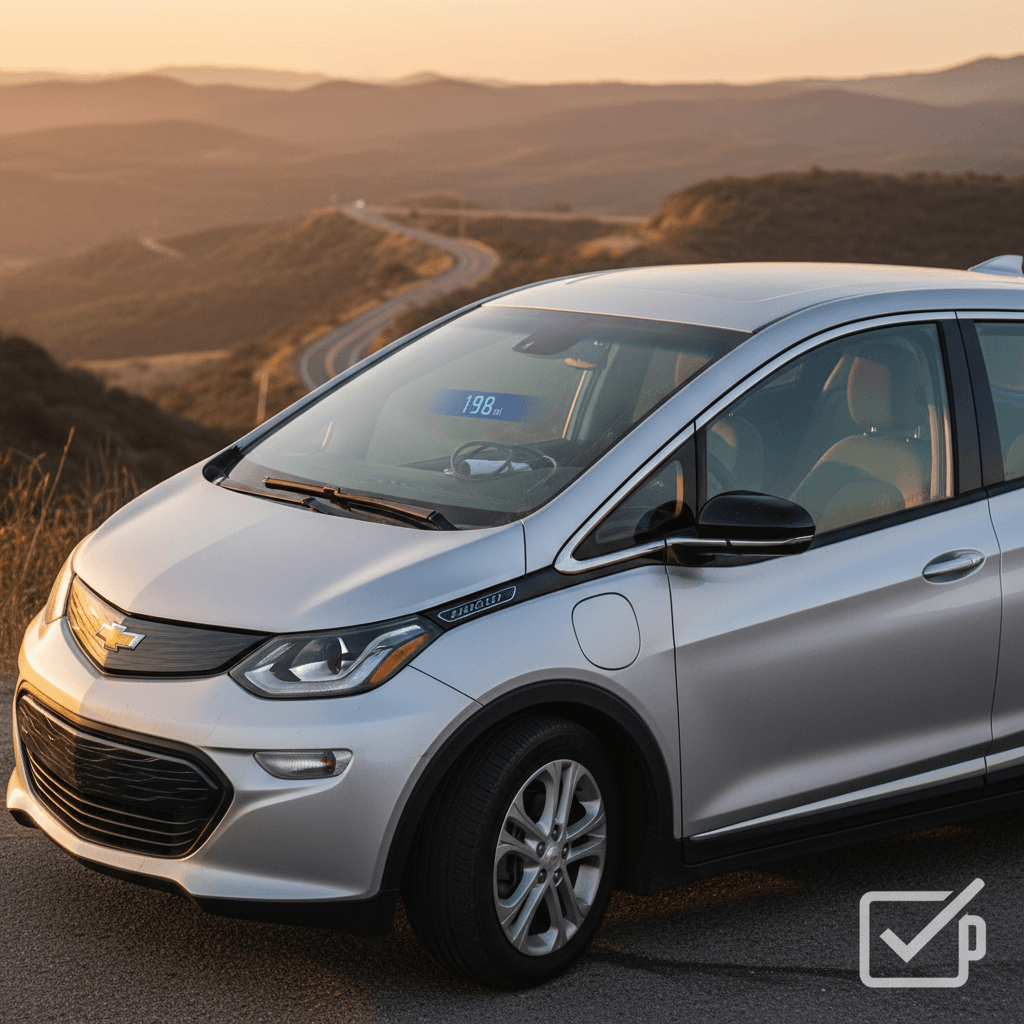
If you’re looking at a used Chevrolet Bolt, the first question you probably have is simple: what’s the Chevrolet Bolt EV range in the real world, today, not on a marketing slide? Between EPA ratings, winter losses, battery recalls, and now a next‑generation Bolt on the horizon, it can be hard to know what you’re actually getting for your money.
Why range matters most on a used EV
Chevrolet Bolt EV range at a glance
Bolt EV and EUV range snapshot
For most U.S. drivers, a healthy Bolt EV will comfortably cover a full week of commuting on a single charge, and a road‑trip day of 180–220 miles between fast‑charge stops. The Bolt EUV gives up a little range for a bit more space, but in daily use the difference is smaller than it looks on paper.
Think in trips, not just miles
Official EPA range: Bolt EV vs Bolt EUV
The Chevrolet Bolt lineup has gone through a few key range milestones. Understanding which years got which battery and rating will help you quickly evaluate any listing you’re considering.
Chevrolet Bolt EV & EUV EPA range by model year
Approximate combined EPA range ratings for U.S. models. Always confirm the exact year and trim when you shop.
| Model / Years | Battery size (usable, approx.) | EPA combined range | Notes |
|---|---|---|---|
| 2017–2019 Bolt EV | ~60 kWh | 238 mi | Original pack and rating. |
| 2020–2023 Bolt EV | ~65 kWh | 259 mi | Battery capacity increased; same motor, more range. |
| 2022–2023 Bolt EUV | ~65 kWh | 247 mi | Slightly taller, heavier; a bit less range than EV. |
| Upcoming 2027 Bolt (announced) | ~65 kWh LFP (est.) | ~255 mi (est.) | Future Ultium‑based Bolt; details still evolving. |
EPA ratings are a lab standard; your real‑world results will vary with speed, temperature, and driving style.
Don’t over‑index on the 2027 Bolt
Real-world Chevrolet Bolt EV range on the road
EPA numbers assume a standardized mix of speeds and conditions. In the real world, the Bolt EV usually does a bit better around town and a bit worse at 70–75 mph on the highway. That’s typical for a relatively tall, compact EV.
What you can realistically expect from a healthy Bolt
Assuming a late‑model Bolt EV with the 65‑kWh pack and moderate driving.
City & suburban driving
Range: ~270–300 miles on a full charge in mild weather.
- Frequent slowing regenerates energy.
- Lower aero drag below 45 mph.
- Heat/AC are the main efficiency swing factors.
Mixed commuting
Range: ~240–270 miles with a typical mix of 35–70 mph.
- Most used‑Bolt owners land here day to day.
- Easy to cover 40–60 miles/day while charging just a few times a week.
Highway road‑trips
Range: ~200–240 miles at 70–75 mph in mild temps.
- Higher speed = more aero drag, so range drops.
- Plan conservative legs of 180–200 miles between DC fast chargers.
How the Bolt performs in independent tests
How weather and climate affect Chevy Bolt range
Every EV loses range when it’s very cold or very hot, and the Bolt is no exception. The good news is that the Bolt’s heat pump–free system is predictable: most of the range hit comes from cabin heating in winter, so you can manage a lot of it with planning.
Cold weather and winter driving
- Expect 20–35% less range in sub‑freezing temperatures if you rely on the cabin heater.
- Short trips are hardest because the car has to warm up the cabin and battery each time.
- Using seat and steering‑wheel heaters is far more efficient than blasting hot air.
- Pre‑conditioning while plugged in can give you a warm cabin and battery without eating into range.
Heat, elevation, and other factors
- High heat mainly affects long‑term battery health; short‑term range loss is smaller than in the cold.
- Climbing steep grades can temporarily drop efficiency, but you’ll get some energy back on the way down through regen.
- Headwinds and heavy rain can trim range by another 5–15%, especially at freeway speeds.
Winter Bolt owner pro‑tip
Battery degradation and long-term range loss
Range when new is only half the story. On a used Chevrolet Bolt EV, you also care about how much range the car has lost after years of use and how quickly it’s likely to decline from here.
- Most Bolts lose relatively little range in the first 50,000–80,000 miles when treated reasonably well.
- Real‑world owner data commonly shows single‑digit to low‑teens percentage loss after 5–7 years.
- GM’s high‑voltage battery warranty typically covers 8 years / 100,000 miles and requires replacement if usable capacity drops below about 60% of original during that period (check the specific warranty booklet for exact terms).
- Bolts that received replacement packs under the recall effectively had their battery “reset” to zero miles at the time of replacement, which is a quiet upside for used buyers.
Bolt battery durability has aged surprisingly well
Habits that help your Bolt keep its range
You can’t stop degradation, but you can strongly influence the pace.
1. Charge smart at home
- Use Level 2 (240V) when possible.
- Set a daily charge limit (e.g., 70–80%) for routine use.
- Avoid leaving the car at 100% for days at a time.
2. Avoid extreme heat abuse
- In very hot climates, try to park in the shade or a garage.
- Don’t fast‑charge to 100% repeatedly on 100°F days unless you need it.
3. Drive it like a normal car
- Occasional hard acceleration is fine.
- What matters more is average temperature, charging habits, and mileage over many years.
Charging speeds, networks, and trip planning
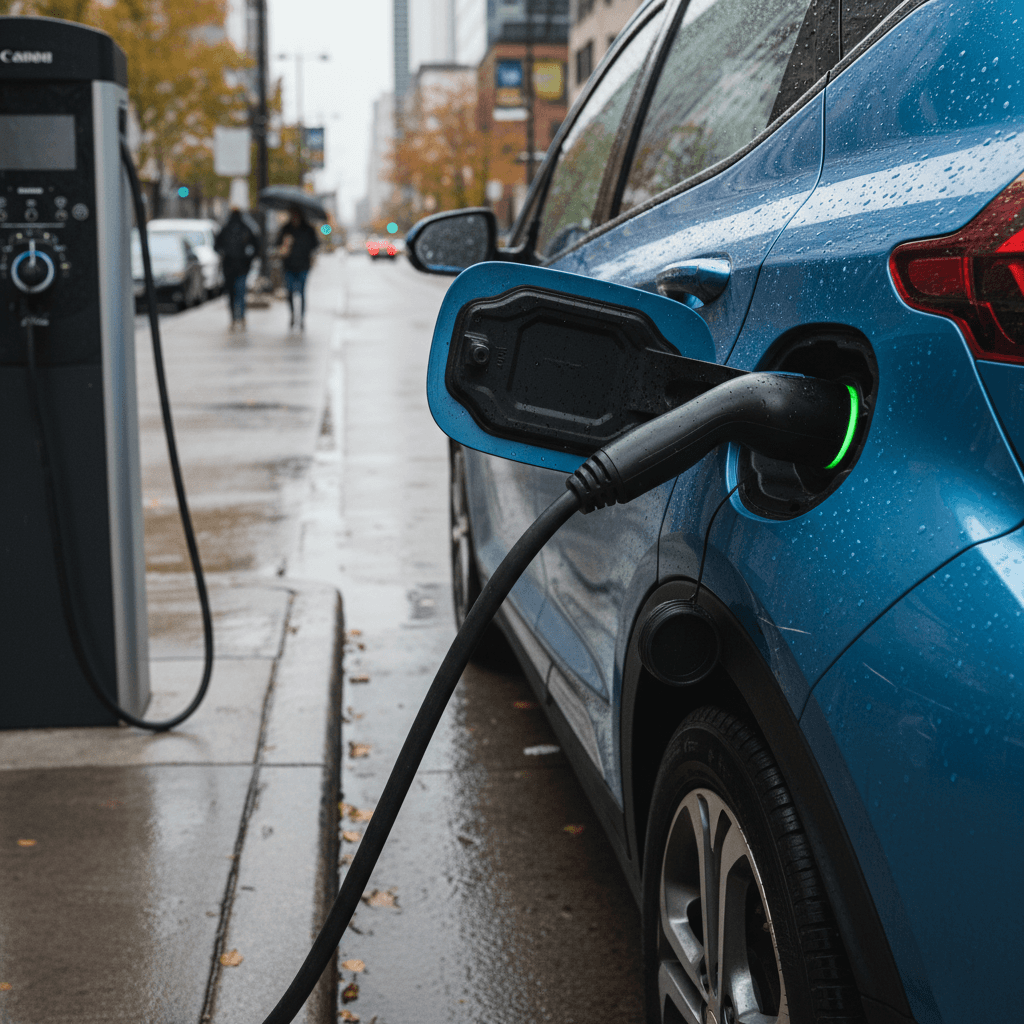
Range is only half the long‑distance story. The other half is how fast you can put miles back into the pack. This is where the Bolt EV’s older DC‑fast‑charging tech is competent but not class‑leading, something you should understand before planning 600‑mile days.
Chevy Bolt charging basics
Key Bolt charging scenarios and what they mean for day‑to‑day use and trips.
| Charging type | Typical power | Use case | What it feels like |
|---|---|---|---|
| Level 1 (120V wall outlet) | 1–1.4 kW | Emergency or occasional charging | About 4–5 miles of range per hour; think overnight top‑ups, not full charges. |
| Level 2 (240V home / workplace) | 7.2 kW (up to ~11 kW on some EVSEs) | Daily charging | Roughly 25–30 miles of range per hour. Empty to full in about 8–10 hours. |
| DC fast charging | Up to ~55 kW on most Bolts | Road‑trips, quick top‑ups | 10–80% in roughly 45–60 minutes. Best to grab a meal or coffee while you charge. |
Exact times vary with temperature, starting state of charge, and charger quality.
Bolt is a great commuter, a patient road‑tripper
The upside is that on a typical U.S. commute, you won’t care about fast‑charge speed at all. A Level 2 charger in your garage or at work turns the Bolt into a 24/7 “full tank at home” experience. That’s where the car really shines.
Used Chevy Bolt range checklist for buyers
When you’re evaluating a used Chevrolet Bolt EV or EUV, you’re really evaluating its battery and charging story. Here’s a simple checklist to keep you focused on the things that matter most for range.
Range-focused checklist for used Bolt shoppers
1. Confirm model year and variant
Double‑check whether you’re looking at a Bolt EV (hatchback) or Bolt EUV (slightly larger) and which model year. 2020–2023 Bolt EVs and 2022–2023 EUVs have the 65‑kWh pack and the higher EPA ranges.
2. Ask about recall battery replacement
Many Bolts received new packs under GM’s recall. A replacement pack means effectively “younger” battery health than the odometer suggests. Ask for service records or documentation.
3. Review a recent full‑charge estimate
Look at the car’s projected range at 100% in its typical driving mode. Don’t obsess over one number, but if a 259‑mile Bolt shows only ~190 miles at 100% in mild weather, that’s a flag worth investigating.
4. Check DC fast‑charge history
Frequent DC fast‑charging isn’t a deal‑breaker, but if the car lived on DC chargers in very hot climates, you may see more degradation. Ask the seller how and where they usually charged.
5. Take a real‑world test drive
Drive 15–20 miles on your typical mix of roads and watch the projected range drop. You’re looking for steady, predictable behavior, not wild swings over a short distance.
6. Get objective battery data if you can
At <strong>Recharged</strong>, every vehicle comes with a Recharged Score Report that includes <strong>verified battery health and range estimates</strong>. If you’re buying elsewhere, consider an independent EV inspection or diagnostic to avoid surprises.
How Recharged simplifies Bolt range shopping
Ready to find your next EV?
Browse VehiclesChevrolet Bolt EV range: FAQ
Frequently asked questions about Chevy Bolt range
Is the Chevy Bolt’s range enough for you?
If you strip away the hype and the headlines, the Chevrolet Bolt EV is a straightforward proposition: roughly 250 miles of rated range, around 200–240 miles of honest highway range, and relatively gentle degradation over time. For commuters, first‑time EV buyers, and anyone who values low running costs over blistering fast‑charge speeds, that’s a compelling package, especially on the used market.
The key is matching the car to your life. If your typical day is under 80 miles and you can install Level 2 charging at home or work, a used Bolt EV or EUV will feel almost effortless. If you’re dreaming of back‑to‑back 500‑mile days at 80 mph, you’ll either need to embrace longer coffee stops or look at faster‑charging alternatives.