If you own, or are shopping for, a Chevy Bolt EV or Bolt EUV, you’ve probably heard scary stories about Chevrolet Bolt EV battery replacement cost. Five-figure repair quotes, totaled cars, and long recall waits can make any sensible driver nervous. The reality in 2025–2026 is more nuanced: many owners still pay $0 thanks to warranty and recall coverage, while others see quotes high enough to rival the value of the car.
Quick context for 2025–2026
Chevy Bolt EV battery replacement cost: the short answer
Chevy Bolt EV battery replacement costs at a glance (2025–2026)
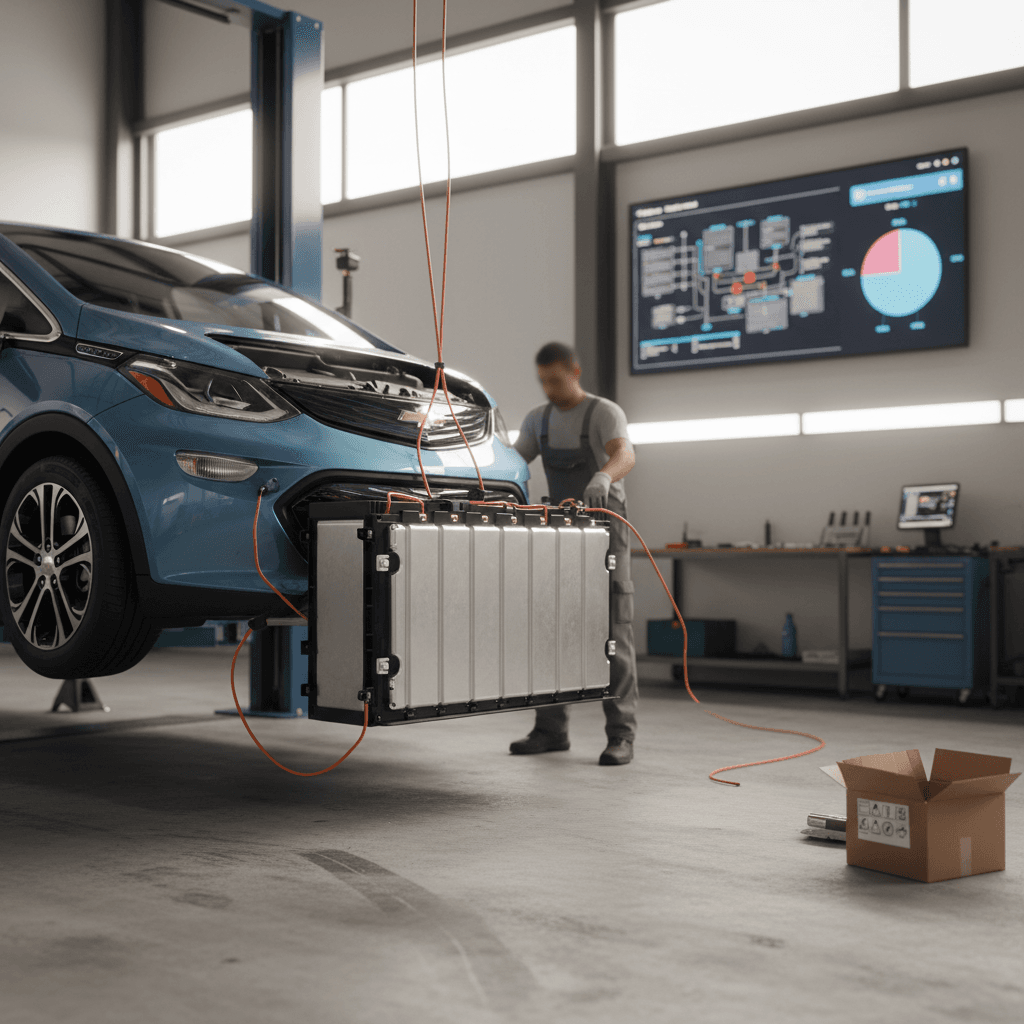
When people talk about “battery replacement” on a Bolt, they usually mean the large high‑voltage pack (roughly 60–66 kWh depending on model year). That’s the one that can hit five figures. The small 12‑volt battery under the hood is a totally different part and is priced more like a traditional car battery.
30‑second rule of thumb
Two batteries, two very different price tags
1. High‑voltage drive battery (the expensive one)
This is the large lithium‑ion pack mounted under the floor. It powers the motor and stores the car’s full driving range.
- Capacity: roughly 60–66 kWh depending on model year
- Typical replacement quotes: $8,000–$19,000 installed, when paid out of pocket
- Covered by GM’s 8‑year/100,000‑mile EV battery warranty on original sale
2. 12‑volt accessory battery (the cheap one)
This looks and behaves more like a traditional car battery. It powers accessories, control modules, and lets the car “wake up.” When it dies, the Bolt can seem completely bricked, which panics owners, but it’s usually a small fix.
- Typical parts + labor: $180–$500
- DIY cost: often under $200 with the right battery
- Not the same as the high‑voltage drive battery
If a shop quote is under $1,000, you’re almost certainly looking at the 12‑volt battery, not the big pack.
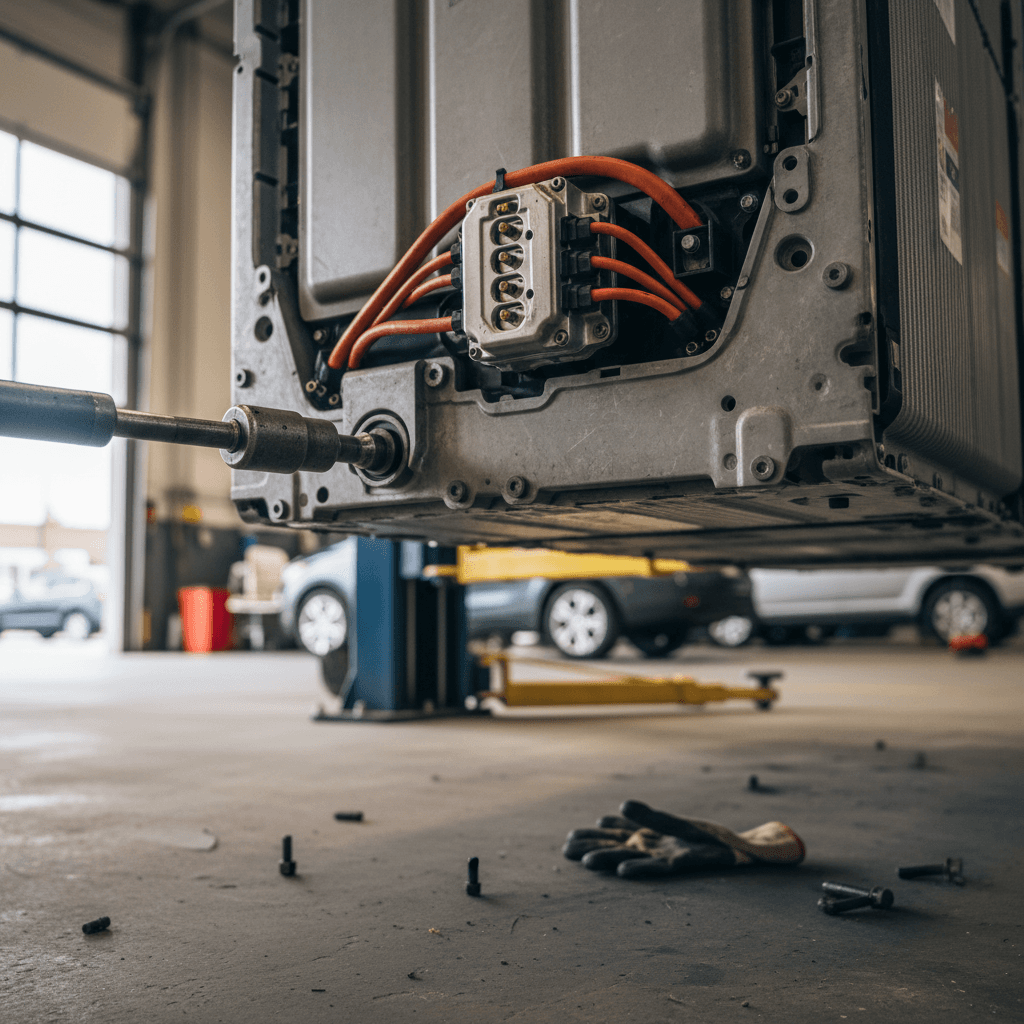
Why many Chevy Bolt owners still pay $0 for a new pack
Before you fixate on the five‑figure numbers, it’s worth understanding how generous GM has had to be with the Bolt. Between the standard EV battery warranty and the widely publicized battery fire recall, a large share of Bolts on the road have already received brand‑new packs at no cost to the owner.
Two big reasons Bolt battery replacement can be free
Warranty coverage plus recall programs have taken much of the sting out of early Bolt ownership
8‑year/100,000‑mile EV battery warranty
All first‑generation Bolts (EV and EUV) sold new in the U.S. came with an 8‑year or 100,000‑mile warranty on the high‑voltage drive battery and related components. That coverage applies to:
- Defects in materials or workmanship
- Certain failure modes that prevent safe operation
- Capacity loss beyond GM’s specified threshold
If your Bolt is a 2019 or newer, there’s a good chance this warranty still applies today, at least by model year, check your in‑service date and mileage to be sure.
Battery fire recall and replacement packs
Because of defective LG battery cells, GM initiated a major recall affecting many 2017–2022 Bolts. Early on, GM committed to replacing all affected packs. Later, they moved to a software‑based monitoring system that flags packs for replacement only if problems are detected.
Owners whose cars qualified under the recall often received brand‑new battery packs with improved chemistry and, in some cases, slightly more usable capacity, again, at no direct cost.
Important nuance on recall vs. warranty
Out-of-warranty Chevrolet Bolt EV battery replacement costs
Once you’re outside both battery warranty and recall coverage, you’re in the world of real‑world repair quotes, and they can vary widely. In owner reports, insurance claims, and 2024–2025 EV repair guides, complete high‑voltage battery replacement for a Bolt EV or EUV tends to land in these bands:
Real-world Chevy Bolt EV battery replacement cost ranges
Approximate U.S. pricing for a full high‑voltage battery pack replacement, including parts and labor, in 2024–2025.
| Scenario | What’s happening | Approx. total cost (parts + labor) |
|---|---|---|
| Warranty/recall replacement | Pack fails tests or is flagged by recall or diagnostics under active coverage | $0 (covered by GM) |
| Dealer replacement, older Bolt | Out-of-warranty 2017–2019 Bolt EV with dealer installing GM remanufactured or new pack | $8,000–$11,000 |
| Dealer replacement, newer Bolt | 2020–2023 Bolt EV/EUV out of coverage, full list price pack plus labor at big‑city dealer rates | $16,000–$19,000 |
| Insurance claim after crash | Battery damage in a collision; insurer pays or totals the car depending on value | $10,000–$19,000 on the estimate |
| Independent EV shop | Specialist shop sourcing used or reman pack, where available | Sometimes below $8,000, but availability is hit‑or‑miss |
These are typical ranges, not guaranteed prices. Your VIN, location, and parts availability will move you up or down the scale.
Sticker shock is normal
6 factors that change your Bolt’s battery quote
- Model year and pack type. Early 2017–2019 Bolts and later 2022–2023 EUVs don’t always use the same exact pack or supplier pricing. Newer packs often carry higher list prices.
- Mileage and in‑service date. If you’re even barely within 8 years/100,000 miles, or still covered by an extended recall parts warranty, the same failure can cost you $0 instead of five figures.
- Dealer vs. independent shop. A franchised Chevy dealer usually installs only GM‑sourced packs at full price. Some independent EV shops can use refurbished or salvage packs at a lower cost, when they can source them safely.
- Labor rates in your area. High‑cost metro areas can easily add $1,500–$2,000 in labor alone for a pack swap. Rural markets may be several hundred dollars less.
- Diagnostic result. Sometimes a driveability problem that feels like a dying pack turns out to be a module, wiring, or software issue that’s much cheaper to address.
- Insurance involvement. If your battery was damaged in a crash or flood, your insurer may pay the bill, or decide the car is a total loss based on book value vs. repair cost.
Always get the trouble codes
Do you always need a full battery replacement?
Not always. Just as an engine can be repaired instead of replaced, some Bolt battery issues can be addressed without dropping in an all‑new pack, especially once the car is outside GM warranty coverage and third‑party shops get involved.
Common alternatives to full pack replacement
These options are still emerging but can save serious money as the Bolt fleet ages
Module‑level repair
Some EV‑specialist shops can open the battery pack and replace a small number of failed modules or components instead of the entire assembly.
Upside: Potentially thousands cheaper than a full pack.
Downside: Limited availability, and GM dealers generally won’t perform or endorse this work.
Used/salvage pack
As more Bolts are totaled in crashes, salvage yards are starting to offer intact packs with decent remaining capacity.
Upside: Can cut the parts bill dramatically versus new.
Downside: You’re buying a used part with its own unknown history, and installation should be handled by a shop that lives and breathes high‑voltage EV work.
Software or BMS fixes
Not every scary dash message means a dead battery. Some faults relate to sensors, battery‑management software, or harness issues.
Upside: Hundreds of dollars instead of thousands if you get lucky.
Downside: Requires careful diagnostics by someone who understands GM’s EV systems.
“Treat a Bolt battery quote the way you’d treat an engine replacement quote on any other compact car: it may make sense under warranty or insurance, but out of pocket you should always compare it to the value of the whole vehicle.”
Warranty, recall coverage, and the fine print
If there’s one thing that separates smart Bolt owners from anxious ones, it’s knowing exactly what coverage your specific VIN still has. GM’s warranty language isn’t complicated, but the interaction between standard coverage and the recall can be.
How to check your Bolt’s battery coverage in 10 minutes
1. Find your in‑service date
Your in‑service date is when the car was first sold or leased new. It’s the start line for the 8‑year/100,000‑mile battery warranty. A dealer service department can look this up by VIN, and it may also appear on your original purchase paperwork.
2. Confirm current mileage
Look at the odometer and compare it to the 100,000‑mile cap. If you’re under both 8 years and 100,000 miles, standard EV battery coverage should still be in play unless a buyback or branded title changed things.
3. Check open recalls and campaigns
Use the NHTSA VIN lookup tool or GM’s own owner portal to see whether any high‑voltage battery recalls or special coverage adjustments are still open on your car.
4. Ask for a warranty history printout
A Chevy dealer can print your vehicle’s warranty repair history and list any special battery coverage terms applied after a recall pack replacement.
5. Get any battery issue documented now
If you’re near the end of your coverage window and experiencing range loss, fault messages, or charging problems, get the car in and have the concerns documented while you’re still under the umbrella.
6. Keep all paperwork for resale
If your Bolt ever gets a new pack under warranty or recall, tuck that repair order into your glovebox. A documented fresh battery is a major selling point in the used market.
High‑voltage safety reminder
Used Chevy Bolt buyer checklist: avoid surprise battery bills
If you’re shopping used, the Bolt can be a fantastic value, especially if it has already received a recall pack. But you should walk into any test drive with your eyes open about battery health and future replacement risk.
What to check before you buy a used Bolt EV or EUV
Battery health is the headline, but it’s not the only story
Battery history
- Ask directly: Has the high‑voltage battery ever been replaced?
- Request service records; look for recall or warranty pack replacements.
- A newer pack can add years of peace of mind.
Real‑world range
- On a full charge, what range estimate does the dash show?
- Compare to EPA ratings for that model year.
- A modest drop is normal; severe loss could signal trouble.
Warranty & title status
- Is the car still within 8 years/100,000 miles?
- Any branded title (salvage, rebuilt, lemon) can affect coverage.
- Confirm open recalls are resolved.
How Recharged can help
Ready to find your next EV?
Browse VehiclesEssential questions to ask the seller
Has the high‑voltage battery ever been replaced or repaired?
If yes, ask for copies of the repair orders. A recall or warranty pack is a plus; a crash‑damage replacement may affect resale differently.
Has the car ever been fast‑charged heavily?
A history of daily DC fast charging isn’t an automatic dealbreaker, but mixed charging habits (home Level 2 plus occasional fast charging) are easier on the pack long term.
What’s the typical daily range now?
Ask how many miles the current owner comfortably drives on a full charge and in which conditions (highway, winter, etc.).
Any current warning lights or charging quirks?
“It just needs a software update” should always be verified by a proper diagnostic session before you buy.
When battery cost can total a Chevy Bolt EV
As Bolts age and resale values fall, a full‑price battery pack can exceed what the car is worth on the open market. That’s when insurers, and sometimes owners, decide to walk away.
How insurers look at a dead pack
Insurance companies care about math, not sentiment. If your Bolt’s high‑voltage battery is damaged in a crash or flood, they’ll compare the repair estimate (often $10,000–$19,000) to the car’s actual cash value.
- If the repair eats most of the value, they’ll likely declare a total loss.
- You’ll get a payout based on market value, minus any deductible.
- The car may reappear later as a salvage vehicle, potentially with its battery resold.
What this means if you’re paying cash
If you’re the one footing the bill outside of insurance or warranty, treat any $8,000+ quote as a moment to pause and reassess.
- Compare the quote to what similar Bolts are selling for in your area.
- Consider whether putting that money toward a newer EV makes more sense, especially with modern LFP‑battery models and the redesigned 2027 Bolt on the horizon.
- Used EV marketplaces like Recharged can show you what a comparable Bolt or alternative model would cost today.
Chevrolet Bolt EV battery replacement FAQ
Frequently asked questions about Chevy Bolt EV battery replacement cost
Bottom line: how worried should you be?
For most current Chevy Bolt EV and EUV owners, the specter of a five‑figure battery bill is more frightening on paper than it is in day‑to‑day life. GM’s 8‑year/100,000‑mile EV battery warranty and the long tail of the recall campaign mean a significant share of cars on the road either still have coverage or have already received a fresh pack.
Where you do need to be careful is at the margins: high‑mileage cars that are aging out of coverage, collision‑damaged Bolts with compromised packs, and out‑of‑warranty failures in regions with only a handful of EV‑literate shops. In those cases, a full replacement can rival the value of the car itself, and it’s perfectly rational to consider moving into another EV instead of writing a huge check.
The key is information. Know your warranty status, get clear diagnostics, and, if you’re buying used, insist on transparent battery health data. That’s exactly what Recharged’s Recharged Score Report is built to deliver, so you can enjoy the Bolt’s smooth, quiet miles without constantly looking over your shoulder at the battery line on the estimate sheet.