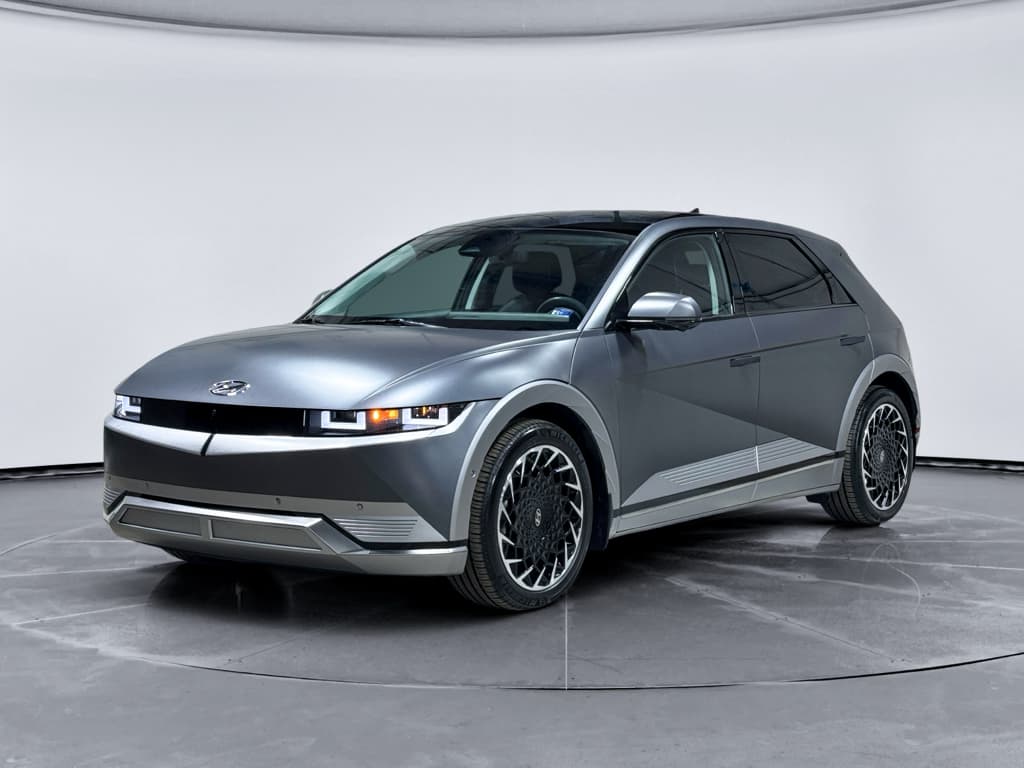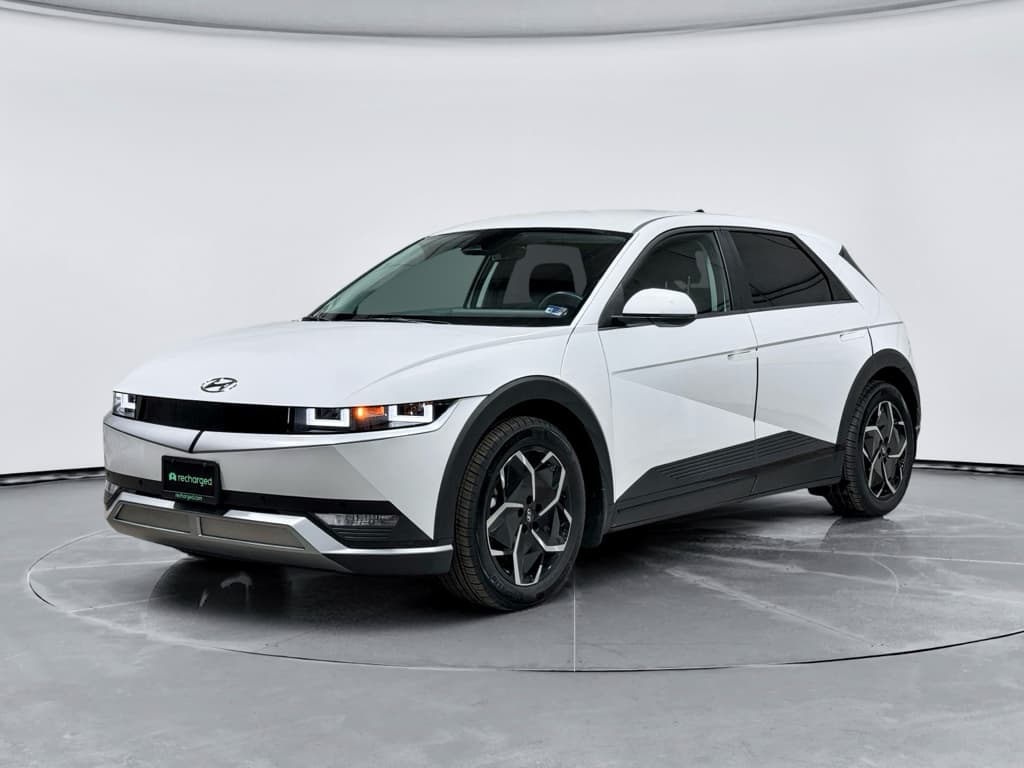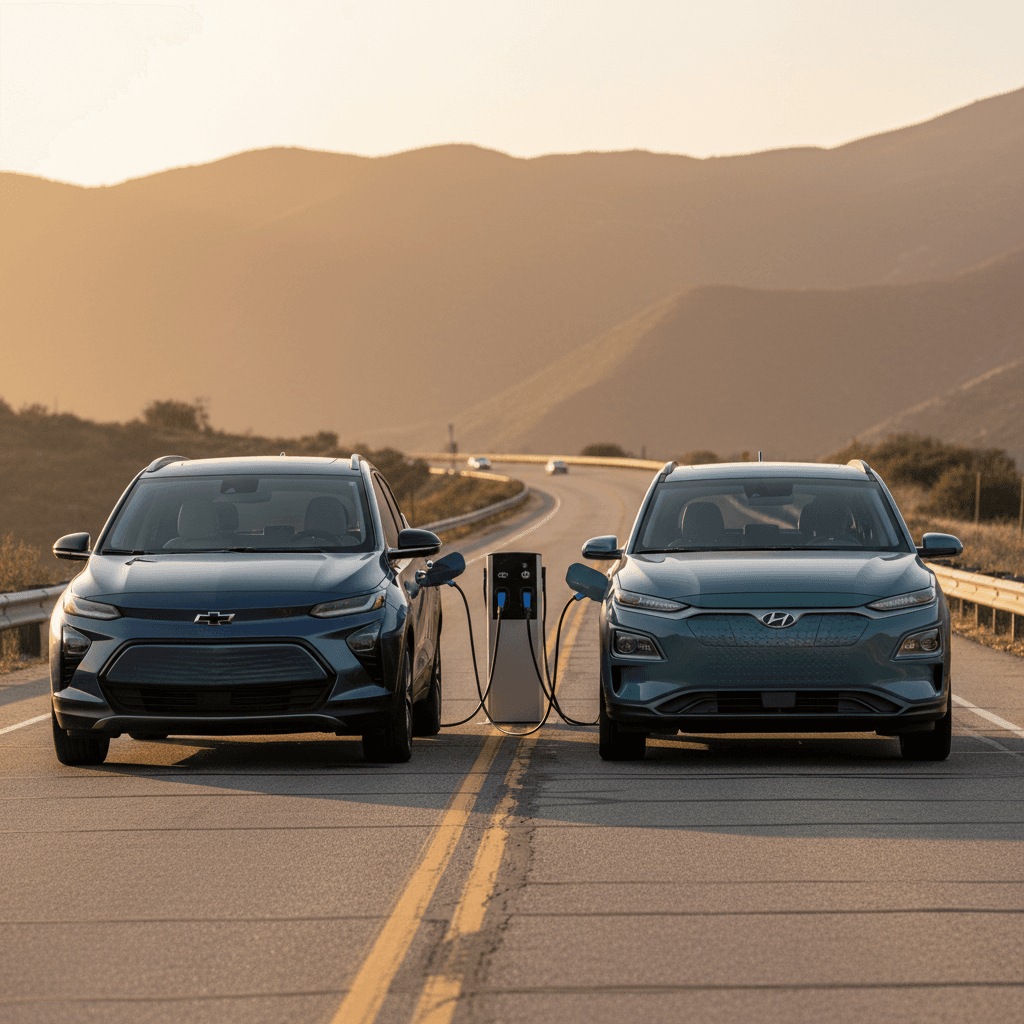
If you’re cross‑shopping the Chevrolet Bolt EUV vs Hyundai Kona Electric, you’re in good company. These two small electric crossovers are among the most efficient, affordable long‑range EVs on the used market. The catch: they take very different paths to get there, and one may suit your daily life much better than the other.
New vs. used context (2026)
Bolt EUV vs Kona Electric: who each EV is for
At a glance: which EV fits you best?
Use this as a quick filter before we dive into the specs.
Chevrolet Bolt EUV: best for…
- City and suburban families who want generous rear legroom in a small footprint.
- Budget‑minded shoppers chasing maximum value and low running costs.
- Drivers who prioritize one‑pedal driving and a nimble feel over long‑haul comfort.
- Shoppers unfazed by buying a discontinued but well‑supported model.
Hyundai Kona Electric: best for…
- Drivers who want more range options and newer model years (2024–2025).
- Owners planning more highway miles or occasional road trips.
- Shoppers who care about ride quality, refinement, and tech polish.
- Anyone wanting a small EV that feels more like a traditional compact SUV.
Chevrolet Bolt EUV vs Hyundai Kona Electric: quick specs
Core specs comparison (typical U.S. trims)
Key numbers for the most common U.S. configurations you’ll see on the used market.
| Spec | Chevrolet Bolt EUV (2022–2023) | Hyundai Kona Electric Std Range (2024) | Hyundai Kona Electric Long Range (2022–2025) |
|---|---|---|---|
| Battery (usable kWh) | ~65 kWh | 48.4 kWh (approx) | 64–64.8 kWh |
| EPA range | ~247 miles | ~200–210 miles (estimate, market dependent) | ~258–260 miles |
| DC fast‑charge peak | up to 55 kW | up to ~74 kW (region‑dependent) | up to ~100 kW |
| 0–60 mph | ~7.0 sec | ~7.5 sec (est.) | ~7.0 sec |
| Front legroom | 44.3 in | 41.7 in | 41.7 in |
| Rear legroom | 39.1 in | 36.4 in | 36.4 in |
| Cargo behind 2nd row | 16.3 cu ft | 25.5 cu ft | 25.5 cu ft |
| Model years (U.S.) | 2022–2023 | 2024–2025 | 2019–2025 |
Figures are representative; exact numbers vary by model year and wheel/tire choice.
Spec sheet fine print
Space, comfort, and practicality
Both EVs are small on the outside but surprisingly useful inside. Where they differ is how they allocate that space between passengers and cargo.
Chevrolet Bolt EUV: big legroom, modest cargo
- Rear seat room is a standout. With about 39 inches of rear legroom, adults fit comfortably behind tall front passengers, rare in this class.
- The flat floor and upright seating make it easier to install child seats and get kids in and out.
- Cargo space behind the rear seat is around 16 cubic feet. That’s hatchback‑useful but clearly smaller than the Kona Electric.
- Interior materials are simple but functional, with a clean dash and large central screen.
Hyundai Kona Electric: more SUV‑like, more cargo
- Front and rear legroom are a bit tighter than the Bolt EUV, though the latest generation improves shoulder space and overall volume.
- Where the Kona wins is cargo capacity: about 25.5 cubic feet behind the rear seat, enough for larger strollers or more luggage.
- The 2024–2025 redesign adds a small front trunk and a more open, airy cabin design.
- Seat comfort tends to be better for longer drives, especially in higher trims with adjustable lumbar and available ventilated seats.

How to choose on space
Range, efficiency, and charging performance
On paper, the Bolt EUV and Kona Electric look similar in range, but their charging behavior and efficiency tell a more complete story, especially if you road trip even a few times a year.
Real‑world efficiency highlights
Daily driving & commuting
For commuting and local use, both EVs have more range than most drivers will use in a day. If you drive 30–60 miles daily and charge at home, either one will feel almost effortless. The Bolt EUV’s ~247‑mile rating and the Kona long‑range’s ~258–260 miles are effectively equivalent in this use case.
Road trips & DC fast charging
- Bolt EUV: Peaks around 55 kW on DC fast chargers and holds that rate reasonably well. For an affordable EV, it’s perfectly usable for the occasional road trip, but you won’t get the quick 10–80% sessions you see in newer 800‑volt cars.
- Kona Electric (long range): Later models can reach around 100 kW on DC fast chargers, cutting highway charging stops significantly compared with the Bolt EUV, especially from 10–80%.
- Standard‑range Kona: Offers less absolute range but charges quicker due to the smaller pack, which can be a good fit if you mostly stay local and fast‑charge sparingly.
Cold weather and range
Driving experience, safety, and tech
Neither of these EVs is a sports car, but how they feel from behind the wheel, and the tech wrapped around them, can make or break your satisfaction over a 3–7‑year ownership window.
How they feel to drive
Comfort and confidence matter more than 0–60 times for most buyers.
Ride & handling
Bolt EUV: Feels nimble and easy to place in city traffic. Ride can be a bit busy on rough pavement but it’s controlled. One‑pedal driving is excellent.
Kona Electric: Feels more substantial and SUV‑like. Newer models ride smoother and quieter, especially on the highway.
Safety & driver assists
Both offer strong safety suites: automatic emergency braking, lane‑keeping assist, and adaptive cruise in many trims.
The Bolt EUV adds available Super Cruise (hands‑free highway assist) on some trims, a unique feature at this price point.
Infotainment & UX
Bolt EUV: Clear, functional interface with standard Apple CarPlay and Android Auto. Physical controls for key functions keep things simple.
Kona Electric: Later models add larger screens, better graphics, and more polished menus. Wireless phone mirroring may be available depending on year and trim.
For most shoppers, the question isn’t “Which EV is faster?” It’s “Which one will I still enjoy living with after the 500th commute?” In that sense, ride quality, seating comfort, and controls matter far more than 0–60 times.
Reliability, battery health, and resale value
Both the Bolt EUV and Kona Electric have generally solid reliability records, but each comes with unique history that’s worth understanding before you buy used.
What to know about reliability and batteries
1. Battery recalls and updates
Early Chevy Bolt EVs (not EUVs) experienced battery‑related recalls, prompting GM to replace many packs. By the time the Bolt EUV arrived for 2022, GM had moved to updated cells, and the EUV itself has not been the focus of major battery recalls. The original Kona Electric (pre‑facelift) had its own recall campaigns in some regions; verify recall completion by VIN.
2. Degradation expectations
Owner reports for both models suggest <strong>modest battery degradation</strong> when properly charged and stored, often less than many early‑generation EVs. Still, a car that fast‑charged constantly or lived in extreme heat may show more loss of range.
3. Warranty coverage window
In the U.S., both brands offered around <strong>8 years/100,000 miles</strong> of battery warranty coverage (exact terms vary by year and region). On a 2022 Bolt EUV or 2022–2024 Kona Electric, you may still have several years of battery coverage remaining, an important safety net for used buyers.
4. Resale & future demand
The Bolt EUV is discontinued in its first generation, which can depress prices but also make it a strong value on the used market. Hyundai is actively updating the Kona Electric, which may support resale values but also means earlier years can look dated more quickly.
How Recharged addresses battery uncertainty
Ready to find your next EV?
Browse VehiclesOwnership costs and incentives for used buyers
On running costs, both EVs are champions: electricity is cheaper than gasoline in most of the U.S., and maintenance needs are minimal. The real differences show up in purchase price and potential incentives.
Purchase price on the used market
- Bolt EUV: Because it’s discontinued after 2023 and was priced aggressively when new, used Bolt EUVs often undercut comparable Konas on price for similar mileage and equipment.
- Kona Electric: Strong efficiency and ongoing production (with newer 2024–2025 models) tend to keep resale values higher, especially for long‑range trims.
In simple terms, dollar for dollar, the Bolt EUV often buys you a newer or better‑equipped vehicle than a similarly priced Kona Electric.
Tax credits and incentives (used EVs)
As of 2026, U.S. federal rules allow certain used EV purchases to qualify for up to a $4,000 used EV tax credit, subject to income, price, and dealer eligibility rules. Availability changes frequently, and not every VIN or transaction qualifies.
Because both the Bolt EUV and many Kona Electric models are relatively affordable on the used market, they can be good candidates for that credit, if they meet the price cap and are purchased through a qualifying dealer.
Always confirm current eligibility and program details before you buy.
Don’t assume a used EV automatically qualifies
Which is better for you? Recommendations by driver type
There’s no one‑size‑fits‑all winner here. Instead, think about how you actually drive and what you need your EV to do on its worst day, not its best one.
Bolt EUV vs Kona Electric: best pick by scenario
Match your driving pattern to the EV that fits it best.
Mostly city/suburban driving, tight parking
Winner: Chevrolet Bolt EUV
- Compact footprint with generous rear legroom is ideal for urban families.
- Excellent one‑pedal driving makes stop‑and‑go traffic less tiring.
- Used pricing is usually more attractive than Kona Electric for similar years.
Frequent highway trips or regional travel
Winner: Hyundai Kona Electric (Long Range)
- Higher DC fast‑charge speeds mean shorter charging stops.
- Excellent efficiency makes highway range feel competitive with larger EVs.
- More cargo space for luggage and gear.
Small kids, strollers, and family gear
Tie, leaning Kona Electric
- Bolt EUV: easier rear‑seat access and legroom for parents and car seats.
- Kona Electric: more cargo room for strollers, diaper bags, and bulk shopping.
- Walk around both with your actual gear if you can; the right answer depends on your mix of passengers vs. cargo.
Maximizing value on a tight budget
Winner: Chevrolet Bolt EUV
- Lower used prices and strong efficiency make the Bolt EUV one of the best value EVs on the market.
- Being discontinued can actually help you as a buyer, depreciation is your friend when you’re the second owner.
If you want the newer‑feeling, more SUV‑like experience and plan to use public fast charging more often, the Hyundai Kona Electric, especially in long‑range form, is the better all‑rounder. If you’re chasing maximum value, excellent rear‑seat space, and a simple, efficient commuter, the Chevrolet Bolt EUV is very hard to beat on the used market.
How Recharged helps you shop Bolt EUV and Kona Electric with confidence
Because both the Bolt EUV and Kona Electric are now primarily used‑market players, the quality of the specific car you buy matters more than the badge on the hatch. That’s exactly where Recharged is designed to help.
- Recharged Score battery health diagnostics: Every EV on Recharged gets a detailed battery health assessment, so you can compare a used Bolt EUV and Kona Electric on their real‑world range today, not just the original window sticker.
- Transparent pricing and nationwide inventory: See fair‑market pricing up front, trade in your current vehicle, and shop used EVs from around the country in one digital experience.
- EV‑specialist guidance: Recharged’s experts help you decide whether a Bolt EUV’s value or a Kona Electric’s cargo and charging advantages better fit your budget and lifestyle.
- Financing, trade‑in, and delivery: Line up payments, get an instant offer or consignment for your current car, and have your next EV delivered to your driveway, or visit the Recharged Experience Center in Richmond, VA if you prefer to see vehicles in person.