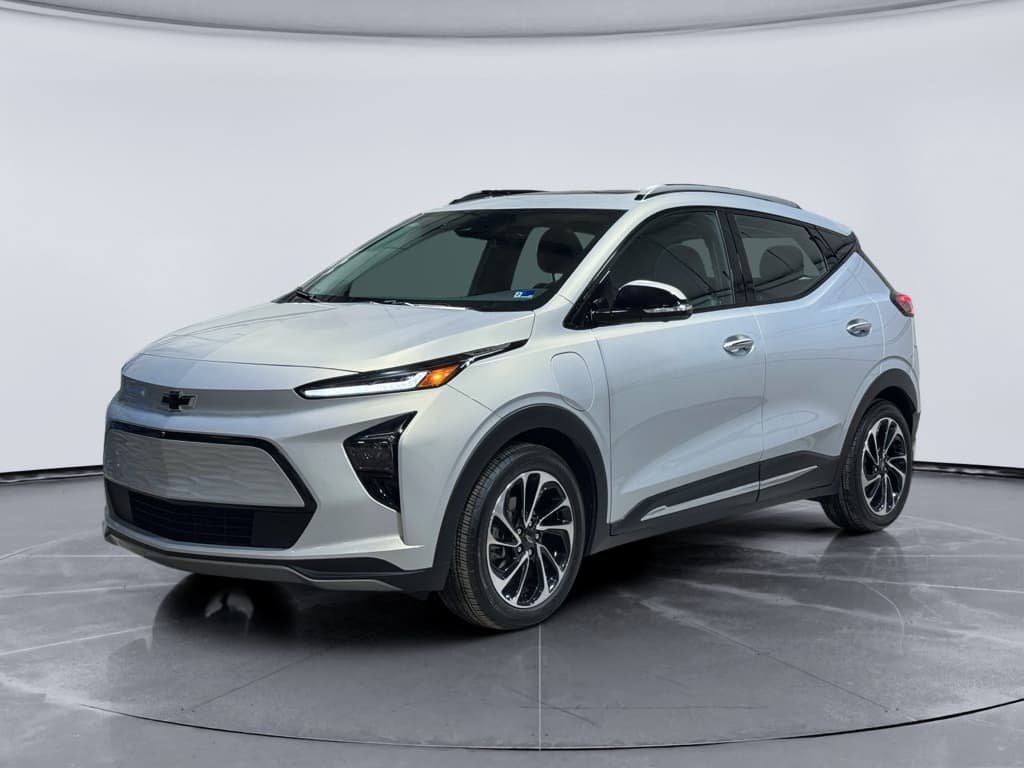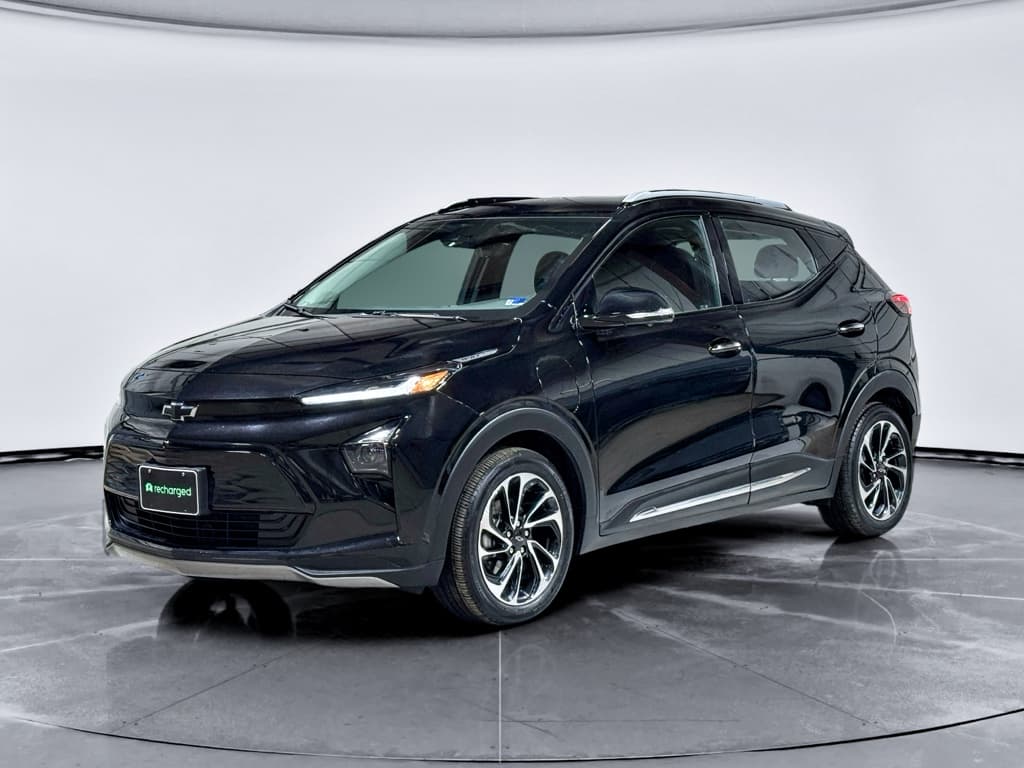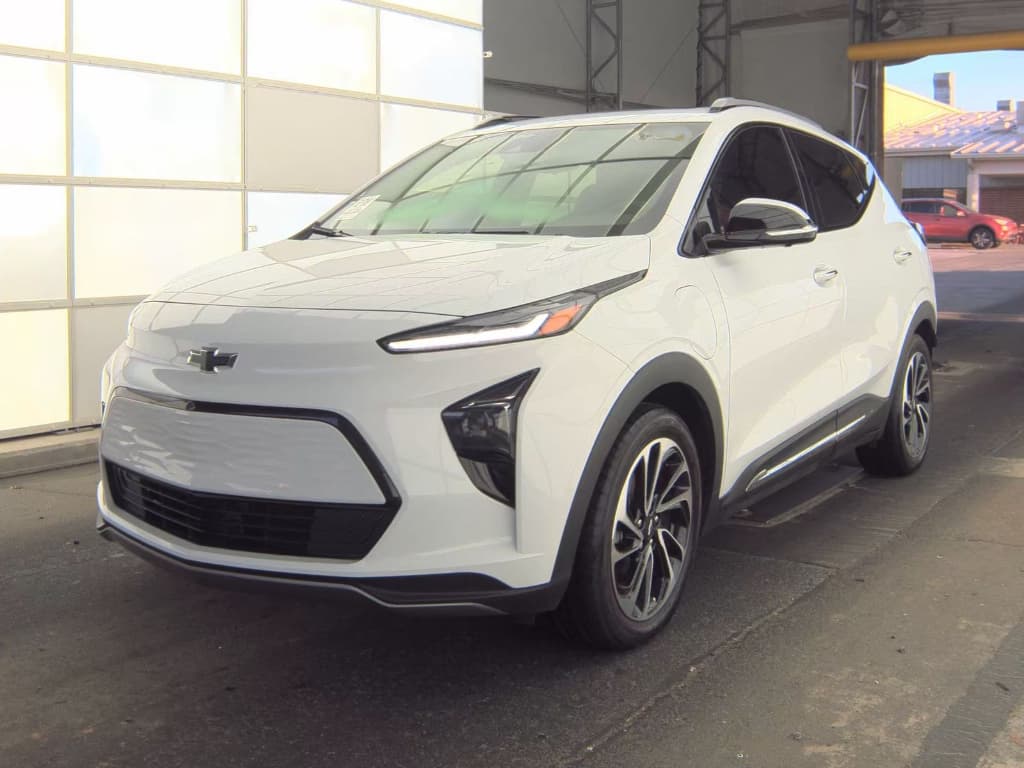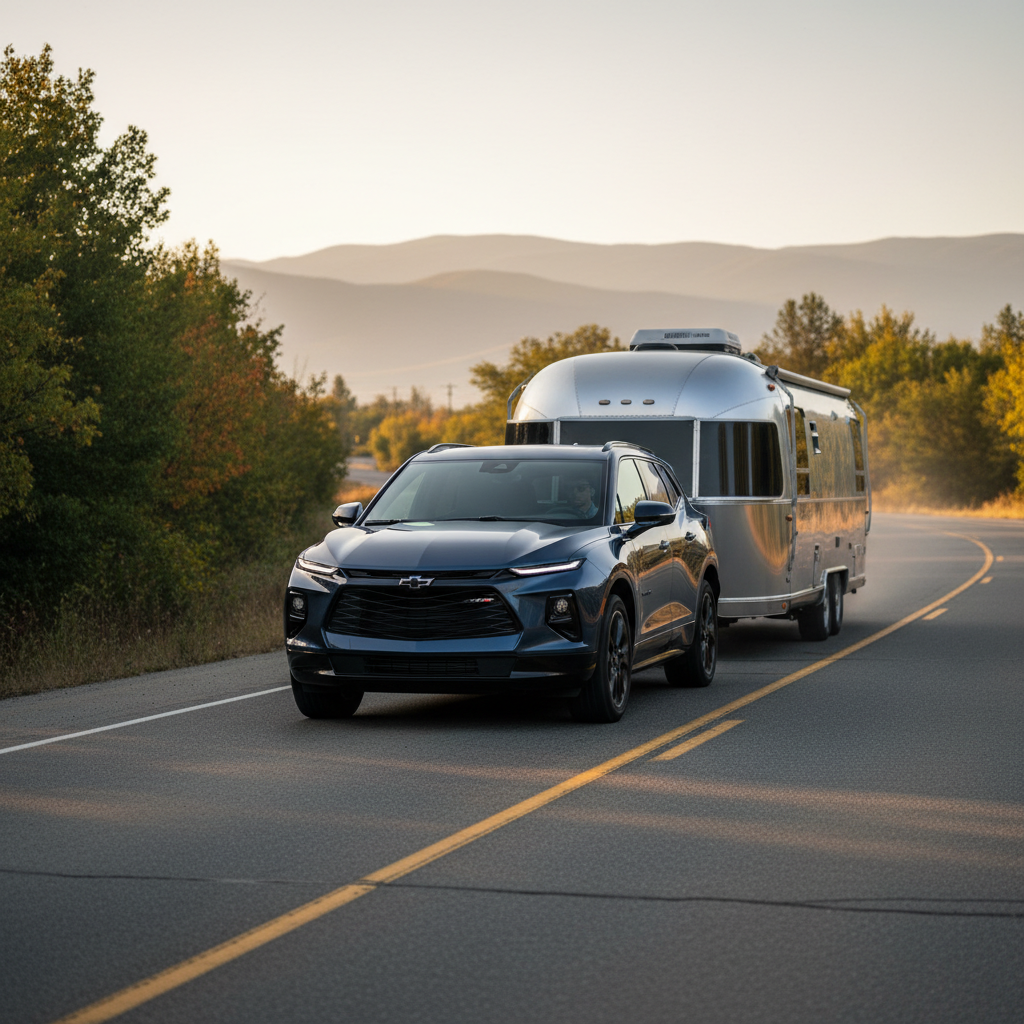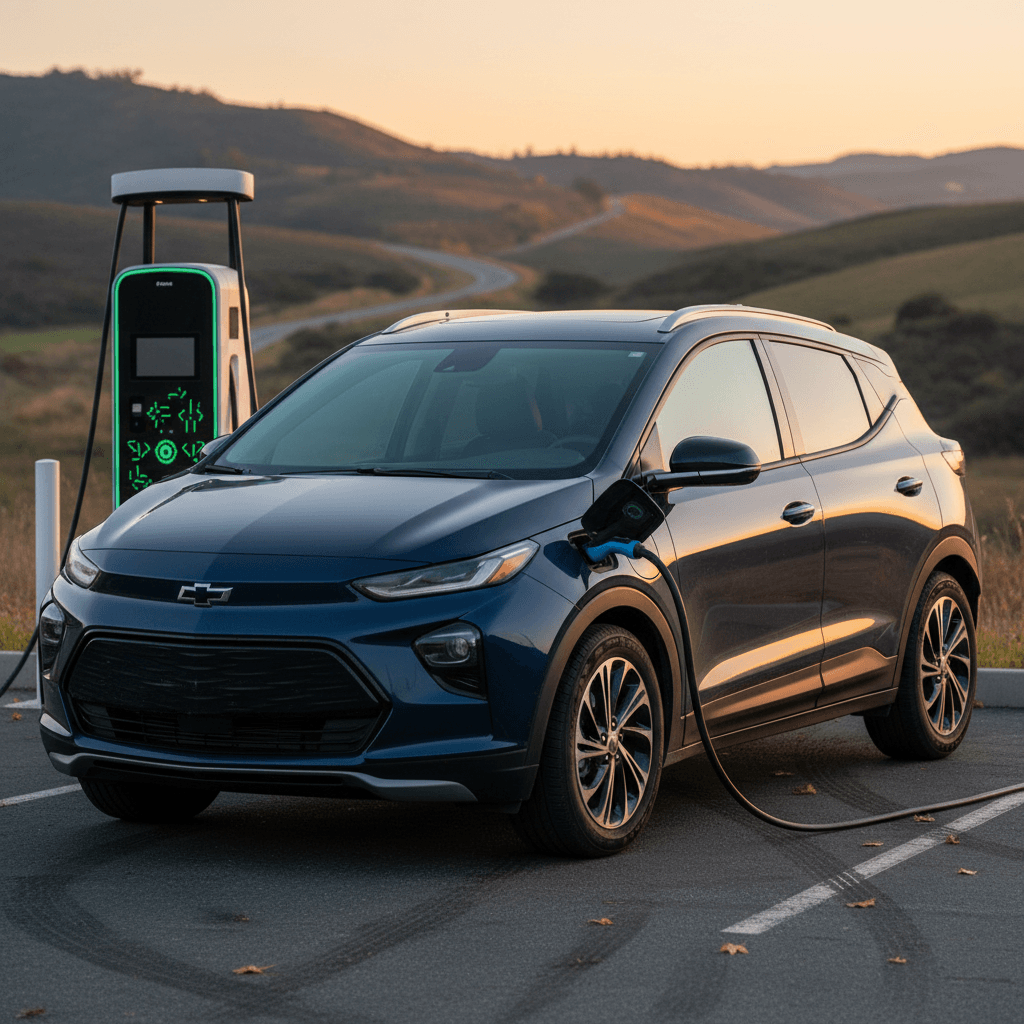
If you own a Chevrolet Bolt EUV, you already know it’s a great city commuter. But with smart planning and a few practical long-distance driving tips, it can also be a surprisingly capable highway road‑trip machine. This guide walks through range realities, charging strategy, comfort, and battery health so you can head out confidently instead of watching the state of charge with white knuckles.
Quick Bolt EUV Specs for Road Trips
Why the Chevrolet Bolt EUV Works for Long-Distance Trips
Bolt EUV Strengths on the Open Road
Where the small crossover format helps on long drives
Comfortable Seating Position
Predictable Efficiency
Hands-Free Assistance (Super Cruise on Some Trims)
The Bolt EUV doesn’t have the fastest DC fast charging on the market, and it won’t match the range of larger battery SUVs. But for most U.S. interstates with decent CCS coverage, a well-planned route can feel surprisingly similar to driving a gasoline compact, just with more intentional stops and a bit of charging strategy.
Know Your Bolt EUV’s Real-World Highway Range
Typical Bolt EUV Highway Range Snapshot
EPA ratings are helpful, but long-distance driving in a Chevrolet Bolt EUV is all about real-world highway range. At typical U.S. interstate speeds (65–75 mph), you should plan around 180–220 miles per full charge in mild weather, less if you’re battling strong headwinds, high speeds, or winter temperatures.
- Aim for 3.0–3.5 mi/kWh on flat highways in the 50–75°F range.
- Expect range to drop at 75–80 mph versus 65 mph, speed is the number‑one efficiency killer.
- In winter, preconditioning the cabin while plugged in can preserve range, but you’ll still see a noticeable hit from cold batteries and cabin heat.
Don’t Plan to Empty the Pack
How to Plan Long-Distance Routes and Charging Stops
Planning is the difference between a relaxing Bolt EUV highway trip and a frustrating one. Luckily, there are solid tools and a simple framework you can use to line up fast chargers along your route.
Best Tools for Bolt EUV Route Planning
Use more than one so you always have a backup plan
In-Car Energy & Navigation
EV Routing Apps
Network-Specific Apps
Set Reasonable Leg Lengths
For most U.S. corridors, plan 120–160 mile legs between DC fast chargers. That keeps you in the comfortable middle of the pack, arriving with 15–25% and rarely charging to 100%, which is slow.
If chargers are sparse, you may need a longer leg, but don’t stretch into uncomfortable territory unless you’ve double‑checked conditions like weather and elevation.
Target Arrival and Departure SOC
- Arrive around 10–25% SOC (state of charge) to take advantage of the faster part of the charging curve.
- Depart around 70–80% on most legs instead of waiting to 100%; the last 10–20% is slower and rarely necessary on charger-dense routes.
- On truly sparse corridors, 90–100% departures make sense, just build in the extra time.
Verify Every Critical Charger
Optimizing DC Fast Charging in a Bolt EUV
The Bolt EUV’s DC fast charging tops out around the mid‑50 kW range, so your road trip rhythm will look different than someone in a 150 kW monster. Your goal is to spend more time driving and less time watching the charger creep from 80–100%.
Bolt EUV DC Fast Charging Strategy by State of Charge
How charging speed and strategy change as your battery fills
| SOC Range | Typical Power Behavior | Best Use on Road Trips | Approx. Time Advice |
|---|---|---|---|
| 5–20% | Near peak power | Ideal arrival window at DC fast chargers | Try to arrive in this zone when possible. |
| 20–60% | Sustained good power | Sweet spot for efficient charging | Great time to grab food, restroom, short walk. |
| 60–80% | Taper begins | Still reasonable on sparse corridors | Use when next charger spacing is wide. |
| 80–100% | Slowest charging | Avoid unless necessary for a long gap | Plan only when chargers are far apart or conditions are harsh. |
You’ll usually save time overall by doing more, shorter stops within the efficient part of the charging curve.
Aim for 20–30 Minute Stops
Driving Techniques to Stretch Highway Range
You don’t have to hypermile to get good results out of a Chevrolet Bolt EUV on long trips. But a few steady habits can add 10–30 extra miles of usable range, which often means arriving at the faster charger instead of limping into a slow backup.
Highway Driving Habits that Help Range
1. Hold a Consistent Speed
Use cruise control on open stretches to avoid unnecessary acceleration. Even a steady 68 mph can outperform a pattern of 60–80 mph surges.
2. Choose the Right Lane
Staying in the right or middle lanes often keeps your speed in the efficient band and reduces sudden braking events that waste energy.
3. Use One-Pedal Driving Smartly
The Bolt EUV’s strong regen is useful in traffic and on hills. On flat highways, aim to avoid lifting hard at the last second, anticipate slowdowns instead.
4. Watch Tire Pressure
Underinflated tires create rolling resistance and chew up range. Check pressures before long trips and set them to the recommended levels when tires are cold.
5. Minimize Roof Loads
Roof boxes and bike racks punch a big hole in your aerodynamics. If you must use one, reduce speed a bit and factor in additional energy use.
6. Respect Headwinds and Hills
If your energy graph starts climbing above plan in a headwind or long uphill section, back your speed off a few mph to stay within your target mi/kWh.
Managing Climate Control and Comfort Without Killing Range
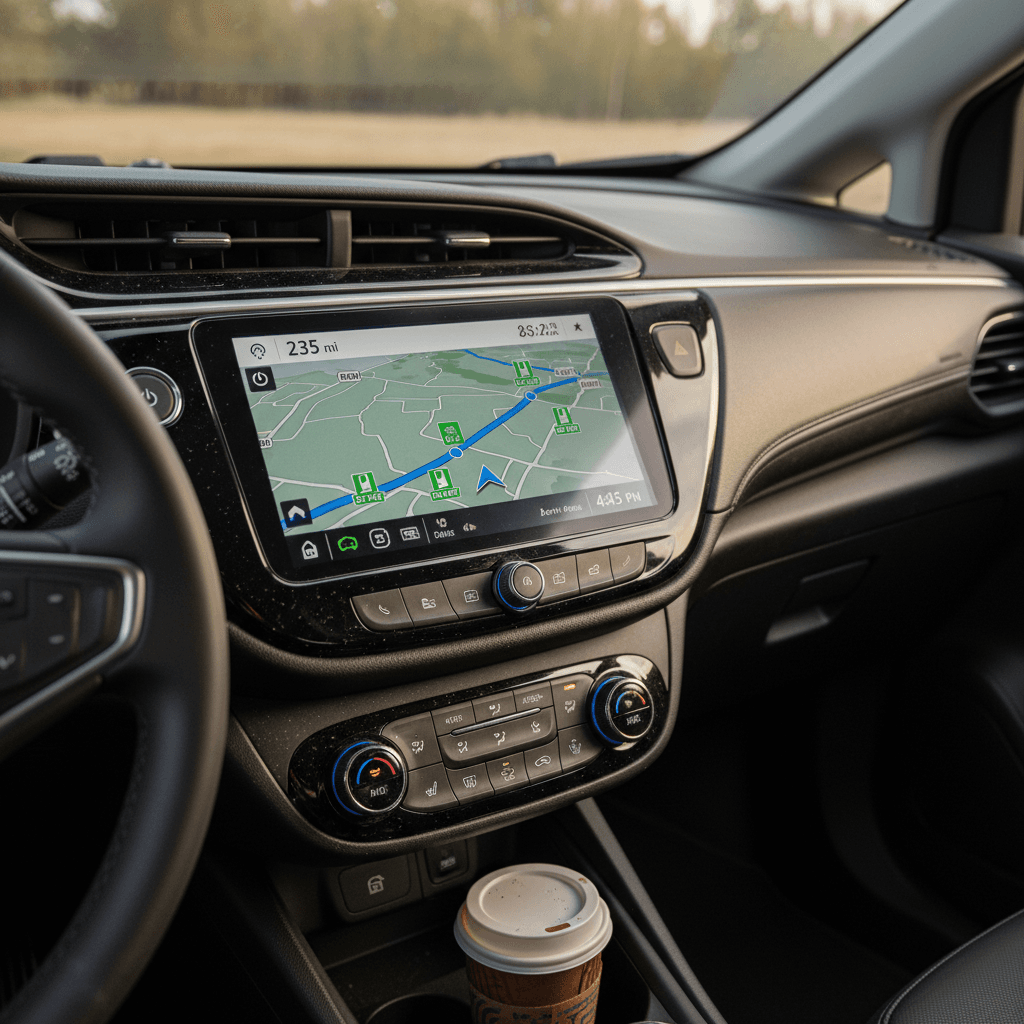
On long drives, comfort matters just as much as efficiency. The key is learning how to use the Bolt EUV’s climate tools so you stay comfortable while keeping energy use predictable.
Smart Climate Strategies for Bolt EUV Road Trips
Stay comfortable without shocking your projected range
Precondition While Plugged In
Lean on Seat & Wheel Heaters
Use Auto Wisely in Summer
Avoid Long Idling with HVAC at High Power
Battery Health Considerations on Long Trips
A few road trips won’t ruin your Bolt EUV’s battery. But how you use DC fast charging and high states of charge over years does matter, especially if you’re planning to keep the car or buy used.
- Use DC fast charging when you need it on trips, but rely on Level 1 or Level 2 at home for daily charging.
- Avoid sitting at 100% for long periods in hot weather; charge to full close to departure if you truly need the range.
- On multi-day trips, it’s fine to let the car rest around 40–70% overnight instead of topping to 100% every single evening.
How Recharged Thinks About Battery Health
Packing, Weight, and Cargo Tips for the Bolt EUV
The Bolt EUV is a compact crossover. It can swallow more cargo than it looks like at first glance, but weight and aerodynamics still matter on long drives.
How Packing Choices Affect Your Bolt EUV Road Trip
Small decisions around cargo and accessories can make a noticeable difference to efficiency on long highway days.
| Packing Choice | Impact on Range | What to Do Instead |
|---|---|---|
| Heavy cargo in cabin/trunk | Moderate, more mass to move, especially uphill | Pack only what you need; remove heavy items after the trip. |
| Roof box or bike rack | High, big aerodynamic penalty at 65–75 mph | Use hitch‑mounted carriers when possible; slow down a bit with roof gear. |
| Loose items in cabin | No direct range impact, but hurts comfort and safety | Use bins or bags to organize; keep sightlines clear. |
Heavier loads and roof accessories hurt range the most at interstate speeds.
Special Tips for Long Trips in a Used Bolt EUV
If you’re driving, or shopping for, a used Bolt EUV, you’ll want extra confidence before counting on 180‑plus‑mile legs. The fundamentals are the same, but you should confirm how the car’s condition lines up with your route plans.
Check Battery Health and Software
- Look at the car’s indicated full‑charge range in mild weather as a quick snapshot of usable capacity.
- Confirm recall work and software updates have been completed; they can affect charging behavior and safety.
- If you’re buying from a marketplace like Recharged, review the Recharged Score battery report to see how much capacity remains and whether road‑trip‑length legs still make sense for your routes.
Test a Mini Road Trip First
Before you drive cross‑country, do a single‑day highway shakedown of 200–300 miles with at least one DC fast‑charge stop. Note your real‑world efficiency, charging speeds at different SOC levels, and how accurately the car predicts arrival SOC.
Use what you learn to tighten or relax your buffers on the big trip.
Thinking of Trading Into a Longer-Range EV?
Bolt EUV Road Trip Checklist
Pre-Trip Checklist for Long-Distance Drives
1. Map Your Fast Chargers
Use at least one EV routing app and one network app to mark out DC fast chargers along your route, plus Level 2 backups in sparse areas.
2. Set Conservative Buffers
Plan to arrive at chargers with at least 10–15% SOC and avoid legs that require you to exceed your proven real‑world range.
3. Inspect Tires and Pressures
Check for uneven wear and set tire pressures to the door‑jamb spec when tires are cold. This helps efficiency and safety.
4. Update Apps and Payment Methods
Make sure your charging apps are logged in, updated, and linked to valid payment methods so you’re not fighting logins at the station.
5. Pack Smart, Not Heavy
Avoid hauling unnecessary heavy items and roof accessories. If you must use a box or rack, budget extra energy and consider slightly lower speeds.
6. Plan Overnight Charging
Confirm hotel or destination charging options where possible. Even Level 2 overnight can replace several hours of DC fast charging the next day.
Chevrolet Bolt EUV Long-Distance Driving FAQ
Frequently Asked Questions About Bolt EUV Road Trips
Key Takeaways for Your Next Bolt EUV Road Trip
Long-distance driving in a Chevrolet Bolt EUV is less about raw specs and more about rhythm: understand your true highway range, build a smart plan around CCS fast chargers, and keep your charging stops within the efficient part of the curve. Combine that with practical habits, steady speeds, smart climate use, and realistic buffers, and a compact electric crossover suddenly feels right at home chasing distant horizons.
If you’re shopping for a Bolt EUV or another used EV specifically for road‑trip duty, a transparent view of battery health and charging behavior is critical. That’s why every vehicle at Recharged includes a Recharged Score Report with verified battery diagnostics, fair market pricing, and support from EV specialists who live this stuff every day. The more you know before you set out, the more your next long‑distance adventure feels like a vacation instead of an experiment.