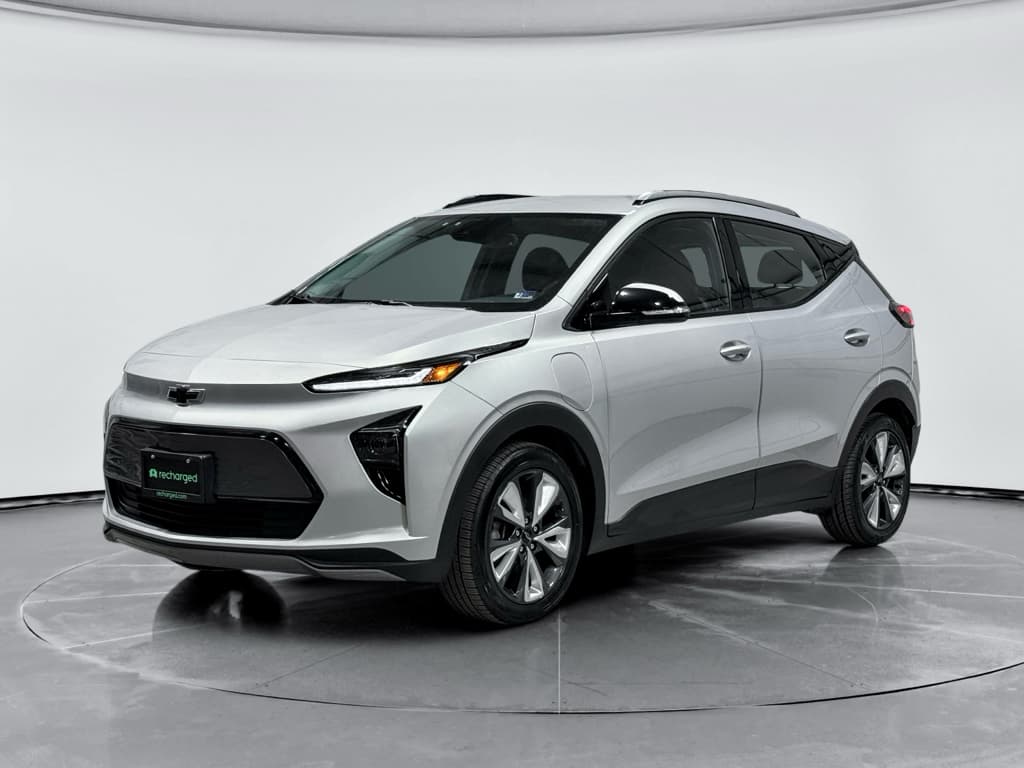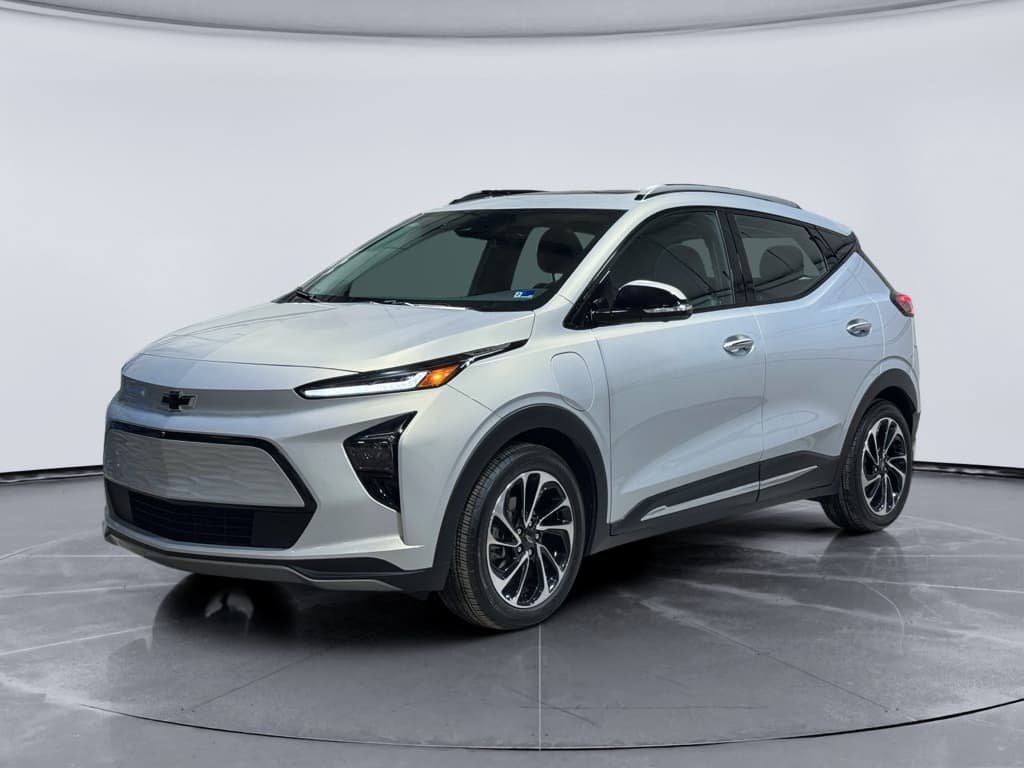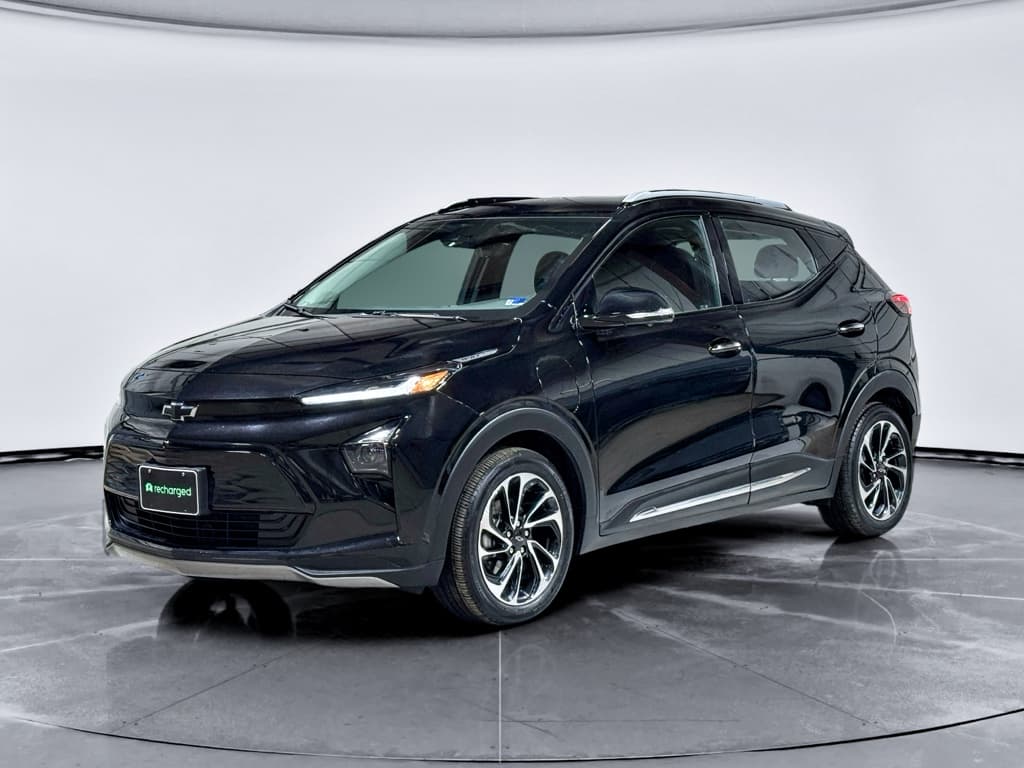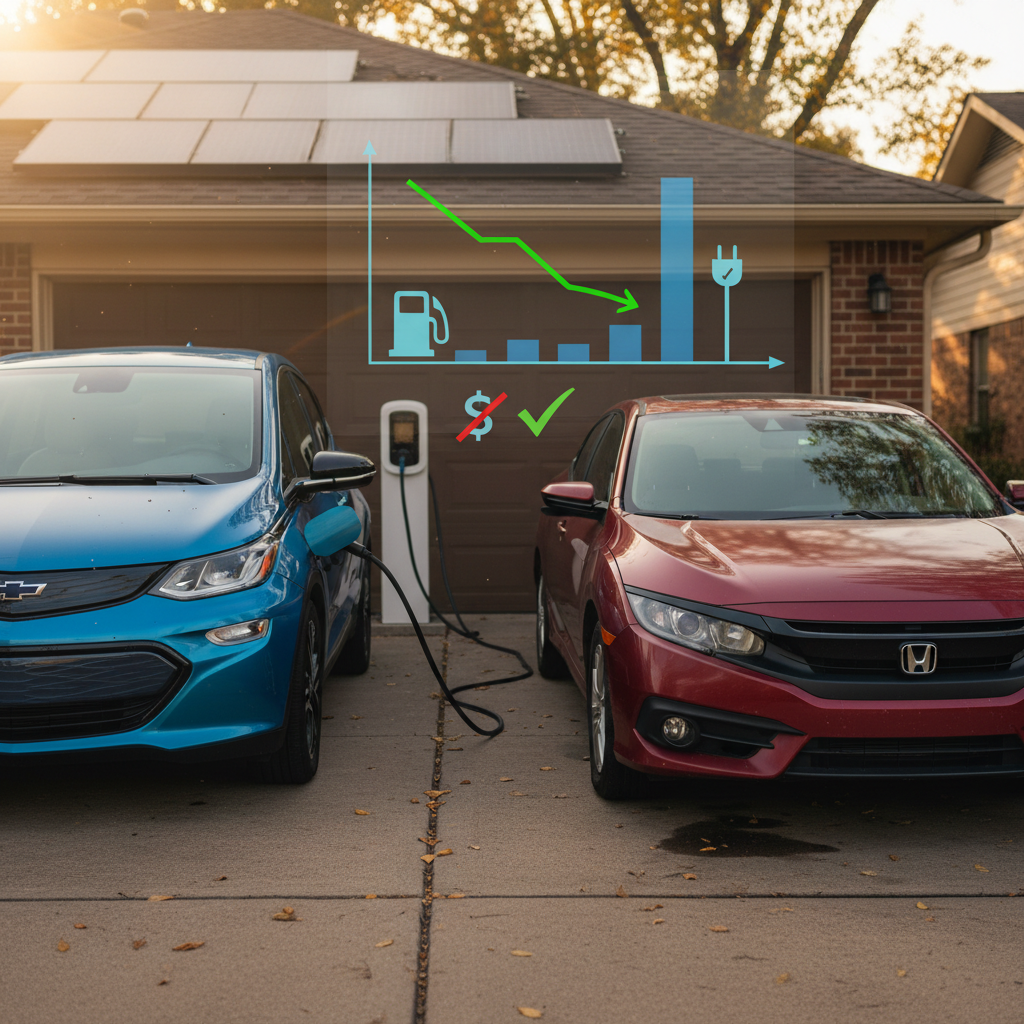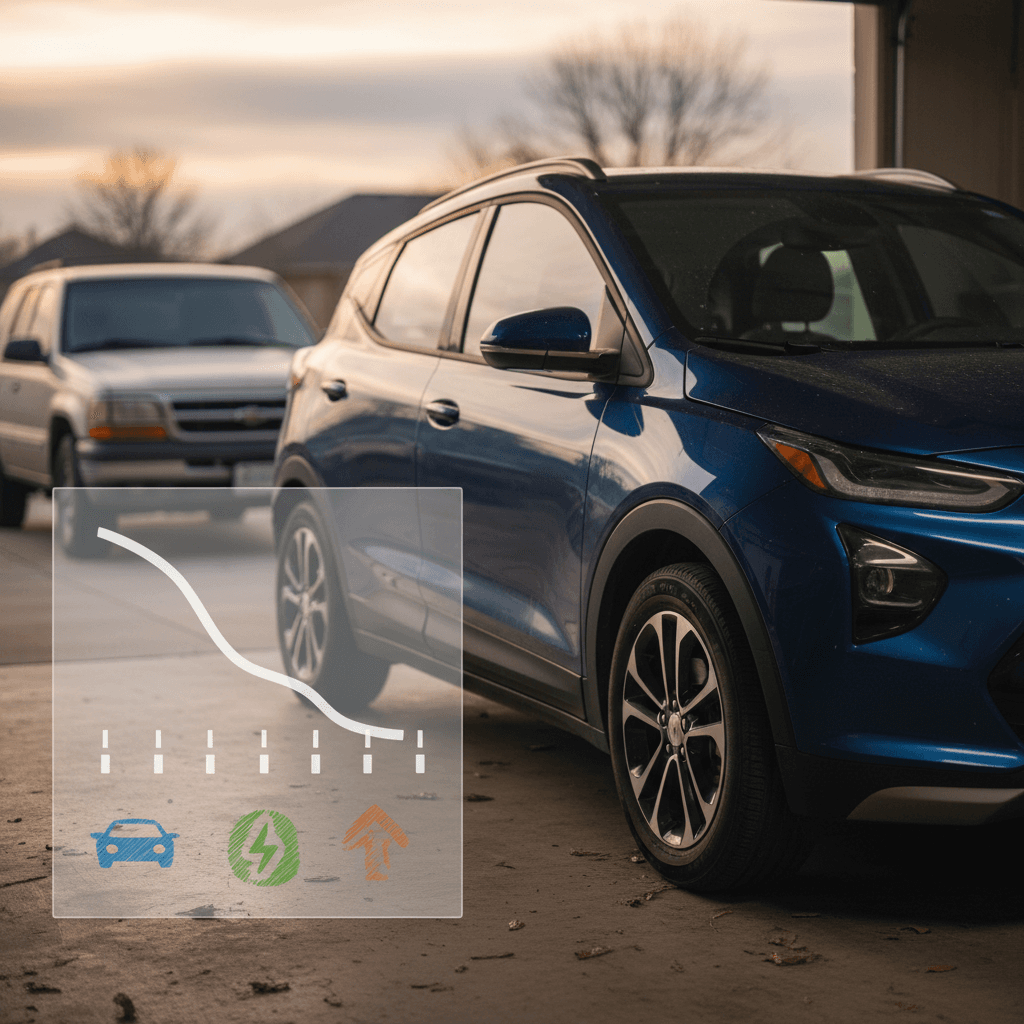
If you’re eyeing a Chevrolet Bolt EUV on the used market, the question behind all the other questions is simple: what does the Chevrolet Bolt EUV depreciation curve over 5 years really look like, and are you getting a bargain or a future headache? The answer is that the Bolt EUV has one of the oddest, most interesting value stories in the EV world right now, and if you understand it, you can buy a lot of car for surprisingly little money.
Key takeaway in one line
Why the Chevrolet Bolt EUV depreciation curve matters
The Bolt EUV launched in the U.S. for the 2022 model year as a slightly larger, more SUV‑ish companion to the Bolt EV. In April 2023, GM announced it would end production of both Bolt models by December 2023 to clear space for Ultium‑based EVs. That means every Bolt EUV is now a short‑run, discontinued EV, usually a recipe for brutal depreciation. Instead, the car has become the cult‑favorite budget EV of the last few years, and its used values reflect that push and pull.
On one side you have normal car‑market gravity: compact hatchback shape, front‑wheel drive only, an interior that feels more practical than plush. On the other you have 247 miles of range, low running costs, and a devoted owner base that talks about their EUVs like rescue dogs. Depreciation is where those realities reconcile.
Bolt EUV MSRP, trims, and what buyers actually paid
To understand the 5‑year curve, you first need to know where the curve starts. The Bolt EUV had two main model years (2022–2023) and a simple trim walk:
Chevrolet Bolt EUV original pricing snapshot (U.S.)
Approximate starting MSRPs before destination and incentives; many buyers paid less due to discounts and dealer programs.
| Model year | Trim | Approx. base MSRP | Typical real‑world transaction notes |
|---|---|---|---|
| 2022 | LT | ~$33,500 | First year EUV; many were later discounted after the battery recall |
| 2022 | Premier | ~$38,000 | Loaded models with Super Cruise commanded a premium when new |
| 2023 | LT | ~$28,000 | Chevy cut prices by about $6,000 vs 2022; often described as America’s cheapest long‑range EV |
| 2023 | Premier/Redline | Low $30Ks | Popular with early adopters; some sold near MSRP, others with modest discounts |
MSRPs set the official top of the depreciation curve, but the real starting point for many owners was lower thanks to factory price cuts and incentives.
By 2023, GM had slashed pricing enough that the Bolt EUV undercut many economy cars. That’s crucial: if someone bought a Premier at $33,000 instead of $38,000, their personal depreciation curve starts lower than what the sticker suggests. That’s why tools that model depreciation purely off MSRP can make the drop look harsher than what owners actually experienced.
The 5‑year Chevrolet Bolt EUV depreciation curve
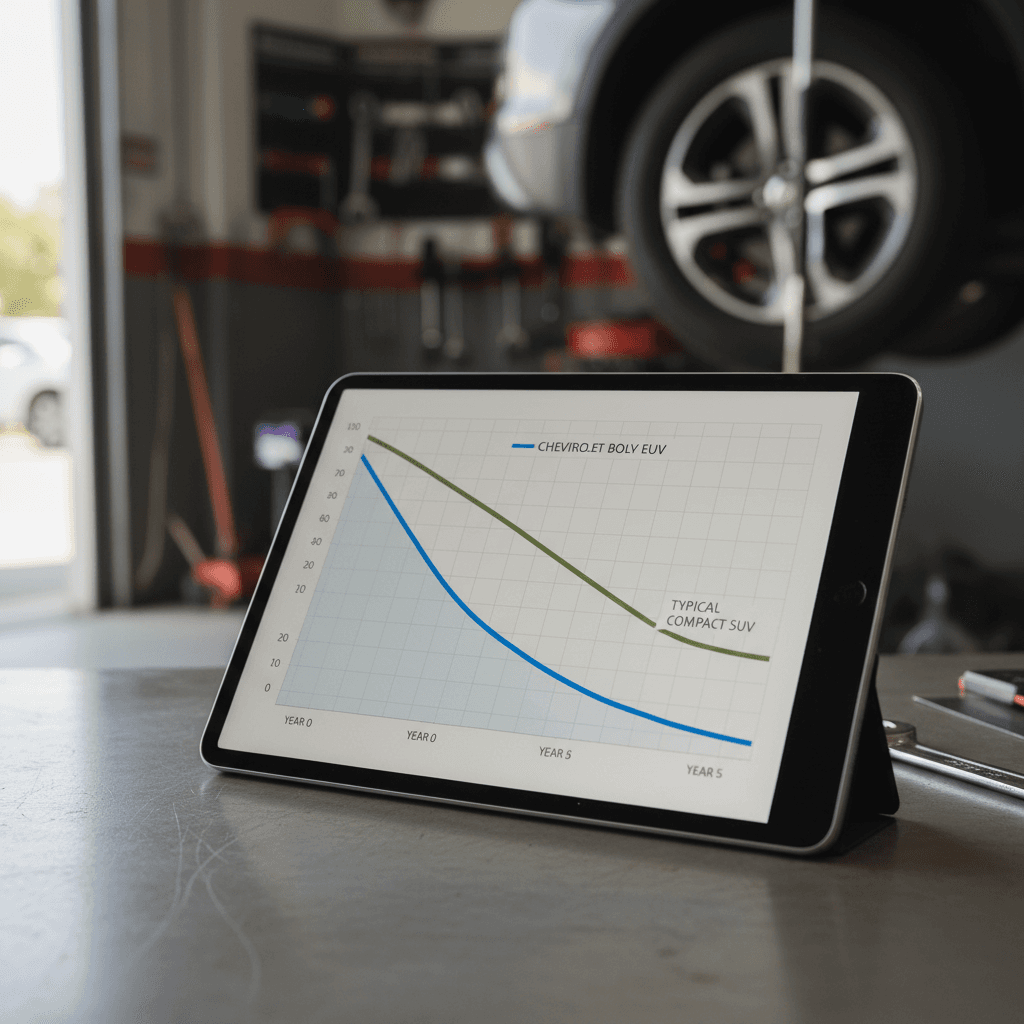
Let’s anchor things in one concrete example: a 2023 Chevrolet Bolt EUV. Public valuation tools in early 2026 suggest that, against an MSRP in the high‑$20,000s to low‑$30,000s, a 2023 EUV has shed roughly 45% of its original list value by year three and is trading in the mid‑teens on the used market in average condition. Some owner anecdotes and dealer wholesale data point to clean, low‑mile examples changing hands anywhere from the high‑teens to mid‑$20Ks, depending on trim and options.
Bolt EUV 5‑year depreciation at a glance (typical case)
If you sketch this out for a typical 2023 EUV with a ~$31,000 real‑world transaction price, the 5‑year curve might look roughly like this in today’s market conditions:
Illustrative 5‑year depreciation curve: 2023 Bolt EUV
Approximate retained value assuming a $31,000 transaction price when new, average mileage, U.S. market, no major damage. These are directional ranges, not guaranteed prices.
| Vehicle age | Calendar example | Approx. private‑party value | Notes |
|---|---|---|---|
| Year 1 | 2024 | $23,000–$25,000 | Price cuts on new cars and recall headlines pressure early resale. |
| Year 2 | 2025 | $19,000–$22,000 | Strong deals from rental fleets and end‑of‑production inventory keep used prices soft. |
| Year 3 | 2026 | $16,000–$20,000 | Where we are now for many clean 2023s; shoppers see them as outstanding value commuters. |
| Year 4 | 2027 | $14,000–$17,000 | Curve flattens; low running costs support a healthy floor of commuter demand. |
| Year 5 | 2028 | $13,000–$16,000 | Battery health and condition matter more than model year; values track miles and history. |
Notice how the curve is front‑loaded: most of the pain is in the first three years, while years four and five look much more like a normal compact car.
Important caveat
What makes Bolt EUV depreciation a little weird
Four forces shaping Bolt EUV depreciation
Why a discontinued compact EV hasn’t just cratered in value.
1. Battery recall stigma (mostly historical)
Early Bolt EVs had a high‑profile battery recall. The EUV arrived after GM reworked its pack strategy, but the taint stuck to the nameplate. That pushed early used values down faster than they otherwise might have and made buyers cautious.
Over time, owners discovered that post‑fix Bolts are generally reliable commuters with strong warranty backing, and that’s helped stabilize prices.
2. Massive price cuts from the factory
GM chopped thousands of dollars off Bolt EV/EUV MSRPs for 2023. That means many first owners started from a deep discount versus 2022 buyers. On a spreadsheet, depreciation looks harsh. In real life, a lot of owners paid economy‑car money for a long‑range EV and have taken a relatively gentle hit.
3. Discontinuation fear… and opportunity
When GM announced the end of Bolt EUV production in 2023, shoppers heard "discontinued" and saw risk: parts, support, future value. But the flip side is that the EUV became the last of the truly affordable long‑range EVs for a while. Enthusiasts and budget‑minded commuters stepped in, propping up demand.
4. EV incentive whiplash
Shifts in U.S. federal and state incentives created strange price relationships between new and used EVs. At times, a new Bolt EUV after credits wasn’t much more than a slightly used one, flattening early resale values. As inventories cleared, used prices found a more rational level.
Upshot for used shoppers
Battery health: the hidden axis of depreciation
With an EV, the dollar value isn’t just about age and miles; it’s also about how much usable energy the pack still holds. The Bolt EUV uses a roughly 65 kWh battery and delivers EPA‑rated range around 247 miles when new. As that capacity slowly fades, so does both real‑world range and resale value.
- Light degradation expected: Many Bolt owners report modest capacity loss over the first 3–5 years with normal use, enough to notice, but not enough to ruin a commuter car role.
- Use pattern matters: Lots of DC fast charging, high‑heat climates, and frequently charging to 100% can accelerate wear compared with gentle home Level 2 charging and a 20–80% routine.
- Warranty safety net: GM’s battery warranty (8 years/100,000 miles for most U.S. cars) helps keep a floor under resale values during the first five years of life. Buyers know that catastrophic pack issues are likely covered.
How Recharged quantifies battery health
How the Bolt EUV’s curve compares to other EVs
Versus mainstream compact SUVs (gas)
- A typical compact gas SUV might lose ~40–45% of its value in five years.
- The Bolt EUV, measured from full MSRP, often ends up in the 50–55% loss range over the same time.
- But remember: many Bolt buyers started from factory discounts, which effectively shrink their real‑world percentage loss.
On paper, depreciation looks worse than a gas RAV4 or CR‑V. In practice, someone who paid heavily discounted money for their Bolt EUV may have fared similarly, or better.
Versus other affordable EVs
- Compared with early Nissan Leafs (shorter range, air‑cooled packs), the Bolt EUV often holds value better because its range remains more useful longer.
- Compared with newer, more expensive compact EVs, the EUV usually depreciates more in dollars but not always more in percentage terms.
- Because the EUV is one of the few genuinely budget long‑range EVs, it has a persistent pool of value‑driven buyers propping up used demand.
In other words: it’s not the king of EV resale, but for the price class, the story is friendlier than “discontinued EV” would suggest.
Used Bolt EUV pricing cheat sheet for shoppers
If you’re standing on a used‑car lot (or scrolling a marketplace) in 2026, you don’t have time to run regression models. You need sanity‑check bands: is this price in the ballpark, or is someone trying to tax your optimism?
Quick value bands for typical Bolt EUV listings (early 2026)
2022 Bolt EUV LT, higher miles
Think 40,000–60,000 miles, base equipment, clean history. A fair private‑party price often lands somewhere in the low‑ to mid‑teens. Nice examples a bit higher; fleet‑spec cars with wear should be lower.
2022 Premier / well‑equipped
Add a few thousand for options like Super Cruise, sunroof, and nicer interior trim. Low‑mile, heavily optioned cars can still justify high‑teens pricing if the battery data and history check out.
2023 Bolt EUV LT, moderate miles
For 15,000–30,000 miles, expect mid‑teens to around $20,000, depending on trim and region. If a basic 2023 is priced deep into the $20Ks, compare it to newer tax‑credit‑eligible EVs before jumping.
2023 Premier / low‑mile “cream puff”
Top‑trim EUVs with low miles and clean history may still command upper‑teens to low‑$20Ks. Above that, the car needs to be nearly perfect or bundled with unusual extras to make sense.
Rebuilt, high‑mile, or rough examples
Accident history, salvage/rebuilt titles, or >80,000 miles should bring an aggressive discount. These cars can make sense for short‑hop urban duty, but they live on a much steeper personal depreciation curve.
Watch out for value traps
How to evaluate a used Chevrolet Bolt EUV
Two Bolt EUVs of the same year and mileage can sit on completely different depreciation curves depending on how they were treated. Here’s how to tell a future bargain from a future write‑off.
Step‑by‑step: putting a specific Bolt EUV on the curve
1. Start with the VIN history
Pull a full vehicle history report. Look for airbag deployments, structural damage, flood events, and repeated minor accidents. A clean record supports the upper half of the value range; heavy damage or salvage status puts the car on a much steeper curve.
2. Check battery health and range
Ask for recent range figures at 100% charge and, ideally, a professional battery health report. A Bolt EUV that reliably delivers close to its original rated range is worth more than a similar‑mileage car that has obviously lost capacity.
3. Look at charging and use patterns
Cars that lived on daily DC fast charging, or in extreme heat without garage parking, deserve a discount relative to gently used, mostly‑home‑charged examples. Ask where and how the car was charged, and see if the data supports the story.
4. Inspect tires, brakes, and interior wear
EVs can be hard on tires because of instant torque. Uneven wear hints at suspension or alignment issues. Heavy interior wear or odors suggest hard use, another reason to demand a lower spot on the depreciation curve.
5. Confirm warranty and recall status
Make sure open recalls have been completed and that you understand how much of the battery and powertrain warranty remains. A car with several years of coverage left commands a premium over one that’s nearly out of its safety net.
6. Compare to live market data
Don’t rely on a single guide. Cross‑check dealer listings, private‑party ads, and valuation tools. If a car is priced dramatically above similar listings with comparable battery health, either negotiate, or be prepared to walk.
How Recharged does this for you
How Recharged helps you beat the depreciation curve
The dirty secret of depreciation talk is that it’s always about someone else’s past decisions. Your job as a used‑EV shopper is to step into the story at the right moment, with the right car, at the right price. The Bolt EUV in early 2026 is a classic case: the original owners have already weathered the wild years of price cuts, incentive swings, and discontinuation drama. You get to buy the car as what it is today: an inexpensive, long‑range electric commuter.
What buying a Bolt EUV through Recharged looks like
Less guesswork, more signal.
Transparent Recharged Score
Every Bolt EUV on Recharged comes with a Recharged Score Report that breaks down battery health, charging history where available, cosmetic condition, and more, so you see exactly why a car is priced where it is on the curve.
Fair, data‑driven pricing
Our pricing leans on real transaction data and EV‑specific valuation models, not just generic gas‑car depreciation tables. If a particular EUV deserves to sit above or below the average curve, we explain why.
Financing, trade‑in & delivery
Recharged can finance your purchase, give you an instant offer or consignment option for your current vehicle, and arrange nationwide delivery. You can do the whole transaction digitally, or visit our Experience Center in Richmond, VA if you prefer to see a car in person.
Ready to find your next EV?
Browse VehiclesChevrolet Bolt EUV depreciation: FAQ
Frequently asked questions about Bolt EUV depreciation
The Chevrolet Bolt EUV’s 5‑year depreciation curve is a little like the car itself: unflashy, pragmatic, and more interesting the closer you look. Early adopters rode out the sharpest drops as GM sorted pricing, incentives, and its future EV strategy. As a used‑car shopper in 2026, you have the luxury of walking in after the drama. If you pair a realistic view of the depreciation curve with hard data on battery health and history, and, ideally, the kind of transparency built into a Recharged Score Report, you can end up with one of the best value‑per‑dollar daily drivers in the electric world.