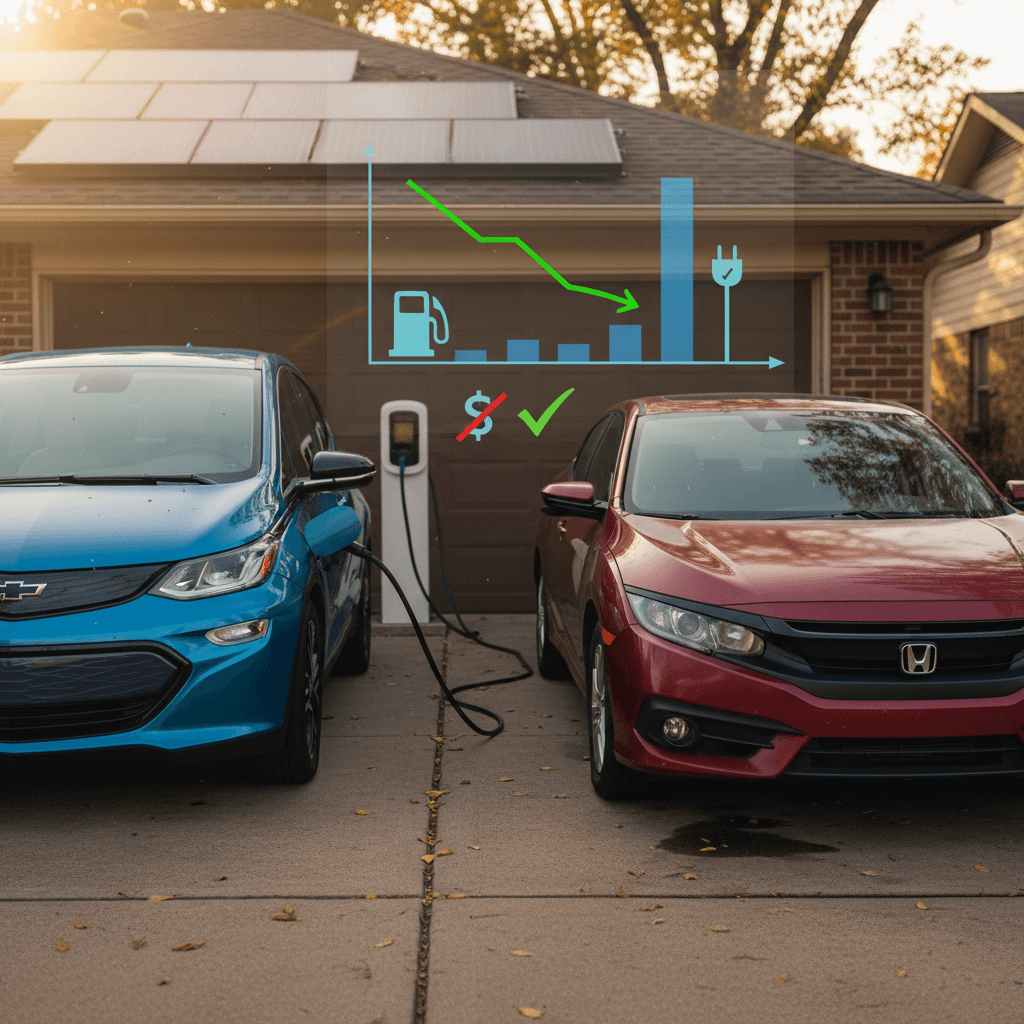
If you’ve been driving a Honda Civic for years, you already know it’s one of the most economical gas cars on the road. That’s exactly why people ask: does it really make financial sense to switch from a Honda Civic to a Chevrolet Bolt EV? In this guide, we’ll walk through clear, U.S.-based numbers to show the real-world cost savings (and trade-offs) of going from Civic to Bolt, fuel, maintenance, and total cost of ownership included.
Quick takeaway
Why Compare a Honda Civic to a Chevy Bolt EV?
The Honda Civic is a benchmark for low-cost, reliable gasoline transportation. Many Civic owners put 150,000+ miles on their cars with minimal drama. The Chevrolet Bolt EV sits at the other end of the spectrum: a compact, fully electric hatchback with excellent efficiency and some of the lowest used EV prices in the market today.
Honda Civic vs Chevy Bolt EV at a Glance
Two efficient compact cars, two very different energy sources
Typical Honda Civic (2016–2021 gas model)
- Fuel economy: ~32–36 mpg combined in real-world driving
- Energy source: Gasoline only
- Range per tank: ~400–450 miles
- Strength: Low upfront cost, easy refueling anywhere
Chevrolet Bolt EV (2017–2022)
- Efficiency: ~3.5–4.0 miles per kWh in mixed driving
- Energy source: Electricity only
- EPA range: ~238–259 miles, depending on year
- Strength: Very low energy and maintenance costs, especially from home charging
Think in cost per mile
Baseline Assumptions for a Fair Cost Comparison
Your exact savings will depend on where you live and how you drive, but we need some realistic baselines to work with. These are U.S. averages and conservative estimates as of early 2026, not best‑case scenarios.
Baseline Numbers Used in This Article
You can swap in your own gas and electricity prices later, but these starting points keep the math simple and realistic.
| Factor | Honda Civic (gas) | Chevy Bolt EV | Notes |
|---|---|---|---|
| Annual miles driven | 12,000 miles | 12,000 miles | Roughly the current U.S. average commuter mileage |
| Fuel / energy efficiency | 34 mpg (combined) | 3.7 mi/kWh | Reasonable real‑world numbers for mixed driving |
| Gasoline price | $3.25 per gallon | , | National average has hovered around low‑$3s recently |
| Home electricity price | , | $0.16 per kWh | Close to recent U.S. residential average |
| Public DC fast charging | , | $0.35 per kWh | Approximate cost on many networks |
| Home charging share | , | 80% of miles | Assumes you mostly charge at home |
| Ownership horizon | , | 3 and 5 years | We’ll model both 3‑ and 5‑year scenarios |
Assumptions are based on recent national averages and typical real-world efficiency for each vehicle.
Your local prices matter
Headline Cost Per Mile (Our Baseline Case)
Fuel vs Electricity: Cost Per Mile Showdown
Let’s turn those assumptions into simple cost‑per‑mile math. This is where the switching from Honda Civic to Chevrolet Bolt EV cost savings really start to show up.
Honda Civic: Fuel Cost Per Mile
- Gas price: $3.25/gal
- Real‑world efficiency: 34 mpg
Fuel cost per mile = $3.25 ÷ 34 ≈ $0.10 per mile.
At 12,000 miles per year, that’s about $1,150 per year in gasoline.
Chevy Bolt EV: Electricity Cost Per Mile
- Home electricity: $0.16/kWh
- Efficiency: 3.7 mi/kWh
- Home charging share: 80% of miles
- Public fast charging: $0.35/kWh on 20% of miles
Home charging: $0.16 ÷ 3.7 ≈ $0.043/mi
Fast charging: $0.35 ÷ 3.3 (slightly lower efficiency) ≈ $0.11/mi
Blended cost per mile ≈ 5–6¢/mi. At 12,000 miles/year, that’s roughly $600–$700 per year in electricity.
Using those numbers, a typical driver going from a Honda Civic to a Chevrolet Bolt EV saves about $450–$550 per year in energy alone at current national prices. In years when gas spikes or you can shift more charging to off‑peak or lower‑rate electricity, the savings can be even larger.
Rule of thumb
Maintenance and Repair: Where EVs Quietly Win
Everyone focuses on fuel, but the second big bucket of savings when you switch from a Honda Civic to a Chevy Bolt EV is maintenance and repairs. EVs simply have fewer moving parts and far fewer fluids to change.
Typical Maintenance Items: Civic vs Bolt
What you can largely forget about with an EV
Oil & Fluids
Honda Civic: Engine oil + filter changes 2–3x per year, transmission fluid at intervals, coolant services, etc.
Chevy Bolt EV: No oil changes, no transmission fluid service in the traditional sense. Brake fluid changes and coolant service are much less frequent.
Wear Items
Civic: Belts, spark plugs, exhaust components, catalytic converter, and more over a long life.
Bolt EV: No exhaust system, no spark plugs, fewer belts. You still have tires, suspension, cabin air filter, and wipers.
Brakes
Civic: Conventional braking means more pad and rotor wear, especially in stop‑and‑go traffic.
Bolt EV: Aggressive regenerative braking stretches pad life dramatically. Many EV drivers go well over 100,000 miles before the first brake job.
- Honda Civic: $700–$900 per year in maintenance and light repairs over long‑term ownership (oil, fluids, wear items, minor fixes).
- Chevy Bolt EV: $400–$600 per year on average, mostly tires, cabin filters, and the occasional software or warranty item.
But what about battery replacement?
Insurance, Taxes, and Fees: What Changes With a Bolt EV?
Compared with fuel and maintenance, differences in insurance and registration costs when you switch from a Civic to a Bolt are more modest, but they’re still worth understanding.
- Insurance: In many states a Bolt EV will cost a bit more to insure than an older Civic simply because it’s newer and more valuable, and EV parts can be pricier. For most drivers the difference is in the range of $100–$250 per year, but this is highly location- and driver‑dependent.
- EV registration or road‑use fees: A growing number of states charge a flat annual EV fee instead of fuel taxes, often $100–$200 per year. If your state does this, consider that fee part of your fuel cost comparison.
- Tax credits and incentives: New Bolt EVs are no longer being produced, but used Bolts can sometimes qualify for used EV tax credits or state/local rebates depending on current laws and your income. Those incentives can dramatically change the upfront math, but they’re too fluid to assume universally in the examples below.
Net effect
3-Year and 5-Year Total Cost Examples
Now let’s put all the pieces together. We’ll look at a realistic switch scenario for someone moving from an older Civic into a used Chevy Bolt EV purchased through a digital retailer like Recharged.
Example 1: 3-Year Ownership, 12,000 Miles/Year
Assumes you already own your Civic outright and buy a used Bolt EV with financing. Numbers are rounded for clarity.
| Cost Category (3 years) | Keep Honda Civic | Switch to Used Chevy Bolt EV | How We Got There |
|---|---|---|---|
| Energy (fuel/electricity) | ≈ $3,450 | ≈ $2,000 | Civic: $1,150/yr × 3; Bolt: ~$650/yr × 3 |
| Maintenance & repairs | ≈ $2,100 | ≈ $1,350 | Civic: ~$700/yr; Bolt: ~$450/yr |
| Insurance difference | Baseline | +≈ $450 | Bolt costs ~$150/yr more to insure |
| EV registration/road fee | $0 (gas taxes at pump) | ≈ $450 | Assumes $150/yr flat EV fee in your state |
| Loan/vehicle cost | $0 (already owned) | Varies widely | If you finance a $18,000 used Bolt at typical rates, payments dominate this row |
| Total operating savings (energy + maintenance) | , | ≈ $2,200 saved | $1,450 fuel + $750 maintenance over 3 years |
Use this as a framework, your exact payments, insurance, and fuel costs will vary by state and lender.
In this 3‑year snapshot, ignoring purchase price, the Bolt saves around $2,200 in operating costs versus keeping the Civic. If your insurance and EV fees add about $900 over the same period, your net 3‑year operating advantage is still roughly $1,300 in favor of the Bolt.
Example 2: 5-Year Ownership, 12,000 Miles/Year
The longer you keep the car, the more the lower running costs of the Bolt matter.
| Cost Category (5 years) | Honda Civic | Chevy Bolt EV | Difference |
|---|---|---|---|
| Energy (fuel/electricity) | ≈ $5,750 | ≈ $3,250 | ≈ $2,500 saved with Bolt |
| Maintenance & repairs | ≈ $3,500 | ≈ $2,250 | ≈ $1,250 saved with Bolt |
| Insurance (extra for Bolt) | , | +≈ $750 | Partially offsets savings |
| EV registration/road fee | $0 | ≈ $750 | If your state charges $150/yr |
| Net operating savings (5 years) | , | ≈ $2,200–$2,500 | Fuel + maintenance – extra insurance – EV fees |
These numbers assume similar patterns extended to a 5‑year horizon.
How to use these tables
Charging Strategy: Home vs Public Fast Charging
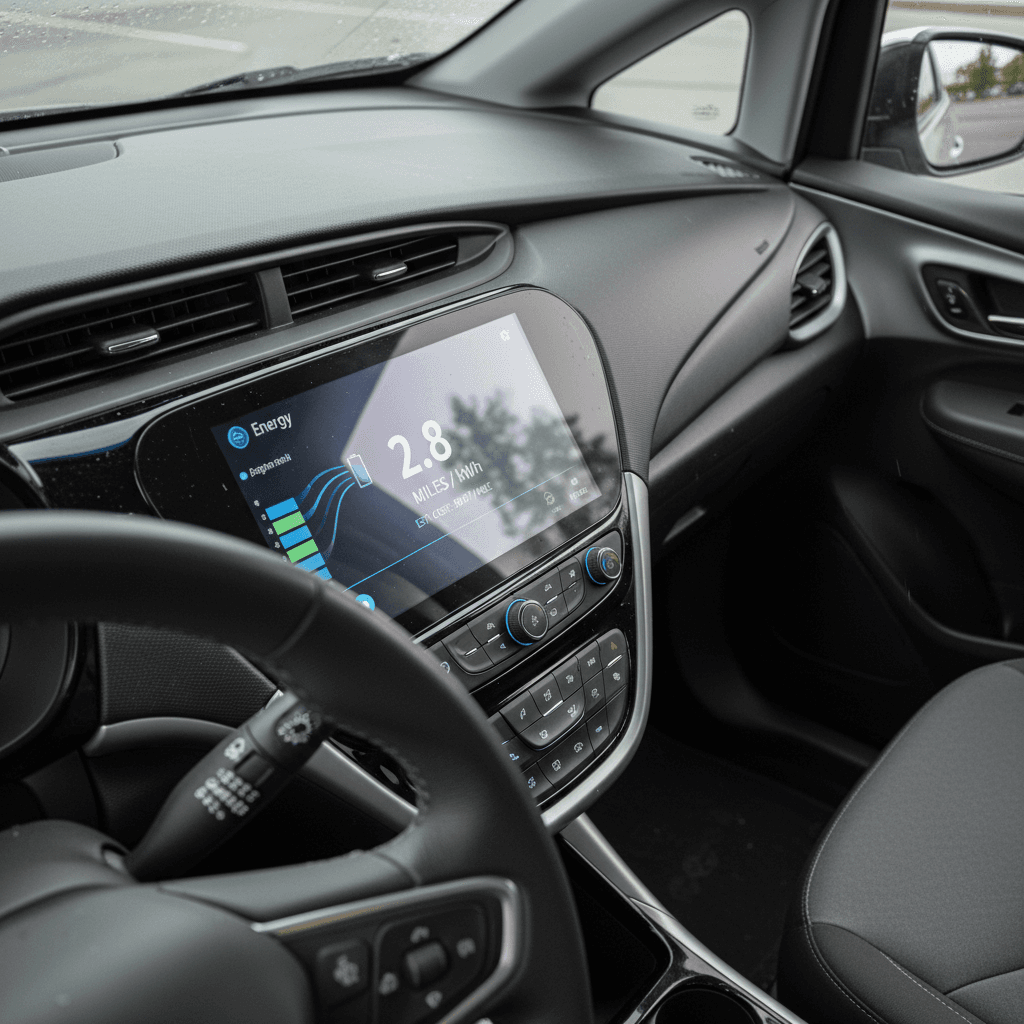
Whether a Bolt EV actually beats your Civic on cost depends heavily on where you charge. Home charging at a reasonable electricity rate is the secret weapon that makes the math work.
Common Charging Scenarios and What They Mean for Savings
1. Mostly home charging (best case)
If you can charge overnight at $0.10–$0.18/kWh, your Bolt will almost certainly beat your Honda Civic on energy costs by a wide margin. This is the scenario that produces the biggest savings in our examples.
2. Mix of home and workplace charging
If your employer offers free or discounted workplace charging, the Bolt’s effective cost per mile drops even further, sometimes approaching 2–3¢ per mile. That can double the fuel savings vs a Civic.
3. Heavy public DC fast charging
Relying heavily on DC fast chargers at $0.35–$0.50/kWh can narrow or even erase your fuel savings compared with a Civic, especially in regions with cheap gas. Fast charging is great for trips, but expensive as your primary fuel source.
4. Apartment living with no dedicated parking
Without reliable overnight charging, you’ll lean on public options more. In this case, the Civic’s convenience and predictable fuel costs may still be competitive, unless you have a particularly expensive local gas market.
Don’t ignore home electrical work
Non-Financial Benefits of Switching to a Bolt EV
Dollars and cents matter, but most Civic drivers who make the switch to a Bolt EV stay in the EV world for reasons that go beyond a spreadsheet.
Everyday Experience Upgrades When You Go Bolt
What you feel day to day, not just at the pump
Quieter, smoother driving
“Full tank” from your driveway
No tailpipe emissions
For many Civic owners, the Bolt EV feels like going from a flip phone to a smartphone, not just cheaper to run, but fundamentally better to live with day in and day out.
How Recharged Helps You Run the Numbers
If this all feels like a lot of back‑of‑the‑envelope math, you’re not alone. That’s exactly why Recharged exists, to make used EV ownership simple and transparent, especially for shoppers cross‑shopping efficient gas cars like the Civic.
Shopping a Used Chevy Bolt EV Through Recharged
Tools that make the Civic-to-Bolt switch less of a leap
Verified battery health with Recharged Score
Financing, trade‑in, and delivery
Ready to find your next EV?
Browse VehiclesMake the math real
FAQ: Switching from a Honda Civic to a Chevy Bolt EV
Frequently Asked Questions
Bottom Line: Should You Switch from a Civic to a Bolt EV?
When you strip away the hype and look at the numbers, switching from a Honda Civic to a Chevrolet Bolt EV usually delivers meaningful cost savings, especially if you log average or above‑average miles and can charge at home. In our baseline examples, a typical driver saves roughly $400–$500 per year on energy and another $200–$300 per year on maintenance, even after accounting for modestly higher insurance and EV registration fees.
If your Civic is nearly paid off and in great shape, the decision may come down to how much you value a quieter, smoother drive and the convenience of home charging versus taking on a payment. If your Civic is aging, needs major work, or burns more fuel than the averages we used, the Bolt EV’s case gets stronger quickly.
The most practical next step is to run your own numbers. Price out a used Chevy Bolt EV, ideally one with a verified battery health report like the Recharged Score, get real insurance quotes, and plug in your local gas and electricity rates. When you see everything side by side, you’ll know whether the Civic‑to‑Bolt EV switch is a smart financial move for you, not just in theory.