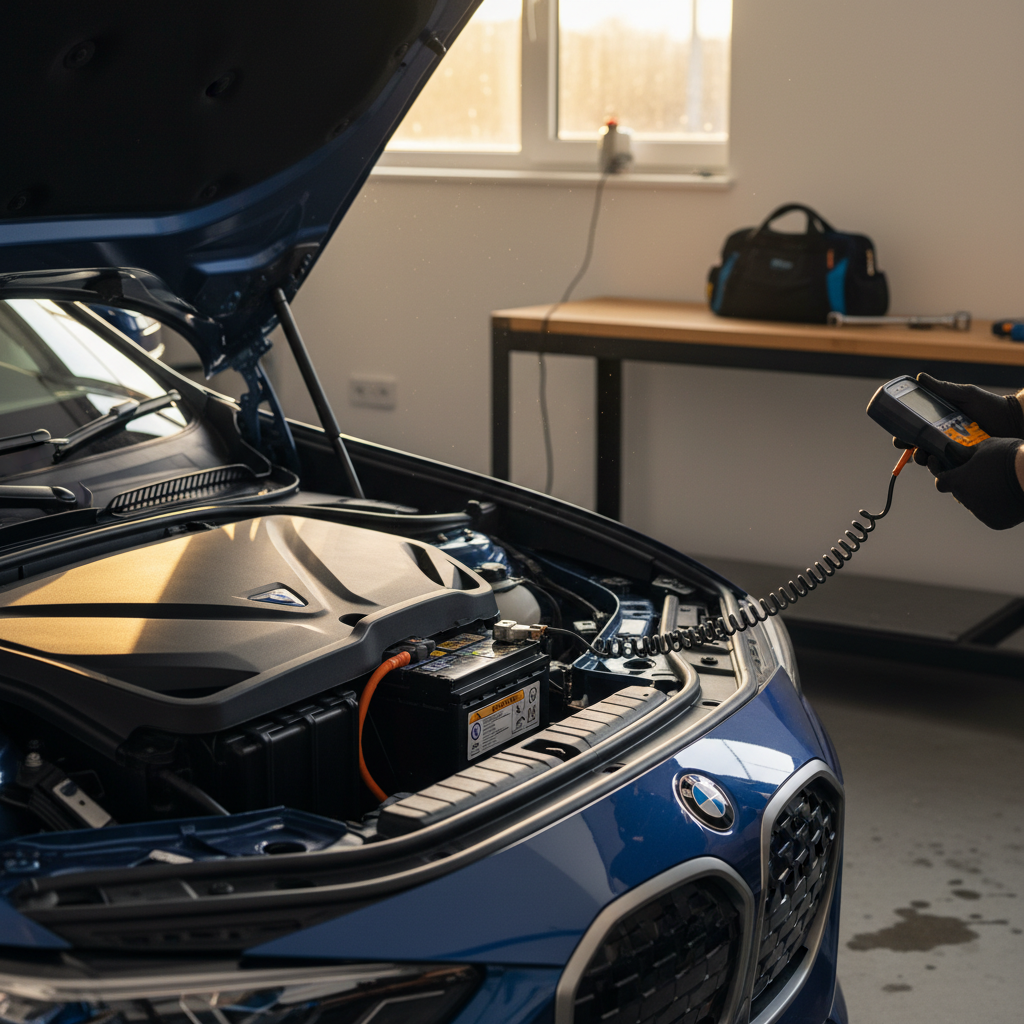
If you own or are eyeing a used Chevrolet Bolt EUV in 2026, you’ve probably heard the horror stories: a dead battery that costs as much as the whole car. There’s some truth hiding in that panic. A full Chevrolet Bolt EUV battery replacement cost in 2026 can land well into five figures at a dealer. But the odds that you’ll ever sign that check are a lot lower than the headlines suggest, especially if you understand how GM’s warranty, recall coverage, and smart shopping work together.
Key takeaway for 2026
Chevy Bolt EUV battery replacement cost in 2026: the short answer
Bolt EUV battery cost at a glance in 2026
Those top‑line numbers reflect worst‑case, retail scenarios, the quote you’d get in 2026 if your Bolt EUV’s battery failed with no warranty, recall coverage, or goodwill assistance in play. The good news is that most 2022–2023 Bolt EUVs on the road are still well inside their 8‑year/100,000‑mile battery warranty window, and many earlier cars received free recall packs that restarted the warranty clock on the battery itself.
Sticker price vs. real life
Why Chevrolet Bolt EUV battery cost matters for 2026 owners and shoppers
Battery cost matters because on an EV, the pack is your engine and fuel tank rolled into one. On paper, a replacement can equal half, or more, of a used Bolt EUV’s market value. That’s enough to spook first‑time EV shoppers, and it’s a big question for anyone thinking of keeping their Bolt into its second decade.
Who should care most about Bolt EUV battery cost in 2026?
Different owners have different risks, and opportunities.
Current Bolt EUV owners
If you drive a 2022–2023 Bolt EUV, you’re still inside the 8‑year/100,000‑mile battery warranty. Your job is to protect that coverage, keep good records, and treat the pack kindly so it easily outlives the warranty window.
Used‑EV shoppers
In 2026, more off‑lease and ex‑fleet Bolt EUVs are hitting the market. You need to know how to decode the battery’s story: warranty end date, recall status, and real‑world health, ideally with a third‑party report like a Recharged Score.
Long‑term keepers
If you’re planning to drive your Bolt EUV past 150,000 miles, battery cost is a long‑term planning question. You want to understand how degradation patterns, climate, and charging habits affect whether you’ll ever see a failure severe enough to justify replacement.
How Recharged fits in
How the Bolt EUV battery warranty works in 2026
Chevrolet backs the Bolt EUV’s high‑voltage battery with an 8‑year / 100,000‑mile Propulsion Battery Limited Warranty, separate from the basic 3‑year/36,000‑mile bumper‑to‑bumper coverage. If the battery has a defect in materials or workmanship within that window, GM will repair or replace it, including labor, at no cost to you when the work is done by an EV‑certified dealer.
- For most 2022–2023 Bolt EUVs sold new in the U.S., the battery warranty runs roughly from model‑year in‑service date through 2030–2031, or 100,000 miles, whichever comes first.
- The warranty follows the car, not the owner. If you buy a used Bolt EUV in 2026, you get whatever balance of that 8‑year/100,000‑mile battery coverage remains.
- On newer documentation, GM also spells out a capacity guarantee: if usable capacity falls below about 60% of original during the warranty period (as determined by a dealer), the pack may be repaired or replaced. That threshold is rarely hit in normal use.
- Many vehicles covered by the earlier LG battery recall received additional warranty language specific to the replacement pack, often another 8‑year/100,000‑mile parts warranty from the replacement date.
What’s actually covered?
How to check a Bolt EUV’s battery warranty status in 2026
1. Find the in‑service date
Ask a Chevy dealer to pull the vehicle’s history by VIN, or look at the original purchase paperwork if you have it. The 8‑year clock starts when the car was first put into service, not necessarily the model year printed on the tailgate.
2. Verify odometer vs. 100,000‑mile limit
The battery warranty expires at whichever comes first: 8 years or 100,000 miles. A 2022 Bolt EUV with 85,000 miles in 2026 is a very different risk story than one with 35,000 miles.
3. Look for ‘Battery Limited Part Warranty’ entries
On many recall‑repaired cars, GM’s system will show a separate line item for a <strong>Battery Limited Part Warranty</strong> with its own 8‑year/100,000‑mile expiration from the replacement date. That’s essentially a second safety net for the battery itself.
4. Ask about prior battery repairs
Have a dealer print the warranty repair history. Look for HV‑battery‑related campaigns, recall work, or replaced sections/packs. A car that has already received a fresh pack under recall can be a <strong>better</strong> long‑term bet.
Recall battery replacements and what they mean for cost
Because of the high‑profile LG cell defect that led to rare Bolt EV/EUV battery fires, GM launched a sweeping recall covering all 2017–2022 Bolt EVs and EUVs. Many of those cars ultimately received brand‑new packs at no cost, often including an 8‑year/100,000‑mile GM Service Replacement Parts Limited Warranty on the new battery.
What the recall did for owners
- Free batteries for many cars: Owners whose packs met GM’s criteria received new high‑voltage batteries installed at no charge, including labor.
- Fresh warranty clock on the pack: Replacement batteries installed under recall typically got their own 8‑year/100,000‑mile coverage, documented as a service parts warranty.
- Updated software safeguards: Even cars that didn’t get full pack swaps received revised battery management software designed to monitor and protect the pack.
What that means in 2026
- A 2020 Bolt EUV that received a recall pack in late 2023 might have coverage on the battery itself into 2031, even if the original vehicle warranty expires earlier.
- For used‑EV shoppers, a recall‑replaced battery can be a selling point, not a red flag, assuming the work is properly documented.
- If a recall‑covered pack fails again within its replacement warranty, GM is generally on the hook, not you.
Why recall history can be a plus
What actually drives Chevrolet Bolt EUV battery replacement cost
When you hear a single scary number for Bolt EUV battery replacement, what you’re really hearing is a bundle of line items: the cost of a new or remanufactured pack, the labor to drop the old unit and install the new one, HV‑safety procedures, shop fees, and taxes. Each of those moves up or down depending on where and how the work is done.
Typical Chevy Bolt EUV battery replacement cost breakdown (2026, out of warranty)
Approximate ranges for a full high‑voltage pack replacement at retail dealer pricing in the U.S. in 2026.
| Cost component | Low estimate | High estimate | Notes |
|---|---|---|---|
| New OEM high‑voltage battery pack | $10,000 | $16,000+ | Full 60–66 kWh assembly, often more than half the car’s market value. |
| Labor to remove/replace pack | $700 | $2,000 | EV‑certified technicians, lift time, diagnostic checks. |
| Auxiliary parts/fluids | $200 | $400 | Fasteners, seals, coolant, high‑voltage safety gear. |
| Dealer fees & shop charges | $100 | $300 | Diagnostic fees, disposal, miscellaneous shop supplies. |
| Sales tax (where applicable) | Varies | Varies | Applied to parts and sometimes labor, depending on local law. |
| Total estimated out‑of‑pocket | $11,000 | $18,000+ | What an unlucky, out‑of‑warranty owner might see on a 2026 invoice. |
These numbers are ballpark estimates, not quotes. Actual pricing varies by dealer, region, and parts availability.
Don’t forget: used packs and salvage options
Realistic out-of-warranty scenarios for 2026 (who might actually pay)
So who realistically faces a five‑figure Bolt EUV battery bill in 2026? Not the typical suburban owner with a 2022 Premier and 35,000 miles. The risk concentrates in a narrower slice of vehicles and use cases.
Higher‑risk Bolt EUV scenarios in 2026
These are the edge cases where full pack replacement cost becomes more than a thought experiment.
High‑mileage commuters & fleets
Think ride‑share, delivery, or long‑distance commuters stacking 25,000+ miles per year. A 2022 Bolt EUV with 80,000–100,000 miles by 2026 may age out of warranty sooner than a low‑miler, and any failure after that is harder to shift onto GM.
Harsh climate + abuse
Batteries age faster in extreme heat, especially when they live at high state of charge. A car DC fast‑charged to 100% daily in Phoenix is under more stress than a garage‑kept car in Seattle that mostly home‑charges to 80%.
Unknown or sketchy history
Carfax doesn’t tell you who fast‑charged to 100% daily or let the car sit dead for months. Bolts with patchy maintenance records, missing recall documentation, or odd behavior (rapid range loss, repeated HV warnings) demand extra scrutiny, and professional diagnostics, before you buy.
Battery replacement vs. car value
Shopping used in 2026: reading the battery tea leaves
In 2026, the Bolt EUV sits in a sweet spot: modern safety tech, decent DC fast‑charging, and approachable pricing on the used market. The trick is separating the great cars from the ones that might hand you a battery headache just as the warranty clock runs out.

Used Chevy Bolt EUV battery checklist for 2026 shoppers
1. Confirm remaining battery warranty
Use the VIN and in‑service date to calculate the precise warranty expiration. A 2023 Bolt EUV sold in mid‑2023 could still have <strong>seven or more years</strong> of battery coverage in 2026.
2. Pull recall and service records
Make sure all battery‑related recalls and software updates are complete. If a recall pack was installed, document the <strong>replacement date</strong> and confirm any new battery‑specific warranty language.
3. Get objective battery health data
Ask for a third‑party battery report, such as the <strong>Recharged Score</strong>, which looks at pack capacity, balance, and charging history where available. Dashboard range estimates alone are not enough.
4. Test‑drive for consistency
During a mixed city/highway drive, watch how quickly the state of charge and estimated range drop. Sudden, dramatic swings or repeated high‑voltage warnings are reasons to pause and investigate.
5. Inspect charging behavior
Confirm that the car AC‑charges normally at Level 2 and, if possible, perform a short DC fast‑charge session. <strong>Unusually slow or interrupted charging</strong> can hint at pack or thermal‑management issues.
6. Compare price to battery risk
A steep discount might be fair on a high‑mileage car close to the end of its battery warranty, but only if you walk in eyes‑open about the <strong>potential replacement cost</strong> and your exit strategy.
Leaning on an EV specialist
How to make your Bolt EUV battery last (and avoid replacing it)
The cheapest battery replacement is the one you never need. The Bolt EUV’s nickel‑rich lithium‑ion pack is designed for a long service life, and analysis of recall‑replaced packs suggests that well‑cared‑for batteries can run 200,000–250,000 miles before meaningful degradation. Your daily habits have a lot to say about where in that range you land.
- Aim for 20–80% for daily use. Use 100% only for trips that need the full range, and avoid letting the car sit at 100% in hot weather.
- Don’t live at the extremes. Try not to leave the car parked for days at very low state of charge (under ~10%) or at 100%, especially in high heat.
- Favor home Level 2 over constant DC fast charging. DC fast charging is fine, but making it your only fueling source, especially in hot climates, can accelerate wear.
- Let the thermal system do its job. If the fans or coolant pumps run after a fast charge, let the car finish its thermal management rather than unplugging and driving off immediately every time.
- Keep software up to date. Battery‑management updates can tweak how the pack is charged and monitored. Don’t ignore software recall notices or dealer campaigns.
- Store smart. If you park the Bolt EUV for weeks, leave it around 40–60% and, if possible, in a shaded or climate‑controlled garage.
What ‘normal’ Bolt EUV degradation looks like
Budgeting and financing if a Bolt EUV battery ever does fail
Let’s say the worst happens: Your Bolt EUV is out of battery warranty in 2029 or 2030, the pack fails in a way that can’t be patched, and a dealer quotes you $13,000 for a new battery. What then? In 2026, it’s smart, not paranoid, to sketch out how you’d respond, even if you never need to put the plan into action.
Option A: Replace the battery
- When it makes sense: The rest of the car is in excellent shape, market values are higher than today, or you personally value driving this particular car for many more years.
- How to pay: Some owners use savings; others treat it like a major repair financed over time through a personal loan or EV‑specific financing products.
- Upside: A fresh pack can reset your range and extend the car’s life significantly, especially if a strong warranty comes with the replacement.
Option B: Exit gracefully
- Sell or trade instead of fixing: If the quote approaches or exceeds the car’s value, walking away can be rational.
- Leverage instant offers: Services (including Recharged) can give you a real‑world offer based on the car’s condition, even with a failing pack.
- Step into a different used EV: You might be better off putting that $11k–$18k toward a newer used EV with stronger remaining battery coverage.
Using Recharged if you need to pivot
FAQ: Chevrolet Bolt EUV battery replacement cost in 2026
Frequently asked questions
Bottom line: Should Bolt EUV battery cost scare you in 2026?
The raw numbers are attention‑grabbing: by 2026, a full Chevrolet Bolt EUV battery replacement can still mean an $11,000–$18,000 invoice at a dealer if you’re far outside any warranty or recall coverage. But that’s a tail‑risk scenario, not the destiny of every Bolt EUV. For most owners, the combination of GM’s 8‑year/100,000‑mile battery warranty, the extensive recall campaign, and the inherently long life of modern lithium‑ion packs means you’re unlikely to ever buy a new battery out of pocket.
Where you do have control is in the car you choose and how you treat it. If you’re shopping used in 2026, insist on real battery data, clear documentation, and pricing that reflects the remaining warranty runway. If you already own a Bolt EUV, charge thoughtfully, keep software current, and document any battery‑related service. And if you want a co‑pilot for all of that, Recharged is built around exactly this question: making EV ownership, and especially used EV ownership, as transparent and low‑drama as it ought to be.