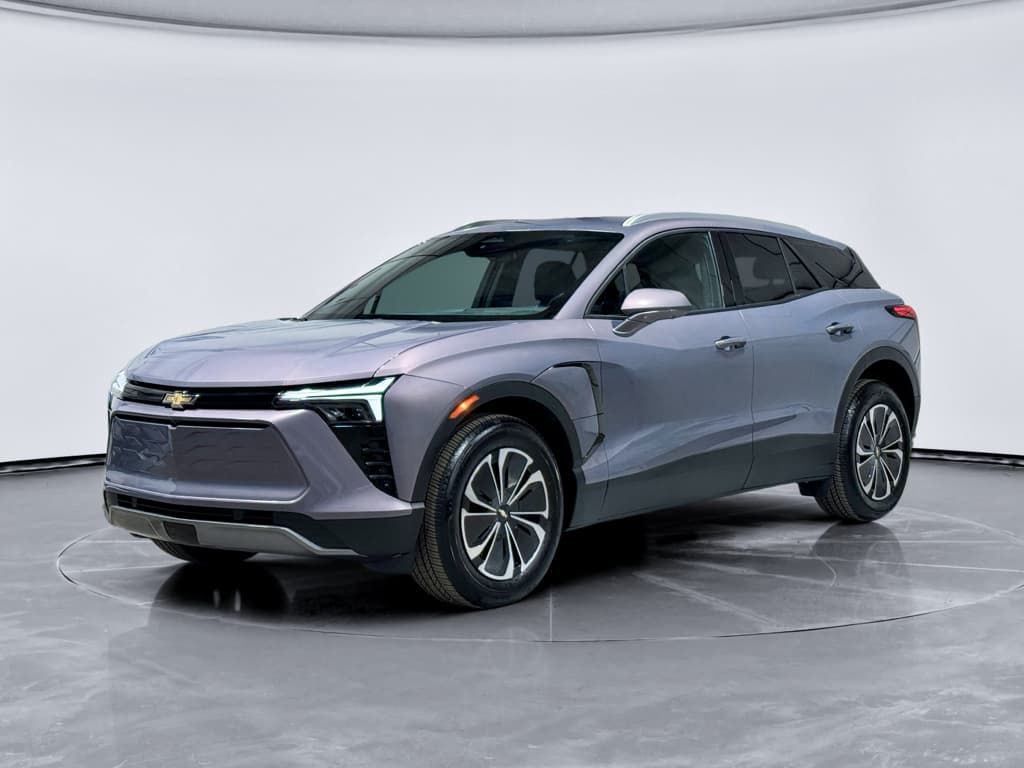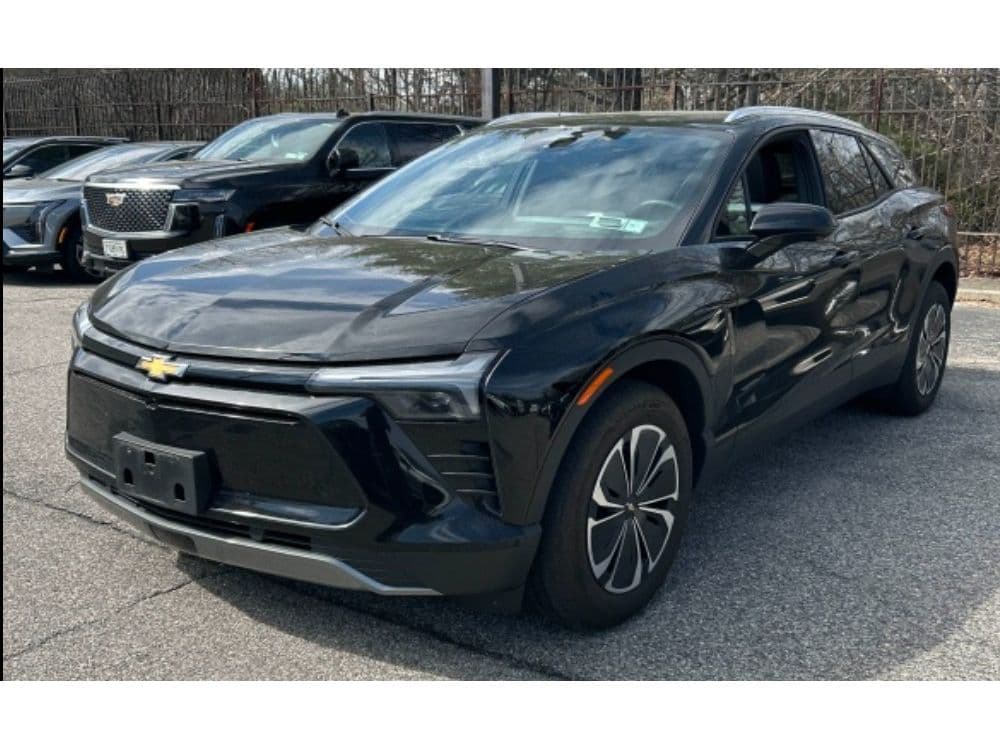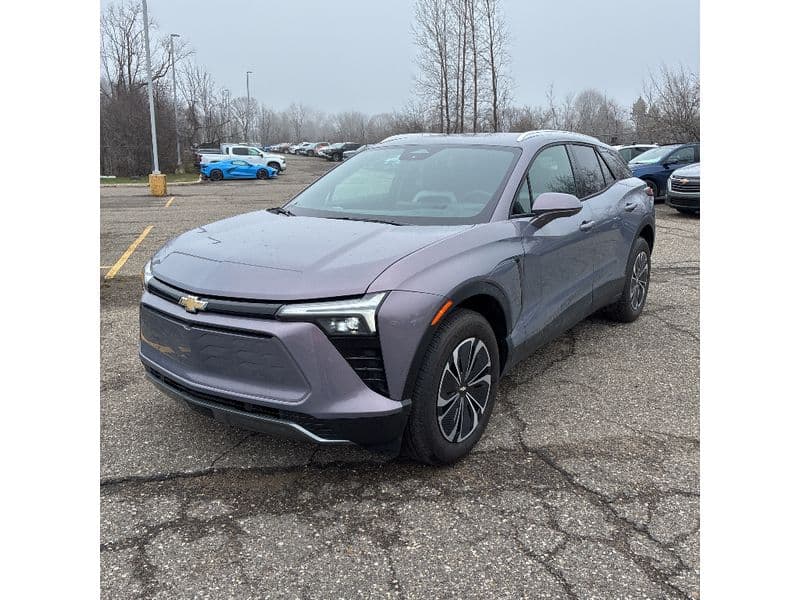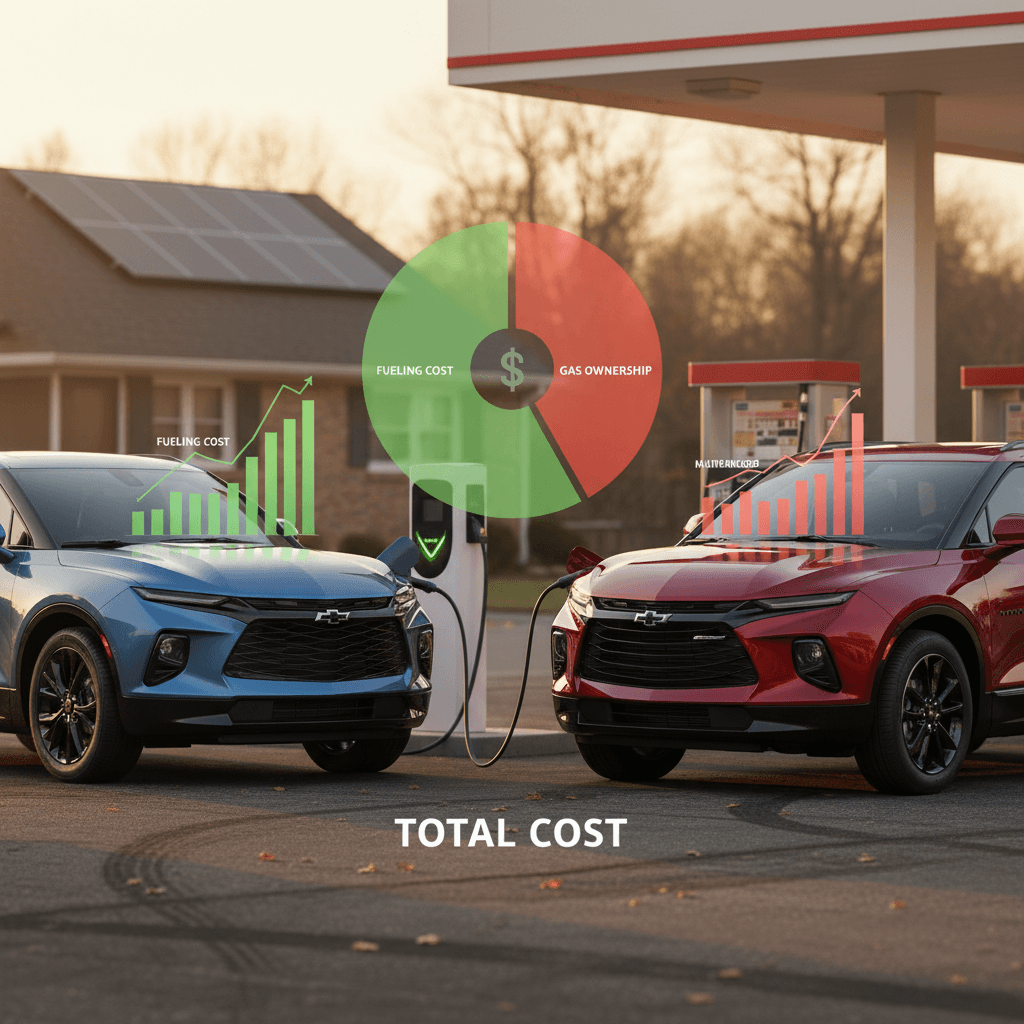
You don’t buy a midsize SUV like the Chevrolet Blazer because you love spreadsheets. But if you’re trying to decide between a Chevrolet Blazer EV and a similar gas SUV, you are quietly asking one question: over the years I own it, which one actually costs less? This guide walks through a clear, numbers-based total cost of ownership comparison so you can see how the Blazer EV stacks up against its gas equivalent.
Quick take
Why compare the Chevrolet Blazer EV to a gas SUV?
Chevrolet sells two very different Blazers today: the traditional gas-powered Chevrolet Blazer and the all‑electric Chevrolet Blazer EV. On the surface, they’re both five‑passenger midsize SUVs with similar space and badge appeal. Underneath, they’re completely different machines with very different cost patterns. Comparing the Chevrolet Blazer EV total cost vs a gas car equivalent is one of the clearest real‑world tests of whether an EV actually saves you money.
To keep this practical, we’ll focus on mainstream trims (not the wildest performance versions) and walk through how much you can expect to spend on purchase, fuel or electricity, maintenance, insurance, and depreciation over five years. Then we’ll zoom in on how this picture changes if you buy used, where companies like Recharged can make the numbers even more compelling.
The basics: Blazer EV vs gas Blazer at a glance
Chevrolet Blazer EV vs Gas Blazer: key numbers
Exact numbers vary by trim, wheel size, and where you live, but these ballpark figures are enough to build a realistic total cost of ownership comparison: the EV costs more up front but much less to run. Let’s pin down the assumptions so you can see what applies to your life.
Key assumptions behind the cost math
- Timeframe: 5 years of ownership, which matches many loans and leases.
- Mileage: 12,000 miles per year (60,000 miles total).
- Location: Typical U.S. driver with average electricity and gas prices.
- Charging mix: Mostly home Level 2 charging, occasional public fast charging on trips.
- Comparable gas SUV: A nicely equipped gas Chevrolet Blazer or similar midsize SUV with all‑wheel drive.
Your numbers will differ
Purchase price, incentives, and financing
On paper, a Blazer EV costs more than a comparable gas Blazer. Depending on model year and equipment, new Blazer EV LT and RS trims generally sticker in the high‑$40,000s to low‑$50,000s, while a similarly equipped gas Blazer often lives in the low‑to‑mid‑$40,000s before discounts. That’s a decent gap before you touch the start button.
Illustrative new‑purchase scenario
- Blazer EV RS nicely equipped: about $52,000 transaction price.
- Gas Blazer RS AWD similarly equipped: around $44,000 after normal discounts.
- Price gap: roughly $8,000 in favor of the gas SUV.
Actual pricing will depend on incentives, dealer discounts, and options. Use your real quotes here.
Federal and state incentives
- Many Blazer EV buyers have qualified for up to a $7,500 federal clean vehicle credit in recent years, depending on trim and income limits.
- Some states and utilities add their own rebates or home charger incentives.
If you qualify for the full $7,500, it can nearly erase the purchase price gap between the EV and a gas Blazer.
Think used, not just new
Financing costs themselves (interest on your loan) are usually similar between the two vehicles if you borrow the same amount. Where EVs quietly win is that, with lower running costs, they’re less likely to surprise you with big unplanned expenses while you’re still paying off the car.
Fuel vs electricity: what it really costs to drive
This is where the Chevrolet Blazer EV usually buries the gas SUV. Electricity is simply more efficient than burning gasoline, and electric drivetrains waste far less energy as heat. But let’s put real numbers on it.
Per‑mile energy cost: Blazer EV vs gas Blazer
Assumes 12,000 miles per year and typical U.S. prices
Blazer EV energy cost
- Average efficiency for many Blazer EV trims lands around 2.8–3.2 mi/kWh in mixed driving.
- Assume a realistic 3.0 mi/kWh for everyday use.
- At a typical U.S. residential rate of $0.15/kWh, that’s about $0.05 per mile.
- 12,000 miles/year × $0.05 = $600/year in electricity if you mostly charge at home.
Gas Blazer fuel cost
- A conventional AWD gas Blazer averages roughly 24 mpg combined.
- At $3.75/gal (national average fluctuates), that’s about $0.16 per mile.
- 12,000 miles/year ÷ 24 mpg = 500 gallons.
- 500 gallons × $3.75 = $1,875/year in gasoline.
5‑year fuel vs electricity cost comparison
Illustrative 5‑year energy spend at 12,000 miles/year
| Vehicle | Per‑mile energy cost | Annual spend (12k mi) | 5‑year spend (60k mi) |
|---|---|---|---|
| Chevrolet Blazer EV (home charging) | $0.05 | $600 | $3,000 |
| Gas Chevrolet Blazer (24 mpg @ $3.75/gal) | $0.16 | $1,875 | $9,375 |
Your actual numbers depend on local energy prices and driving style.
What about fast charging?
Maintenance and repairs: where the EV pulls ahead
Gas SUVs are maintenance machines: oil changes, transmission fluid, spark plugs, exhaust systems, timing chains, and more. The Blazer EV eliminates many of those items. You still have tires, brakes, coolant for the battery system, and suspension components, but the list is noticeably shorter and intervals are longer.
Typical 5‑year maintenance: Blazer EV vs gas SUV
Chevrolet Blazer EV
Expect cabin air filters, brake fluid checks, tire rotations, and occasional coolant service for the battery/thermal system. Thanks to regenerative braking, pads and rotors often last much longer than in a gas SUV.
Gas Chevrolet Blazer or similar SUV
Oil and filter changes every ~5,000–7,500 miles, transmission and differential service, engine air filters, spark plugs (depending on miles), plus the same tires, brakes, and suspension wear items.
Estimated 5‑year spend – Blazer EV
A conservative estimate for routine service and minor repairs often lands around <strong>$1,000–$1,500</strong> over five years if you stay on top of recommended maintenance and don’t have major issues.
Estimated 5‑year spend – gas SUV
Routine maintenance on a midsize gas SUV can easily total <strong>$2,500–$3,500</strong> over five years, especially if you use dealer service departments.
Fewer surprise shop visits
Insurance, registration, and taxes
Insurance is the place where EVs don’t always walk away with the trophy. Because the Blazer EV is a newer, more complex vehicle with an expensive battery pack, collision coverage can run higher than a comparable gas Blazer, especially if you insure both as brand‑new vehicles.
Insurance cost reality check
- Some drivers see similar premiums between EVs and gas SUVs.
- Others see EV premiums that are 5–15% higher, depending on repair costs in their region.
- Shopping around matters more than the badge on the grille here.
For our example, we’ll assume the Blazer EV costs about $100/year more to insure than a similar gas Blazer.
Registration and taxes
- Some states charge extra EV registration fees to make up for lost gas‑tax revenue.
- Others reduce vehicle property tax on EVs or offer HOV lane perks.
These state‑by‑state quirks can add or subtract a few hundred dollars over five years, but they rarely overturn the big fuel and maintenance savings.
Resale value and battery health
The elephant in the EV showroom is always the same: What happens to the battery, and what will this thing be worth when I’m done with it? The Blazer EV uses GM’s Ultium battery tech, and like other modern EVs it’s designed to hold most of its capacity for many years. Real‑world owner reports so far show range and efficiency staying close to EPA numbers in the first few years, with normal seasonal swings.
Battery warranties help protect you
Resale value is trickier to predict because it depends on future gas prices, new‑EV incentives, and how quickly new models roll out. Historically, many EVs have depreciated faster than comparable gas SUVs in the first few years, especially when new‑car discounts are aggressive. Over a five‑year horizon, it’s reasonable to assume a Blazer EV and a gas Blazer land in a similar ballpark of percentage depreciation, even if the dollar amounts differ.
How Recharged reduces used‑EV risk
5‑year total cost: Chevrolet Blazer EV vs gas SUV
Let’s pull the big pieces together. Remember, these are illustrative numbers meant to show how the math works. Plug your own quotes and local prices into the same framework to get a personal answer.
Illustrative 5‑year total cost of ownership
New Chevrolet Blazer EV vs similar gas Blazer, 12,000 miles/year, typical U.S. prices
| Category (5 yrs) | Blazer EV (example) | Gas Blazer (example) | Notes |
|---|---|---|---|
| Effective purchase price | $44,500 | $44,000 | EV: $52,000 sticker – $7,500 credit; Gas: $44,000 after discounts. |
| Fuel / electricity | $3,000 | $9,375 | EV: mostly home charging @ ~$600/yr; Gas: ~$1,875/yr at 24 mpg & $3.75/gal. |
| Routine maintenance & minor repairs | $1,250 | $3,000 | EV has fewer wear items and fluids. |
| Insurance (5‑yr total) | $7,250 | $6,750 | Assumes EV averages $100/yr more. |
| Registration / EV fees | $1,000 | $900 | States vary; we assume a modest EV fee. |
| Estimated depreciation | $23,000 | $21,500 | Both lose value; gas Blazer starts from slightly lower base price. |
| 5‑year total | ~$80,000 | ~$85,500 | Under these assumptions, the Blazer EV comes out about $5,500 ahead. |
Purchase prices assume the Blazer EV buyer qualifies for the full $7,500 federal credit; your eligibility may differ.
When the gas SUV can still win
When the Blazer EV makes the most financial sense
Ideal ownership profiles for a Blazer EV
Where the total cost advantage is strongest
You can charge at home
You drive 10k–15k miles/year
You’ll keep it 5+ years
You care about smooth, quiet power
You spend time in stop‑and‑go traffic
You have other cars for long trips
Buying a used Blazer EV: protect your savings
If you really want to tip the scales in your favor, a used Blazer EV is worth a close look. Early depreciation has already happened, but you still get most of the lifetime fuel and maintenance savings. The trick is avoiding a battery‑health surprise and overpaying for a car with unknown history.
Used Blazer EV checklist
1. Verify battery health
Ask for a <strong>quantitative battery health report</strong>, not just a screenshot of the dash range estimate. At Recharged, every EV comes with a Recharged Score that measures real battery condition, not just guess‑o‑meter optimism.
2. Compare to gas SUV total cost
Price out a similar‑age gas Blazer or rival SUV with comparable mileage. Then estimate five years of fuel vs electricity and maintenance. A slightly higher EV purchase price can still be the cheaper choice overall.
3. Look at home charging options
If you’re buying used, plan for a <strong>Level 2 home charger</strong> if you don’t already have one. That’s usually a few hundred dollars for equipment plus installation, and it’s crucial for unlocking low‑cost, overnight charging.
4. Review warranty coverage
Check how much of the original battery and powertrain warranty is left. A used Blazer EV with several years of battery coverage remaining is a very different ownership proposition than one that’s nearly out of warranty.
5. Consider financing and trade‑in
Used EV financing has matured. Platforms like Recharged can bundle <strong>financing, trade‑in, and nationwide delivery</strong> so you see your monthly cost clearly before you commit.
FAQ: Chevrolet Blazer EV total cost vs gas SUV
Frequently asked questions
Bottom line: is the Blazer EV worth it?
If you can charge at home and drive a fairly typical number of miles, the Chevrolet Blazer EV can absolutely be the cheaper SUV to live with than a comparable gas Blazer, especially over five or more years. Electricity is cheaper and more efficient than gasoline, maintenance is simpler, and you’re insulated from the next surprise jump at the pump.
On the other hand, if you drive very little, have no access to affordable home or workplace charging, or live where electricity is unusually expensive, a gas SUV can still hold its own. That’s why it’s so important to look beyond sticker price and run the numbers for your situation.
If you’re curious how a Blazer EV, or any used EV, would pencil out for you, start by browsing Recharged’s used EV inventory. Every vehicle includes a Recharged Score battery health report, fair‑market pricing, EV‑savvy financing options, and even nationwide delivery. That way, when you choose between a Blazer EV and a gas SUV, you’re making the call with clear, real‑world total cost of ownership in hand, not just a hunch.