If you’re eyeing a Chevrolet Blazer EV, sooner or later you’re going to ask the practical question: what’s the cargo space like with the seats down? Specs on a page are one thing. Fitting a Costco run, a stroller, camping gear, or a pair of bikes is another. Let’s walk through what the Blazer EV can really carry, how it compares to other electric SUVs, and how to set it up to work for your life.
Quick answer
Chevrolet Blazer EV cargo space basics
The Blazer EV is a two‑row, five‑seat midsize electric SUV. There’s no third row and no front trunk (frunk), so all your main storage is behind the second row and under the cargo floor. From Chevrolet and multiple spec listings, you’ll see two key numbers repeated:
- 25.5–25.8 cubic feet of cargo space behind the rear seats (seats up).
- 59.1–59.8 cubic feet of cargo space with the rear seats folded flat.
That spread comes down mostly to configuration: some trims and the available panoramic roof slightly change the official measurements. In day‑to‑day use, though, the important number for haulers is that roughly 60‑cubic‑foot maximum with the rear seats down.
Blazer EV cargo numbers at a glance
How much cargo space does the Blazer EV have with seats down?
Let’s zero in on the question you probably Googled: Chevrolet Blazer EV cargo space with seats down. Across Chevrolet’s own materials and third‑party spec sheets, the numbers land here:
Blazer EV cargo volume by configuration
Official cargo volumes for most 2024–2025 Blazer EV trims.
| Configuration | Cargo volume (cu ft) | Notes |
|---|---|---|
| Behind rear seats (seats up) | 25.5–25.8 | Everyday trunk space for groceries, strollers, and backpacks. |
| With rear seats folded | 59.1–59.8 | Maximum cargo space behind the front seats, seats folded flat. |
Exact figures can vary slightly by trim and whether the vehicle has the panoramic roof, but these are the typical numbers you’ll see quoted.
In plain language, dropping the rear seats more than doubles your usable space. Think of it as going from compact‑SUV trunk room to small‑cargo‑van territory. It’s not as boxy as a minivan, but in footprint it’s right in the sweet spot for families and active owners who haul gear on weekends and commute during the week.
Trim and sunroof impact
Real‑world: What actually fits with the seats folded
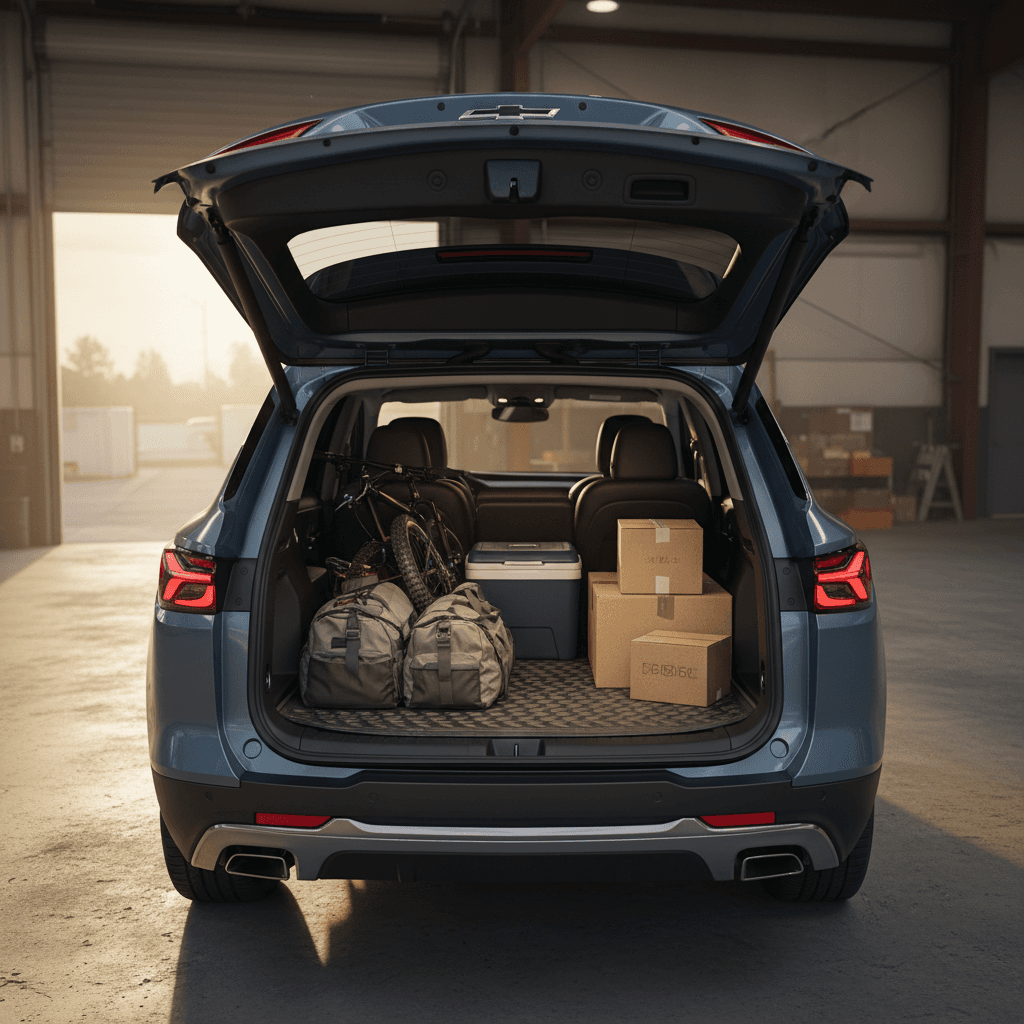
Numbers are nice, but you’re probably wondering what that 59‑ish cubic feet actually looks like in real life. Here are some practical scenarios based on owners’ experiences and the Blazer EV’s layout.
Blazer EV cargo space with seats down: common use cases
How that 59–60 cubic feet translates into real‑world hauling.
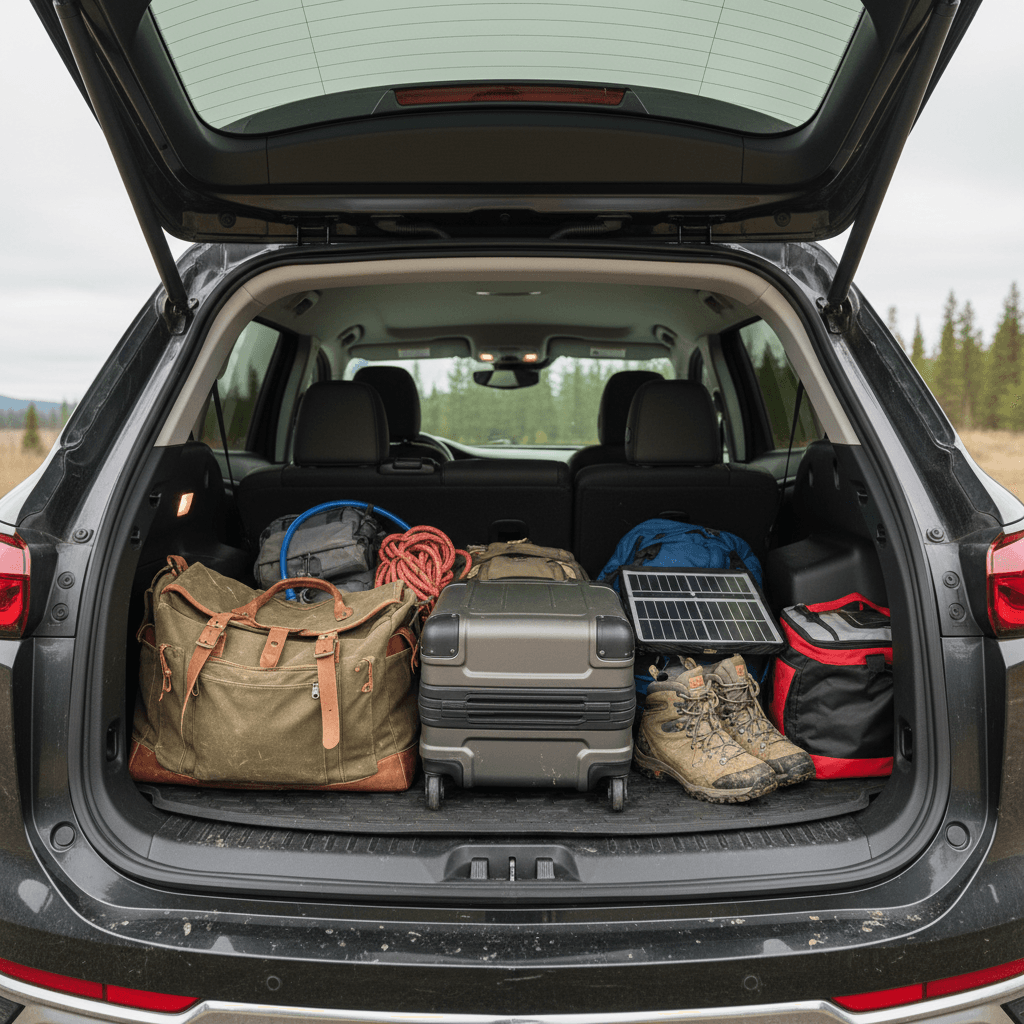
Airport or road‑trip luggage
With the rear seats folded, you can typically fit:
- 4–5 full‑size checked suitcases plus a few carry‑ons, or
- 2–3 large suitcases, a stroller, and several soft duffel bags.
Soft bags stack best because of the sloping rear glass.
Costco / Sam’s Club run
Plan on loading:
- Several bulk boxes (paper towels, dog food, etc.)
- A full grocery haul for a family of four
- Plus a cooler or two for cold items.
The under‑floor compartment helps hide smaller items.
Camping & outdoor gear
Seats down makes room for:
- 2–3 camping totes and a family tent
- Cooler, camp chairs and sleeping bags
- Or one assembled mountain bike (front wheel off) diagonally.
Long items and sports gear
Because the Blazer EV rides on a long wheelbase, folding the rear seats opens up a cargo floor that’s generous for skis, snowboards, fishing rods, or lumber. Owners routinely slide items in diagonally and still close the hatch.
If you’re under about 6 feet tall, you can often lie down diagonally on a camping pad with the seats folded, not luxurious, but doable for a night or two in a pinch.
Occasional big boxes
Think flat‑pack furniture, a big TV, or a baby crib. With the seats flat, the floor is nearly continuous front‑to‑back, so big boxes can slide in through the hatch and rest against the folded seatbacks. The trick is watching the height with the hatch opening; very tall boxes may need to tilt slightly.
No front trunk (frunk)
Blazer EV cargo space vs other electric SUVs
GM didn’t turn the Blazer EV into a cargo box, but it didn’t shortchange space either. Here’s how it stacks up against a few popular electric SUVs when you fold their rear seats:
Blazer EV vs other EV SUV cargo space with seats down
Approximate maximum cargo volumes behind the front seats for popular electric SUVs.
| Model | Max cargo with seats down (cu ft) | Frunk? | Notes |
|---|---|---|---|
| Chevrolet Blazer EV | ≈59–60 | No | Competitive space; emphasizes rear‑seat room and style. |
| Ford Mustang Mach‑E | ≈59.7 | Yes | Similar max cargo, slightly more space behind rear seats, plus a usable frunk. |
| Kia EV6 | ≈50.2 | No | Less maximum cargo space; more of a sporty crossover feel. |
| Hyundai Ioniq 5 | ≈59.3 | No | Very similar overall cargo capacity; more squared‑off shape helps with tall items. |
| Tesla Model Y | ≈76 | Yes | Class leader in total volume; taller, boxier rear and a frunk. |
Figures are rounded and based on manufacturer or widely published specs. Always confirm exact numbers for the model year you’re considering.
If you need minivan‑level space, the Model Y and three‑row SUVs still win. But for most families stepping out of a traditional midsize SUV, the Blazer EV’s seats‑down cargo space should feel familiar and usable, with a nicer back seat than many rivals.
Where the Blazer EV shines
How to fold the Blazer EV’s rear seats for maximum space
Getting to that quoted 59‑plus cubic feet is as simple as dropping the second‑row seatbacks, but there are a few tricks to doing it quickly and safely.
Step‑by‑step: Folding the Blazer EV’s rear seats
1. Clear the rear footwells
Move backpacks, toys, and floor mats out of the second‑row footwells so the seatbacks can fold fully without binding on anything.
2. Slide the front seats forward slightly
If you’re tall, you may need to bump the front seats a notch or two forward so the rear seatbacks can lie close to flat. You can adjust them back after you see how much room you need.
3. Use the release levers
From the rear doors, locate the seatback release handles on the upper outboard corners of the second‑row seats. Pull the release and push the seatback down toward the cargo floor.
4. Fold 60/40 as needed
The Blazer EV has a split‑folding rear bench (typically 60/40). You can fold one side for long items like skis while keeping a passenger seat on the other side, or drop both for maximum capacity.
5. Flatten and protect the load floor
Smooth out the seatbelts so they don’t get trapped under cargo, and consider adding a cargo liner or blanket to protect the upholstery and leather from sharp corners.
6. Use the under‑floor storage
Lift the rear cargo floor panel. There’s a deep bin perfect for charging cables, emergency kits, or smaller items you don’t want sliding around on the main floor.
Safety reminder
Key dimensions and practical measurements
Official spec sheets give us cubic‑foot numbers but not always the measurements you care about, like whether a dog crate or pinball machine will fit. Exact interior dimensions can vary slightly, but here’s how to think about the Blazer EV’s space when the seats are down:
- Length of load floor (hatch to back of front seats): Expect a usable length in the ~70–75‑inch ballpark when the front seats are in a normal driving position. Taller drivers may give up a couple of inches if they need to slide the seat all the way back.
- Width between wheel wells: Like many midsize SUVs, the Blazer EV’s rear wheel housings pinch the space a bit. Figure roughly 40–42 inches between the narrowest points, enough for most coolers and boxes, but tight for a full 4×4‑foot sheet without angling it.
- Maximum width near the hatch opening: Closer to the bumper and above the wheel wells, you’ll see closer to 50 inches of width, which helps swallow wide suitcases or strollers.
- Height at hatch opening: The hatch opening is lower than the interior roof. Tall items often need to tilt in, then stand more upright once they’re past the opening. Measure your specific bulky item ahead of time if you’re right on the edge.
Bring a tape measure
Tips to make the most of your Blazer EV cargo room
The Blazer EV’s seats‑down cargo space is generous, but how you use it makes all the difference. A few simple habits can turn it into a road‑trip and Costco hero.
Practical ways to stretch that 59–60 cubic feet
Organization tricks that make your Blazer EV feel bigger inside.
Use stackable bins
Square storage bins or milk crates stack neatly against the folded seatbacks and don’t waste vertical space. They’re perfect for camping gear, sports equipment, or kids’ stuff that lives in the car.
Add a cargo liner
A fitted liner or mat protects the carpet and back of the seats from spills and scratches. It also makes it easier to slide heavy items in and out without snagging fabric.
Plan for pets
If you travel with dogs, a crate or barrier that fits behind the front seats with the rear seats down gives them a safe, defined space and keeps hair off your luggage or groceries.
Keep charging gear out of the way
Your portable charge cable and adapters eat up space if they live on the main cargo floor. Stash them in the under‑floor compartment so they’re always available but never in the way of your everyday loads.
Roof racks and hitch carriers
If you like to road‑trip with bikes, kayaks, or extra luggage, a roof rack or hitch‑mounted cargo box pairs well with the Blazer EV. Just remember: added weight and drag can trim your range, so plan charging stops accordingly.
Range vs. cargo trade‑off
Buying a used Blazer EV? How to inspect the cargo area
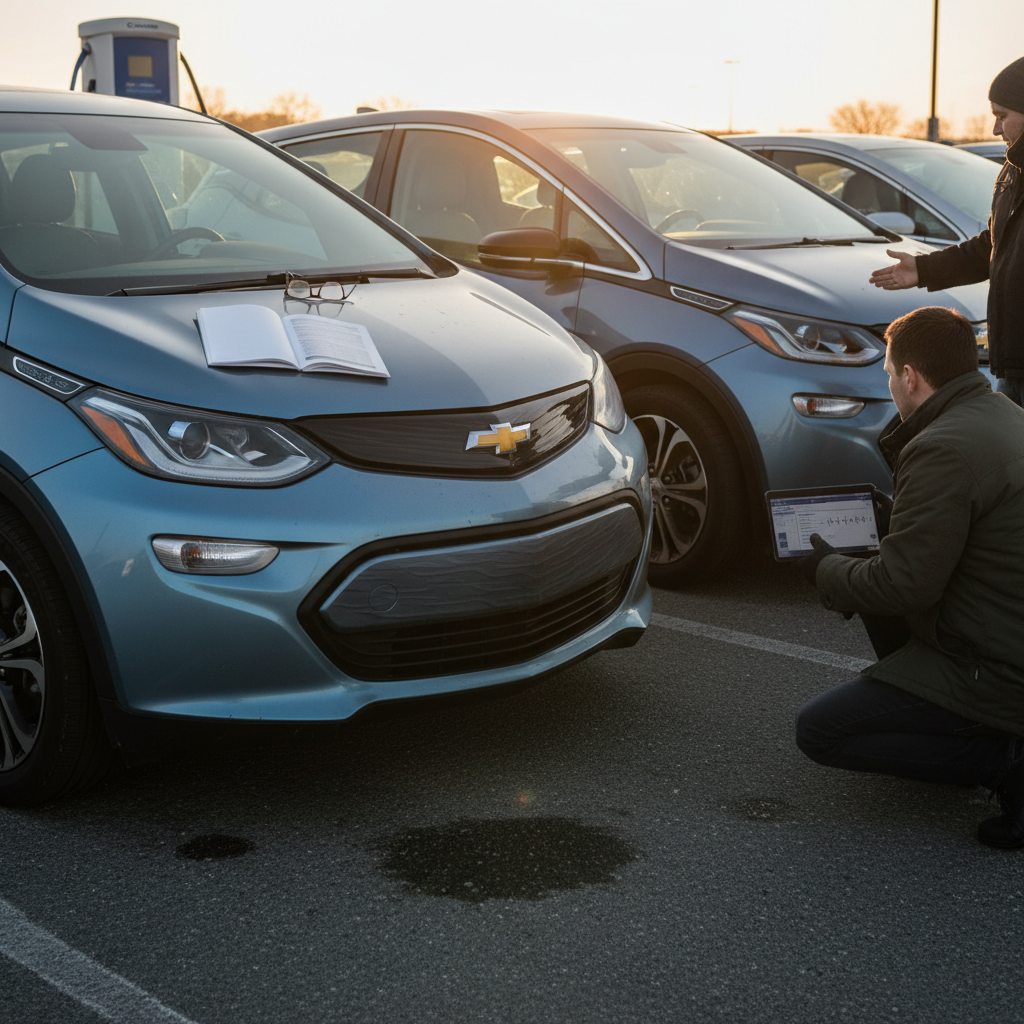
If you’re shopping the used market, the cargo area tells a story about how the Blazer EV’s been used. Hard‑working family hauler? Weekend Home Depot warrior? Here’s what to look for.
Cargo‑area checklist for used Blazer EVs
1. Check seatback condition
Fold the rear seats and inspect the seatback fabric or leather. Deep gouges, torn upholstery, or compressed foam can hint at heavy or poorly secured loads.
2. Inspect the load floor and tie‑downs
Lift the cargo floor panel and look for water damage, rust around tie‑down anchors, or cracked plastic. Make sure the panel sits flat and latches securely.
3. Look for stains and smells
Persistent odors or stains in the cargo carpet can point to spilled chemicals, pet accidents, or moisture. Those can be more than cosmetic, they may signal mold or rust hiding underneath.
4. Test the hatch and struts
Open and close the power tailgate several times. It should move smoothly without grinding or uneven motion, and the opening height should be comfortable for you.
5. Confirm split‑fold function
Fold each section of the 60/40 rear bench separately and bring them back upright. Latches should fully engage and the seatbacks should feel solid when locked.
6. Verify included accessories
Ask whether the cargo cover, cargo net, and floor mats are present. Replacing missing accessories adds cost, something to factor into the purchase price.
How Recharged can help
Ready to find your next EV?
Browse VehiclesChevrolet Blazer EV cargo space FAQ
Frequently asked questions
Bottom line: Is the Blazer EV big enough for you?
If you’re coming out of a typical midsize SUV, the Chevrolet Blazer EV’s cargo space with the seats down will feel right at home. About 60 cubic feet behind the front seats is enough for serious family hauling, DIY projects, and weekend adventures, even if it doesn’t match the cargo‑king EVs on the market.
Where the Blazer EV really earns its keep is in the balance: roomy rear seats, competitive cargo volume, and the smooth, quiet drive of an electric powertrain. If that sounds like your kind of compromise, it belongs on your test‑drive list.
Ready to see how it fits your life? On Recharged, you can shop used Blazer EVs, compare cargo space to other electric SUVs, and get a Recharged Score Report that demystifies battery health and ownership costs, so you know exactly what you’re loading into your garage, not just your driveway.