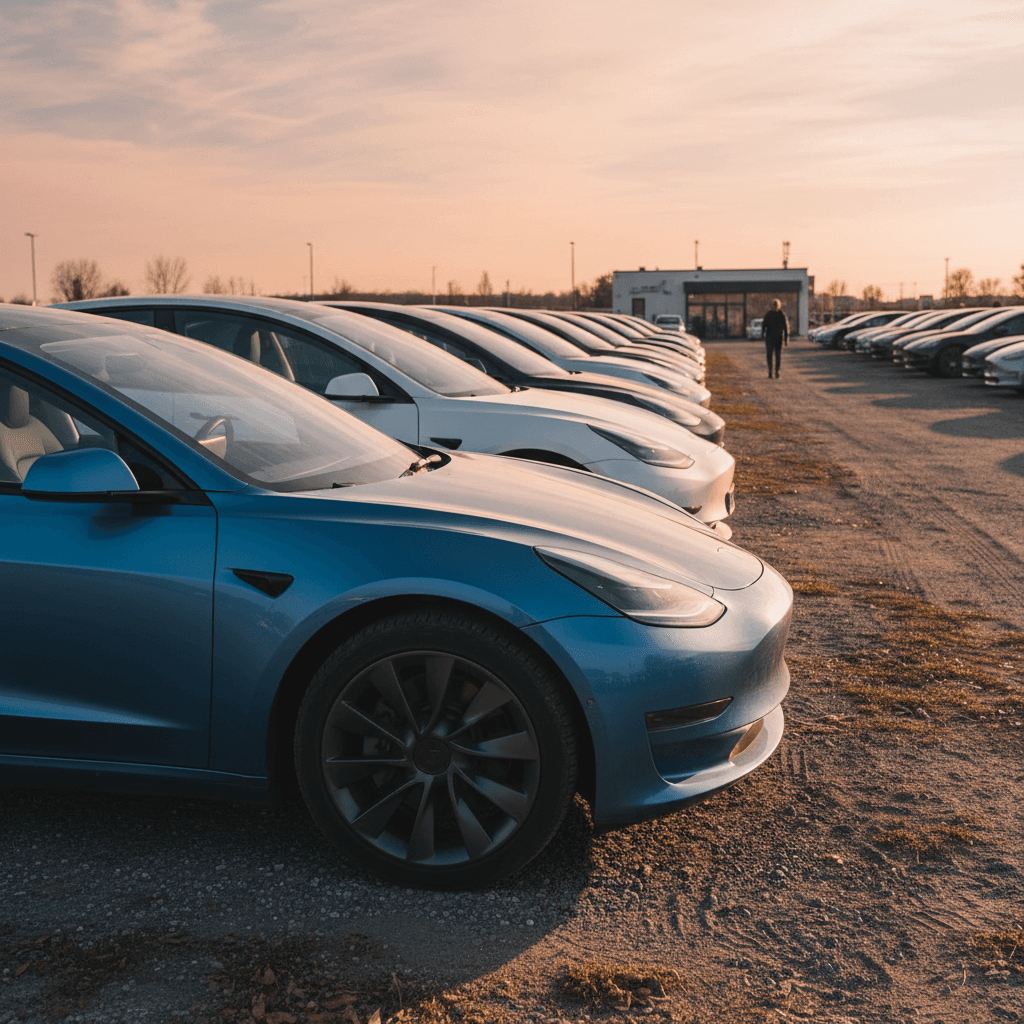
If you search for the cheapest Tesla used, you’ll see everything from $15,000 beaters to nearly‑new cars with five‑figure discounts. The trick isn’t just finding the lowest price, it’s finding a cheap Tesla that still has healthy battery life, manageable running costs, and features you’ll actually use.
Good to know
Why “cheapest used Tesla” doesn’t mean “worst”
Tesla resale values have come back down to earth. Models that once behaved like luxury sports cars on the used market now depreciate more like regular vehicles. That’s bad news if you bought new at the top of the market, but good news if you’re shopping used: you can get real EV range and modern tech for compact‑sedan money.
Used Tesla pricing and depreciation snapshot
Think “value floor,” not rock bottom
Quick answer: What is the cheapest used Tesla today?
Typical 2025 price ranges for cheap used Teslas (U.S.)
Approximate retail asking prices from dealers and marketplaces for higher‑mileage, older examples in average condition. Private‑party sales can be a bit lower; certified and low‑mileage cars will be higher.
| Model | Model years to target for cheapest deals | Typical low end (dealer) | Typical mid‑range (dealer) | Notes |
|---|---|---|---|---|
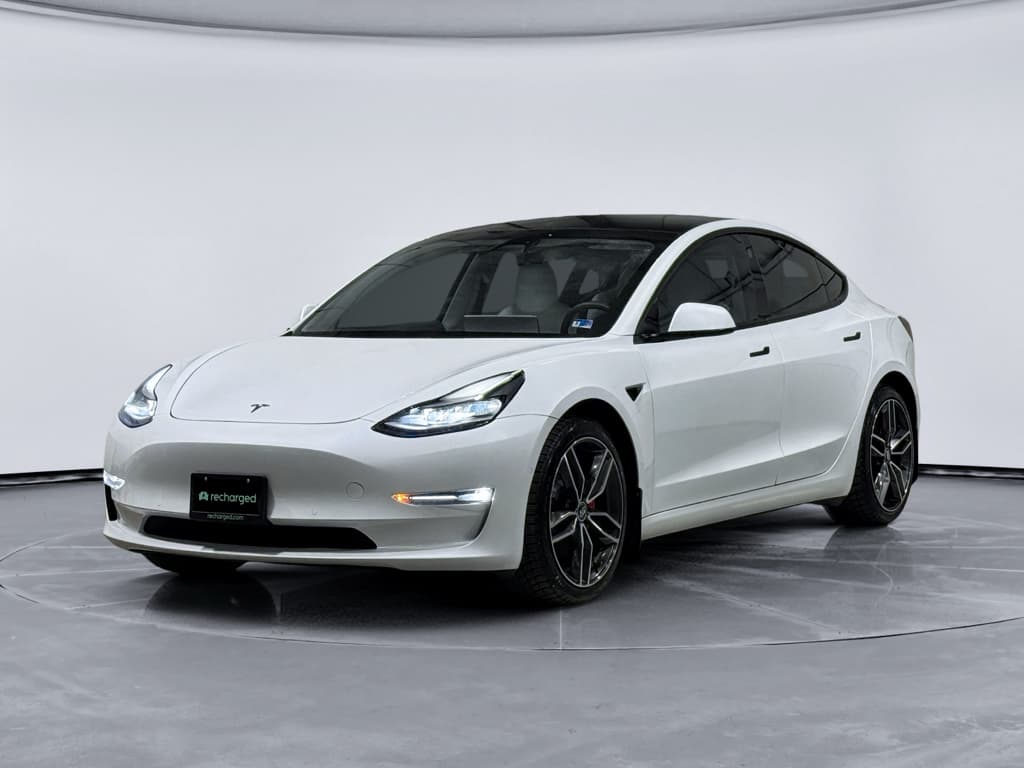
| Model 3 | 2018–2019 | $18k–$20k | $21k–$24k | Usually the cheapest Tesla overall; sweet spot for value. |
| Model S | 2014–2017 | $17k–$23k | $24k–$30k | Often very cheap for the size/performance, but older tech and higher repair risk. |
| Model X | 2016–2017 | $24k–$30k | $31k–$38k | Large, complex SUV; can be attractively priced but costly to fix. |
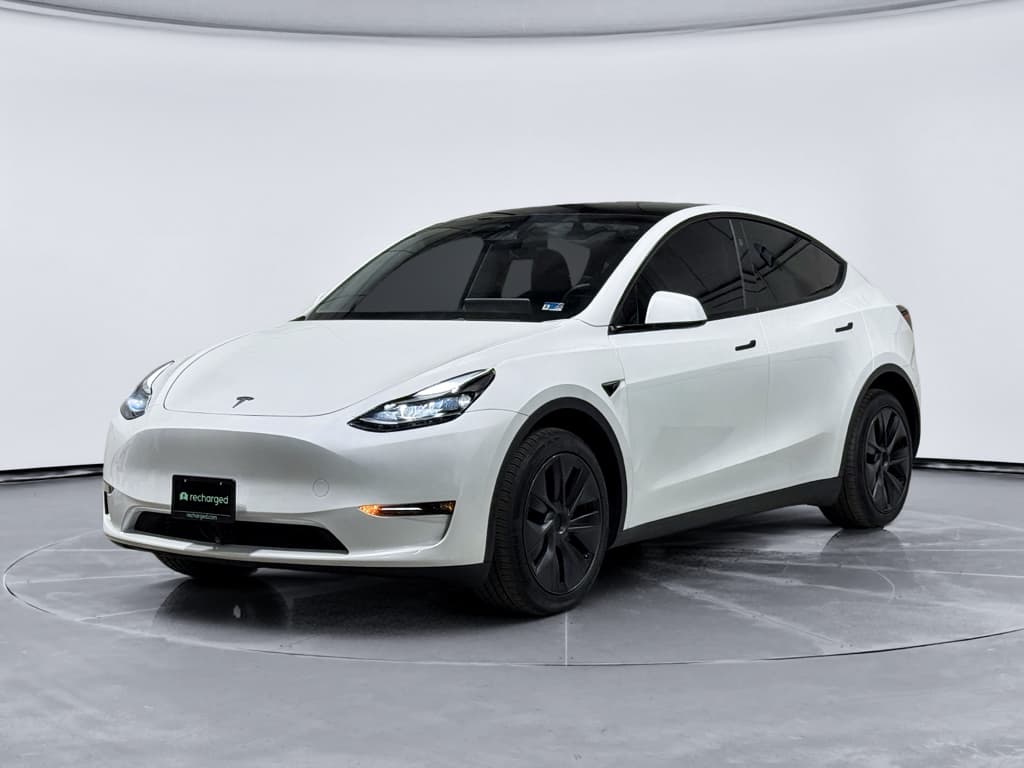
| Model Y | 2020–2021 | $26k–$30k | $31k–$36k | Still newer; prices falling but not truly “cheap” yet compared with 3/S. |
Prices are rounded ballparks to help you compare models, actual listings vary by mileage, condition, options, and region.
These are market snapshots, not promises
Model‑by‑model: Which used Teslas are usually cheapest?
How the main Tesla models stack up when you shop cheap
Think beyond sticker price, range, repair risk, and battery chemistry matter.
Model 3: The default cheap Tesla
If you just want the cheapest Tesla used that still feels modern, the early Model 3 is your starting point.
- 2018–2019 cars commonly list in the high‑teens to low‑$20k range.
- More efficient than S/X, cheaper to insure and run.
- Many have modern driver‑assist hardware and over‑the‑air updates.
For most buyers, a used Model 3 is the best balance of price, range, and ongoing costs.
Model S: Big car, surprisingly low prices
Older Model S sedans (2014–2016) can be as cheap, or cheaper, than early Model 3s.
- Huge depreciation plus high original MSRPs create dramatic discounts.
- You get more space and performance for the money.
- But out‑of‑warranty air suspension, door handles, and MCU screens can get expensive.
Great if you value space and performance and accept more risk.
Model X: Tempting but higher‑risk bargain
Used Model X SUVs with six‑figure mileage can dip into the low‑$30k range.
- Falcon‑wing doors and complex hardware mean more things to maintain.
- Ideal only if you really need the size and features.
Not the first place to shop if you just want the cheapest entry point into Tesla ownership.
Model Y: Not the cheapest, but safest default
The Model Y is newer, so prices haven’t fallen quite as far as the 3/S yet, but they are sliding.
- Compact SUV body style, huge demand, and newer batteries keep values firm.
- Great choice if you want a more family‑friendly Tesla and can spend mid‑$30k.
If you’re purely chasing the lowest price, the Y won’t be the winner, but it’s a strong long‑term value.
Price vs. value: How to spot a false bargain
When a low price is actually good value
- Moderate mileage (say, 70k–110k) with clean service history.
- Battery health documented, either via a recent diagnostic or consistent trip data.
- Cosmetic flaws (curbed wheels, light scratches) that don’t affect driving.
- Earlier build year with later‑style hardware (e.g., upgraded MCU screen).
You’re trading a little age and mileage for a discount while still getting a solid car.
When the "cheap" Tesla may cost you more
- Unexplained battery behavior: big jumps in state of charge, rapid range loss, or lots of fast‑charge usage with no documentation.
- Multiple accident reports or salvage/rebuilt title.
- Out of basic warranty and near the end of the 8‑year battery warranty.
- Aftermarket modifications to suspension, wheels, or electronics without receipts.
These cars are discounted for a reason. If you can’t quantify the risk, walk away.
Salvage Teslas: cheapest up front, most expensive long‑term
Battery health: the make‑or‑break factor
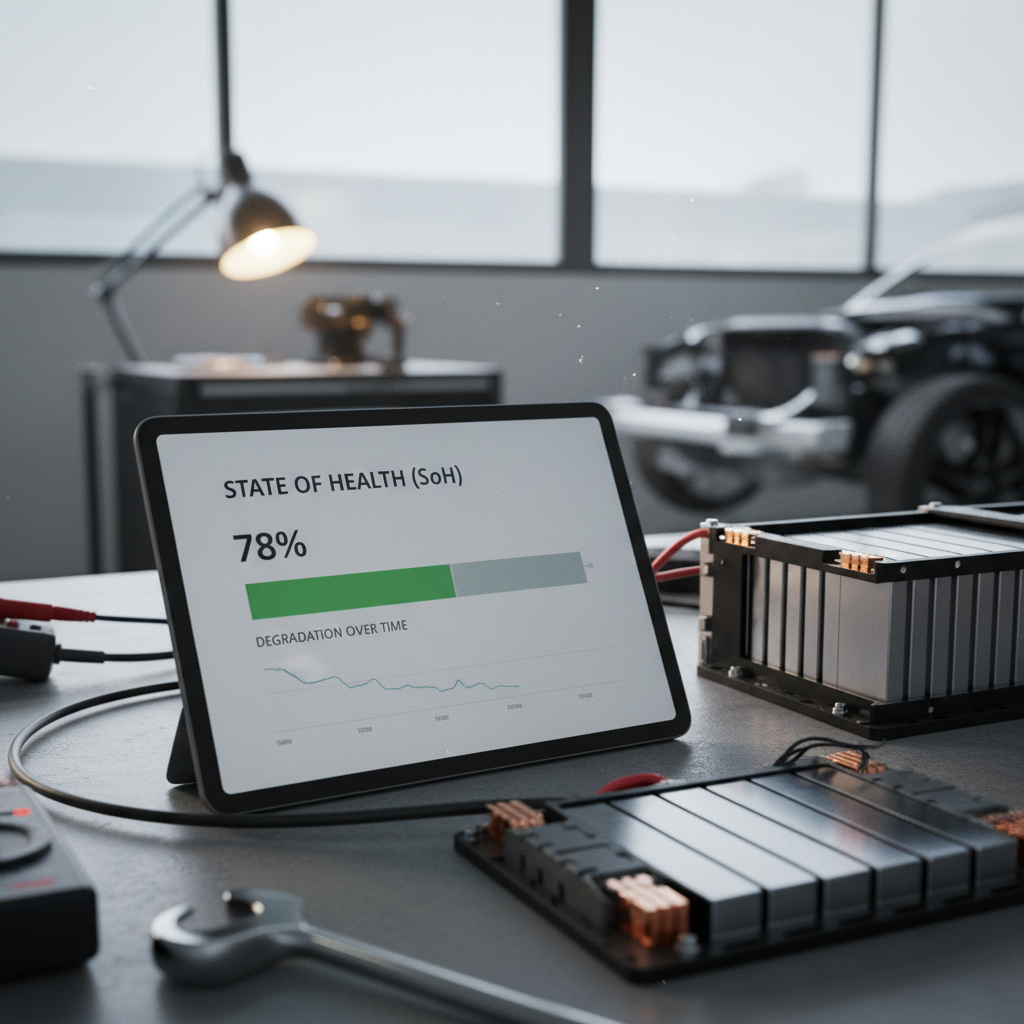
On an internal‑combustion car, a cheap engine swap can save a bad purchase. On a Tesla, the battery pack is the car. Fortunately, the data we have from hundreds of thousands of vehicles shows that Tesla packs generally age well, but the way the previous owner drove and charged the car matters a lot.
Typical real‑world Tesla battery degradation
Used Tesla battery health checklist
1. Check the displayed full‑charge range
Ask the seller for a screenshot of the car at 100% state of charge. Compare the displayed range to the car’s original EPA rating. A modest drop (5–15%) is normal; much more may warrant deeper inspection.
2. Look at lifetime efficiency
Higher Wh/mi or kWh/100 miles numbers suggest more aggressive driving, heavy loads, or lots of highway use, all of which can stress the pack. It doesn’t kill a deal, but it informs price.
3. Understand charging history
Frequent DC fast charging isn’t automatically bad, but a car that lived on Superchargers its whole life deserves a closer look. Ideally you want a mix of home Level 2 and occasional fast charging.
4. Verify software and hardware version
Later battery and drive‑unit revisions often have better longevity. Ask for the VIN and build date, and cross‑check with owner forums or an EV‑savvy retailer like Recharged.
5. Get a third‑party or Recharged battery diagnostic
Whenever possible, get an independent report on state of health. Recharged’s <strong>Score Report</strong> includes verified battery diagnostics, so you know what you’re buying before you sign anything.
Don’t confuse software‑limited range with degradation
Feature checklist: What you give up when you go cheap
A big reason early Model 3s and pre‑refresh Model S sedans are so affordable is that Tesla keeps adding features while discounting new cars. When you chase the lowest possible used price, expect to compromise on some convenience and safety tech.
Key features that vary a lot on cheap used Teslas
Autopilot vs. Enhanced/Full Self‑Driving
Many cheap cars have basic Autopilot, but not the expensive FSD package. Don’t pay a premium unless the feature is actually enabled on the car, and remember Tesla can sometimes change transfer policies.
Heat pump and cold‑weather efficiency
Newer Model 3/Y have heat pumps that improve winter range. Older cars rely on resistive heating, which draws more energy. If you live in a cold climate, this matters more than a set of 20‑inch wheels.
Interior and infotainment refreshes
Pre‑refresh Model S and early Model 3s have older screens and sometimes slower media control units. Upgrades are possible but not cheap. Decide if you care about the latest interface or just want solid range.
Charging port standard and adapter needs
Newer Teslas use the NACS connector that’s becoming the North American standard. If you’re buying an older car and plan to use non‑Tesla networks, budget for adapters and verify what’s included.
Driver‑assistance hardware revisions
Tesla has changed cameras, radar, and compute hardware over the years. That affects the performance and future support of driver‑assist features. Ask which hardware version the car uses, not just whether it “has Autopilot.”
A cheap Tesla isn’t necessarily a stripped Tesla
Financing, trade‑ins, and total cost of ownership
The cheapest used Tesla isn’t always the one with the lowest price on the listing page. Interest rates, insurance, electricity costs, and expected repairs all feed into what you actually spend over the next 3–5 years.
Cost factors that separate a good deal from a bad one
Using financing to reach a better car
If you’re stretching between, say, a $19k early Model 3 and a $23k newer one with better battery health and features, financing can be the difference between “cheap now” and “cheap over time.” A small payment increase can buy you:
- Several extra years of battery warranty coverage.
- Later hardware with improved reliability.
- Higher resale value when you sell or trade.
Recharged offers EV‑friendly financing that lets you see your monthly costs up front, with no pressure to decide on the spot.
Don’t forget trade‑in value
Because used Tesla prices have come down, your current vehicle matters more. A strong trade‑in or instant offer can effectively push you up a trim level or model year without changing your monthly budget.
Recharged can give you an instant offer or consignment option for your current car, so you can see the net cost of upgrading into a Tesla, not just the headline price.
How Recharged helps you buy a cheap Tesla without regrets
Tesla ownership exposes the gap between traditional used‑car shopping and EV reality. You’re no longer just checking for oil leaks and timing belts, you’re making a long‑term bet on software, charging behavior, and battery chemistry. That’s exactly the problem Recharged is built to solve.
Why bargain‑hunters use Recharged for used Teslas
Lower price is good. Lower risk is better.
Recharged Score battery report
Fair‑market pricing, not guesswork
EV‑specialist guidance
Nationwide delivery & digital buying
Trade‑in, instant offer, or consignment
Experience Center in Richmond, VA
Ready to find your next EV?
Browse VehiclesFAQ: Cheapest used Tesla questions
Common questions about the cheapest used Teslas
Bottom line: finding the cheapest used Tesla that’s still a good car
If all you care about is owning a Tesla logo, you can absolutely chase the cheapest Tesla used listing you can find. But if you want a car you can depend on for years, the smarter play is to optimize for battery health, age, and hardware, and then push as close to the price floor as those constraints allow.
For most shoppers in 2025, that means starting with 2018–2019 Model 3s, considering older Model S or X only if you understand the repair and warranty trade‑offs, and treating any suspiciously cheap car as guilty until proven innocent by data. Tools like Recharged’s Score Report, EV‑savvy financing, and expert guidance exist for exactly this reason: so you can enjoy the upside of Tesla’s falling used prices without inheriting the downside of someone else’s mistakes.