You Google “cheapest EV in USA” and get a blizzard of listicles, concept promises, and cars you can’t actually find on a lot. Meanwhile, payments, interest rates, and insurance are all marching uphill. If you’re trying to get into an electric car without setting your wallet on fire, the question isn’t just “what’s the cheapest EV?”, it’s “what’s the cheapest EV that makes sense for my life?”
Quick answer
Why “cheapest EV in the USA” is trickier than it sounds
If you’re expecting one magic answer, you’ll be disappointed. “Cheapest EV” depends on at least four moving parts: the sticker price, available incentives, how you drive, and, this is where most shoppers get surprised, the health of the battery. A rock-bottom price on a car with a tired pack is like a $299 smartphone with a two-hour battery life. Technically cheap, practically infuriating.
- New vs used: New EVs still tend to start around $30,000, while used models can dip under $15,000, but with much more variation in condition.
- Federal tax credits: As of 2025, federal EV credits are volatile and increasingly limited by where the car is built and battery sourcing. You can’t assume you’ll get $7,500 back.
- Range reality: A ‘cheap’ EV with 140 miles of real-world range might be perfect for a short commute, and useless for your 120‑mile weekend family loop.
- Charging access: The less you can reliably charge at home, the more range (and onboard charging speed) you really need, which pushes you up the price ladder.
Don’t shop by price alone
Cheapest new EVs in the USA right now
Let’s start with the new‑car side, because that’s what search engines love to show you. Here are some of the most affordable new EVs you can expect to see on U.S. lots for the 2025–2026 model years, along with why they’re cheap, and what you give up.
Representative cheapest new EVs in the U.S. (late 2025)
Approximate starting MSRPs before destination or incentives. Always check current local pricing.
| Model | Type | Approx. starting MSRP* | EPA range (base) | Why it’s cheap | Key compromise |
|---|---|---|---|---|---|
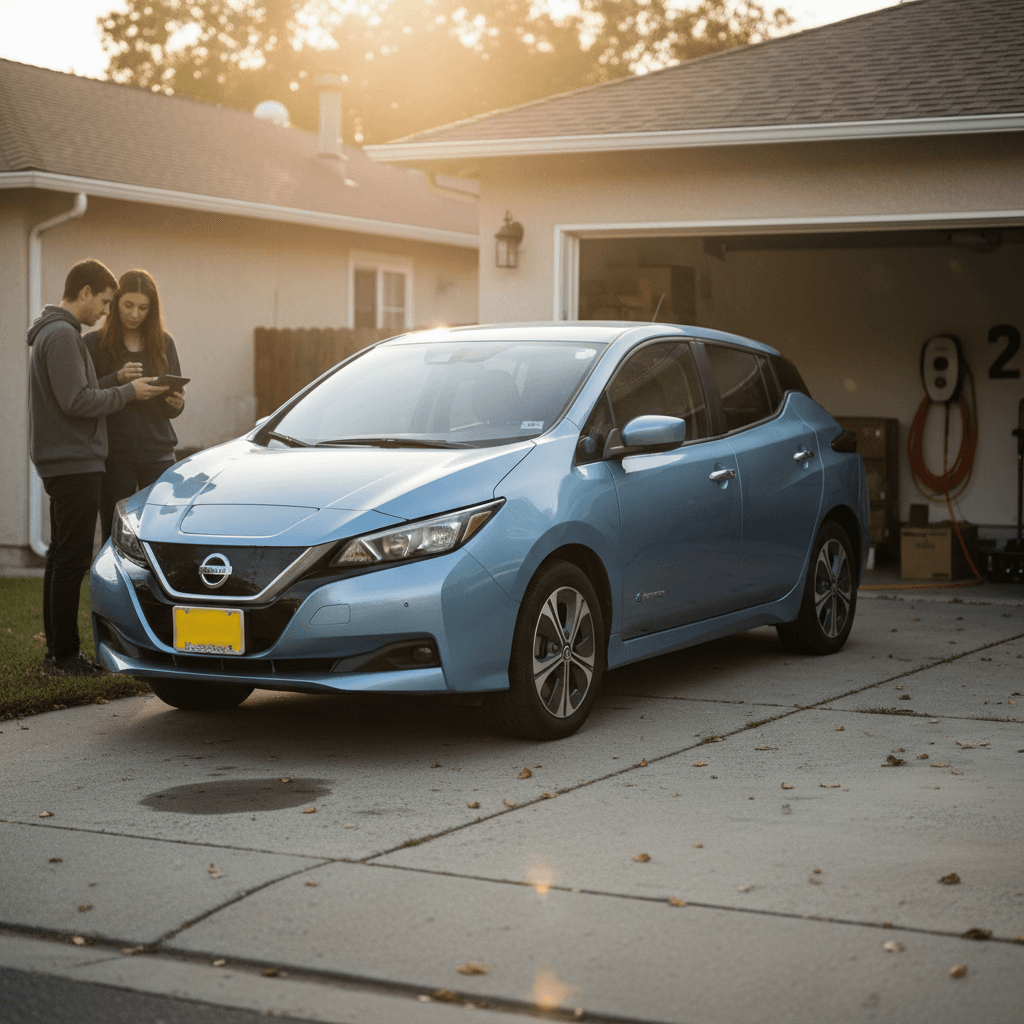
| Nissan Leaf (2025–2026) | Compact hatch | ≈$29,500–$30,000 | Around 200–300 mi, depending on battery | Aging platform, value-focused packaging | Lower perceived prestige, historically used CHAdeMO fast charging on older gens |
| Chevy Equinox EV (2025) | Compact SUV | ≈$35,000 | ~300+ mi (RWD) | GM’s volume play SUV EV | Early availability and trims may be limited |
| Mini Cooper Electric (2025) | Subcompact hatch | Low $30Ks (est.) | Shorter range than crossovers | Small size, city focus | Tight back seat and cargo |
| Hyundai Kona Electric (2025) | Subcompact SUV | Mid $30Ks | 200+ mi | Carries over proven hardware | Less space and cachet than Ioniq 5/6 |
| Volvo EX30 (2025) | Subcompact SUV | Mid $30Ks | >250 mi (est.) | Premium badge, built to a price | Smaller cabin and cargo area |
These aren’t theoretical future models, these are EVs you can actually shop for in the near term.
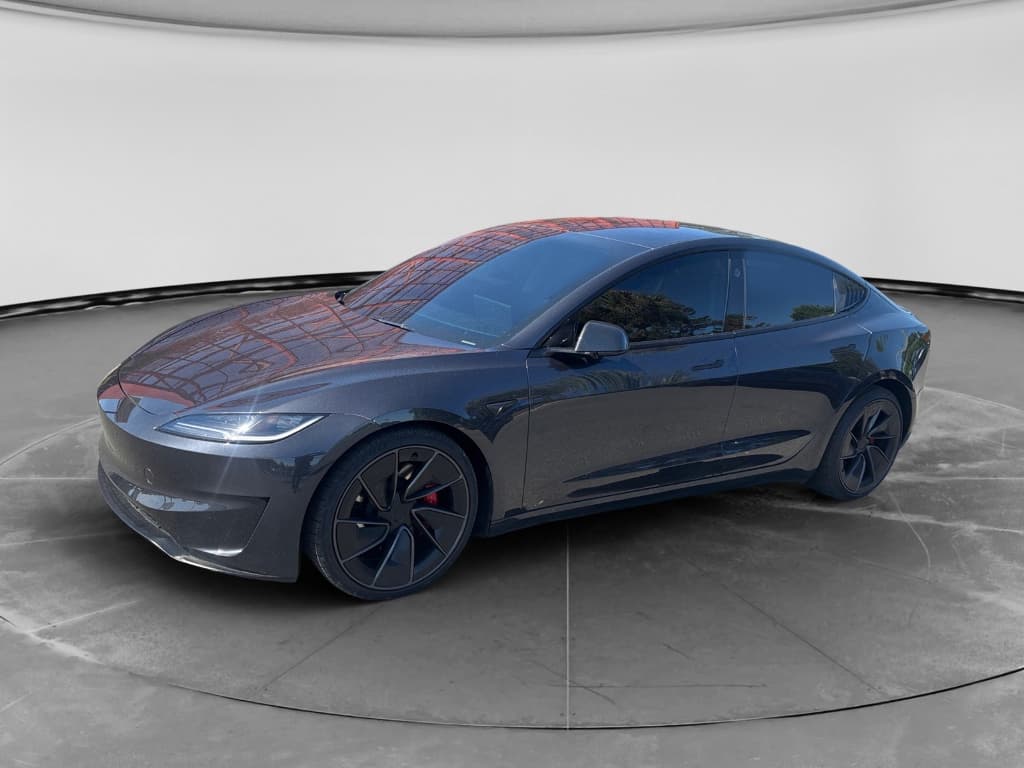
About that “$25,000 Tesla”
New vs used EV: which is actually cheaper?
On paper, the cheapest EV in the USA is a new Leaf hovering around $30,000. In the real world, the cheapest way to plug in is almost always buying used. Depreciation hits EVs faster than gas cars, which is bad news for the first owner and very good news for you.
Buying new
- Pros: Full warranty, latest safety tech, fresh battery, sometimes eligible for credits or cash incentives.
- Cons: Higher payment, steeper first‑year depreciation, you’re paying to be the test pilot.
Buying used
- Pros: Way lower purchase price, depreciation has done its worst, you can see how the battery actually aged.
- Cons: Uneven battery health, spotty maintenance histories, older charging standards on some models.
Why used EVs are the real bargain rack
How to think about “cheap”
Best cheap used EVs worth hunting for
If you’re shopping used, you’ll see some names over and over again. Some are quiet bargains. Some are cheap for very good reasons. Here’s a quick tour through the greatest hits on the used‑EV discount rack.
Popular cheap used EV choices
These are the names that dominate the under‑$25K EV conversation.
Chevy Bolt EV / Bolt EUV
Why it’s cheap: Discontinued for a few years, remembered for a battery recall, overshadowed by SUVs.
- Real‑world range: often 220–250 miles for newer years.
- Excellent efficiency and DC fast charging on CCS.
- Compact hatchback; great city car, OK road‑tripper.
For many buyers, this is the sweet spot: modern range, excellent value, and lots of supply off lease.
Nissan Leaf (earlier generations)
Why it’s cheap: Older tech, smaller batteries, and early cars without active thermal management.
- Early Leafs can be well under $10,000.
- Range can shrink dramatically as packs age.
- Older models use CHAdeMO fast charging, which is slowly being phased out.
Perfect for short‑range, low‑speed duty if you verify battery health first.
Hyundai Kona Electric / Kia Niro EV
Why they’re cheap-ish: Crossovers with solid range but less brand glamour than Tesla or Rivian.
- Often 230–260 miles of range.
- Comfortable commuters, decent cargo space.
- Good mix of value and livability.
Great pick if you want practical space and range on a budget.
Tesla Model 3 (earlier years)
Why it’s cheaper now: Years of price cuts and lots of lease returns have pushed used prices down.
- Access to Tesla’s Supercharger network (often with NACS built in).
- Strong performance and software experience.
- Watch for build‑quality quirks and wheel/tire wear.
Not the absolute cheapest car, but often the cheapest way into the Tesla ecosystem.
Cheap, but maybe too cheap
Total cost of ownership: what really makes an EV cheap?
The cheapest EV in the USA is the one that costs you the least over the years you own it, not just on day one. That means looking past the sticker and asking unglamorous questions about electricity rates, tires, insurance, and repairs.
Cost factors that matter more than MSRP
1. Electricity vs gasoline
Even at today’s rates, most drivers will spend noticeably less per mile on electricity than on gas, especially if you can charge at home overnight on a decent plan.
2. Battery health and replacement risk
A degraded battery means fewer usable miles per charge and a lower resale value. In extreme cases it can mean a five‑figure replacement bill. Always factor in the pack’s condition.
3. Tires and maintenance
EVs can be heavier and torquier than gas cars, which can chew through tires faster. At the same time, there’s no oil to change and far fewer moving parts in the drivetrain.
4. Insurance and financing
Some EVs cost more to insure, particularly high‑performance or luxury models. And your interest rate can do more damage to your monthly payment than an extra $1,000 on the price.
5. Resale value
The cheaper you buy, the less room there is to fall, but certain models (and batteries) age better in the used market, cushioning your exit when it’s time to sell or trade in.
A simple rule of thumb
How to shop smart for a cheap EV
You don’t need to become a high‑voltage engineer to buy a good budget EV, but you do need a plan. Think of this as your pre‑flight checklist before you sign anything.
Step‑by‑step: finding the right cheap EV
1. Define your real range needs
Track your driving for a normal week. If you never exceed 80–100 miles in a day, a lower‑range, lower‑priced EV might work. If you routinely do 150‑plus, shop for more range or faster charging.
2. Decide on home charging
Can you install Level 2 charging (a 240V outlet or wallbox) at home? If not, you’ll want more range and better DC fast‑charging, both of which usually mean a higher purchase price.
3. Pick a short list of models
Instead of chasing every “deal,” narrow down to 2–3 models that fit your needs, say, Bolt EV, Kona Electric, and Model 3. Then compare prices, options, and availability in your area.
4. Demand a real battery health check
For a used EV, a test drive and a Carfax aren’t enough. You want a <strong>quantitative battery report</strong> so you know how much capacity the pack has lost and how it’s likely to age.
5. Run the monthly payment math
Look at payment, predicted electricity costs, and insurance together. A slightly higher purchase price with a lower rate or better insurance can actually be cheaper month to month.
6. Don’t be afraid of a few miles
A three‑ or four‑year‑old EV with 40,000–60,000 miles and a strong battery report can be a far smarter buy than a low‑mileage car with a sketchy history.
Be careful with DIY high‑voltage work
How Recharged helps budget EV buyers
If you’re shopping the cheap end of the EV pool, information asymmetry is your enemy. Sellers know more about the car than you do; batteries don’t advertise their health on the window sticker. That’s exactly the gap Recharged was built to close.
What you get when you buy a used EV through Recharged
Clarity where it matters most: battery, value, and support.
Recharged Score battery report
Fair market pricing
Expert‑guided buying experience
Ready to find your next EV?
Browse VehiclesFlexible ways to get into an EV
- Financing: Apply online and see options tailored to your budget.
- Trade‑in & instant offer: Turn your current gas car into EV equity.
- Consignment: Let us help you sell your current EV while you move into the next one.
Designed for real life, not just car people
- Fully digital buying experience, plus an in‑person Experience Center in Richmond, VA.
- Nationwide delivery, so the right car isn’t limited to your ZIP code.
- Guidance on home charging setup and realistic running costs.
Frequently asked questions about the cheapest EVs
Cheap EV FAQs
Bottom line on the cheapest EV in the USA
So what’s the cheapest EV in the USA? On a spec sheet, it’s usually the Nissan Leaf wearing the budget crown. On your driveway, though, the truly cheapest EV is the one whose battery is still healthy, whose range actually fits your life, and whose monthly costs don’t ambush you six months in. That’s why the smart move isn’t to chase the lowest advertised price, but to hunt for the best‑value EV you can afford, often a carefully chosen used car with a clean bill of battery health.
If you’re ready to start that hunt, you don’t have to do it alone. Recharged was built to make EV buying simple, transparent, and data‑driven, from battery diagnostics and pricing to financing, trade‑ins, and delivery. Take your budget, your commute, and your questions, and we’ll help you find the car that’s not just cheap today, but still a good decision years from now.