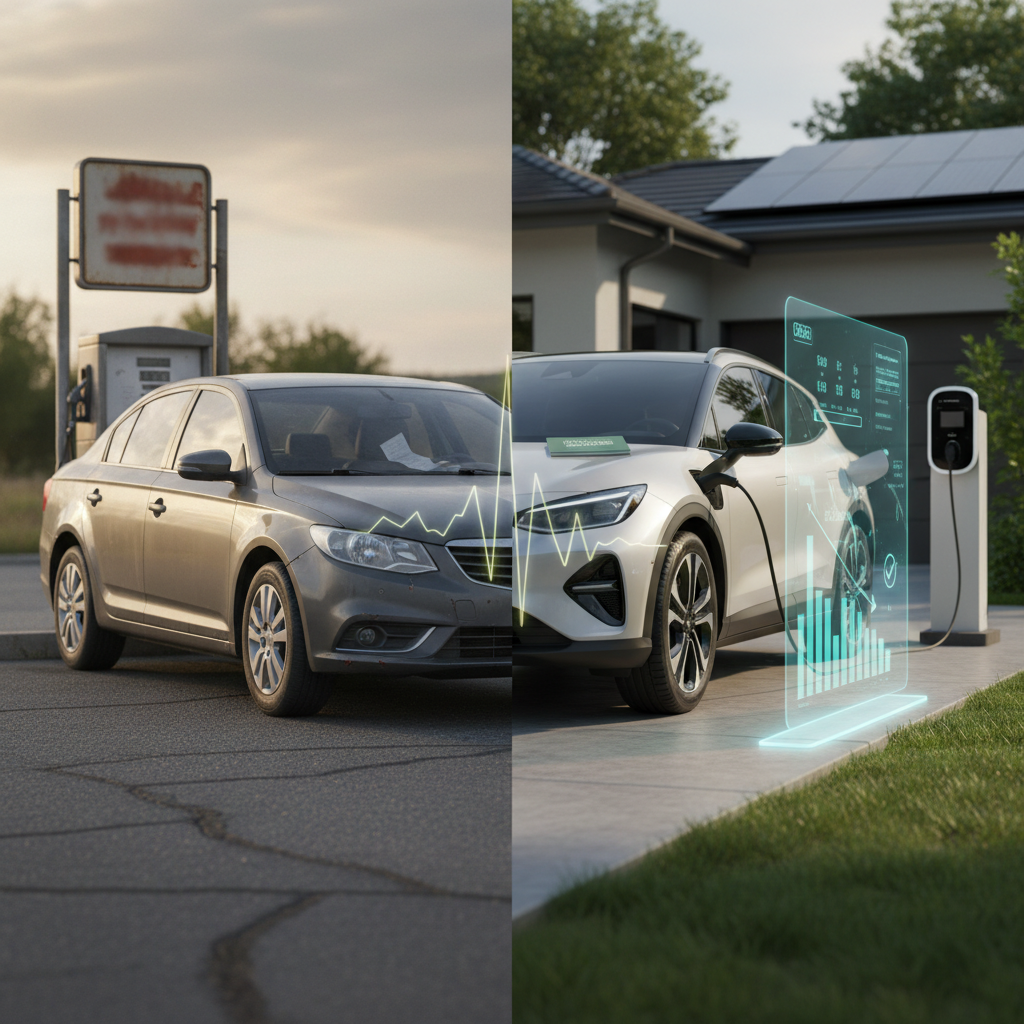
If you’re typing “cheap auto shops near me” into your phone, you’re probably staring down a repair bill you didn’t plan for. The goal isn’t just to find the lowest price, it’s to find a shop that’s affordable and trustworthy so you don’t pay for the same repair twice.
Quick context for 2025
Why “cheap auto shops near me” doesn’t have to mean risky
Cheap and good can coexist
Independent shops with lower overhead can charge less than dealerships but still employ ASE-certified technicians and use solid parts. They save money on fancy waiting rooms, not on your safety.
For routine work, brakes, suspension, fluids, tires, these shops can be both affordable and reliable when you vet them properly.
When “cheap” becomes expensive
Repairs get expensive when a shop misdiagnoses a problem, uses low-quality parts, or cuts corners on things like torque specs or calibration. You “save” $150 today and spend $800 correcting it a few months later.
The rest of this guide is about separating smart savings from false economy.
Auto repair cost realities in 2025
What “cheap” auto repair really costs in 2025
To know if a cheap auto shop near you is actually a good deal, you need rough benchmarks. Prices vary by state and city, but there are predictable ranges.
Common repair price ranges (parts + labor)
Use these ranges as a sanity check when you shop estimates in your area.
| Service | Typical Total Range | What “cheap but fair” looks like |
|---|---|---|
| Oil change (synthetic) | $60–$125 | $60–$90 with quality oil and filter |
| Brake pads + rotors (per axle) | $350–$1,000+ | $350–$550 for common non-luxury cars |
| Battery replacement (12V) | $100–$300 | $120–$220 installed |
| Check engine light diagnostic | $80–$150 | $80–$110, sometimes applied toward the repair |
| Alternator replacement | $300–$1,200 | $400–$700 for common models |
| Starter replacement | $230–$800 | $300–$550 for most non-luxury vehicles |
If a quote is far below the low end, ask why; if it’s far above the high end, push for details.
How to use these numbers
How to search for cheap auto shops near you the right way
Three ways to find affordable shops near you
Stack these approaches and you’ll quickly see which shops are both inexpensive and reputable.
1. Use map + review apps
Start with Google Maps, Apple Maps, or Yelp and search phrases like “auto repair near me”, then filter by rating.
- Look for 4.3★ and higher with 100+ reviews.
- Read recent reviews that mention price and honesty.
- Watch for how the shop responds to complaints.
2. Call 3–5 shops
Pick a specific job, “front brake pads and rotors,” “battery replacement,” “check engine light diagnostic”, and ask:
- “What’s your labor rate?”
- “What brand of parts do you use?”
- “Do you provide written estimates and warranties?”
3. Ask your network
Text neighbors, coworkers, or local Facebook/Nextdoor groups:
- “Looking for an honest, reasonably priced mechanic in [your town]. Any favorites and what did you pay for?”
- Compare names that keep appearing.
Info to have ready when you call shops
Vehicle basics
Year, make, model, engine size, and mileage. A 2015 compact sedan and a 2022 luxury SUV live in different price worlds.
Symptom and history
What you’re noticing (noise, light, leak) and any recent work. This helps the shop estimate more accurately.
VIN if possible
Your vehicle identification number lets shops price the correct parts and avoid “surprise” charges later.
Your schedule & location
Mention if you need same-day work, a shuttle, or towing. Some shops offer discounts off towing when they do the repair.
Price checklist: how to compare auto shop estimates
When you’re comparing cheap auto shops near you, don’t just look at the bottom line. Two quotes that are $80 apart might not be apples-to-apples.
7‑step estimate comparison checklist
1. Labor rate vs. hours
A shop at $130/hour that books 1.0 hour can beat a shop at $100/hour that books 2.0 hours for the same job. Ask both: “How many labor hours are you quoting?”
2. Parts brand and warranty
OEM or high‑quality aftermarket parts are worth paying for. Verify the brand and ask, “What’s the <strong>parts warranty</strong>?” 12 months/12,000 miles is a common baseline.
3. Shop warranty on labor
Good shops stand behind their work. Aim for at least 12 months/12,000 miles on labor; many offer 24 months/24,000 miles or more for common repairs.
4. Diagnostic vs. repair charges
Ask whether a diagnostic fee is separate and if it’s applied to the repair if you approve the work. That can make a slightly higher shop the better deal.
5. Fees and shop supplies
Look for line items like “shop supplies,” “hazmat,” or “disposal.” A few dollars is normal; $40+ in vague fees is not, especially on small jobs.
6. Turnaround time
If your car is how you get to work, a shop that can finish today might be “cheaper” overall than one that keeps your car for three days, even if the invoice is slightly higher.
7. Payment options
Ask about payment plans or financing. If you drive an EV, note that platforms like <strong>Recharged</strong> also help you manage repair costs as part of the total cost of ownership when you buy a used EV.
When the higher quote wins
Red flags that make a cheap auto shop expensive later
- Won’t provide anything in writing, only a verbal “ballpark.”
- Refuses to return old parts or show you what failed.
- Pushes hard for add‑ons that aren’t on your estimate.
- Has mostly 1–3★ reviews mentioning surprise fees or repeat repairs.
- Cannot explain the diagnosis in plain language.
- Offers a price that’s dramatically below every other estimate without a clear reason.
Be cautious with ultra‑low coupons
“The best shops are rarely the absolute cheapest or the absolute most expensive. They’re the ones whose prices line up with the quality of their people, their parts, and their guarantees.”
Special considerations if you drive an EV or plug-in hybrid
If you own a full EV or plug‑in hybrid, the equation changes. Traditional “cheap auto shops near me” searches will surface plenty of gas‑car specialists who may not have the tools or training for high‑voltage systems or advanced driver‑assist features.
What EV owners should look for in a shop
You’re trying to protect both your wallet and your battery.
High‑voltage training and equipment
Ask directly whether the shop has:
- Techs trained on high‑voltage systems
- Insulated tools and appropriate safety gear
- Experience with your specific EV brand
Battery health and software awareness
EV repairs often hinge on battery condition and software updates. Reputable EV‑focused providers:
- Check state of health (SOH) for the pack
- Understand common warranty patterns
- Know which issues are software vs. hardware
Where Recharged fits in
Recharged also offers EV‑specialist support, financing, trade‑ins, and an Experience Center in Richmond, VA, so if your current gasoline car is starting to nickel‑and‑dime you with repairs, one option is to shift into a well‑vetted used EV instead of pouring money into a vehicle that’s on its way out.
Independent vs dealer vs chain: which is really cheapest?
Independent shops
- Often the best value for out‑of‑warranty cars.
- Lower labor rates and flexible parts options.
- Quality varies, reviews and certifications matter.
Ideal for: Daily drivers, used EVs, and older vehicles that don’t need dealer‑only software work.
Dealership service centers
- Highest labor rates in most states.
- Best for warranty work, recalls, and complex software.
- OEM parts and brand‑specific training.
Ideal for: New vehicles under warranty or highly complex brand‑specific issues.
National chains & big box stores
- Mid‑range pricing with lots of coupons.
- Great for tires, alignments, oil changes, basic services.
- Quality can vary store to store.
Ideal for: Simple maintenance when convenience and hours matter most.
When not to chase the cheapest option
FAQ: cheap auto shops near me
Frequently asked questions about cheap auto shops
Key takeaways, and when to consider Recharged
- “Cheap auto shops near me” should mean fair pricing plus quality, not rock‑bottom numbers with corner‑cutting.
- You’ll get the best results by comparing 3–5 shops using written estimates, not just a single phone quote.
- Look beyond hourly rate: factor in parts brand, warranty, diagnostic approach, and reviews.
- For safety‑critical repairs, prioritize experience and guarantees over saving the last few dollars.
- If you drive, or want to drive, an EV, use EV‑specialist services so high‑voltage and battery work are done right.
If you’re trying to keep an older car on the road, finding a truly affordable, honest shop near you is one of the best financial moves you can make. But sometimes the cheapest long‑term solution is stepping out of a vehicle that keeps asking for four‑figure repairs. That’s where Recharged comes in: a used‑EV marketplace built around verified battery health, fair pricing, financing, trade‑ins, and expert guidance. Whether you stick with your current car or make the jump to an EV, the right information, and the right partner, will save you far more than any coupon ever could.