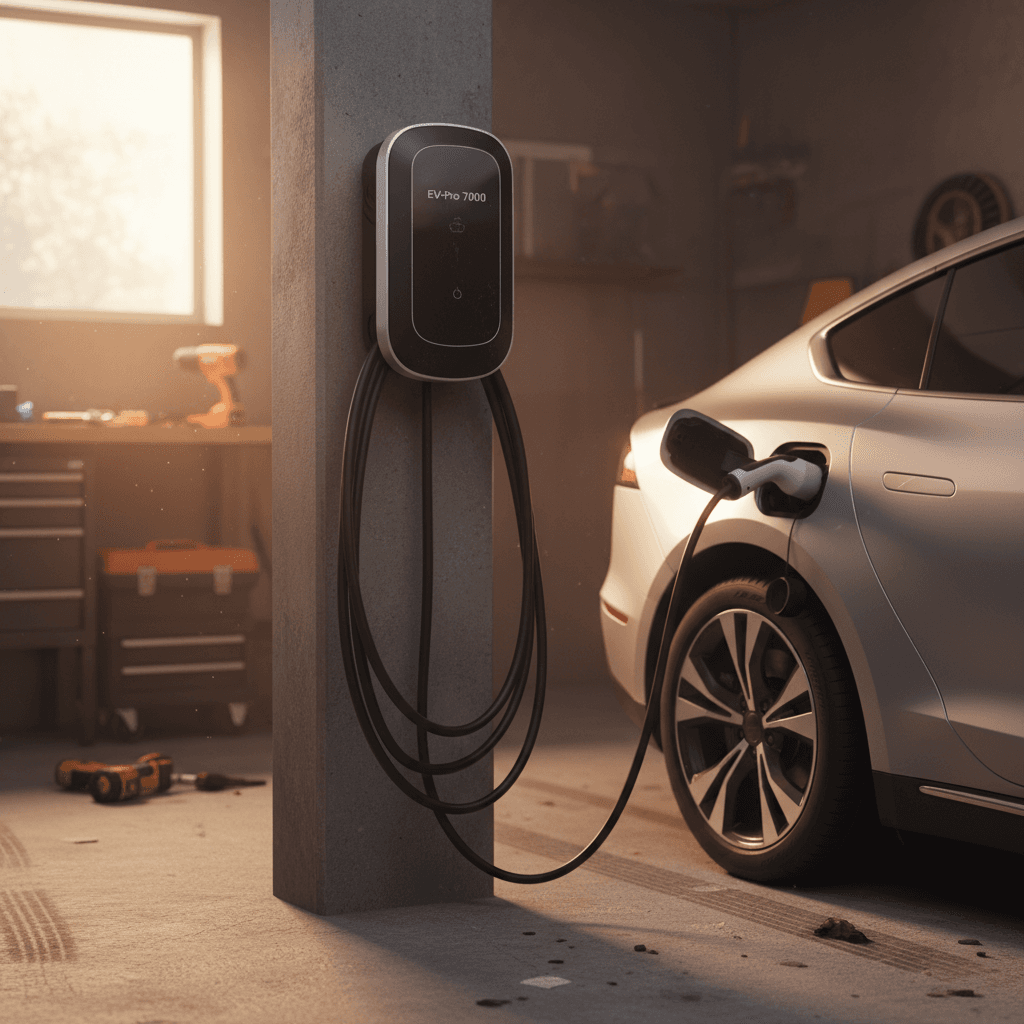
If you’re serious about living with an EV, the most important “fuel system” you’ll ever buy isn’t at a gas station, it's the charger equipment and Level 2 charging station you install at home. Get that decision right, and your car quietly tops up while you sleep. Get it wrong, and you’re juggling public chargers, tripping breakers, and wondering why your shiny electric car still feels inconvenient.
Quick definition
Why Level 2 charging equipment matters for everyday EV life
Why most EV owners end up with Level 2
Level 1 charging, the cord that plugs into a regular 120‑volt outlet, is fine for some plug‑in hybrids and ultra‑light commuters. But if you drive a typical battery‑electric car and cover real miles, Level 1 often can’t keep up. A Level 2 charging station lets you arrive home nearly empty and still leave the next morning with a comfortable buffer of range.
Ownership tip
Level 1 vs. Level 2 vs. DC fast charging
Charging levels at a glance
How Level 1, Level 2, and DC fast charging stack up for speed, cost, and where they’re typically used.
| Charging level | Voltage | Power (typical) | Miles of range per hour | Typical use | Pros | Cons |
|---|---|---|---|---|---|---|
| Level 1 | 120 V | 1–2 kW | 3–6 mi/hr | Standard household outlet | No extra equipment, works anywhere | Very slow for full EVs |
| Level 2 | 240 V | 3.3–11.5 kW (some up to ~19 kW) | 20–45+ mi/hr | Homes, workplaces, public lots | Fast enough for overnight, widely supported | Requires dedicated circuit and installation |
| DC fast | 400–800 V DC | 50–350 kW | 150–1,200 mi/hr | Highway corridors, public stations | Road‑trip fast, short stops | Expensive hardware, not for home, more battery stress if overused |
Level 2 sits in the sweet spot for home and workplace charging.
Think of Level 1 as a trickle charger, Level 2 as a daily fuel pump in your garage, and DC fast as the highway pit‑lane. For almost every EV driver, Level 2 is where the ownership experience really clicks.
How a Level 2 charging station actually works
The power path
A Level 2 charging station is essentially a smart switch between your home’s 240‑volt circuit and your car’s onboard charger.
- Power leaves your breaker panel on a dedicated 240‑volt circuit.
- It runs through wiring to the wall‑mounted charger (or pedestal outside).
- The charger communicates with the car to agree on a safe current level.
- The car’s onboard charger converts AC from the wall to DC for the battery.
Brains and safety
Modern Level 2 stations aren’t just fancy extension cords. They include:
- Ground‑fault protection to detect leaks and shut down power.
- Temperature sensors in the plug or handle on many models.
- Communication protocols that make sure the car never draws more current than the circuit or charger can safely supply.
- Optional Wi‑Fi or cellular connectivity for scheduling, load sharing, and usage data.
Don’t treat it like a DIY project
Key specs: amps, kW, connectors, and cable length
When you start comparing charger equipment, the spec sheets can feel like alphabet soup: amps, volts, kW, J1772, NACS, Wi‑Fi, OCPP. Underneath the jargon are a few decisions that really matter for your Level 2 charging station.
- Amps (A) – How much current the charger can deliver. Common residential Level 2 units are 32 A, 40 A, or 48 A.
- kW (kilowatts) – Power delivered = volts × amps ÷ 1,000. At 240 V, a 32‑amp charger is about 7.7 kW; 40 A is ~9.6 kW; 48 A is ~11.5 kW.
- Circuit breaker size – By code, continuous loads should use only 80% of a breaker’s rating. A 40‑amp charger needs a 50‑amp breaker; a 48‑amp charger needs a 60‑amp breaker.
- Connector – In North America, most current public and home Level 2 stations use the J1772 plug, while newer EVs are rapidly moving to the Tesla‑designed NACS connector. Many home chargers are now dual‑standard or come with adapters.
- Cable length – Typically 18–25 feet. Longer is more flexible in a garage or driveway but slightly heavier to handle.
Common Level 2 charger sizes
How amperage translates into power and real‑world charging speeds for a 240‑volt circuit.
| Charger current (A) | Circuit breaker (A) | Approx. power (kW) | Approx. miles of range per hour* | Best for |
|---|---|---|---|---|
| 16 A | 20 A | 3.8 kW | 12–15 mi/hr | Plug‑in hybrids, light daily driving |
| 24 A | 30 A | 5.8 kW | 18–22 mi/hr | Smaller EV batteries, modest commutes |
| 32 A | 40 A | 7.7 kW | 25–30 mi/hr | Most drivers with overnight parking |
| 40 A | 50 A | 9.6 kW | 30–37 mi/hr | Faster top‑ups, multi‑EV households |
| 48 A | 60 A | 11.5 kW | 37–45 mi/hr | Large batteries, heavy daily mileage |
Most households choose somewhere between 32 A and 48 A for a home Level 2 station.
Match charger speed to your car
Smart vs. basic Level 2 chargers
Two personalities of Level 2 charging equipment
Both get the job done. The question is how much control and data you want.
Smart connected chargers
Wi‑Fi or cellular‑enabled stations talk to an app and sometimes your utility.
- Schedule charging for off‑peak rates automatically.
- Track energy use and cost per mile.
- Share one circuit among multiple chargers with load balancing.
- Some upcoming models allow bidirectional power so your car can help power your home during outages.
Expect higher upfront price and occasional software updates or subscriptions.
Basic “dumb” chargers
These units simply deliver power when you plug in. No app, no cloud.
- Lower cost and fewer things to break.
- Still benefit from your EV’s built‑in charge scheduling.
- Great for owners with flat electric rates and simple needs.
- Often available as portable plug‑in units for more flexibility.
If you don’t care about data or remote control, a basic unit is often plenty.
Grid‑friendly future
Home installation, costs, and 2025–2026 incentives
Installing a Level 2 charging station at home is usually straightforward, but the price tag can swing from “pleasant surprise” to “I didn’t see that coming” depending on your electrical setup.
Typical 2025 home Level 2 installation costs
Rough U.S. cost ranges for a single Level 2 charging station at home, including equipment and labor.
| Scenario | What’s involved | Approx. total cost |
|---|---|---|
| Simple plug‑in install | Outlet already near parking, plug‑in 32 A charger, short run | $800–$1,200 |
| Standard hardwired install | New 240 V circuit run to garage/driveway, 40 A or 48 A charger | $1,200–$2,500 |
| Complex install | Panel upgrade, long wire run or trenching, outdoor pedestal | $2,500–$4,000+ |
Real quotes will vary, but this gives you a ballpark before incentives and tax credits.
- Electricians in 2025 typically charge a few hundred to around $1,500 for labor on an EV charger install, depending on complexity.
- Average all‑in Level 2 installation costs in recent U.S. surveys land roughly in the $800–$2,500 range for most homes.
- If your main electrical panel is maxed out, a panel upgrade alone can add $1,500–$3,000 or more.
Don’t forget incentives
Pre‑installation checklist
1. Confirm your panel capacity
Have an electrician or home energy pro check your main panel’s size (in amps) and how much spare capacity you have for a continuous 240‑volt load.
2. Pick a mounting location
Decide where the car will usually park and how the cable will reach. A few extra feet of cable can solve a lot of day‑to‑day annoyances.
3. Choose plug‑in vs. hardwired
Plug‑in units are easier to replace or move later; hardwired installations are often cleaner, more weather‑sealed, and allow higher amperage.
4. Ask about permits and inspection
Most jurisdictions require a permit and inspection for a new 240‑volt circuit. Your electrician can usually handle this paperwork for you.
5. Gather incentive info
Look up federal, state, and utility‑level rebates ahead of time so you know what documentation you’ll need after the job is done.
How to choose the right Level 2 charger for your situation
There’s no single best Level 2 charging station. The right charger equipment depends on your driving, your home, and your appetite for gadgets. Here’s a practical way to think about it.
Different paths to the right Level 2 charging station
Daily commuter (up to ~40 miles/day)
Aim for a 32‑amp Level 2 charger on a 40‑amp circuit, more than enough overnight.
A basic, non‑connected unit is often fine; you can schedule charging through your car.
If you rent, look for a plug‑in charger that can move with you later.
Heavy‑mileage driver or large battery
Consider 40‑amp or 48‑amp equipment, if your EV can use the extra speed.
Smart features help you automatically charge in the cheapest time‑of‑use windows.
If you have multiple EVs, look at chargers or systems that support load sharing between vehicles.
Apartment or condo resident
First, check building rules, common‑area charging may already exist or be planned.
Portable Level 2 chargers that plug into a 240‑volt outlet (like a shared laundry room) can be a lifesaver.
If you can’t install at home, prioritize public Level 2 access near work, school, or transit.
Solar + home‑energy enthusiast
Choose a smart charger that can integrate with solar or a home battery, or at least track usage closely.
Watch for emerging bidirectional‑ready units that can eventually let your car support your home in an outage.
Work with an electrician who understands whole‑home load management, not just running a new circuit.
Think beyond today’s car
Safety, battery health, and charging best practices
The good news is that Level 2 charging, done properly, is generally gentle on both your home and your battery. Modern EVs manage their own thermal systems and charge rates, they’re better at protecting themselves than most owners are. Still, a few habits and safety checks make a difference.
Safety and battery‑friendly habits
Use dedicated, code‑compliant circuits
Your Level 2 charging station should be on its own breaker, with wiring sized correctly for continuous duty. Avoid sharing circuits with other heavy loads.
Keep an eye on heat
During the first week, casually feel the charger handle and wall connector after an hour of charging. Warm is normal; hot or soft plastics are a red flag, call your electrician.
Avoid living at 0% or 100%
For daily use, many manufacturers recommend keeping the battery between roughly 10% and 80–90% state of charge when practical.
Use scheduled charging
Let your EV start charging later at night if your utility offers cheaper off‑peak rates. It’s easier on the grid and your wallet.
Don’t fear rain or snow
Quality Level 2 stations and EV charge ports are designed to handle weather. Just keep connectors off the ground and follow the manufacturer’s instructions.
When to stop and call a pro
What used EV buyers should know about home charging
Buying a used EV is a smart way to let someone else pay for the biggest chunk of depreciation. But your experience will hinge on how easily you can charge. At Recharged, every vehicle comes with a Recharged Score Report, including verified battery health, so you know what you’re working with before you start planning your home charging setup.
Used EV + Level 2 charger: questions to ask
A short checklist that can save you long‑term annoyance.
1. How healthy is the battery?
A battery that’s lost more capacity will need more frequent charging. Knowing the pack’s health helps you size your charger and plan your routine.
2. What can your home support?
Before you fall in love with an 11.5 kW unit, make sure your panel and wiring can handle it. Sometimes a 32‑amp station is the smart compromise.
3. How will you use the car?
If your used EV will be a commuter or kid‑shuttle, Level 2 at home is a quality‑of‑life upgrade. If it’s a weekend toy with low miles, you might live with Level 1 longer.
Where Recharged fits in
Ready to find your next EV?
Browse VehiclesFAQ: Level 2 charger equipment and home stations
Frequently asked questions about Level 2 charging equipment
The bottom line on Level 2 charger equipment
A Level 2 charging station isn’t an optional accessory, it’s the piece of charger equipment that turns EV ownership from an experiment into a routine. The right station, sized to your car and your home, will quietly do its job for years: no lines, no fumes, just a car that’s ready when you are.
Take a moment to think about how you drive, where you park, and what your electrical panel can support. Then pick a Level 2 solution that fits today but won’t box you in tomorrow. And if you’re browsing used EVs, remember that Recharged can help you match a car’s real‑world battery health and range to a home charging plan that makes sense, so you spend less time worrying about kW and more time simply driving.