
If you’re shopping the used market, you’ve probably noticed a growing number of certified used vehicles promising extra peace of mind. They’re priced higher than ordinary used cars, they come with glossy warranty booklets, and dealers pitch them as the “safe” choice. But what does that certification really mean, and how does it work when the vehicle is electric?
Why certified used vehicles matter now
What are certified used vehicles?
A certified used vehicle (often called a certified pre‑owned or CPO vehicle) is a used car or SUV that has been inspected and reconditioned to meet a set of standards, and then sold with some type of limited warranty and benefits. The key idea is that you’re getting a late‑model, low‑mileage used vehicle with documentation that someone has checked it thoroughly and is willing to stand behind it for a period of time.
- Typically 1–6 years old, with mileage caps that vary by brand
- Inspected using a multi‑point checklist (often 125–300+ items)
- Reconditioned with repairs or maintenance to meet those standards
- Sold with a warranty that extends beyond any remaining new‑car coverage
- Often bundled with extras like roadside assistance or loaner cars
Key distinction: who is certifying?
Types of certified used vehicle programs
Three common flavors of certified used vehicles
Same buzzword, very different realities behind the scenes
1. Manufacturer CPO
Backed by the automaker. These are sold through franchised dealerships representing that brand. The automaker defines eligibility, inspection standards, and warranty coverage, and you can usually service or claim warranty work at any franchised dealer nationwide.
2. Dealer certified
Backed by the dealership or a third party. The dealer chooses the checklist and warranty provider. Coverage may only be honored at that store or a limited network, and terms can vary widely.
3. Third‑party or association programs
Independent certification programs, a trade association or warranty company sets minimum standards, and participating dealers opt in. These can be legitimate, but quality varies. Always read what’s actually covered.
Don’t be fooled by the word “certified”
Benefits of buying a certified used vehicle
When the program is solid, certified used vehicles can strike a useful middle ground between new‑car peace of mind and used‑car pricing. Here are the core benefits most shoppers are looking for.
Why many buyers gravitate to certified used
- Access to lower‑APR promotional financing versus conventional used‑car loans
- Roadside assistance and, on some brands, complimentary maintenance for a period of time
- Uniform standards across a nationwide dealer network (for manufacturer CPO)
- More predictable ownership costs in the first few years
How this translates to EVs
Ready to find your next EV?
Browse VehiclesDownsides and myths to watch for
The marketing around certified used vehicles can make them look like an obvious choice. The reality is more nuanced. You’re paying for real benefits, but sometimes you’re mostly paying for perception.
Common pitfalls with certified used vehicles
Understand where the premium actually goes
Myth: Certification is always worth the premium
Certified vehicles can cost hundreds or even a few thousand dollars more than similar non‑certified cars. Depending on the warranty length and your driving plans, that may or may not pencil out compared with a solid independent inspection plus a separate service contract.
Myth: All CPO warranties are generous
Some programs offer only a short bumper‑to‑bumper extension or just add time, not miles. Others come with deductibles, exclusions, or strict maintenance requirements. The headline term, like “6‑year/100k”, doesn’t tell the whole story.
Myth: Dealer certified = manufacturer certified
A dealer can “certify” a vehicle from any brand using a third‑party warranty. That car won’t have the same coverage as that brand’s own CPO program, and the warranty may only be honored at that specific store.
Myth: Certified means trouble‑free ownership
Inspectors can’t see the future. Wear‑and‑tear items still fail, and some issues only surface months later. Certification reduces risk; it does not eliminate it.
Red flag: certification used as a distraction
How certified used vehicles are inspected
Every program advertises a big inspection number, 125, 160, 300 points, but the count matters less than what they’re actually checking and how thoroughly repairs are documented. As a shopper, you want to understand the scope, not just the marketing.
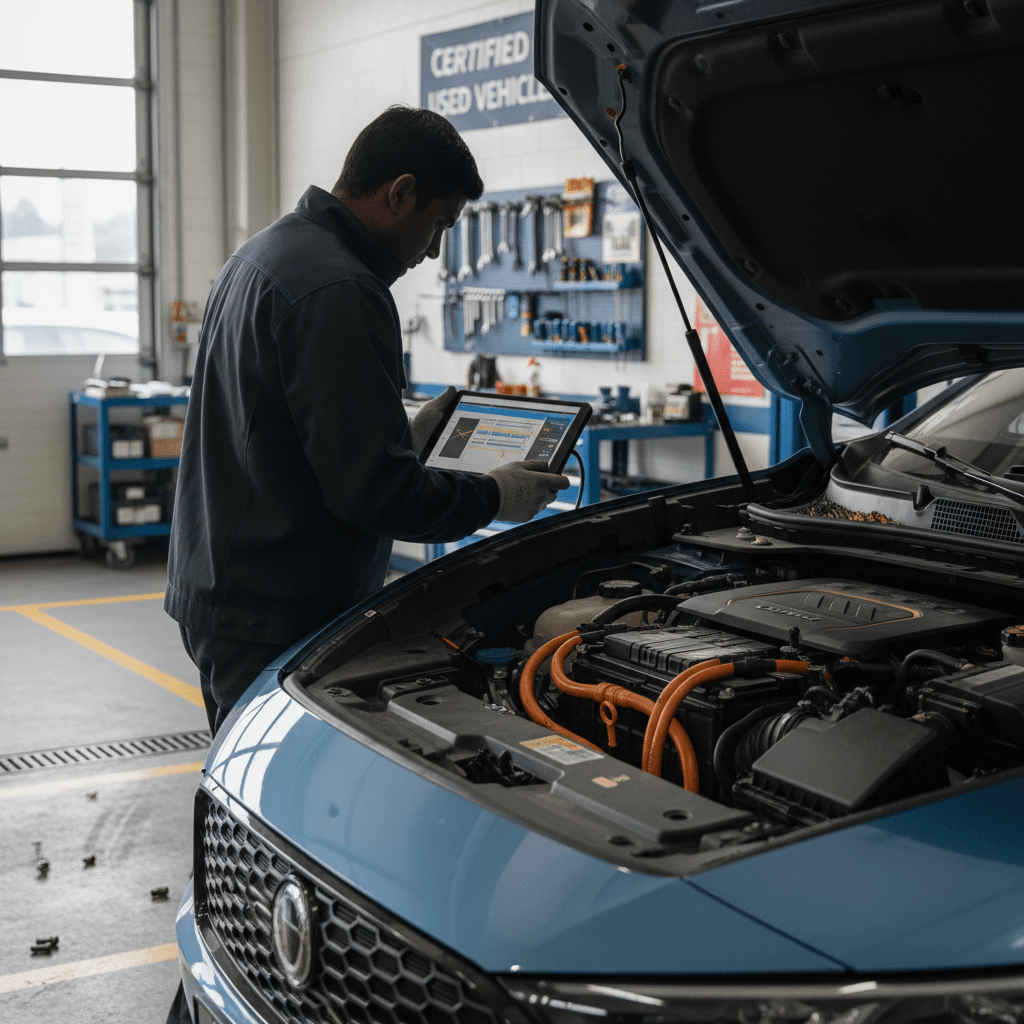
- Mechanical systems: engine, transmission, cooling, steering, suspension, brakes, HVAC
- Safety items: airbags, seatbelts, lights, tires, windshield, ADAS sensors and calibrations
- Electronics: infotainment, cameras, driver‑assist systems, key fobs, charging hardware for EVs
- Cosmetics: paintwork, interior wear, glass, wheel damage, odors
- History review: title status, accident history, mileage consistency, recall completion
Ask for the actual inspection report
Certified used vehicles vs. regular used cars
Choosing between a certified used vehicle and a regular used car usually comes down to your risk tolerance, how long you plan to keep the vehicle, and how disciplined you are about doing your own homework.
Certified used vehicles vs. regular used cars at a glance
How manufacturer‑backed CPO compares to a typical non‑certified used car from a dealer or online marketplace.
| Aspect | Certified used (manufacturer CPO) | Regular used (non‑certified) |
|---|---|---|
| Age & mileage | Typically newer, lower miles within program caps | Wider range, from nearly new to older, higher‑mile cars |
| Inspection | Standardized, documented multi‑point check; repairs completed before sale | Dealer may do a basic safety check; depth varies widely |
| Warranty | Factory‑backed limited warranty that extends coverage | May be sold as‑is or with short dealer warranty; you can add a service contract |
| Perks | Roadside assistance, loaners, sometimes free maintenance or trial subscriptions | Usually none unless you purchase add‑ons |
| Price | Higher, often a premium versus similar non‑CPO cars | Lower upfront price; more variation |
| Financing | Often eligible for promotional APR offers | Standard used‑car rates; may be higher |
| Where you can service | Any franchised dealer of that brand (for warranty work) | Varies, independent shops, dealer, or service contract network |
These are general patterns, exact details depend on brand, dealer, and vehicle history.
When certified can make sense
- You want a late‑model car but don’t want to pay new‑car pricing.
- You’re risk‑averse and value factory warranty coverage.
- You don’t have a trusted mechanic or inspector.
When a well‑vetted used car is enough
- You’re comfortable arranging a pre‑purchase inspection of your own.
- You’d rather pay less upfront and self‑insure smaller repairs.
- You plan to keep the vehicle long enough that short CPO coverage doesn’t move the needle.
How certified used vehicles work for EVs
With used electric vehicles, certification gets more complicated. Traditional CPO programs were built around engines, transmissions, and oil changes, not high‑voltage batteries, thermal management, and software. The industry is still catching up, which is why it’s crucial to understand what’s unique when the used vehicle you’re considering is an EV.
- Battery health is the main asset: A new traction battery is often the single most expensive component in the vehicle.
- Coverage terms are different: Many automakers already offer 8‑year/100,000‑mile (or similar) battery warranties, so a CPO extension may or may not add much.
- Diagnostics matter more than checklists: You want real data on usable capacity and charging behavior, not just “passes our inspection.”
- Software and connectivity: Over‑the‑air updates, DC fast‑charging speed, and feature availability can all change over time.
How Recharged approaches “certified” for EVs
Certified used EVs: questions to ask
Use these to cut through the marketing and get to the engineering
1. Battery health
How is battery state of health measured? Can you see a report showing usable capacity compared with new, DC fast‑charging history, and any fault codes?
2. Battery & drive warranty
How much time and mileage remain on the original battery and electric‑drive warranty? Does the certified program extend it at all, or just the bumper‑to‑bumper coverage?
3. Charging hardware
Has the onboard charger, charge port, and charge‑port door been tested under load? Are mobile connectors or adapters included and covered?
4. Range & efficiency
Has the car been test‑driven to confirm realistic range and efficiency, not just the original EPA label? Are there notes on abnormal energy use?
5. Software & updates
Is the vehicle on the latest stable software? Are all driver‑assist and connectivity features functioning, and will you be able to receive updates as the second owner?
6. Recall & campaign status
Are all open recalls and software campaigns completed, especially those related to battery safety or charging performance?
How to shop certified used vehicles step by step
Step‑by‑step process to evaluate a certified used vehicle
1. Clarify your priorities and budget
Decide what matters more: lower monthly payment, maximum warranty coverage, or the latest tech. That will define how much of a premium, if any, you should tolerate for a certified vehicle.
2. Decide on gas, hybrid, or EV
If you’re open to an EV, look at total cost of ownership, not just price. Lower energy and maintenance costs plus falling used EV prices can tip the scales toward electric, especially when you have strong battery data.
3. Compare programs, not just cars
Before driving anything, read at least two manufacturer CPO program summaries and one dealer/third‑party program. Note warranty terms, deductibles, and transferability.
4. Pull history and inspection documents
For any shortlist vehicle, review the vehicle history report, the certified inspection checklist, and the reconditioning work order. You’re looking for consistency and transparency.
5. Test‑drive with a checklist
On the drive, verify basics, alignment, braking, noises, as well as tech and driver‑assist features. In an EV, pay extra attention to charging behavior and estimated range on a full pack.
6. Run your own numbers
Compare certified and non‑certified options using total cost over the period you expect to own the vehicle. Include insurance, financing, energy/fuel, and a realistic repair reserve.
7. Consider modern retail alternatives
Traditional franchise dealers aren’t your only option. Platforms like Recharged offer used EVs with transparent pricing, online financing, trade‑in offers, and at‑home delivery, plus an EV‑specific condition report.
Use the warranty to negotiate, not just justify price
When paying extra for certification makes sense
Certification is a tool, not a guarantee. There are situations where it’s a clear win, and others where you’re better off putting the premium toward a better vehicle or a stronger independent inspection.
Good scenarios for certified used vehicles
- You want a late‑model vehicle (or EV) with modern safety tech and are very risk‑averse.
- The manufacturer CPO program adds meaningful warranty term and includes roadside assistance.
- You’re financing, and CPO status unlocks a significantly lower APR.
- You plan to resell within a few years and expect CPO pedigree to help resale value.
When to think twice about paying the premium
- The “certified” label is dealer‑only, with a short third‑party warranty and high deductible.
- You can buy a non‑certified vehicle with better history and lower miles for less money.
- You have access to a trusted mechanic or EV specialist for a deep pre‑purchase inspection.
- The vehicle already has strong factory battery and powertrain coverage extending most of your planned ownership period.
Where Recharged fits in
FAQs about certified used vehicles
Frequently asked questions about certified used vehicles
Bottom line: Certified used vehicles in a changing market
Certified used vehicles fill a real need: they give cautious buyers a way to access late‑model cars, and increasingly, EVs, with more transparency and some safety net against big repairs. But certification is a tool, not magic. The value comes down to who is backing the program, how thorough the inspection really is, and whether the warranty adds meaningful protection over the years you plan to own the vehicle.
If you’re leaning electric, the stakes are higher, because battery health and software support matter more than an oil‑change checklist ever did. That’s why Recharged focuses on verified battery diagnostics, fair‑market pricing, and EV‑specialist support for every used EV on the platform. Whether you choose a traditional certified pre‑owned vehicle or a carefully vetted used EV from Recharged, the right move is the same: ignore the buzzwords, read the documents, and make the numbers work for you, not the other way around.