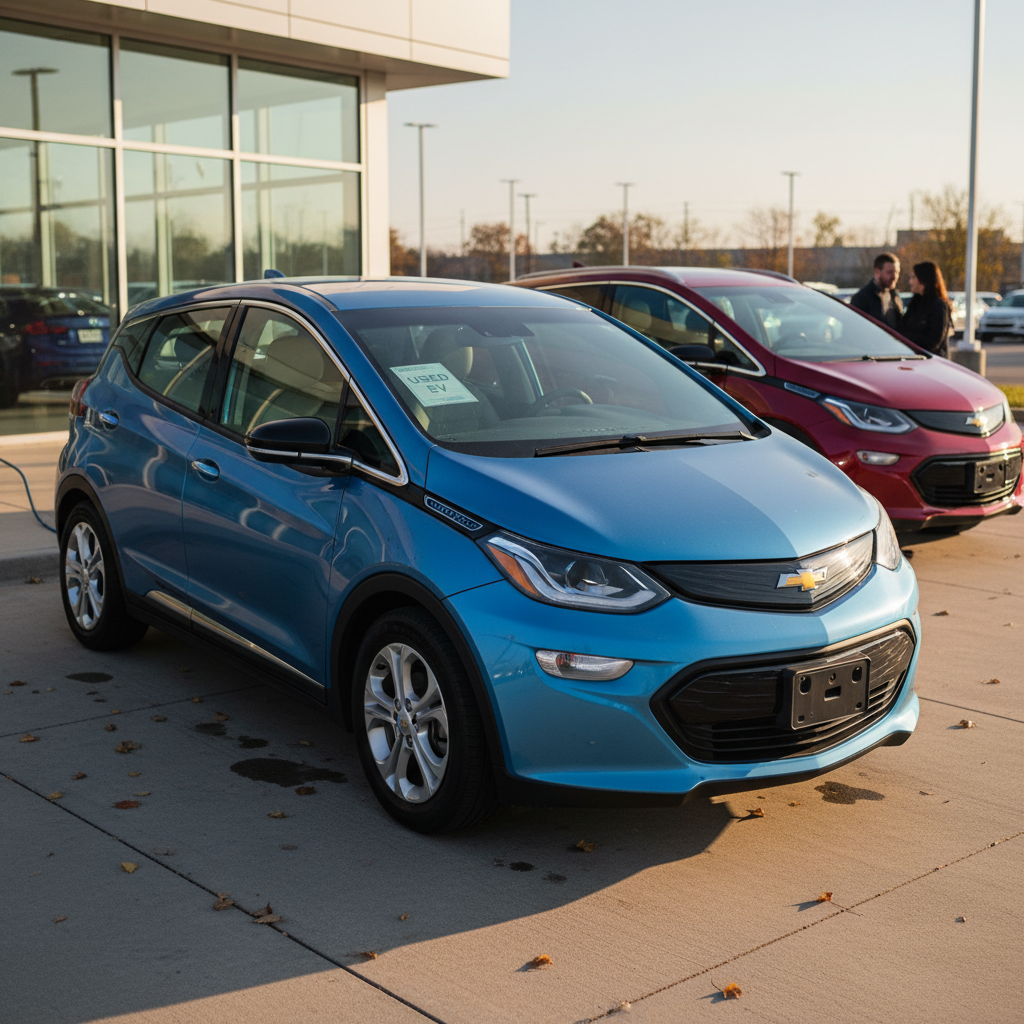
If you’re shopping for an affordable electric SUV, a certified pre-owned Chevrolet Bolt EUV is going to pop up in your search results again and again. The Bolt EUV is roomy, efficient, and one of the lowest-cost ways to get 200+ miles of range, so the real question isn’t “Is it a good EV?” It’s “Does paying extra for Chevy’s Certified Pre-Owned (CPO) badge actually make sense for you?”
Quick takeaway
Why the Chevrolet Bolt EUV Makes Sense Used
Chevrolet built the Bolt EUV specifically to answer the complaint, “The regular Bolt is great, but I wish it were a little bigger.” Compared with the Bolt EV hatchback, the Bolt EUV stretches the wheelbase, opens up rear legroom, and adds an available panoramic roof and advanced driver-assistance features like Super Cruise on properly equipped cars. Yet it still delivers EPA-rated range up to the high‑200‑mile neighborhood for 2022–2023 models and sips electricity in normal commuting.
Used Chevrolet Bolt EUV Snapshot (U.S. Market, Late 2025)
The result is a used EV that drives like a tidy compact crossover but runs on electrons, not gasoline. In late 2025, pricing has come down enough that a Bolt EUV can undercut many used gas SUVs while giving you modern tech and much lower fuel and maintenance costs.

What “Certified Pre-Owned” Means for a Bolt EUV
Let’s start by translating the label. A certified pre-owned Chevrolet Bolt EUV is a used Bolt EUV that meets Chevrolet’s age, mileage, and condition standards and has been inspected and sold by a participating Chevy dealer under the brand’s CPO program. It’s still a used car, but it comes with factory‑backed warranty coverage layered on top of whatever remains from the original new‑car warranties.
Typical Chevy CPO Coverage for a Bolt EUV
Exact terms may vary by dealer and state; always read the fine print before you sign.
Multi‑point inspection
Chevy’s CPO program requires a detailed inspection (often 100+ items) covering body, interior, electronics, and road test. Think of it as a structured, dealer-run checklist, though it may not go as deep on EV battery diagnostics as a third-party specialist.
Extended limited warranty
On qualifying vehicles, you’ll typically get a factory-backed limited warranty that extends some coverage beyond the original 3-year/36,000‑mile bumper-to-bumper warranty. EV components are treated differently from wear items, so read the exclusions closely.
Roadside & perks
Most Chevy CPO Bolt EUVs include some combination of roadside assistance, courtesy transportation, and trial subscriptions for connected services, nice‑to‑have benefits if you like a dealer safety net.
CPO ≠ brand-new EV warranty
CPO Bolt EUV vs. Regular Used Bolt EUV
So, should you hunt specifically for a certified pre-owned Chevrolet Bolt EUV, or is a well‑cared‑for, non‑CPO example every bit as good? The answer lives in three buckets: price, inspection quality, and who’s backing the promises.
CPO Bolt EUV: Pros & Cons
- Pros
- Structured manufacturer program and recognizable badge on the window.
- Factory‑backed limited warranty extensions for certain components.
- Typically sold by Chevy dealers who know the platform and recall history.
- Cons
- Higher upfront price versus similar non‑CPO cars.
- Inspection quality can still vary by dealership and technician.
- Battery health checks may be basic, capacity and fast‑charge history are rarely documented for you.
Regular Used Bolt EUV (Dealer or Marketplace)
- Pros
- Often several thousand dollars cheaper than CPO twins.
- More selection: ex‑rental, lease returns, and private‑party vehicles.
- Room for third‑party inspections and detailed battery diagnostics.
- Cons
- Warranty coverage may be limited to the original battery warranty and any paid service contracts.
- Inspection standards vary widely between sellers.
- You must do more homework on battery health, charging history, and recall work.
How Recharged fits in
Pricing: What a Certified Pre-Owned Bolt EUV Should Cost
Used EV prices move quickly, but by late 2025 the Chevrolet Bolt EUV has settled into a very approachable range. Typical dealer listings for 2022–2023 Bolt EUVs with average mileage tend to land around $20,000–$25,000, with particularly clean, low‑mile examples nudging a bit higher depending on trim and features.
Approximate Pricing for Used vs. Certified Pre-Owned Bolt EUV (Late 2025, U.S.)
Ballpark dealer asking prices assuming clean titles and average mileage. Local market and incentives can move these numbers up or down.
| Model year | Type | Typical mileage | Non‑CPO price band | Likely CPO price band |
|---|---|---|---|---|
| 2022 | Bolt EUV | 15k–40k mi | $20,000–$24,000 | $22,000–$26,000 |
| 2023 | Bolt EUV | 10k–35k mi | $21,000–$25,000 | $23,000–$27,000 |
| 2022–2023 | Bolt EUV Premier w/ options | 15k–40k mi | $23,000–$27,000 | $25,000–$30,000+ |
Use these ranges as a starting point, then layer in battery condition, options, and whether you’re paying a CPO premium.
Those are broad ranges, but they illustrate the pattern: a certified pre-owned Chevrolet Bolt EUV will usually carry a premium of roughly $1,500–$3,000 over a comparable non‑CPO car on the same lot. Whether that’s worth it comes down to how much you value the extra warranty perks versus investing that money in a pre‑purchase EV inspection and a stronger charging setup at home.
Price trends are your friend
Battery Warranty and Longevity on a CPO Bolt EUV
The battery is the heart of any used EV purchase, and the Bolt EUV is no exception. Fortunately, Chevrolet gave the Bolt EUV a generous 8‑year/100,000‑mile high‑voltage battery warranty from the original in‑service date. That coverage transfers to subsequent owners, whether the car is certified pre‑owned or not.
- The warranty covers defects and excessive capacity loss (Chevy defines a replacement threshold in the warranty booklet, typically when usable capacity falls below a set percentage of original).
- It does not cover normal, gradual degradation, or range loss from heavy fast‑charging or extreme temperature exposure.
- For earlier Bolt EVs there were widely publicized battery recalls and replacements; the 2022–2023 Bolt EUV shares updated battery tech and has, so far, a stronger reliability reputation.
When a new battery doesn’t mean a new warranty
The good news is that well‑cared‑for Bolt batteries have shown low degradation in real‑world use, especially when mostly AC‑charged and not parked at 100% for long stretches. Many owners report range that feels close to new even past 50,000 miles. Your mission as a used buyer is to verify that your specific car behaves that way, not just assume it because the CPO sticker is shiny.
Features and Trims to Target on a Used Bolt EUV
The Bolt EUV was sold mainly in LT and Premier trims, with option packages stacked on top. When you’re comparing a certified pre-owned Chevrolet Bolt EUV to other listings, trim and options matter almost as much as mileage.
Popular Bolt EUV Configurations Worth Seeking Out
If you’re paying CPO money, make sure you’re also getting the features you really want.
LT with Comfort & Convenience
- Heated front seats and steering wheel, great for preserving range by using seat heat instead of blasting cabin heat.
- Blind‑spot monitoring and rear cross‑traffic alert for easier commuting.
- Often the sweet spot of price vs. equipment on the used market.
Premier with Super Cruise
- Super Cruise hands‑free driving on compatible highways (on properly equipped cars) can be a game‑changer for long drives.
- Ventilated front seats, upgraded interior trim, and extra driver‑assistance features.
- Expect to pay more, especially for low‑mile, late‑build 2023 cars, but you’ll feel the difference every day.
Don’t overpay for paint
Inspection Checklist for Any Used or CPO Bolt EUV
Whether you’re standing in a Chevy showroom looking at a certified pre-owned Chevrolet Bolt EUV or scrolling through listings on your couch, the questions you should ask are the same. Here’s a practical checklist you can work through in 20–30 minutes.
Bolt EUV Pre‑Purchase Checklist
1. Confirm battery warranty dates
Ask for the <strong>original in‑service date</strong> and current mileage. That tells you how much of the 8‑year/100,000‑mile high‑voltage battery warranty is left. Get it in writing on the buyer’s order or a separate warranty summary sheet.
2. Request a battery health report
Look for documentation of <strong>state‑of‑health (SOH)</strong> or capacity testing, not just “no codes found.” On Recharged vehicles, this is summarized in the Recharged Score Report so you can see how your car compares to peers.
3. Check charging history
Ask how the car was usually charged: mostly Level 2 at home or workplace is ideal. A history of constant DC fast charging isn’t a deal‑breaker on a newer Bolt EUV, but it’s worth factoring into price and expectations.
4. Inspect tires and brakes
EVs are heavy and torque‑rich, so they can be harder on tires. Uneven tire wear can hint at alignment issues, while tired brakes suggest lots of stop‑and‑go use without much regenerative braking.
5. Verify recall and software updates
Have the seller show proof that all <strong>open recalls and service campaigns</strong> are complete. A Chevy dealer can pull this by VIN; Recharged vehicles have this checked as part of intake and scoring.
6. Test‑drive with an eye on range
Start with a known state of charge and note the predicted range. After your drive, check how many miles you actually drove vs. how many the estimate dropped. Big swings may indicate past abuse, or just a seller who last drove it hard on the highway.
Walk‑away signs
How Recharged Compares to Traditional CPO for Bolt EUVs
A Chevy CPO Bolt EUV puts the emphasis on brand‑backed warranties and dealer inspections. Recharged approaches the same problem from the EV‑specialist side: start with the battery, then put the rest of the car in context. If you’ve ever wished a CPO label came with real data, this is what that looks like.
Recharged vs. Traditional CPO: What You Actually Get
Both paths can work, the trick is choosing the one that fits how you like to shop and how much time you have for research.
Recharged Score battery insights
Every Recharged vehicle, including Bolt EUVs, gets a Recharged Score Report that measures battery health, charging behavior, and projected longevity, so you’re not guessing about the most expensive component.
Fair market pricing transparency
Instead of relying on a CPO badge to justify a premium, Recharged benchmarks each Bolt EUV against real‑time market data. You see how asking price compares to similar cars nationwide.
EV‑savvy support & delivery
Recharged pairs you with EV specialists who can walk you through home charging, range expectations, and financing. You can also handle everything online and have your Bolt EUV delivered nationwide, or visit the Richmond, VA Experience Center if you want to see cars in person.
You still get the factory battery warranty that makes the Bolt EUV such a smart used buy in the first place, just with more visibility into how that battery has actually lived. For many shoppers, that’s more useful than a generic CPO brochure.
Frequently Asked Questions About Certified Pre-Owned Bolt EUVs
Certified Pre-Owned Chevrolet Bolt EUV: FAQ
Is a Certified Pre-Owned Chevrolet Bolt EUV Right for You?
If you want a compact electric SUV that’s easy to park, inexpensive to run, and genuinely pleasant to drive, the Chevrolet Bolt EUV is one of the best values on the used market. A certified pre-owned Chevrolet Bolt EUV layers on brand‑backed warranty coverage and dealer perks, for a price. For some shoppers, that premium is worth the warm blanket of familiarity.
For others, especially those who care more about data than decals, a carefully vetted non‑CPO Bolt EUV can deliver the same peace of mind at a lower total cost. That’s where Recharged comes in: every Bolt EUV we list includes a Recharged Score Report with verified battery health, fair market pricing, and EV‑specialist guidance from first click to delivery or pickup at our Richmond, VA Experience Center. However you choose to shop, take your time, demand transparency, and let the numbers, not just the badges, make your decision.