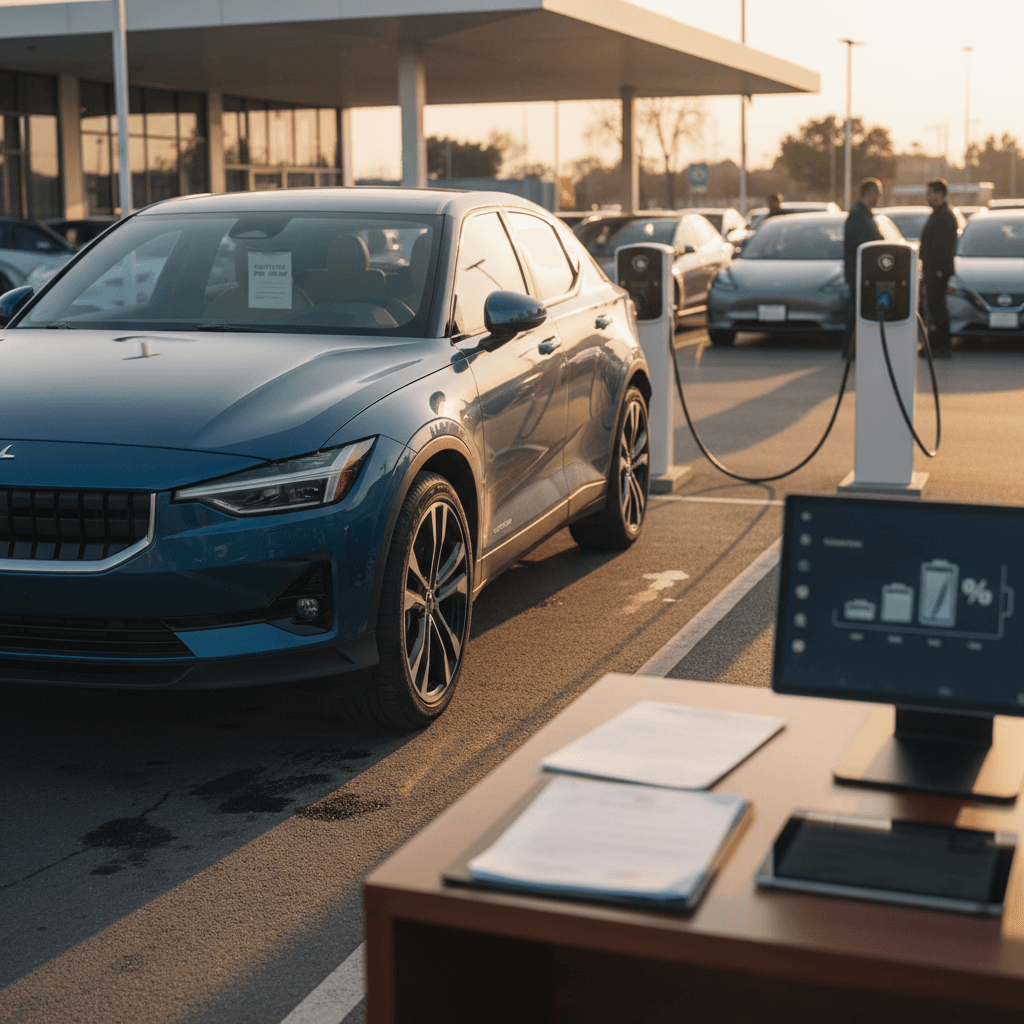
Shopping for a certified pre owned auto can feel like the safest way to buy used, factory inspection, extra warranty, nicer cars. But the details behind that “CPO” badge matter a lot, especially if you’re looking at an electric vehicle (EV) where battery health is everything. This guide breaks down how certified pre owned programs really work in 2025, what they’re worth, and how they compare to modern EV‑focused approaches like the Recharged Score.
Quick definition
What is a certified pre-owned auto?
At its core, a certified pre owned auto is just a used car that’s been pushed through a formal program instead of being sold as‑is. Automakers and dealerships pick newer, lower‑mileage vehicles, run them through a multi‑point inspection, complete any required reconditioning, and then sell them with a limited warranty and some perks like roadside assistance. You pay more than you would for a regular used car in exchange for lower perceived risk and a simpler buying experience.
- Typically 5–7 model years old or newer
- Mileage capped (often 60,000–80,000 miles, lower for luxury brands)
- Clean title and no major accident history
- Passed a structured inspection checklist (100–170+ items)
- Sold through franchised dealers or select independent programs
The key nuance: “certified” does not always mean the same thing. A factory CPO Honda or VW is very different from a house‑brand “certified” program at a random used‑car lot. You need to know who is certifying the vehicle and who’s actually standing behind the warranty.
Watch the label
How manufacturer CPO programs work
What most factory CPO programs require
While every brand has its own rulebook, the broad pattern for a manufacturer CPO program looks similar:
- The dealer screens trade‑ins and lease returns against the brand’s CPO age, mileage, and title standards.
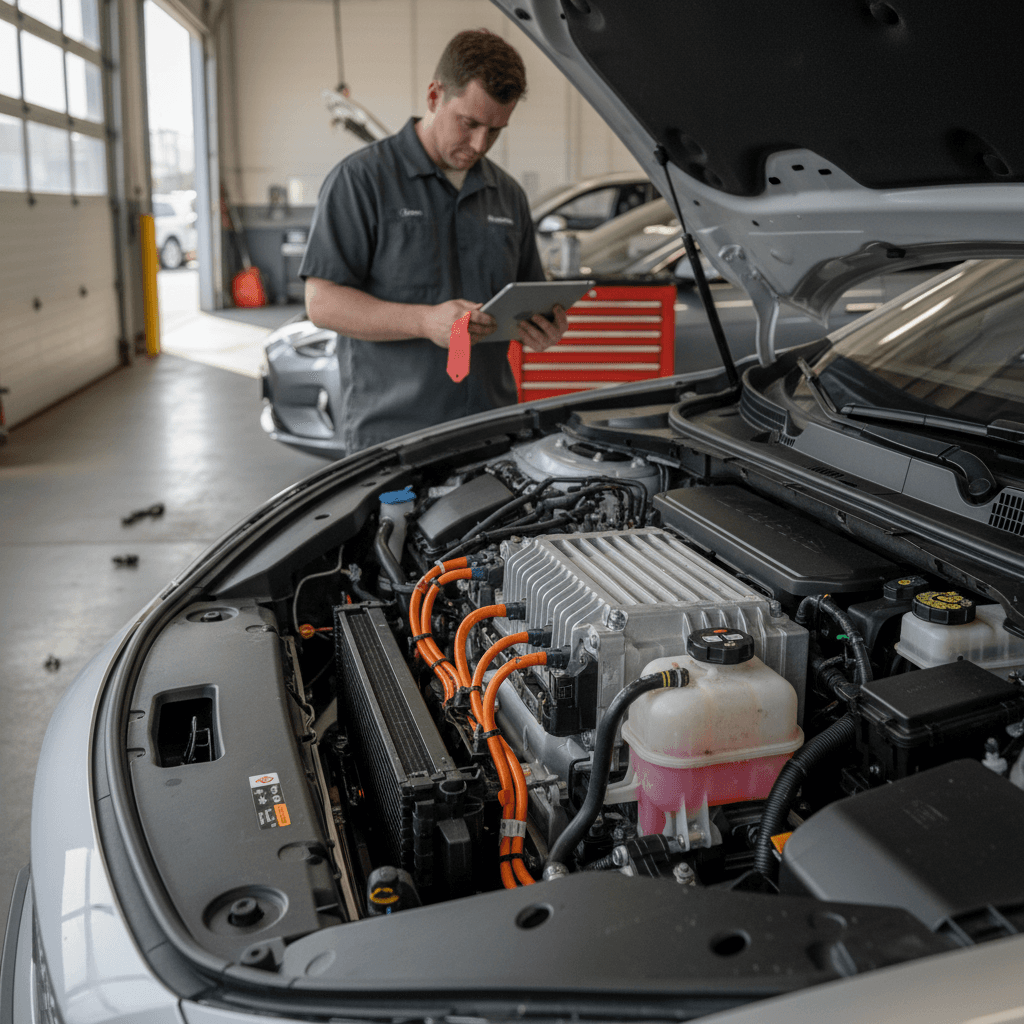
- Eligible vehicles get a multi‑point inspection, anywhere from ~100 checks at mainstream brands to 170+ at some luxury marques.
- Components that don’t meet spec are repaired or replaced; basic reconditioning (tires, brakes, fluids, cosmetic fixes) is completed.
- The manufacturer applies a CPO warranty, typically adding bumper‑to‑bumper coverage for 12–24 months and powertrain coverage to 6–7 years or around 100,000 miles from the original in‑service date.
- The car is marketed as “Certified Pre‑Owned” with a higher asking price than a non‑certified equivalent.
Check the actual checklist
Certified pre owned vs used vs new
When you’re staring at listings, you’re really choosing among three buckets: brand‑new, non‑certified used, and certified pre owned. Each has a different risk/reward profile.
How certified pre owned autos compare
High‑level comparison of new, used, and CPO vehicles from a buyer’s perspective.
| Type | Typical Price | Age & Miles | Warranty | Key Pros | Key Cons |
|---|---|---|---|---|---|
| New | Highest | 0 miles, current model year | Full factory bumper‑to‑bumper and powertrain | Latest tech & safety, full warranty, incentives | Fast depreciation, higher monthly payment |
| Non‑CPO Used | Lowest | Older, higher mileage, varies widely | Often as‑is or minimal short‑term coverage | Lowest purchase price, most selection | Higher risk, inspection quality depends on you |
| Certified Pre Owned | Middle | Newer, lower mileage subset of used market | Factory or dealer warranty beyond used | More protection, inspected, easier financing | Price premium, limited selection, can be oversold |
CPO sits between new and used on price, risk, and protection.
Where CPO makes the most sense
Typical CPO warranties and benefits
The warranty and extras are what you’re really buying with a certified pre owned auto, so it’s worth understanding how they usually work and where the fine print hides.
Common benefits of certified pre owned autos
Most factory programs offer some version of these perks.
Extended warranty
Multi‑point inspection
Roadside assistance
Vehicle history report
Financing incentives
Extras & loyalty perks
Don’t overestimate the warranty
Cost: how much more does CPO really cost?
You pay a premium for a certified pre owned auto. Industry pricing data in 2025 suggests that mainstream CPO cars often run a few percentage points higher than comparable non‑certified used cars of the same age and mileage, with luxury CPO premiums even higher. The logic is simple: the dealer bakes the cost of inspection, reconditioning, and warranty into the price.
When the CPO premium is worth it
- You plan to keep the vehicle through most or all of the CPO warranty term.
- You want nationwide support at franchised dealers, not just a local lot’s promise.
- The brand’s CPO coverage meaningfully extends bumper‑to‑bumper and powertrain protection.
- You’re financing and can leverage lower APRs to offset some of the price premium.
When you might skip CPO
- You’re paying cash and can comfortably budget for repairs.
- You’re buying something simple, inexpensive, and cheap to fix.
- The “certified” label is dealer‑only with a weak third‑party warranty.
- You have access to a trusted independent shop and can fund your own inspection.
How to sanity‑check pricing
Special considerations for certified pre owned EVs
Most certified pre owned auto content still assumes gas engines, but EVs change the stakes. The single most expensive component in an electric vehicle is the battery pack, and while many factory warranties already cover batteries for eight years or more, CPO labels don’t always tell you what you really need to know: how healthy that pack is today.
How CPO works differently for EVs
Why a traditional certified pre owned auto checklist isn’t enough for electric vehicles.
Battery health is central
Thermal history & fast charging
Charging hardware & software
EV‑specific warranties
The hidden risk in CPO EVs
This is exactly the gap Recharged is built to address. Instead of treating EVs as just another CPO checkbox exercise, every vehicle on the Recharged marketplace includes a Recharged Score Report with verified battery health, range projections, and fair‑market pricing. That way you’re not guessing whether a used EV’s battery is still road‑trip ready, you can see the data before you buy.
How to evaluate any certified pre owned auto
Whether you’re shopping gas, hybrid, or EV, the smartest way to shop certified pre owned autos is to treat the “CPO” badge as a starting point, not an answer. Here’s a practical framework you can reuse on any lot or site.
Certified pre owned auto buyer’s checklist
1. Confirm who’s backing the certification
Is this a factory CPO program or just a dealer’s in‑house label? Factory programs generally offer stronger, more portable coverage and clearer rules.
2. Read the warranty start and end dates
Does coverage start from your purchase date or the original in‑service date? For powertrain and battery, figure out how many years and miles are truly left.
3. Get the full inspection report
Ask for the completed inspection worksheet. Look for measurable items (brake rotor thickness, tire tread depth, battery test results) rather than vague notes like “OK.”
4. Pull and read the vehicle history report
Compare the history report to the seller’s story. Look for mileage inconsistencies, structural damage, airbag deployment, or repeated auction passes.
5. Test drive with a purpose
Drive on the highway and around town. For EVs, test regen behavior, charging screens, and any unusual noises from the drivetrain or battery cooling system.
6. Arrange an independent pre‑purchase inspection (PPI)
Even on a certified pre owned auto, a third‑party inspection is cheap insurance. For EVs, choose a shop familiar with high‑voltage systems, and ask specifically about battery health.
Leverage digital inspection reports
Ready to find your next EV?
Browse VehiclesWhere Recharged fits in for used EV buyers
Traditional certified pre owned auto programs were designed around combustion cars, then adapted, sometimes awkwardly, to EVs. Recharged flips that script by starting with electric and designing the entire experience around transparency, battery health, and a digital‑first buying process.
Traditional CPO (EVs as an afterthought)
- Generic inspection checklists that don’t quantify battery health.
- Paper‑heavy processes and in‑person negotiations.
- Limited visibility into fair‑market pricing for EVs, where depreciation curves look very different from gas cars.
- Financing and trade‑in handled separately, often with friction and uncertainty.
Recharged (EV‑first certification)
- Recharged Score Report on every vehicle, including verified battery health diagnostics and range projections.
- Fair‑market pricing analysis that reflects current EV incentives, tax credits, and real‑world demand.
- Digital‑first flow with EV‑specialist support, nationwide delivery, and an Experience Center in Richmond, VA if you want to see cars in person.
- Integrated financing, trade‑in or instant offer, and consignment options for your current vehicle.
Use pre‑qualification to set your real CPO budget
FAQ: certified pre owned autos
Frequently asked questions about certified pre owned autos
Bottom line: is a certified pre owned auto worth it?
A certified pre owned auto can be a smart middle ground between new‑car peace of mind and used‑car pricing, if the warranty is robust, the certification is factory‑backed, and the price premium is reasonable. For gas cars, that equation is mostly about inspection quality and coverage limits. For EVs, it’s increasingly about something more fundamental: real, verifiable insight into battery health and long‑term range.
If you’re shopping EVs in particular, don’t let a generic CPO sticker substitute for data. Look for battery diagnostics, transparent pricing, and a buying experience that respects your time. That’s where EV‑focused platforms like Recharged aim to do what traditional certified programs never quite managed, make used EV ownership simple, transparent, and genuinely confidence‑inspiring.