If you’re shopping for cars with electric power today, you’re not alone. Between traditional hybrids, plug‑in hybrids and fully electric vehicles, roughly one out of every five new vehicles sold in the U.S. now has some form of electric assistance. The challenge isn’t finding an option, it’s figuring out which type of electrified car actually fits your budget, commute and charging situation.
What “cars with electric” really means
Why Cars With Electric Power Are Everywhere Now
Electrified vehicles aren’t niche anymore. In 2024, electrified vehicles (hybrids, plug‑in hybrids and EVs) hit about 20% of U.S. new‑vehicle sales, with more than 3.2 million sold that year. Fully electric models alone accounted for roughly 7–10% of new sales, while hybrids and plug‑ins added another 10%+ on top. At the same time, used EV registrations have climbed past 1% of the used market and are growing year over year, which means shoppers now have real choice on the pre‑owned side too.
Electrified Cars in the U.S. Market
Why this matters if you’re buying used
The Four Main Types of Cars With Electric Powertrains
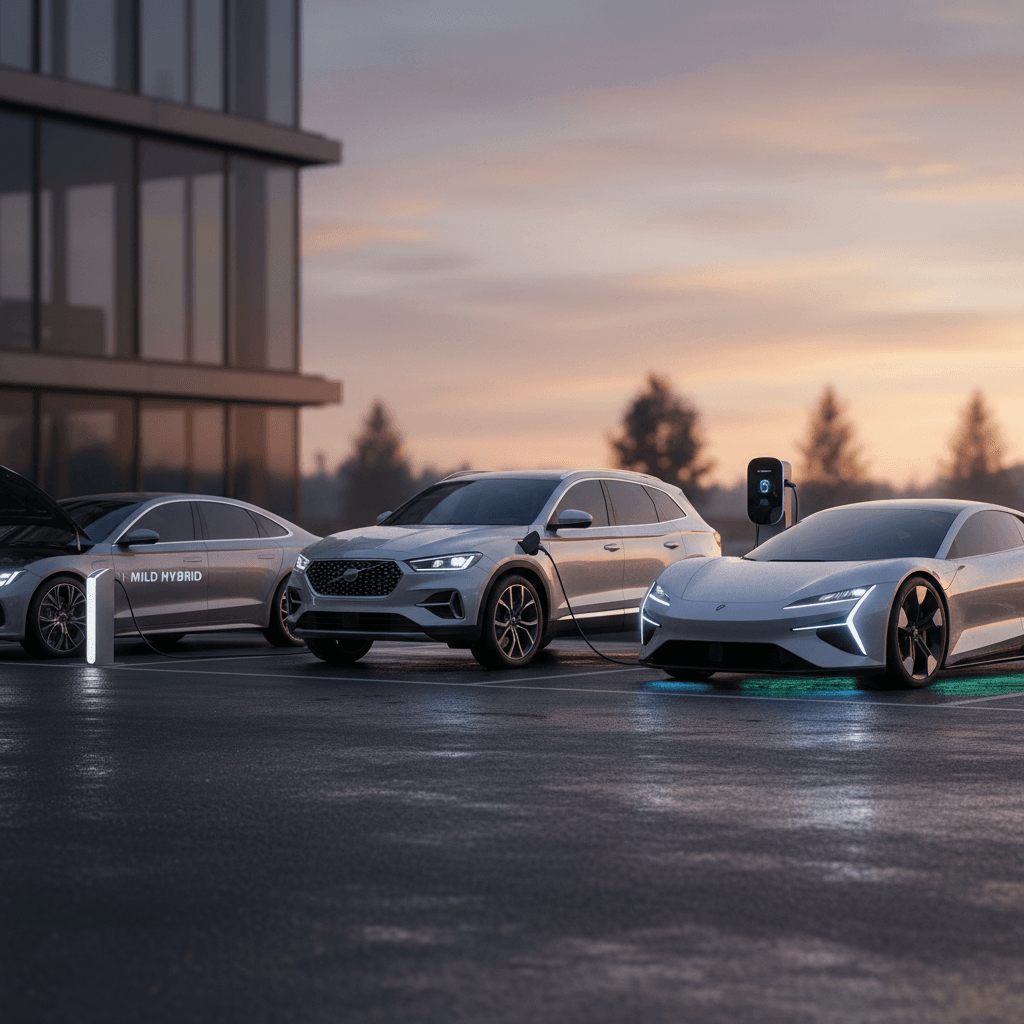
Not all electric assistance is created equal. When you browse cars with electric power, you’re really looking at four different technologies. Understanding the differences will keep you from overpaying for capability you’ll never use, or under‑buying and regretting it later.
The Spectrum of Cars With Electric Power
From gas‑first to electron‑only, where do you fit?
1. Mild Hybrid (MHEV)
Mild hybrids use a small electric motor to assist the gas engine but cannot drive on electricity alone.
- Best for: Drivers who want better MPG with zero lifestyle change.
- Examples: Some recent Ram, Ford and European models.
- Pros: Simple, no plug, modest price premium.
- Cons: Won’t feel like an EV; savings are incremental.
2. Full Hybrid (HEV)
Full hybrids like the Toyota Prius can drive short distances on electric power but you never plug them in.
- Best for: High‑mileage commuters, city drivers.
- Pros: Excellent MPG, proven tech, no charging required.
- Cons: Still burns gas, limited electric‑only driving.
3. Plug‑In Hybrid (PHEV)
Plug‑in hybrids have a larger battery and can go 20–50 miles on electricity before the gas engine joins in.
- Best for: Short daily commutes with occasional road trips.
- Pros: Real EV driving around town, no range anxiety.
- Cons: More complex, needs charging to unlock full benefit.
4. Battery‑Electric Vehicle (BEV)
BEVs are 100% electric. No gas tank, no tailpipe, just a battery and electric motors.
- Best for: Drivers with reliable charging access.
- Pros: Lowest running costs, smooth and quick, zero tailpipe emissions.
- Cons: Range and charging access matter, especially for road trips.
Don’t pay EV money for hybrid benefits
How Much Electric Do You Actually Need?
Your lifestyle, not the latest commercial, is what should drive your choice. A suburban family with two cars and a garage has very different needs from an apartment dweller in a dense city. Here’s a quick way to think about how much electric capability you really need.
Quick Self‑Assessment: Which Electrified Powertrain Fits?
1. Look at your true daily miles
Add up a normal weekday: commute, errands, school runs. If it’s under 30 miles most days, a plug‑in hybrid or modest‑range EV can cover almost everything on electricity.
2. Count your road trips
If you take multi‑state road trips monthly, charging speed and network coverage matter a lot. If you road‑trip once or twice a year, renting a gas car may be cheaper than buying extra EV range you rarely use.
3. Be honest about charging access
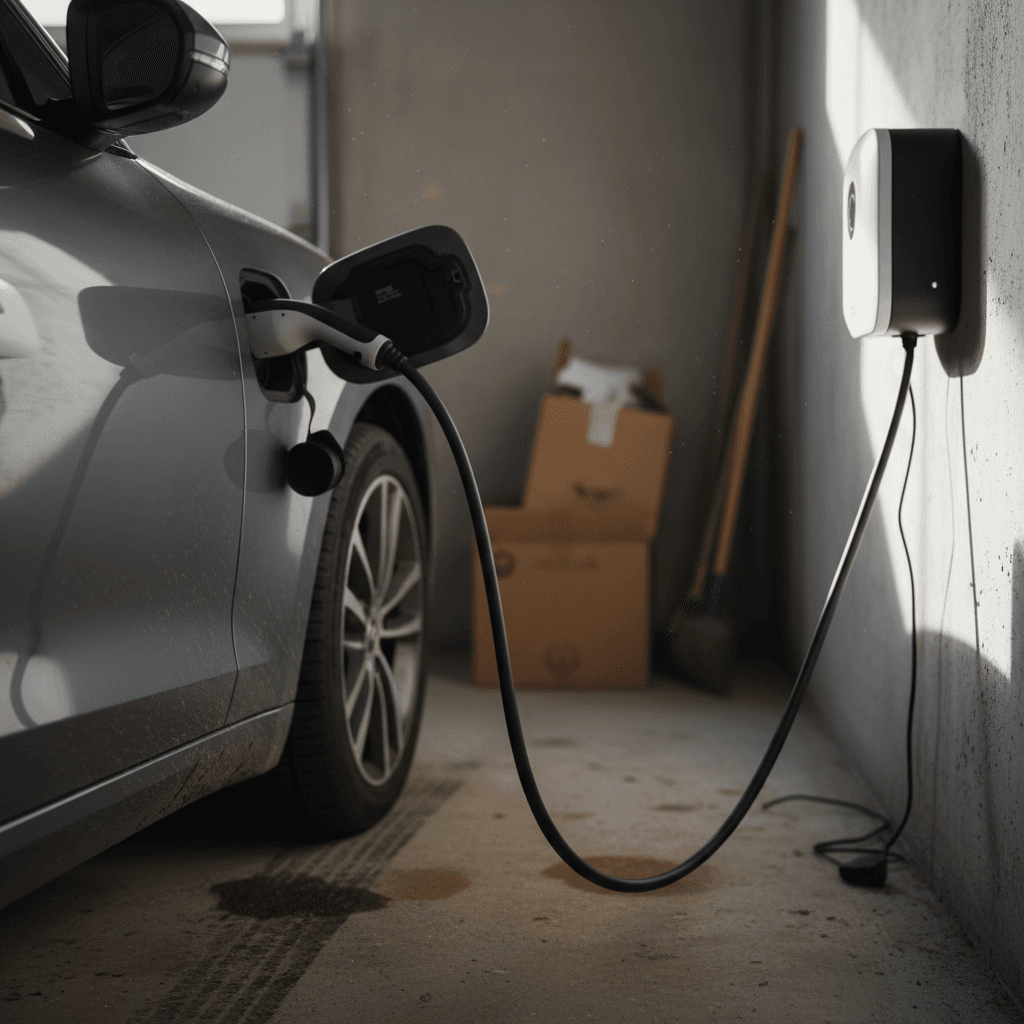
Garage or driveway with power? A Level 2 home charger makes full EV ownership easy. Street parking or older apartment? A hybrid or plug‑in hybrid might be less stressful unless you have reliable work or public charging.
4. Think about how long you keep cars
If you tend to keep vehicles 8–10 years, pay extra attention to battery health, warranties and upgrade paths. That’s where tools like the <strong>Recharged Score battery report</strong> help derisk a used EV purchase.
5. Consider your tolerance for change
Some drivers love new tech and smartphone‑like updates. Others want something that just works. Hybrids are closer to a traditional car experience; EVs feel more like rolling devices with software updates.
6. Map your budget, not just the payment
Look past the monthly payment. Total cost of ownership, fuel or electricity, maintenance, insurance and resale value, often favors EVs and hybrids over time, even if the sticker price is higher.
Cost of Ownership: Hybrids vs Plug‑Ins vs Full EVs
Sticker price is only part of the story with cars with electric power. Incentives, fuel savings and maintenance all tilt the math in favor of electrified options, but in different ways for hybrids, plug‑ins and full EVs.
Typical Ownership Experience by Powertrain Type
Broad patterns based on current U.S. market data, individual models will vary.
| Powertrain | Fuel/Energy Costs | Maintenance | Upfront Price | Best Use Case |
|---|---|---|---|---|
| Mild hybrid | Slightly lower than gas | Similar to gas | Slightly higher than gas | Highway drivers, light electrification |
| Full hybrid (HEV) | Much lower than gas | Slightly lower | Moderately higher | Heavy commuters, city driving |
| Plug‑in hybrid (PHEV) | Low if charged regularly | Hybrid‑like | Higher; more complex | Short commutes, occasional long trips |
| Battery‑electric (BEV) | Lowest cost per mile | Lowest (no oil, fewer parts) | Often highest | Daily driving with good charging access |
Use this as a directional guide, then dig into specific models you’re considering.
Where used EV prices are today
New electrified car
If you’re comparing new hybrids and EVs, look closely at lease incentives. Automakers have leaned on leasing to move EV inventory, and at times it’s actually cheaper to lease a new EV than to buy a comparable gas model, especially when factories and dealers stack cash, rate support and tax advantages into lease programs.
Used EV or plug‑in hybrid
On the used side, depreciation has already done some of the hard work for you. Models like the Chevrolet Bolt, older Hyundai Kona Electric and early Tesla Model 3s often sell for a fraction of their original MSRP. The key is verifying battery health, charging history and fair market pricing before you commit, areas where Recharged’s battery diagnostics and pricing tools are designed to help.
Charging and Living With a Fully Electric Car
If you’re leaning toward a fully electric car, daily living boils down to two questions: Where will you charge most of the time, and how fast do you need it to be? Get those right and EV ownership usually feels easier than gas. Get them wrong and the learning curve can feel steep.
- Level 1 (120V): Standard household outlet. Adds roughly 3–5 miles of range per hour, fine for very short commutes or as a backup.
- Level 2 (240V): Dedicated home charger or workplace/public station. Commonly adds 20–40 miles of range per hour and is the sweet spot for most owners.
- DC Fast Charging: Highway and corridor stations. Can add 150–200+ miles of range in 30–40 minutes on capable vehicles, but usage should be occasional to preserve battery health.
Home charging is the real game‑changer
Public charging is improving but remains uneven by region. Urban corridors and the coasts generally have dense DC fast‑charging coverage; rural areas and parts of the Midwest still require more route planning. If your daily routine keeps you within your EV’s rated range and you can charge at home, you’ll rely on public fast chargers mostly for road trips.
Watch your charging mix
Used Cars With Electric Power: Where the Deals Are
For many shoppers, the sweet spot in cars with electric power is now the used market. Early adoption, generous incentives and rapid product cycles created a wave of vehicles that lost value quickly, especially EVs. That’s painful for first owners but great news if you’re buying pre‑owned.
Popular Used Cars With Electric Power
Well‑known examples you’ll see often in listings
Tesla Model 3 & Model Y
Ubiquitous on the used market, with strong charging‑network access and frequent software updates. Prices have softened as more competition arrives and early owners trade out.
Chevrolet Bolt
Compact hatchback/crossover with solid range for the price. Earlier models had battery recalls addressed under warranty; upcoming new‑generation Bolts add faster charging and NACS ports.
Hyundai & Kia EVs
Models like the Hyundai Ioniq 5, Kona Electric and Kia EV6 offer quick charging, modern styling and strong warranties, making them attractive on the used market.
Nissan Leaf & successors
Affordable entry points into EV ownership. Earlier Leaf models use CHAdeMO fast charging and smaller batteries, so pay close attention to range and infrastructure in your area.
Plug‑In Hybrids (PHEVs)
Toyota RAV4 Prime, Chrysler Pacifica Hybrid and various European PHEVs let you sample EV life without giving up gasoline convenience, often at compelling used prices.
Hybrids from Toyota, Honda and others
Conventional hybrids remain some of the safest bets in the used market, thanks to long track records and robust reliability reputations.
How Recharged helps in the used EV maze
Ready to find your next EV?
Browse VehiclesBattery Health and Range on Used EVs
When you move from gas cars to cars with electric drive, the single most important component is the high‑voltage battery. Like your phone’s battery, it loses capacity over time, but there’s a big difference between normal, gradual degradation and a pack that’s been abused.
- Most modern EVs lose a bit of range in the first couple of years, then degrade more slowly, think in terms of a few percent over several years, not catastrophic drop‑offs.
- Heat, frequent DC fast charging and high sustained states of charge (parked at 100% for days) tend to stress batteries more.
- Many manufacturers warranty the battery for 8 years or around 100,000 miles against excessive capacity loss, which provides some backstop on newer used EVs.
Three battery checks before you buy used
City and suburban driving
If your daily driving is mostly around town, even an older EV rated around 150–200 miles when new may still cover your needs comfortably with some degradation. You’ll plug in more often, but you may not feel constrained.
Highway and cold‑weather use
High speeds and low temperatures trim range faster. If you regularly drive long highway stretches in winter, aim for a newer EV with stronger fast‑charging capability and more headroom between your typical trip length and the battery’s rated range.
"Used EV shoppers have far more choice today than even two or three years ago, but that choice only pays off if buyers understand battery health and charging performance."
The Future of Cars With Electric Powertrains
Looking ahead, almost every serious automaker has committed to expanding cars with electric powertrains, but the mix is shifting. Slower‑than‑expected EV adoption in some segments has pushed brands to lean harder into hybrids and plug‑in hybrids in the near term, even as they continue to develop dedicated EV platforms for the next decade.
What’s Coming Next for Electrified Cars
Short‑term reality, long‑term trajectory
More hybrids in showrooms
High consumer interest in better fuel economy without charging has automakers rolling out hybrid versions of mainstream models, from compact crossovers to full‑size trucks.
Mature EV lineups
We’re moving from early experiments to full EV families: small crossovers, three‑row SUVs, work trucks and luxury sedans built on shared electric platforms.
Charging standard convergence
North American Charging Standard (NACS) plugs are spreading beyond Tesla, making it easier for future EVs to use a wider mix of fast‑charging networks.
Used EV flood starting 2026
As a wave of leased EVs returns starting in 2026, expect a more complex but opportunity‑rich used market. Tools that surface true battery health and fair pricing will matter even more.
What this means for today’s shoppers
FAQ: Common Questions About Cars With Electric Power
Frequently Asked Questions About Cars With Electric Power
Bottom Line: Choosing the Right Electric Option For You
The phrase “cars with electric” covers everything from mild hybrids that quietly boost fuel economy to fully electric SUVs capable of crossing states on a single charge. The right choice comes down to how far you drive, where you can charge, how long you keep cars and how comfortable you are with new tech.
If you want better MPG with almost no lifestyle change, a conventional hybrid is hard to beat. If you crave EV smoothness but still want a safety net for road trips, the plug‑in hybrid camp is worth a look. And if you have solid home charging and are ready to leave the gas station behind, a full EV offers the lowest running costs and the most future‑proof ownership experience.
Wherever you land, the used market is quickly becoming the most interesting place to shop. Platforms like Recharged aim to make that journey simpler by pairing each vehicle with a transparent Recharged Score battery‑health report, fair‑market pricing and EV‑specialist support from first click to final delivery. That way, you can focus less on decoding acronyms and more on finding an electrified car that simply works for your life.