If you’ve typed “cars elec” into a search bar, you’re probably trying to make sense of today’s electric‑car landscape, maybe even wondering if your next vehicle should plug in instead of fill up. In 2025, electric cars aren’t just rare tech toys; they’re mainstream options with serious range, growing charging networks, and a rapidly maturing used market.
Quick definition
What does “cars elec” actually mean in 2025?
Searches for cars elec tend to fall into three buckets: people curious about how electric cars work, drivers comparing gas vs. electric costs, and shoppers looking at used electric cars as prices become more attractive. The good news is that today’s EV market has something for nearly every use case, from compact commuters like the Kia EV4 to luxury cruisers such as the Volvo ES90 and Escalade IQ, along with a healthy supply of late‑model used EVs at meaningful discounts.
Electric cars in 2025 at a glance
How to read the market quickly
How electric cars work: the core basics
Electric powertrain, simplified
Every modern EV is built around three main components:
- Battery pack – Stores energy in kWh, just like the size of your fuel tank.
- Electric motor(s) – Convert that stored energy into motion; torque is instant, which is why EVs feel so quick.
- Inverter & electronics – Manage power delivery and efficiency.
Press the accelerator and power flows from the battery to the motor. Lift off, and many EVs use regenerative braking to put energy back into the battery as you slow down.
Key specs you should care about
- Battery size (kWh) – Bigger number usually means more range.
- Range (miles) – EPA or WLTP rating; real‑world range depends on speed, weather, and driving style.
- Charging speed (kW) – How fast the car can take power at DC fast chargers. 150 kW is common; some go higher.
- Onboard charger (kW) – Limits how quickly you can charge at home Level 2; 7–11 kW is typical.
When you’re shopping used, these numbers tell you how the EV will feel to live with every day.
Don’t mix up kW and kWh
EV batteries in 2025: what’s new and why it matters
For anyone searching “cars elec,” the battery is the make‑or‑break component, especially when you’re buying used. The industry has moved fast: lithium‑ion packs are now safer, more durable, and available in different chemistries aimed at either cost or maximum range.
Major EV battery types you’ll hear about
Understanding chemistry helps you understand value and longevity
Nickel-based lithium-ion (NMC/NCA)
Where you see it: Many long‑range and performance EVs.
Why it matters: Higher energy density means more range and stronger performance, but packs can be costlier and more sensitive to fast charging and heat.
LFP (Lithium‑iron‑phosphate)
Where you see it: Value‑oriented EVs and newer affordable models like the next‑gen Chevrolet Bolt.
Why it matters: Lower cost, excellent cycle life, and good safety. Slightly less range per kWh, but often a smart choice in used EVs if your daily mileage is modest.
Solid & semi‑solid state (emerging)
Where you see it: Early‑run vehicles from innovators and upcoming Toyota models.
Why it matters: Promise of faster charging, higher energy density, and improved safety. For most buyers in 2025, these are worth watching rather than waiting for.
What about sodium‑ion?
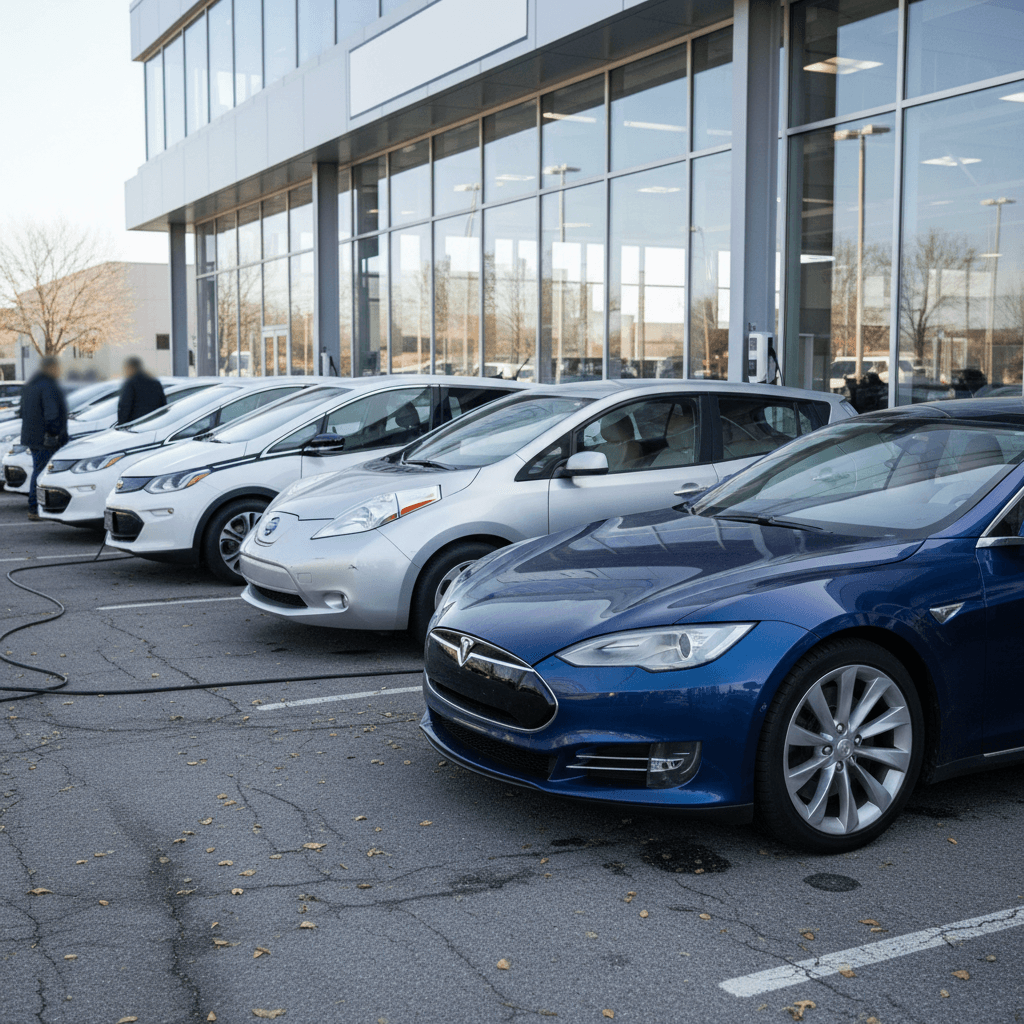
Charging your “cars elec”: daily use and road trips
Charging is where a lot of shoppers get nervous, but once you understand the basic levels, it’s straightforward. For most owners, home Level 2 charging does nearly all the heavy lifting, with public DC fast charging handling road trips and occasional top‑ups.
EV charging options compared
How the main charging levels differ in speed and use case.
| Level | Power source | Approx. speed | Best for |
|---|---|---|---|
| Level 1 | 120V household outlet | 2–4 miles of range per hour | Overnight trickle charging, plug‑in hybrids |
| Level 2 | 240V home or public charger | 20–40 miles of range per hour | Daily charging at home or work |
| DC Fast | 400–800V public fast charger | 150–250+ miles in ~30 minutes | Road trips, quick top‑ups on the go |
Actual charging times vary by vehicle and conditions, but this table gives you ballpark expectations.
Think in miles per hour
Simple road‑trip checklist for electric cars
1. Map your fast chargers
Use apps from major charging networks or your car’s built‑in planner to locate DC fast chargers along your route, ideally every 100–150 miles.
2. Plan for 10–80% charging
Most EVs charge fastest between about 10% and 80% state of charge. Two short stops can be quicker than one long stop to “fill to the brim.”
3. Check connector type (NACS vs CCS)
By 2025, many new EVs are adopting Tesla’s NACS connector, while older models still use CCS. Make sure the charger supports your car, or that you have the correct adapter.
4. Watch weather and speed
Cold temperatures and high speeds both chew through range. Build in a buffer and don’t plan to arrive at the next charger with 0% remaining.
5. Verify station status
Before you bank on a charger, confirm it’s online and available in your charging app. A quick check can save a big headache.
Pros and cons of going electric today
Advantages of “cars elec” in 2025
- Lower running costs: Electricity typically costs less per mile than gasoline, especially if you charge off‑peak.
- Less maintenance: No oil changes, spark plugs, or exhaust system. Brakes last longer thanks to regenerative braking.
- Quiet, quick performance: Instant torque and low cabin noise make even mainstream EVs feel upscale.
- Home refueling: Waking up to a “full tank” every morning is a genuine quality‑of‑life upgrade.
Trade‑offs to consider
- Charging access: Apartment dwellers and street parkers need a plan, whether that’s workplace charging or nearby public stations.
- Road‑trip planning: Long drives are absolutely possible but require more forethought than a gas car.
- Resale and technology shift: Rapid tech improvements can affect depreciation, especially on early EVs with shorter range.
- Cold‑weather range loss: Expect reduced range in winter, particularly on highway trips.
Who’s a great fit for an EV?
Why used electric cars are so attractive right now
Early adopters have already eaten the steepest part of EV depreciation. That creates a window where used electric cars can offer a lot of value, modern safety tech, strong performance, and plenty of range, for the price of an ordinary used crossover.
Why the used EV market is heating up
For many shoppers, pre‑owned is the smartest way into cars elec
Heavy upfront depreciation
Long battery warranties
Plenty of performance
Where Recharged fits in
How to evaluate battery health on a used EV
In a gas car, you might worry about head gaskets or transmission wear. With “cars elec,” the big question is how much battery capacity is left and how it was used. The good news: modern EV packs generally age more slowly than many people feared, but you still want objective data.
Battery‑health checklist for used electric cars
1. Look for a battery health report
Ask for a recent diagnostic that shows the pack’s remaining capacity or State of Health (SOH). Platforms like Recharged build this into the listing, so you don’t have to chase paperwork.
2. Compare estimated vs. original range
Charge the EV to 100% and note the estimated range on the display. Compare it to the original EPA rating. A modest drop is normal; a huge drop may justify a lower price, or walking away.
3. Ask about charging habits
Cars that mostly used home Level 2 and stayed between about 20–80% charge tend to age better than those fast‑charged to 100% constantly or parked in extreme heat.
4. Review battery warranty status
Most manufacturers warranty the pack for 8–10 years. Confirm the in‑service date and whether coverage transfers in full to you as the next owner.
5. Scan for software and recall history
Make sure the car has current software and that any battery‑related recalls or service campaigns have been completed. This is especially important on early EVs.
6. Take a real‑world range test
If possible, drive a familiar loop and note energy use in miles per kWh. This gives you a sense of what daily driving will look like in your climate and terrain.
Don’t panic at every bit of degradation
Pricing, depreciation, and financing for used EVs
EV pricing has been volatile, but a few fundamentals hold true: range, battery reputation, and charging speed all influence resale value. Well‑regarded models with solid battery records, like Tesla Model 3, Hyundai Ioniq 5, or Chevrolet Bolt, tend to hold value better than early short‑range experiments.
What tends to drive used EV pricing
Signals that push a used electric car’s price up or down.
| Factor | Effect on price | What to look for |
|---|---|---|
| Long real‑world range | Supports higher pricing | 200+ usable miles still commands a premium vs. sub‑150‑mile early EVs |
| Fast‑charging capability | Boosts desirability | Cars that can absorb 150 kW or more are better long‑term bets for road‑trippers |
| Strong battery reputation | Supports value | Models with low failure rates and stable chemistry age more gracefully |
| Outdated infotainment or ADAS | Pulls price down | Older screens and driver‑assist tech can date a car even if the range is fine |
| Upcoming redesign or new tech | Creates bargains | A new generation can push prior models’ prices down, even if they still work well for daily use |
These aren’t hard rules, but they’re consistent patterns we’ve seen across the market.
Use total cost, not just sticker price
Matching the right electric car to your life
Not every “cars elec” shopper needs a 350‑mile luxury SUV. The right choice depends on where you live, how you drive, and what you haul. Start with your lifestyle and work backward toward the specs.
Different EV paths for different drivers
Urban & suburban commuters
Daily round‑trip under 60 miles with occasional weekend errands.
Prioritize used EVs with 150–220 miles of real‑world range and good battery health.
Home or workplace Level 2 charging is more important than ultra‑fast DC capability.
Compact hatchbacks and crossovers often give the best value.
Family haulers & road‑trippers
Frequent highway trips, kids, and cargo require more range and space.
Look for 250+ miles real‑world range, roomy back seats, and strong safety scores.
Fast‑charging capability and NACS/CCS connector support are critical.
Consider three‑row EV SUVs or crossovers with robust charging networks.
Budget‑first buyers
Total cost is the main concern; you’re willing to trade some range for savings.
Early‑generation EVs with shorter range can be excellent city cars if priced appropriately.
Focus on models with remaining battery warranty and transparent health reports.
Shop broadly and be flexible on brand to find the strongest value.
Tech enthusiasts & early adopters
You care about the latest software, driver assistance, and battery tech.
Newer EVs with advanced infotainment and over‑the‑air updates will appeal most.
Be mindful of how quickly cutting‑edge tech can depreciate.
A nearly new used EV with low miles may hit the sweet spot between “new tech” and “used price.”
How Recharged can help you narrow the field
Ready to find your next EV?
Browse VehiclesFAQ: “Cars elec” and used EVs
Frequently asked questions about cars elec
Key takeaways for EV shoppers in 2025
If you started your search with a vague “cars elec” query, you now know a lot more about what that world looks like in 2025. Electric cars have matured from niche experiments into a broad, practical category, with battery tech improving, charging networks growing, and a used market that finally gives budget‑minded shoppers real choice.
Your next step is simple: clarify your daily range needs, your charging situation, and your budget. From there, look for used EVs with transparent battery health data, solid remaining warranty, and specs that match your life rather than the brochure headline. Platforms like Recharged can streamline that process with verified diagnostics, fair‑market pricing, EV‑savvy financing, and even nationwide delivery.
Do that, and “cars elec” stops being an abstract search term and becomes a concrete, confident decision, whether that’s a compact commuter, a family SUV, or a well‑priced used Tesla sitting in your driveway, fully charged and ready to go.