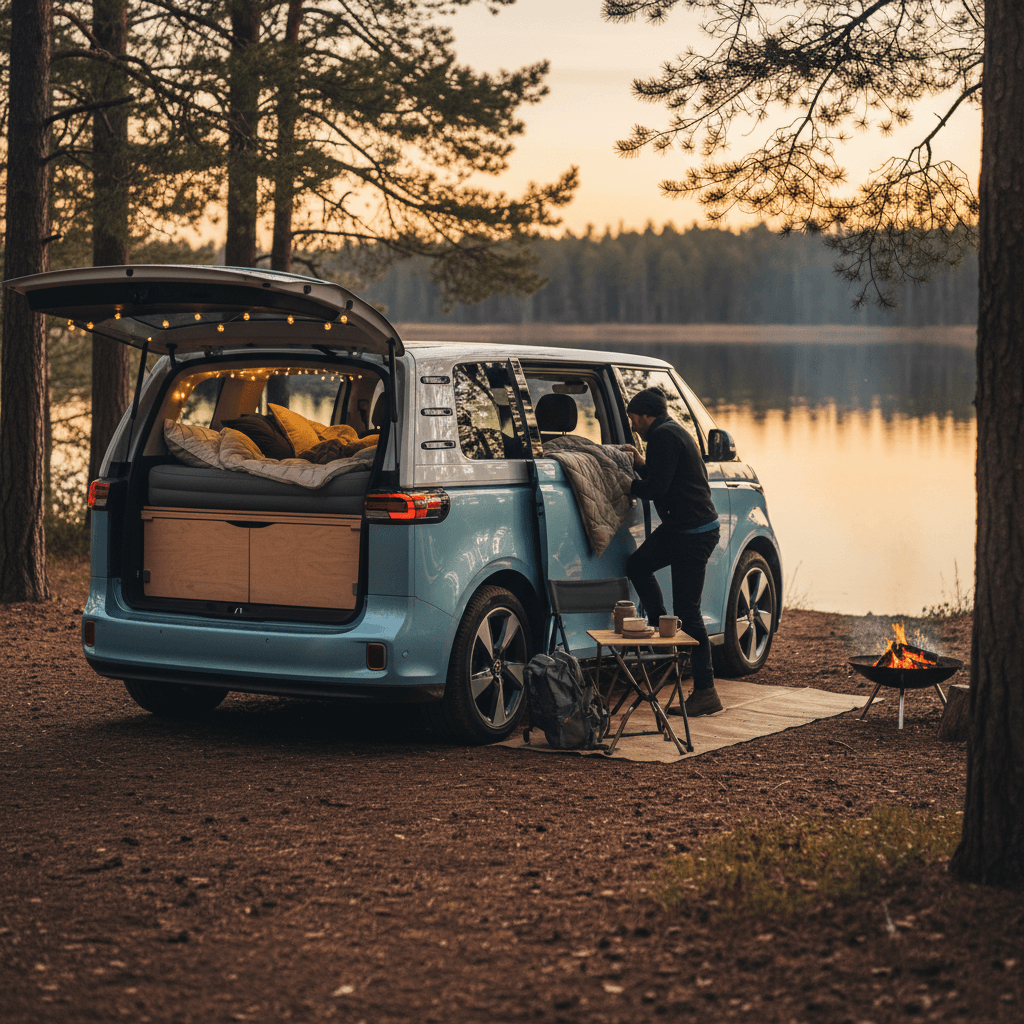
Yes, you can sleep in a Volkswagen ID. Buzz, and many owners already are. The electric microbus was clearly designed with road trips and camping in mind, but its seats, dimensions and EV quirks mean you’ll want to know what you’re getting into before treating it like a full camper van.
Short answer
Can you actually sleep in a Volkswagen ID. Buzz?
If your main question is simply **“Can you sleep in a Volkswagen ID. Buzz?”**, the honest answer is: yes, but how well depends on which version you have and how much effort you put into the setup.
- The short‑wheelbase (SWB) ID. Buzz can fit a sleeping surface roughly the size of a double mattress when the second row is folded and you use the cargo area efficiently.
- The long‑wheelbase (LWB) passenger model offers more length and a higher total cargo volume with the rear rows folded, making it the better choice if sleeping in the van is a priority.
- The ID. Buzz Cargo (where available) has the longest, flattest load area, but most U.S. shoppers will be looking at the passenger version.
What really matters is flat usable length behind the front seats once you’ve folded or removed the rear rows and how you cushion that space. The ID. Buzz doesn’t ship with a built‑in bed like a factory camper, but its boxy shape and electric packaging make it easier to sleep in than many traditional minivans.
ID. Buzz interior space and dimensions for sleeping
Key ID. Buzz space numbers for sleepers
For camping, you care less about headline cargo volume and more about **“Can I actually lie down flat without my knees hitting the seat?”** In that respect, the ID. Buzz does surprisingly well:
- The rear load area in European short‑wheelbase models is quoted at around 2,200–2,230 mm (about 87–88 inches) with the rear bench folded and load area extended, which is enough for most people to lie straight with some headroom for pillows or gear.
- U.S. long‑wheelbase models quote up to 145.5 cubic feet of cargo with both rear rows folded; real‑world measurements and owner reports suggest you can build a platform that spans roughly 6.5–7+ feet in length.
- Interior width between the wheel arches is roughly 1,200 mm (about 47 inches) in SWB models, which is narrower than a queen bed but close to a full‑size mattress width. That’s important when choosing or cutting a mattress.
Practical rule of thumb
Sleeping setups: SWB vs LWB ID. Buzz
Short‑wheelbase (SWB) ID. Buzz
- Seats: Typically 5 seats with a second‑row bench.
- Best for: Couples or solo travelers who don’t need three rows.
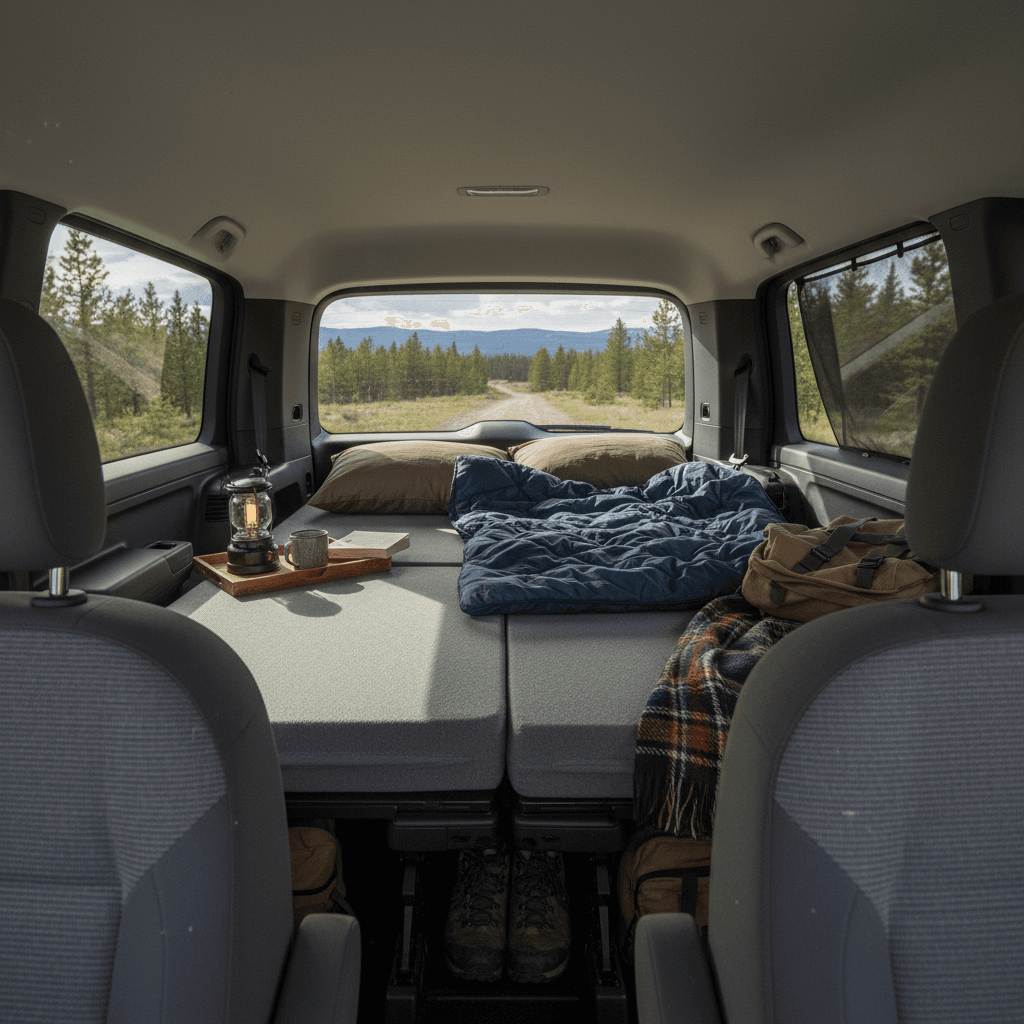
- Sleeping layout: Fold the second row, add an adjustable load floor or low platform to even out the step, and lay down a camping mattress or foam.
- Pros: Shorter overall length, easier to park and maneuver; still enough space for a two‑person bed.
- Trade‑offs: Less total storage when you’re in "bed mode"; you’ll need to be clever about where your gear goes at night (under the platform, front seats, or roof box).
Long‑wheelbase (LWB) ID. Buzz (including US model)
- Seats: Up to 7 seats in 3 rows, with sliding second row and foldable third row.
- Best for: Families who want a people carrier during the day that can convert to a sleeper at night.
- Sleeping layout: Fold or remove the third row where allowed, slide and fold the second row, then use a multi‑piece platform or modular camping kit to create a flat, extended sleeping surface.
- Pros: More flexibility, kids can use the third row while luggage goes behind the second, or you can prioritize a longer bed and still have some interior storage.
- Trade‑offs: Slightly heavier and longer, and three‑row seat hardware can mean more ridges and gaps to bridge if you want a perfectly flat surface.
What about the ID. Buzz Cargo?
Comfort: How flat is the floor and is it comfortable?
Volkswagen designed the ID. Buzz as an MPV first, not a camper, so **the rear seats don’t disappear into the floor** the way they do in some minivans. When you fold them, you get a mostly flat surface but with a noticeable step or ridge in many trims.
Making the ID. Buzz comfortable to sleep in
Three main issues to solve: flatness, cushioning and headroom
1. Level the floor
The folded seats can leave a ridge or gap that’s annoying under a mattress. Common fixes include:
- An adjustable load floor option from VW where available.
- A simple plywood platform cut to size, sitting on low legs or storage boxes.
- An aftermarket "multi‑deck" system built for the ID. Buzz.
2. Add real cushioning
A basic air mattress will work, but many owners prefer:
- Self‑inflating camping mats that better match the interior width.
- Foldable foam "tri‑fold" mattresses tailored to van width.
- A custom foam topper cut to the interior outline.
Thicker foam also smooths over small ridges or seat contours.
3. Mind headroom and access
The ID. Buzz has a tall roof, so headroom isn’t usually the problem. Access is:
- Use sliding doors for entry/exit when the tailgate is blocked by bikes or a kitchen box.
- Leave a small aisle to reach the front seats and center console.
- Plan where shoes, bags and pets stay while you’re in bed.
Don’t skip the test fit
Ventilation, climate control and EV‑specific camping tips
Sleeping in an **electric** van has real advantages, quiet operation and efficient climate control, but it also comes with some quirks. You’ll want to think about airflow, condensation and battery state of charge before your first night in the ID. Buzz.
EV‑specific camping tips for the ID. Buzz
1. Plan your state of charge before bed
Aim to arrive at camp with enough battery to run climate control for the night and still have a safe buffer to reach the next fast charger. For many ID. Buzz owners, that means stopping at a DC fast charger late in the day so you park with 60–80% state of charge rather than 20–30%.
2. Use climate control, not idling
Unlike a gas vehicle, the ID. Buzz can keep the cabin warm or cool with far less energy and no tailpipe emissions. Just be careful with overnight usage, temperatures, fan speed and recirculation settings will all affect how many percent of battery you burn while you sleep.
3. Pay attention to ventilation
Crack windows slightly or use rain guards if you’re in a safe area; pair that with the ID. Buzz’s fan system to keep fresh air moving. Some campers use magnetic bug screens on the sliding doors or hatch to increase airflow without letting insects in.
4. Manage condensation
Any enclosed vehicle with sleepers inside will build up moisture. A small 12V fan plus cracked windows and a moisture‑absorbing pack can make a big difference. In cold weather, expect the inside of the glass to fog heavily without airflow.
5. Check local rules at chargers and rest areas
If you’re sleeping while plugged in at a public charger, verify the site’s rules. Some parking areas and rest stops limit overnight stays even if you’re charging, and private lots may have posted time limits.
6. Keep keys and electronics in easy reach
Store the key fob, phone and any remote controls where you can grab them from your sleeping position. That makes it easy to adjust climate, open doors or disable alarms in the middle of the night without climbing over everything.
Safety note
Privacy, storage and everyday usability
Comfortable sleep is about more than just dimensions. The ID. Buzz has several design touches that help it pull double duty as a family hauler during the week and a micro‑camper on weekends, if you think ahead about privacy and storage.
Turning the ID. Buzz into an overnight space
What you’ll want beyond a mattress
Privacy and darkness
- Window shades or magnetic blackout curtains are almost mandatory if you’re sleeping in lit areas or campgrounds.
- Look for vehicle‑specific shade kits sized for the ID. Buzz’s large glass area.
- As a quick, low‑budget option, cut reflectix panels to fit the windows and tape fabric to the cabin side.
Storage and organization
- Use stackable boxes or drawers under a platform bed for clothes, kitchen gear and tools.
- The removable "Buzz Box" console and fold‑out seatback tables in some trims make it easier to eat or work inside.
- Soft duffel bags compress better than hard suitcases when you need to clear floor space for sleep.
Quick change between modes
- Design your setup so you can switch from "people carrier" to "bed" in under 10–15 minutes.
- Modular platforms or tri‑fold mattresses help, fold them upright behind the second row when you need all the seats.
- Practice the changeover at home so bedtime at the campsite doesn’t turn into a 45‑minute puzzle.
Aftermarket camping kits and DIY ideas
Because the ID. Buzz is already attracting van‑life fans, the aftermarket has started responding with bolt‑in camping modules and simpler interior solutions. If you don’t want to design everything from scratch, you’ll have options.
- Modular drawer and platform systems that drop into the cargo area and unfold into a flat bed with storage underneath.
- Simple bed frames built around standardized Euro box sizes, making it easy to slide storage totes in and out.
- Inflatable or self‑inflating mattresses sized specifically for the ID. Buzz’s rear width (many owners report using high‑quality camping mats side by side).
- Full camper conversions in some European markets that add pop‑top roofs, swivel front seats, kitchen modules and auxiliary electrical systems.
DIY on a budget
Pros and cons of sleeping in a Volkswagen ID. Buzz
Sleeping in an ID. Buzz: pros and cons
How the Volkswagen ID. Buzz stacks up as a sleeper compared with traditional vans and SUVs.
| Aspect | Pros | Cons |
|---|---|---|
| Interior space | Very tall cabin and long load area allow adults to stretch out; sliding doors improve access. | Width is closer to a full mattress than a queen; three‑row hardware can create ridges to bridge. |
| Comfort | Quiet electric drivetrain, smooth ride, plenty of headroom, available armrests and fold‑out tables. | Requires added mattress/platform for serious comfort; no built‑in camper bed in standard models. |
| Climate & noise | Efficient electric climate control and near‑silent operation compared with idling a gas van. | Running HVAC all night will eat into your state of charge, needs planning on long trips. |
| Usability | Transforms from family hauler to micro‑camper, with removable or foldable seats and smart interior storage. | Switching modes daily takes time, especially if you carry lots of gear or pets. |
| Cost vs. full camper | Cheaper and more flexible than a dedicated camper van; doubles as a daily driver. | More expensive than a basic SUV or wagon; full camper conversions add significant cost. |
The ID. Buzz isn’t a built‑in camper, but it’s a strong base for light camping and road trips.
Buying a used ID. Buzz for camping: how Recharged helps
If sleeping in a Volkswagen ID. Buzz is high on your wish list, you’ll want to be selective when you shop, especially on the used market. Range, charging speed and interior condition matter even more when the vehicle is also your bedroom.
- Battery health and range: Camping often means driving long distances between fast chargers and running climate control while parked. A used ID. Buzz with a tired battery could limit how far you can roam.
- Interior wear and flexibility: Check seat mechanisms, sliding doors and any adjustable load‑floor options. A sticky latch or broken seatback can turn bed setup into a nightly frustration.
- Charging hardware: Make sure you understand what home and public charging options the specific trim supports, and what cables or adapters are included.
At Recharged, every used EV comes with a Recharged Score Report that includes verified battery health and fair‑market pricing, plus guidance from EV specialists who actually understand how things like usable range and interior layout affect real‑world camping. If you’re comparing an ID. Buzz to other electric vans or crossovers, that data can help you avoid buying a road‑trip vehicle that only looks good on paper.
Make your camper purchase less stressful
Ready to find your next EV?
Browse VehiclesVolkswagen ID. Buzz sleeping FAQ
Common questions about sleeping in the ID. Buzz
Bottom line: can you sleep in a Volkswagen ID. Buzz?
If you’re wondering whether you can sleep in a Volkswagen ID. Buzz, the answer is a confident yes. You’ll need a mattress or platform, some basic privacy shades and a bit of planning around battery charge and gear storage, but the ID. Buzz’s tall roof, long load area and sliding doors make it far more sleep‑friendly than the average EV or crossover.
For drivers who want a single vehicle that can handle school runs on Monday and a quiet campsite on Friday night, the ID. Buzz is one of the most flexible electric options on the market right now. And if you’re eyeing a used one, working with a service like Recharged, with verified battery health, fair pricing, financing and nationwide delivery, can make the jump into electric van‑life a lot less stressful.