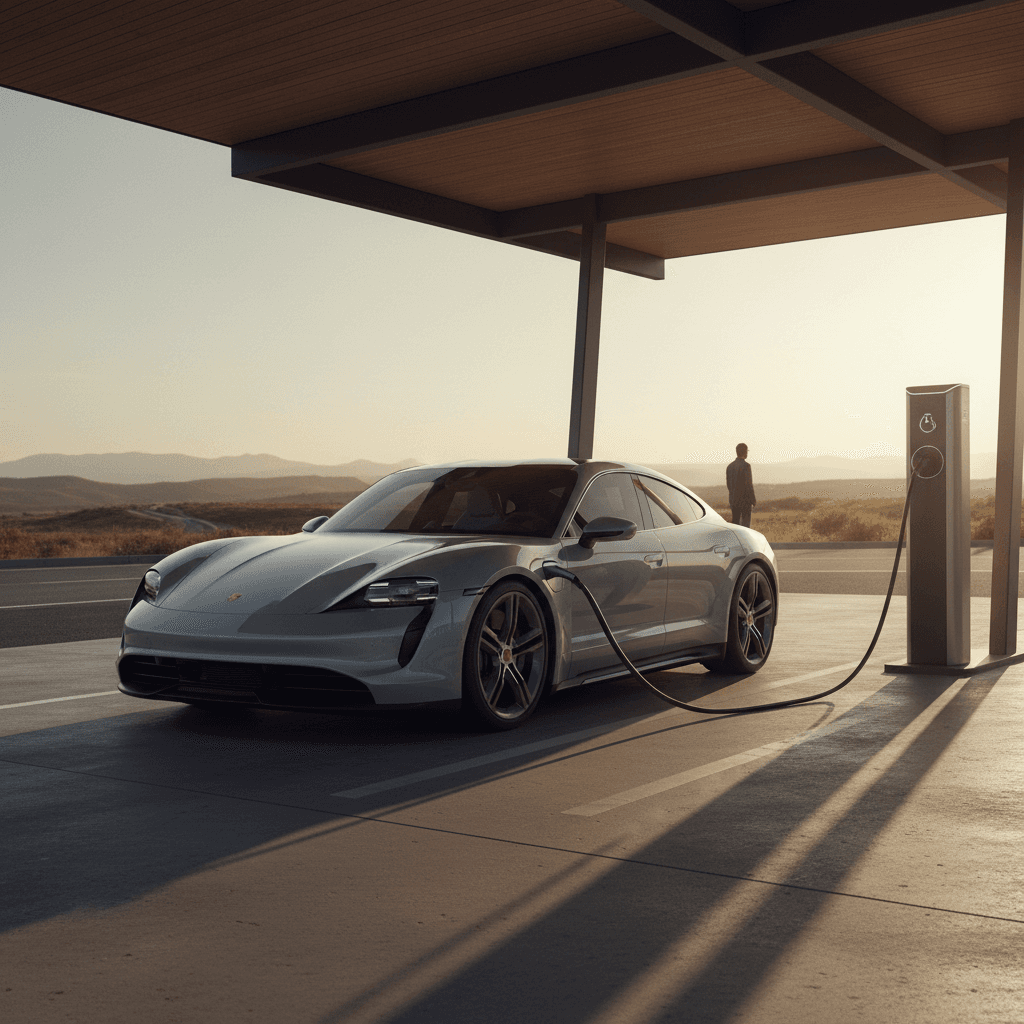
If you’re looking at the 2025 Porsche Taycan, you’re not just shopping for another luxury EV. You’re looking for something that feels like a proper Porsche first and an electric car second. For 2025, the Taycan gets more range, much faster charging, and sharper performance, without abandoning that classic, driver-focused character. This review looks past the brochure numbers to explain what the 2025 Taycan is really like to live with, and how it stacks up new and used.
Quick Take
2025 Porsche Taycan at a Glance
Key 2025 Taycan Numbers
2025 Taycan Lineup Overview
Multiple body styles and power levels, same Porsche DNA
Sedan
The core Taycan body style, from rear‑wheel‑drive base models to fire‑breathing Turbo and Turbo GT trims. This is the sharpest and most efficient version.
Cross Turismo
Raised ride height and wagon body with a hatchback. Extra practicality and bad‑weather confidence without giving up much performance.
Sport Turismo
Wagon profile with a more road‑focused stance than Cross Turismo. Think long‑roof sports car rather than crossover.
What’s New with the 2025 Porsche Taycan?
Porsche didn’t reinvent the Taycan for 2025, but the updates are far from cosmetic. Under the skin, the car gets more efficient motors, revised aerodynamics, and bigger batteries, 89 kWh and 105 kWh usable capacity depending on spec. That unlocks more range, stronger acceleration, and one of the most impressive fast‑charging performances in the EV market.
- Reworked electric motors for higher efficiency and stronger performance, especially on the rear axle.
- Larger Performance Battery and Performance Battery Plus packs with increased usable capacity.
- Improved thermal management and charging hardware that support up to 320 kW DC fast charging on 800‑volt stations.
- Software and UI tweaks to the driver display, central infotainment, and optional passenger screen.
- Updated front and rear styling, including new HD‑Matrix LED headlights and an optional illuminated rear Porsche logo.
- New interior color and trim packages, including leather‑free Race‑Tex options and Turbonite trim accents on Turbo models.
Model Year vs. Calendar Year
Range and Efficiency: Big Step Forward, Not Best in Class
Early Taycans were dinged for disappointing EPA range, especially given their price. For 2025, Porsche attacks that head‑on. The base Taycan jumps from just over 200 miles EPA to roughly 274 miles with the standard Performance Battery and up to about 318 miles with the Performance Battery Plus. That’s on the order of a 30% bump over equivalent 2024 trims, substantial enough that the range number is no longer a deal breaker for most drivers.
Real‑World Range
EPA numbers are conservative for many Taycans, and owners routinely report real‑world results that are slightly better in mixed driving. On highway trips at U.S. speeds, you’ll typically see something closer to 220–250 miles from the smaller pack and 260–290 miles from the larger battery, depending on wheel size, weather, and how hard you drive.
Porsche’s focus is less on ultimate range and more on “usable range”, how far you can go including a quick DC top‑up. That’s where the charging upgrades matter more than the raw mile figure.
How It Stacks Up
- Tesla Model S Long Range: More than 350 miles EPA when new, but slower charging and a softer driving experience.
- Mercedes‑Benz EQE/EQS: Competitive range on paper, but heavier and less engaging to drive.
- Hyundai Ioniq 5 N / Kia EV6 GT: Shorter range than Taycan in many trims, but strong performance value.
If you need the longest possible range for remote travel, the Taycan still isn’t the obvious first choice. If your life revolves around corridors dense with fast chargers, it suddenly makes a lot more sense.
Don’t Ignore Wheel and Tire Choices
Charging Performance: Where the 2025 Taycan Dominates
If there’s one headline for any 2025 Porsche Taycan review, it’s this: charging speed. On a suitable 800‑volt DC fast charger, updated Taycans can pull up to about 320 kW at peak. Even more important, they sustain very high power for longer than most rivals. Under ideal conditions, Porsche quotes about 18 minutes to go from 10% to 80% state of charge, and independent tests of high‑performance trims line up with that story.
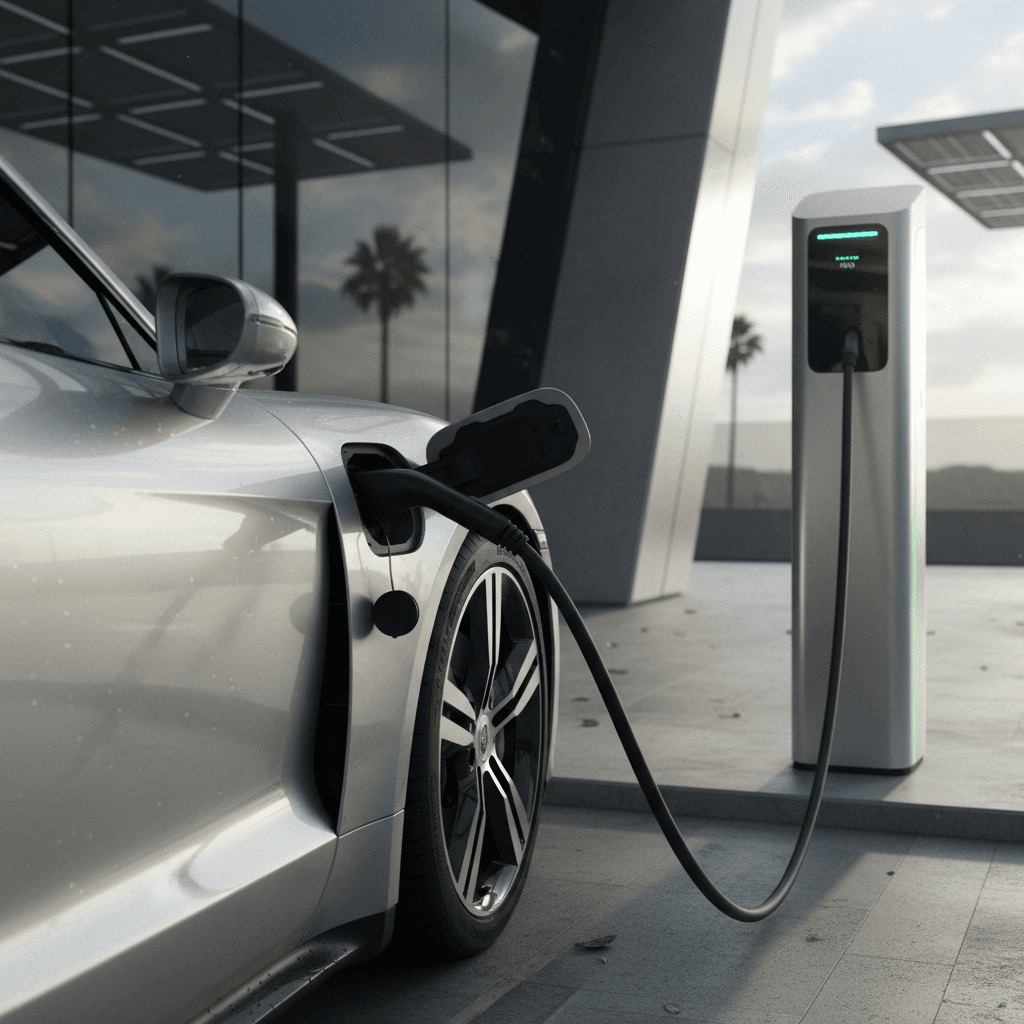
2025 Taycan DC Fast-Charging Snapshot
Approximate times and speeds on a high‑power DC fast charger, assuming ideal conditions and a warm battery.
| State of Charge | Approx. Time Window | Typical Power | What You Gain |
|---|---|---|---|
| 10% → 50% | ~9 minutes | >300 kW | Most of your usable highway range |
| 10% → 80% | ~18 minutes | 200–320 kW | Ideal long‑trip stop window |
| 10% → 90% | ~24–25 minutes | Tapering below 150 kW | Useful if next charger is sparse |
Actual charging speeds depend on temperature, charger quality, and state of charge.
How to Charge a Taycan Faster in the Real World
- On 800‑volt DC fast chargers, Taycan can peak at around 320 kW and hold more than 300 kW for several minutes.
- On 400‑volt DC chargers, an onboard DC/DC converter lets it still charge at up to roughly 150 kW, which is competitive with many rivals.
- At home on a 240‑volt Level 2 circuit, most Taycan trims can accept around 9–11 kW, translating to a full overnight charge from a typical wallbox.
Important Recall Note
On-Road Performance: Still the Driver’s EV
Numbers only tell part of the story. The 2025 Taycan still feels like a Porsche first, taut, communicative, and eager to change direction. Even base rear‑drive cars are genuinely quick, and with dual‑motor all‑wheel drive, the Taycan can embarrass supercars from a stoplight. High‑end Turbo and Turbo GT variants slash the 0–60 mph run to roughly 2 seconds flat in instrumented testing, but the real magic is how controllable and repeatable that performance is.
How the 2025 Taycan Drives
What stands out from behind the wheel
Steering & Handling
Weight is inevitable in an EV, but the Taycan hides it well. Steering is precise and nicely weighted, with optional rear‑axle steering shrinking the car around you in tight corners or parking lots.
Ride Quality
Adaptive air suspension smooths the worst pavement while still keeping the body tightly controlled. Sportier trims ride firmer, especially on big wheels, but never feel sloppy.
Noise & Refinement
Cabin isolation is excellent; you mostly hear tire roar and a subtle synthesized “Porsche Electric Sport Sound” when enabled. Even on highway slogs, the Taycan feels like a long‑distance GT, not a buzzy tech demo.
The Enthusiast Angle
Interior, Tech, and Comfort
Inside, the 2025 Taycan is minimalist but premium, with three primary screens: a curved digital cluster, central touchscreen, and an optional passenger display. The look and feel are more sports car than family hauler, but four adults can ride comfortably, especially in the Cross Turismo and Sport Turismo bodystyles.
Cabin Layout & Materials
Porsche leans into a low, cocooning driving position with supportive seats and an upright steering wheel. Materials are first‑rate, from traditional leather to new leather‑free Race‑Tex packages with wool‑blend Pepita patterns. Turbo and Turbo S trims get distinctive Turbonite accents that visually separate them from the rest of the lineup.
Storage is better than it looks at first glance. The front trunk can handle a couple of soft bags or charging cables, and the rear trunk/hatch is usable for grocery runs or weekend travel.
Infotainment & Driver Aids
- PCM Infotainment: Porsche Communication Management is snappy and supports deep Apple CarPlay integration, plus streaming apps and an available in‑car video feature when parked.
- Driver Assistance: Adaptive cruise, lane‑keeping, 360‑degree cameras, and parking aids are available, though many features are bundled in option packages rather than standard.
- Voice & Apps: Porsche’s own voice assistant is competent, and newer models increasingly integrate third‑party services like Alexa and expanded Porsche Connect functionality.
Visibility and Camera Systems
Ownership Costs and Used-Market Reality
No matter how you slice it, the Taycan is a premium vehicle to buy and own. New, transaction prices quickly climb as you add options. But like many luxury EVs, the Taycan depreciates faster than equivalent gasoline Porsches, which is why the used market has become so interesting, especially for shoppers willing to trade a brand‑new spec sheet for a lower monthly payment.
Key Cost Considerations
1. Depreciation
Early Taycans dropped sharply in the first 3–4 years. The revised 2025 models may hold value slightly better thanks to improved range, but you should still expect steeper depreciation than a 911 or Cayenne.
2. Charging vs. Fuel
At U.S. average residential electricity rates, home charging usually undercuts premium gasoline by a wide margin, especially if you can charge off‑peak. Public DC fast charging can be pricey, so long‑term owners should plan around a home or workplace Level 2 solution.
3. Tires, Brakes, and Wear Items
High‑performance EVs are hard on consumables. Expect to replace tires more often than on a softer luxury sedan. Porsche’s brake systems hold up well thanks to strong regen, but track use will still eat pads and rotors.
4. Warranty and Extended Coverage
New Taycans include an 8‑year/100,000‑mile high‑voltage battery warranty. If you’re buying used, consider remaining battery and bumper‑to‑bumper coverage, especially on high‑performance trims with expensive hardware.
How Recharged Fits In
Who the 2025 Taycan Is (and Isn’t) For
Great Fit If You:
- Care more about driving feel and build quality than chasing the longest possible range number.
- Have reliable Level 2 home charging and at least some DC fast‑charging infrastructure along your regular routes.
- Are cross‑shopping sports sedans and GT cars, not just other EVs.
- Value Porsche’s design, interior quality, and brand cachet.
Maybe Not Ideal If You:
- Regularly drive hundreds of miles through rural areas with limited fast‑charging coverage.
- Need a roomy family hauler with a big back seat and cargo hold, think SUV rather than low sports sedan.
- Are extremely price‑sensitive on maintenance, tires, or insurance.
How the 2025 Taycan Compares to Rival EVs
2025 Taycan vs. Key Rivals
High‑level comparison of where Taycan shines and where competitors push ahead.
| Model | Strengths | Weak Spots | Best For |
|---|---|---|---|
| Porsche Taycan (2025) | World‑class handling, ultra‑fast DC charging, premium build quality | Not class‑leading range, expensive options, tighter rear space | Drivers who want a true sports sedan that happens to be electric |
| Tesla Model S | Top‑tier range, expansive Supercharger network, simple UI | Softer dynamics, more minimal interior quality, aging design | Long‑distance commuters who prioritize range and network coverage |
| Mercedes‑Benz EQE/EQS | Luxurious, quiet cabins, strong tech features | Heavy, less engaging to drive, complex interfaces | Comfort‑first luxury buyers |
| Hyundai Ioniq 5 N / Kia EV6 GT | Strong performance per dollar, 800‑volt charging, warranty | Not a true luxury badge, interiors less premium than Porsche | Value‑oriented enthusiasts who still want speed |
Specs vary widely by trim; this table focuses on broad trends rather than single configurations.
New vs. Used Strategy
Buying a Used Taycan: Battery, Warranty, and What to Watch
Because the 2025 update is so significant, it effectively creates two Taycan generations in the used market: the original cars and the facelifted 2025‑onward models. Both can be smart buys, but you need to approach them differently, especially around battery health, software updates, and recalls.
Used Taycan Inspection Priorities
1. Battery State of Health
Ask for a recent battery‑health report that measures usable capacity, not just percentage charge. A healthy pack should retain the vast majority of its original capacity after the first few years if charged mostly at home on AC.
2. DC Fast‑Charging Behavior
On a test drive, if possible, plug into a DC fast charger and watch the charging curve. The car should ramp quickly to high power and hold it reasonably well until around 50–60% state of charge.
3. Software & Recall Status
Confirm that the latest software updates are installed, including fixes for camera systems and charging behavior. A Porsche dealer can run the VIN and print a campaign history.
4. Brake and Tire Condition
With heavy EVs and big power, tires and brakes take a beating. Uneven wear or mismatched tires are red flags that the car hasn’t been maintained to Porsche standards.
5. Option Packages
Porsche’s option books are thick. Check whether the car has adaptive air suspension, rear‑axle steering, upgraded audio, or key driver‑assist packages, these affect both price and day‑to‑day livability.
Why Battery Verification Matters
Ready to find your next EV?
Browse Vehicles2025 Porsche Taycan FAQ
Frequently Asked Questions About the 2025 Taycan
Bottom Line: Is the 2025 Porsche Taycan Worth It?
The 2025 Porsche Taycan delivers what many EV shoppers have been waiting for: genuine Porsche driving feel paired with significantly better range and truly standout fast‑charging performance. It still doesn’t win every spec‑sheet battle, particularly on absolute range, but it no longer forces you to choose between excitement and practicality the way early Taycans sometimes did.
If you live near robust DC fast‑charging infrastructure and you value steering feel, build quality, and design as much as numbers, the 2025 Taycan belongs on your short list. And if you’re cost‑conscious, the used market, especially with a verified battery‑health report, offers a path into this car for far less than new‑sticker money. However you shop it, going in armed with the right range, charging, and ownership facts will help you decide whether this is the EV that finally pulls you out of gasoline for good.