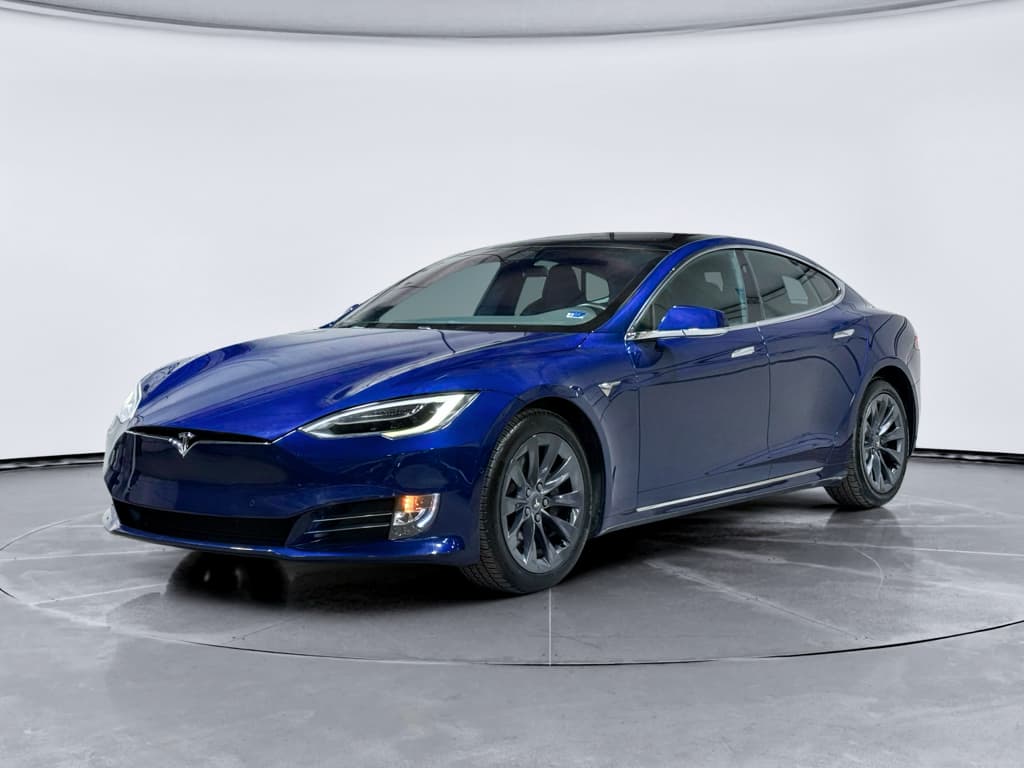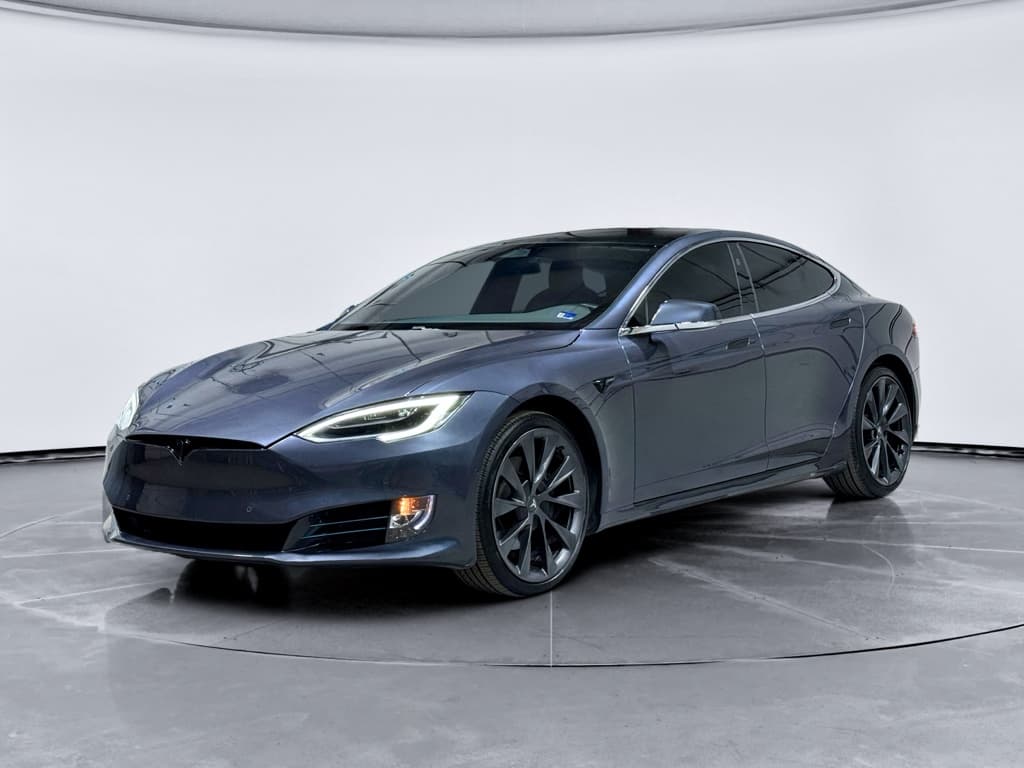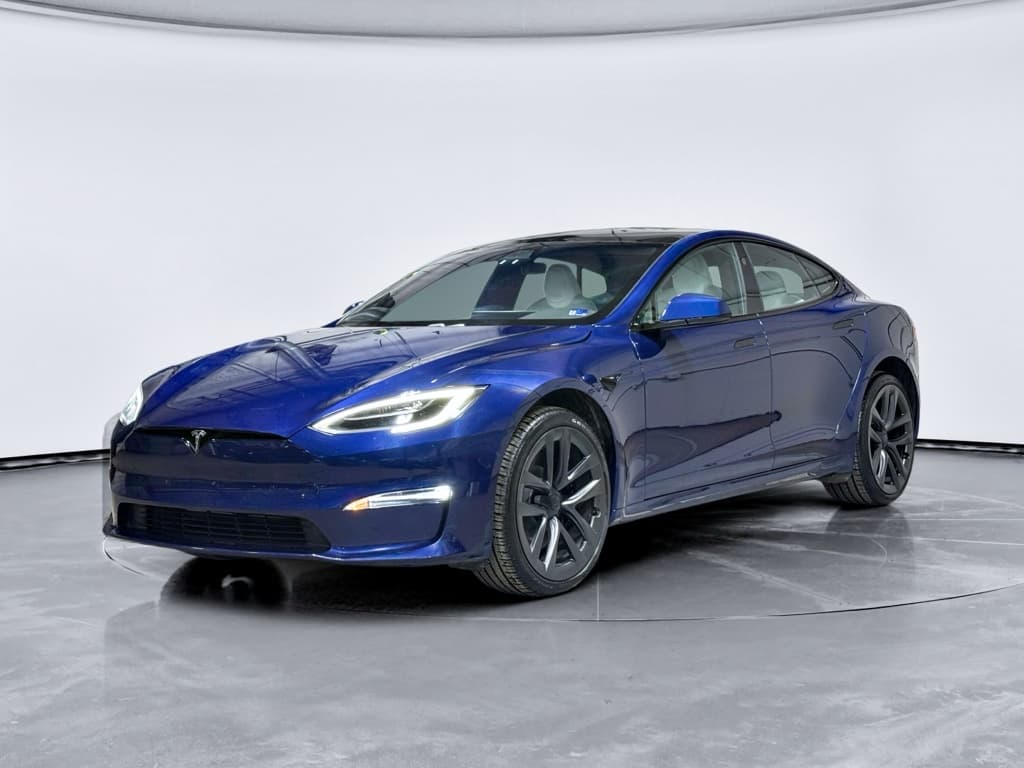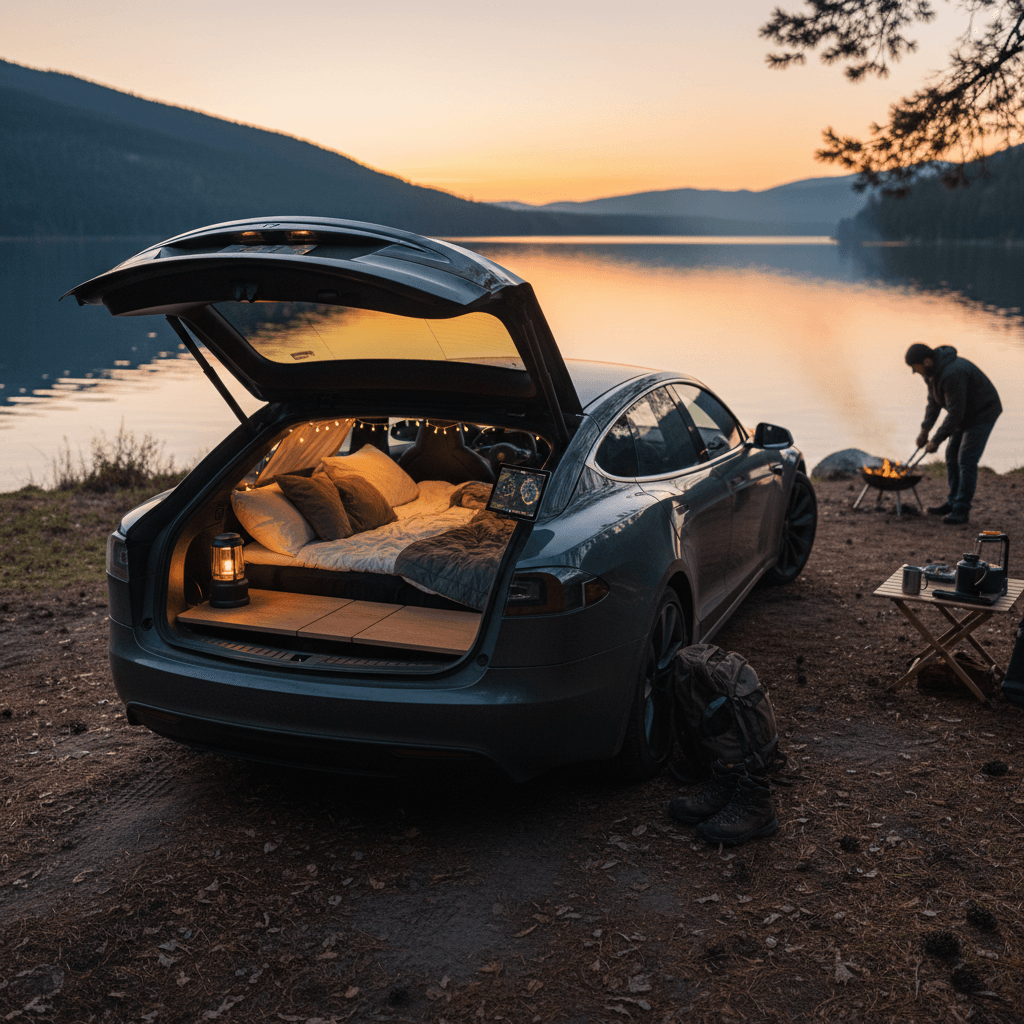
Yes, you can sleep in a Tesla Model S, and not in the “roadside emergency nap” sense. The Model S is one of the few sedans that can realistically double as a minimalist hotel room: flat cargo area, near‑silent HVAC, and a built‑in Camp Mode that keeps the cabin comfortable without filling the air with exhaust. The real questions are how comfortable it is, how much battery you’ll burn overnight, and what you need to watch for legally and mechanically, especially if you’re considering a used Model S.
Short answer
Can You Actually Sleep in a Tesla Model S?
The Model S was not designed as an RV, but it accidentally makes a pretty convincing one‑room studio. The rear seats fold down to create a long, mostly flat cargo area; Camp Mode keeps heat or A/C running with the screen dimmed; and the car’s all‑electric drivetrain means no idling engine, no fumes, and almost no noise. For car‑camping, that’s the holy trinity.
In practice, owners have been sleeping in Model S cars since the very early years. A tall adult, around six feet, can stretch out lengthwise, and two adults can sleep side‑by‑side on a full‑ or queen‑width inflatable mattress. Is it the Four Seasons? No. But compared with a tent in the rain or a roadside motel with a dubious comforter, a well‑set‑up Tesla feels surprisingly civilized.
Don’t confuse “can” with “everywhere legal”
How Much Room Is There Inside a Model S for Sleeping?
The key to sleeping in any car is simple geometry. The Model S is a long, low hatchback, which means its cargo area behaves more like a wagon’s than a typical sedan’s trunk.
Approximate Sleeping Space in a Tesla Model S
Real‑world interior measurements owners use when choosing mattresses and bedding.
| Measurement | Approx. Value | Notes |
|---|---|---|
| Maximum interior length (seats folded) | ~74–78 in (188–198 cm) | From hatch to back of front seats, depending on how far you slide the fronts forward |
| Usable flat length for sleeping | ~72 in (183 cm) | Comfortable for sleepers up to about 6 feet |
| Maximum width at shoulders | ~55 in (140 cm) | Near the rear doors, above the wheel wells |
| Width between wheel wells (hips) | ~38–40 in (97–102 cm) | Tight for two adults on a straight mattress |
| Height from floor to glass roof | ~30–33 in (76–84 cm) | Plenty to sit up slightly, not to stand |
Measurements vary slightly by model year and seat position but this gives you a realistic planning baseline.
On **pre‑refresh Model S (roughly 2012–2020)** there’s a noticeable “step” where the folded seats meet the trunk floor. You can sleep on it, but your spine will lodge a formal complaint by 3 a.m. Most regular car‑campers solve this with a foam topper or a purpose‑built mattress that fills that gap. Newer refresh cars level things out a bit better, but you still want some padding.
Measure before you order a mattress
Tesla Camp Mode in the Model S: How It Works
If the folded seats are the bed frame, Camp Mode is the life‑support system. It’s a climate setting available in every modern Model S that tells the car, in essence: “Yes, I’m staying here. Keep things running, and don’t panic.”
- You enable Camp Mode from the climate control screen (or the Tesla app).
- The car keeps heating or cooling to your chosen temperature and allows airflow through the vents.
- Interior lights, USB power, and the 12V ports stay available so you can charge phones or run small devices.
- Sentry Mode is disabled by default in Camp Mode to reduce power draw; you’re assumed to be inside the car.
- The center screen will dim and show a simple graphic so you’re not staring at a glowing billboard all night.
Camp Mode vs. just leaving the climate on
Battery Use Overnight: Will Camp Mode Strand You?
The anxiety is understandable: you fall asleep in a toasty, softly humming Model S, and you wake up stranded with 5% state of charge and a mountain pass between you and breakfast. In reality, Camp Mode is relatively modest in its appetite, especially compared with hard winter driving.
What Camp Mode Typically Uses Overnight
Those numbers aren’t official Tesla specs; they’re drawn from a lot of owners quietly turning their $80,000 fastback into a rolling cabin. Heat is more energy‑hungry than A/C, so winter camping in a Model S will cost you more range than a summer night in the mountains. The good news is that you can see projected battery drain in real time on the energy graph and simply bail on Camp Mode if the curve looks ugly.
Never start the night on a low state of charge
Comfort Setup: Mattresses, Bedding, and Storage
The Model S is a great platform, but out of the box it’s still a car, metal, carpet, and glass. Turning it into a decent bedroom takes a little kit and a bit of choreography.
Popular Mattress Options for Sleeping in a Model S
You’re fighting two enemies: the seat hinge step and the wheel‑well pinch at your hips.
Folding memory‑foam mattress
Best for comfort if you camp often.
- Bridges the step between seats and trunk.
- Can be trimmed to fit between wheel wells.
- Folds into a cube that fits in the trunk.
Inflatable camping mattress
Best for flexibility and occasional use.
- Packs very small when not in use.
- Easy to size up or down (full vs queen).
- Watch for creaking and cold spots in winter.
Foam topper + pads
Best on a budget.
- Use EVA foam or yoga mats to level the floor.
- Add a 2–3 in memory‑foam topper for softness.
- Modular; you can rearrange for different trips.
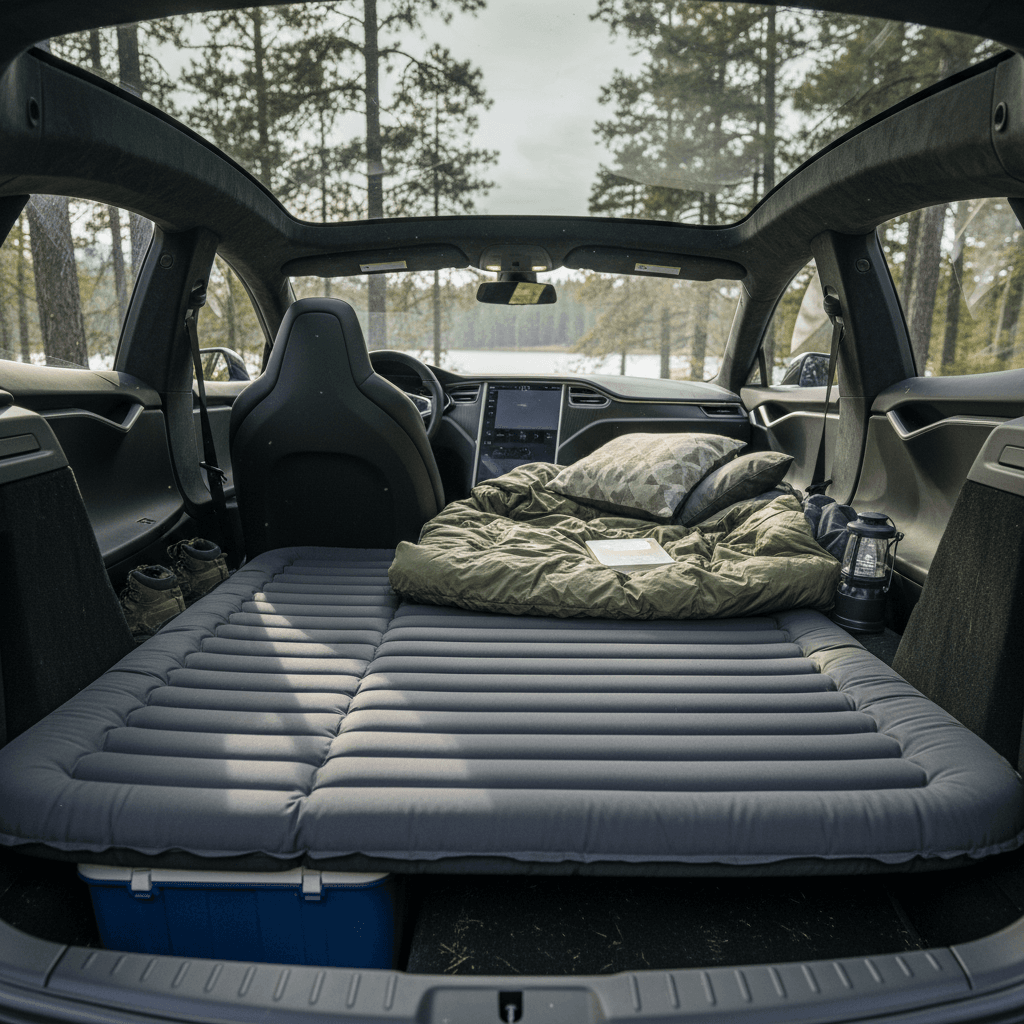
Quick Setup Checklist for Sleeping in a Model S
1. Fold and level the rear seats
Fold the rear seatbacks, remove anything hard from under the carpet, and use foam blocks or panels to smooth the transition where the seats meet the trunk floor.
2. Protect the interior
Lay down a thin tarp, camping rug, or fitted sheet to catch dirt. It’s easier to shake out a rug than to deep‑clean Tesla carpeting.
3. Place mattress and bedding
Position your mattress snugly between the wheel wells, inflate or unfold it fully, then add a fitted sheet, sleeping bags, or a duvet. Thicker pillows help offset the slight nose‑down angle.
4. Manage your gear
Store hard items in the frunk and sub‑trunk, keep soft bags at the foot of the bed, and leave a small grab‑bag of essentials within reach: headlamp, water bottle, toothbrush, and charger cables.
5. Set climate and Camp Mode
Before you climb in, set your preferred temperature, enable Camp Mode, and dim the screen. If you’re sharing the cabin, decide on a door‑opening protocol so you’re not fumbling in the dark.
6. Black out the glass
Use custom window shades or DIY cut‑to‑fit Reflectix panels for side glass and hatch. They add privacy, reduce light pollution, and help the HVAC system work less overnight.
Is It Legal to Sleep in a Tesla Model S?
Mechanically, the Model S doesn’t care if you fall asleep in it. Legally, the United States very much does, and not in any consistent, rational way. Laws about sleeping in vehicles live in a gray swamp of local ordinances, loitering rules, and park regulations.
Places that often allow it
- Designated campsites: Campgrounds, RV parks, and many national/state parks will let you sleep in a vehicle if you’ve paid for the site.
- Some rest areas: Many states allow drivers to sleep for a limited time at highway rest areas. Others ban overnight stays entirely or limit them to a few hours.
- Private lots with permission: Some big‑box stores, churches, or small businesses allow overnight parking if you ask first.
- Safe‑parking programs: In some cities, nonprofits and churches run official lots specifically for people sleeping in vehicles.
Places that often prohibit it
- Residential streets in big cities: Cities like Los Angeles and San Francisco have ordinances against vehicle habitation on many streets.
- Signed lots: “No overnight parking,” “No camping,” or “Customers only” signs are exactly what they say.
- Some rest areas: States such as Colorado or the Carolinas restrict overnight parking; you may be asked to move along.
- School zones and government buildings: These are often heavily patrolled and come with tighter restrictions.
You’re responsible for knowing local rules
One practical rule of thumb: treat the Model S like a very nice tent. If tents are banned, cars used *as* tents will usually be unwelcome too. When in doubt, choose a paid campsite or private lot where you have explicit permission.
Safety, Privacy, and Climate Tips for Sleeping in Your Model S
Key Safety and Comfort Tips
The car is smart, but you’re still the adult in the room.
Pick the right spot
Park where you’d feel okay leaving a friend overnight:
- Well‑lit but not under harsh floodlights.
- Relatively level ground so you don’t slide in your sleep.
- Away from high‑speed traffic and active drive lanes.
Privacy and light control
Window shades do triple duty:
- They keep curious eyes out.
- They block morning light so you actually sleep in.
- They reduce thermal load, saving battery in Camp Mode.
Fine‑tune climate control
Camp Mode will hold a set temperature, but you can help it:
- Start a little cooler than you think; bodies and bedding add heat.
- Use "auto" fan but avoid max settings that roar all night.
- In cold weather, dress and bed for ~5–10°F colder than the cabin readout.
Protect your battery, and your sleep
Model S vs Other Teslas for Sleeping
Tesla owners will argue this at campgrounds the way truck guys argue payload ratings, but the rough hierarchy for car‑camping space goes like this: Model X at the top, then Model Y, then Model S, then Model 3 bringing up the rear. The Model S sits in a sweet spot between driving range and sleeping space.
Tesla Models Compared for Sleeping Inside
How the Model S stacks up against its siblings when you’re using them as a bedroom instead of a car.
| Model | Sleeping Space | Headroom | Ease of Setup | Comments |
|---|---|---|---|---|
| Model S | Good | Moderate | Easy | Long, flat cargo area; tight at the hips; great range for road‑trip camping. |
| Model 3 | Fair | Tight | Moderate | Shorter and narrower; works for solo sleepers or couples who really like each other. |
| Model Y | Very good | Good | Easy | Hatchback shape and higher roof make it more forgiving; popular with frequent car‑campers. |
| Model X | Excellent | Best | Moderate | Most room of the bunch; heavier and thirstier but closest thing to an EV camper van. |
Space ratings are informal but line up with what most owners report at campgrounds and in Tesla camping communities.
If your priority is **maximum living space**, the Model S is a solid B+, elbowed out only by its taller crossover siblings. If your priority is **long‑distance efficiency plus a once‑in‑a‑while sleep setup**, the S makes a compelling argument: you get big‑battery range, sport‑sedan manners, and a decent bed when the sun goes down.
Shopping for a Used Model S With Car Camping in Mind
If you’re specifically wondering whether you can sleep in a used Tesla Model S, you’re already ahead of most shoppers. Road‑trip and camping use changes what matters: you care less about Ludicrous 0–60 times and more about seat mechanisms, seals, and how honest the battery is being about its remaining capacity.
- Battery health and usable range: An older 70 or 75 kWh pack may handle daily commuting fine but feel tight once you add Camp Mode and remote trailheads to the mix. Look for clear, third‑party battery‑health data rather than just trusting the dash readout.
- Seat‑fold mechanism and latches: Make sure the rear seats fold fully and lock down securely. A misaligned latch can create a bigger bump under your spine than any dirt road ever will.
- Water leaks and hatch seals: A Model S with a leaky hatch or sunroof is misery waiting to happen for campers. Check for water stains, damp smells, or mold in the cargo area.
- HVAC performance: Weak heat or A/C isn’t just an annoyance in traffic; it makes Camp Mode far less useful and can dramatically increase battery use in extreme weather.
- Interior wear: Scratches, sagging trim, or cracked plastics in the cargo area can hint at a hard life hauling gear. That matters more when you plan to load in and out often.
How Recharged helps if you’re camping‑curious
Ready to find your next EV?
Browse VehiclesFAQ: Sleeping in a Tesla Model S
Frequently Asked Questions About Sleeping in a Model S
Bottom Line: Should You Sleep in a Tesla Model S?
If the question is, “Can you sleep in a Tesla Model S?” the answer is a confident yes. It’s long enough, quiet enough, and smart enough to make a convincing micro‑cabin when you’re a few hundred miles from home and even farther from a decent hotel. The limiting factors aren’t the car so much as your planning: choosing legal, safe places to park, bringing the right mattress and shades, and leaving enough battery to greet the morning without range anxiety.
Where the Model S really shines is as a dual‑purpose machine: fast, comfortable long‑distance EV by day, minimalist studio apartment by night. If you’re shopping used, be honest about how often you’ll actually sleep in the car and choose your battery size, model year, and interior condition accordingly. And if you want help turning "maybe I can sleep in it" into a solid, road‑trip‑ready plan, Recharged’s EV specialists and battery‑health reports are there to keep both your dreams, and your range, intact.