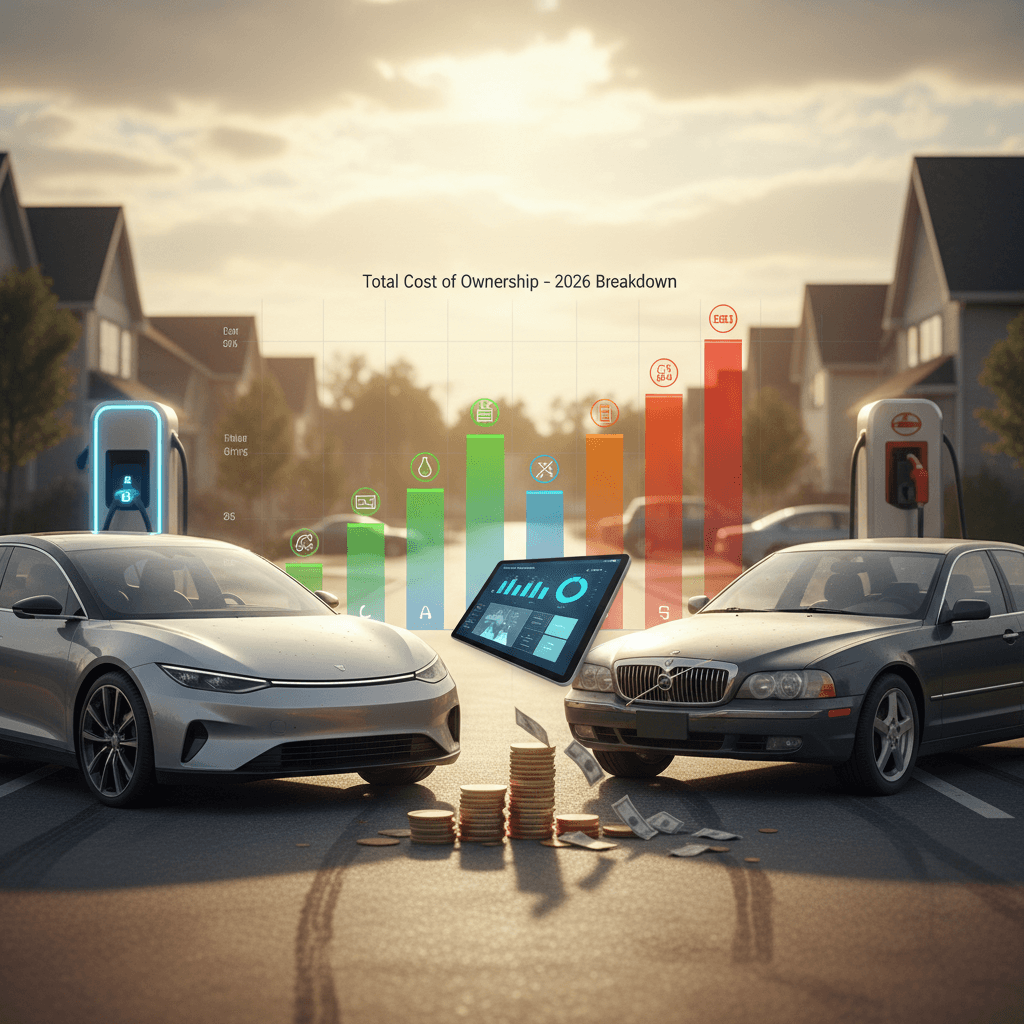
You’ve probably heard that electric cars are cheaper to own, but once you factor in higher sticker prices, home charging setup, and battery worries, it’s fair to ask: do you really save money with an electric car? The honest answer is: it depends on how much you drive, how you charge, and whether you buy new or used, but the math is easier than you think.
EV savings in one sentence
Why “Do You Really Save Money With an Electric Car?” Matters Now
The numbers have shifted quickly in the last few years. Gas prices in early 2026 are hovering around $4 per gallon nationally, and electricity is closer to $0.17 per kWh for the average U.S. household. At the same time, new EV prices are still higher than comparable gas cars, but used EV prices have softened, and many models are now directly competing with used gas cars on price.
EV vs Gas Costs at a Glance (Typical U.S. Driver)
Research from consumer groups, AAA, and independent analysts finds the same pattern: fuel and maintenance savings pile up every mile you drive. The catch is that high purchase prices, insurance, and uncertain resale can eat into those savings if you pick the wrong car or the wrong deal.
How Electric Cars Actually Save (or Spend) Your Money
Where EVs Tend to Win, And Where They Don’t
Think in buckets, not just in monthly payment
Areas EVs usually save you money
- Fuel: Lower cost per mile, especially with home or off‑peak charging.
- Maintenance: No oil changes, fewer moving parts, less routine service.
- Stop‑and‑go driving: EVs are very efficient in city traffic where gas cars waste fuel.
- Used market: A 2–4‑year‑old EV can be a bargain if the battery is healthy.
Areas that can add cost
- Sticker price: New EVs often cost more than comparable gas cars.
- Insurance: Higher repair costs and technology can mean higher premiums.
- Fast charging: Public DC fast charging can rival or exceed gas prices per mile.
- Battery health: A weak battery can drag down range and resale value.
To figure out whether you really save, you need to look at total cost of ownership: purchase, fuel, maintenance, insurance, and what the car is worth when you’re done with it. We’ll walk through each piece with current 2025–2026 data and then put it together in simple examples.
Fuel Cost Per Mile: Electric vs Gas in 2026
Fuel is where EVs usually score their most obvious win. A typical EV in mixed driving uses about 30 kWh per 100 miles (3–3.5 miles per kWh). If your home electricity is $0.17 per kWh, you’re paying roughly $5.10 for 100 miles, or just over 5¢ per mile. Many drivers see slightly lower real‑world costs, closer to 4¢ per mile, especially in milder climates or with cheaper power.
Now compare that to an average gasoline car at, say, 28 mpg. With gas at $3.75 per gallon, 100 miles uses about 3.6 gallons, which costs around $13.50, roughly 13–14¢ per mile. Even an efficient hybrid at 45–50 mpg is usually in the 7–9¢ per mile range at current fuel prices.
Want a quick back‑of‑the‑envelope comparison?
Sample 2026 Fuel Cost Per Mile
Approximate energy costs for a typical U.S. driver, assuming 12,000 miles per year.
| Scenario | Energy price & efficiency | Fuel cost per mile | Annual fuel cost (12,000 mi) |
|---|---|---|---|
| Average gas car | $3.75/gal, 28 mpg | $0.13–$0.14 | $1,560–$1,680 |
| Efficient hybrid | $3.75/gal, 48 mpg | $0.08 | $960 |
| EV, home charging | $0.17/kWh, 30 kWh/100 mi | $0.05 | $600 |
| EV, mostly fast charging | $0.40–$0.50/kWh equivalent | $0.12–$0.15 | $1,440–$1,800 |
Your local prices will vary, but the gap between home‑charged EVs and gas is consistent in most regions.
The fast‑charging trap
Maintenance and Repairs: Where EVs Quietly Win
Maintenance is less dramatic than fuel, you don’t see it every week like a fill‑up, but it adds up. Modern EVs eliminate oil changes, timing belts, spark plugs, and many emissions‑related components that commonly fail in gas cars. What you mainly deal with are tires, brake fluid, cabin filters, and coolant services on a longer schedule.
Typical Maintenance Gap: EV vs Gas
Across 10–15 years, multiple analyses show EV drivers paying roughly half as much on maintenance and repairs per mile as owners of comparable gas vehicles. That doesn’t mean an EV can’t generate a big bill, a collision repair or a rare battery‑related fix can be expensive, but on average, the simple mechanical layout works in your favor.
Regenerative braking is a hidden savings lever
Purchase Price, Incentives, and Financing Reality
Here’s where the story gets more complicated. In 2025 and early 2026, the average new EV still costs several thousand dollars more than a comparable new gas car. At the same time, federal EV purchase credits are being phased out after September 30, 2025, so buyers today can’t necessarily count on the big $7,500 new‑EV or $4,000 used‑EV tax breaks that once narrowed the gap.
New EV vs New Gas
- Sticker price: Many mainstream EVs are priced $5,000–$9,000 above a similar gas model.
- Financing: Higher prices mean higher monthly payments, though some automakers offset this with lower APRs or lease deals.
- When it can still work: If you drive a lot of miles per year and plan to keep the car 7–10 years, fuel and maintenance savings can eventually overcome that higher purchase price.
Used EV vs Used Gas
- Price gap is much smaller: In many segments, a 3‑year‑old EV is now within a few thousand dollars of a similar gas car.
- Value sweet spot: Someone else has already taken the big new‑car depreciation hit.
- Key variable: Battery health. A strong battery makes a used EV a bargain; a weak one can erase the savings.
Why Recharged leans into used EVs
Insurance, Battery Health, and Resale Value
Even if you’re saving on fuel and maintenance, higher insurance premiums or a weak battery can quietly claw those gains back. Insurers are still learning how to price EV risk, and some brands have very expensive body and battery repairs after collisions. On average, many drivers see slightly higher insurance costs for EVs than for comparable gas cars, though it varies a lot by model and zip code.
Battery Health and Resale: The Wild Cards
Get these wrong, and the math can flip on you.
Battery health drives value
Uncertainty scares buyers
Why documentation matters
Don’t ignore battery condition
Real-World Examples: When an EV Saves You Money
Let’s put real numbers to this. These are simplified examples aimed at directionally correct decisions, not penny‑perfect budgets. All figures are in today’s dollars and ignore tax changes or inflation to keep things readable.
Three Common Scenarios
1. 15,000‑mile‑per‑year commuter, home charging
You drive 15,000 miles per year, mostly commuting and errands. A used EV and a used gas car both cost about $25,000. Fuel alone: the gas car at ~13¢/mi costs roughly $1,950/year; the EV at ~5¢/mi is around $750/year. That’s <strong>$1,200/year in fuel savings</strong>. Add a few hundred in lower maintenance each year and you’re looking at <strong>$1,500–$1,800 in annual operating savings</strong>. Over 5 years, that’s roughly $7,500–$9,000 ahead with the EV, before resale.
2. 8,000‑mile‑per‑year city driver, apartment lifestyle
You only drive about 8,000 miles a year and can’t install home charging, so you rely mostly on public Level 2 and occasional fast charging. Fuel savings may drop to just a few hundred dollars a year, and public charging hassles are higher. In this case, buying an expensive new EV primarily for savings is harder to justify. A reasonably efficient hybrid or gas car might be cheaper over 5 years unless you find a <strong>very well‑priced used EV</strong> and can access low‑cost charging at work.
3. Road‑trip family with mix of home and fast charging
You road‑trip several times a year, but 80–90% of your miles are still from home charging. The few road trips will cost you more per mile when you fast charge, but the other 10–12 months of the year you’re paying 4–6¢ per mile. The overall average fuel cost still heavily favors the EV, especially if you’re replacing a larger, thirstier SUV or minivan.
Where EVs are almost always cheaper
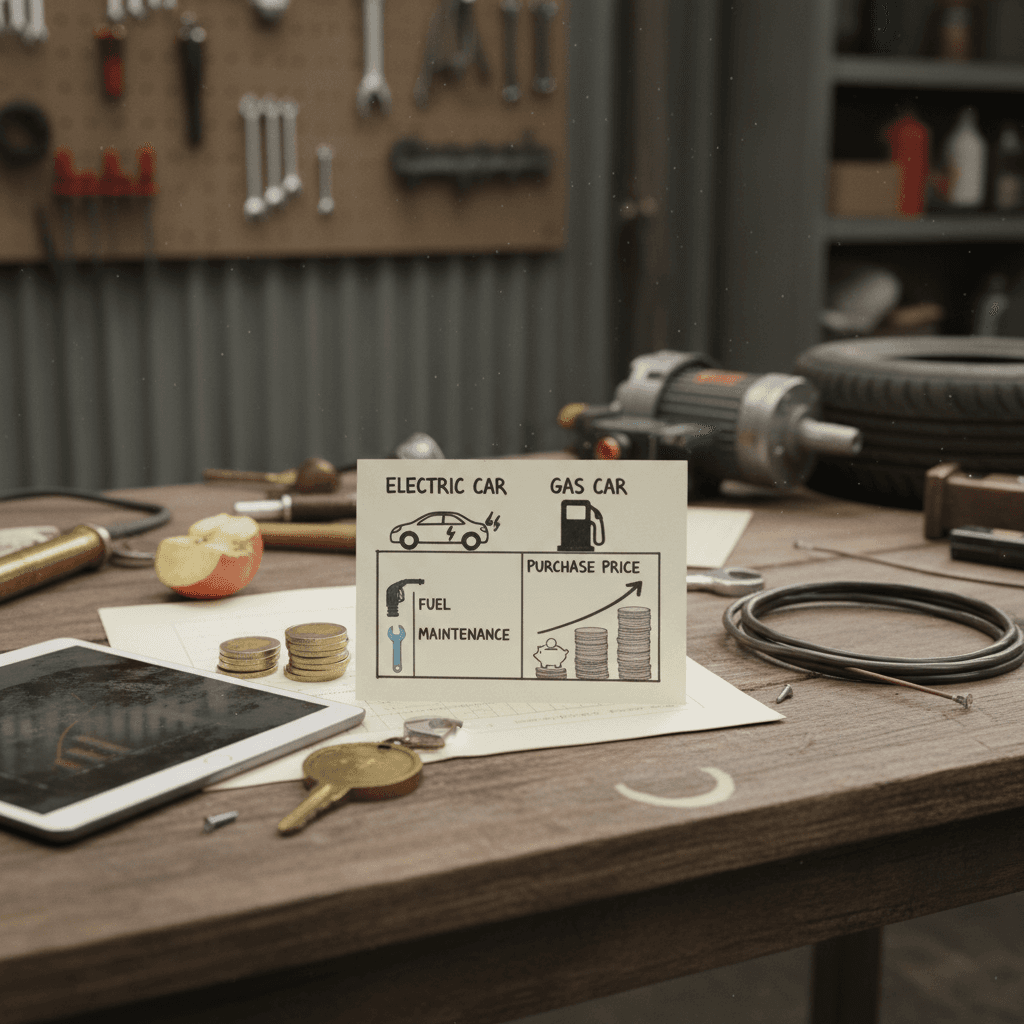
When an Electric Car Might Not Save You Money
- You drive very few miles per year (under ~6,000). Your fuel savings are small, so the higher purchase price and insurance can outweigh them.
- You can’t reliably charge at home or work and must rely on expensive public DC fast charging.
- You’re considering an EV that’s far more expensive than the gas car you’d otherwise buy (for example, moving from a $30,000 gas crossover to a $50,000 luxury EV).
- Insurance quotes for your chosen EV come back significantly higher than for your gas alternative, and you’re already tight on budget.
- You plan to keep the car for only 2–3 years and may take a big depreciation hit on a brand‑new EV.
Beware payment‑only thinking
How to Run the Numbers For Your Situation
You don’t need a spreadsheet degree to figure this out. A few key numbers will get you 90% of the way there. Here’s a simple framework you can use before you ever step into a showroom or click “apply” online.
5‑Step EV vs Gas Cost Check
1. Estimate your annual miles
Look at your last inspection sticker, odometer photos, or service records to see how many miles you’ve added in the past year or two. If you’re around 10,000–15,000 miles per year, EV savings potential is strong. Under 6,000, the case is weaker.
2. Determine how you would charge
Can you install or already use <strong>home Level 2 charging</strong>? Do you have cheap electricity at night? Or would you be relying on public DC fast charging? Home charging at standard residential rates is the foundation of most savings calculations.
3. Compare fuel cost per mile
Take your current mpg and local gas price to get your gas cost per mile, then compare that to 4–6¢ per mile for a home‑charged EV. Multiply both by your annual miles to see a realistic yearly fuel bill for each.
4. Add rough maintenance estimates
Use simple placeholders: $700–$900 per year for a typical gas car, $300–$500 for a typical EV. If you drive more than 15,000 miles per year or keep cars a long time, increase both a bit but keep the gap similar.
5. Look at purchase price and financing
Compare realistic out‑the‑door prices, not just MSRP. Then look at total payments over the time you plan to keep the car, not just the monthly number. A well‑priced used EV can dramatically flatten this part of the equation.
Leverage tools and expert reports
FAQ: Do You Really Save Money With an Electric Car?
Common Questions About EV Savings
Bottom Line: Do You Really Save Money With an Electric Car?
When you strip away the hype, the pattern is clear. Electric cars absolutely can save you real money, but not in every situation and not automatically just because they’re electric. The biggest winners are drivers who put meaningful miles on their cars each year, can charge reliably at home, and choose a sensibly priced EV, often a used one, with a strong, well‑documented battery.
If you’re a low‑miles driver chasing the newest, most expensive EV purely for fuel savings, the math may never pencil out. But if you’re cross‑shopping practical EVs against practical gas cars, taking the time to run a simple total‑cost comparison can reveal thousands of dollars in lifetime savings on the electric side.
This is where a platform like Recharged can tilt the odds in your favor. By focusing on used EVs, verifying battery health through the Recharged Score, offering fair‑market pricing, financing, trade‑in options, and even nationwide delivery, it helps you skip the guesswork and go straight to the part that matters: owning an electric car that fits your life and actually saves you money.