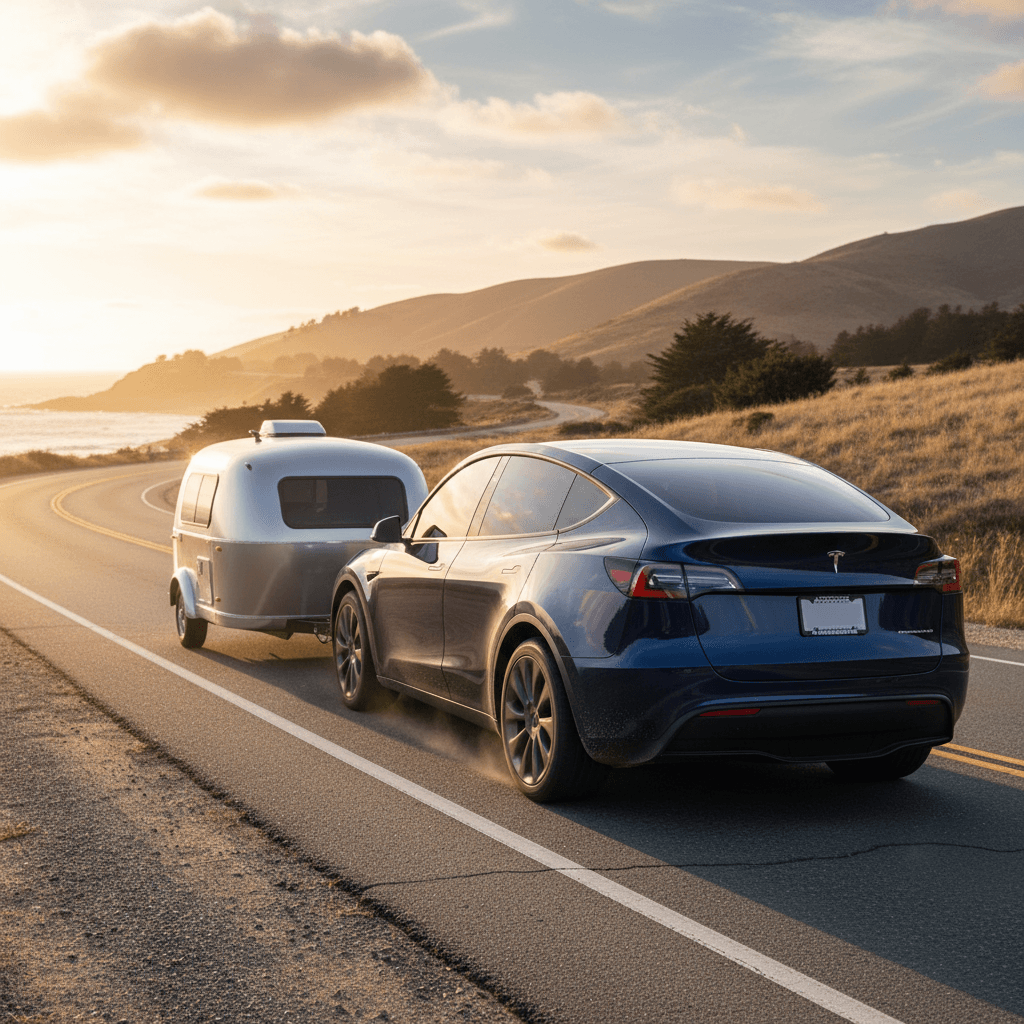
Yes, a Tesla Model Y can tow a trailer, and in the right scenario, it’s shockingly good at it. Instant torque, quiet power, and a low center of gravity make it feel more like an electric locomotive than a compact crossover. But there are hard limits you ignore at your peril: hitch ratings, tongue weight, battery heat, and the inconvenient truth that towing can slice your range in half.
The short answer
Can a Tesla Model Y Tow a Trailer?
Start with the non‑negotiables. From the factory, Tesla rates the Model Y to tow a trailer only if it’s equipped with the official tow package. With that installed, the owner’s manual lists a maximum trailer weight of about 3,500 lbs (1,588 kg) and a maximum tongue weight of 350 lbs (159 kg), depending on wheel size and passenger load.
If your Model Y doesn’t have the tow package, it is not rated for towing. Aftermarket hitches exist, but they sit in a gray zone where Tesla can wash its hands of any warranty drama. If you plan to tow more than a bike rack, the factory hardware is the smart play.
Legal vs. possible
Tesla Model Y Towing At a Glance
Tesla Model Y Towing Capacity by Trim
Tesla’s website and manuals occasionally shift the fine print by market and model year, but the broad strokes for U.S.‑spec Model Y are straightforward when properly equipped with the factory tow package:
Approximate Tesla Model Y Tow Ratings (U.S., With Tow Package)
Always confirm numbers in the owner’s manual and on your hitch label for your exact car and market.
| Model Y Variant | Driven Wheels | Max Trailer Weight* | Max Tongue Weight* | Notes |
|---|---|---|---|---|
| Long Range | AWD | 3,500 lbs | 350 lbs | Most common towing spec in the U.S. |
| Performance | AWD | 3,500 lbs | 350 lbs | Same basic rating, but less ideal for rough roads |
| RWD/Standard Range (where offered) | RWD | 2,000–3,300+ lbs | Up to 350 lbs | Ratings can be lower on some markets/years, check your manual |
| All trims (no factory tow package) | Any | 0 lbs | 0 lbs | Not officially rated for trailer towing |
These figures assume the factory tow package is installed and you’re not overloading the vehicle with passengers and cargo.
Where to find your exact rating
What Kind of Trailer Can a Model Y Safely Tow?
Think of the Model Y as a very strong compact crossover with the battery of a luxury sedan. It’s not a three‑quarter‑ton pickup, and it doesn’t pretend to be. Where it shines is with small, aerodynamic, and relatively light trailers.
Model Y Trailer Matchmaking: What Works, What Doesn’t
Stay in its lane and the Model Y tows beautifully.
Great matches
- 4×8 or 5×8 utility trailers with yard waste, lumber, or household stuff
- Small aluminum boat and trailer (often under 2,500 lbs loaded)
- Compact teardrop or lightweight camper well under 3,000 lbs loaded
Borderline cases
- Boxy single‑axle cargo trailers near 3,500 lbs
- Tall campers with big frontal area (catch lots of wind)
- Heavier boat trailers in hilly terrain
These are possible but require discipline: lower speeds, careful packing, and short legs between charges.
Poor matches
- Full‑size travel trailers that approach or exceed 3,500 lbs loaded
- High, flat‑front toy haulers
- Anything that would make a midsize SUV sweat
Here, the limit isn’t just power, it’s stability, heat, and brutal range loss.
Don’t tow by brochure weight
How Towing Affects Tesla Model Y Range
This is where the fantasy weekend with a solar‑powered camper meets the charging map. Even though the Model Y has plenty of torque, aero drag and weight punish range when you hang a trailer behind a bluff‑front crossover.
From long‑term tests and owner trips, a Model Y towing a medium travel trailer often sees its usable range cut by 40–60% compared with solo highway driving at similar speeds. A small, low utility trailer might cost you 25–35%. A tall, boxy camper at 70 mph? You’re looking at closer to a 50–60% haircut.
Real-World EV Towing Range: What to Expect
Speed is your enemy
If you’re planning a long tow, say, a road trip with a small camper, assume shorter legs and more frequent, shorter fast‑charging stops. Apps like A Better Routeplanner can model range loss with different trailer weights and speeds so you’re not teaching yourself calculus at a Supercharger.
Setting Up Your Tesla Model Y to Tow
The Model Y doesn’t need heroic hardware to tow, but it does need the right hardware. That starts with the official tow package and continues with sensible choices in hitch components and trailer brakes.
Model Y Towing Setup Checklist
1. Confirm you have the factory tow package
Look under the rear bumper for the 2" receiver and 7‑pin trailer connector, or check your Tesla account / Monroney label. No tow package, no rated trailer towing.
2. Choose the correct ball mount and ball size
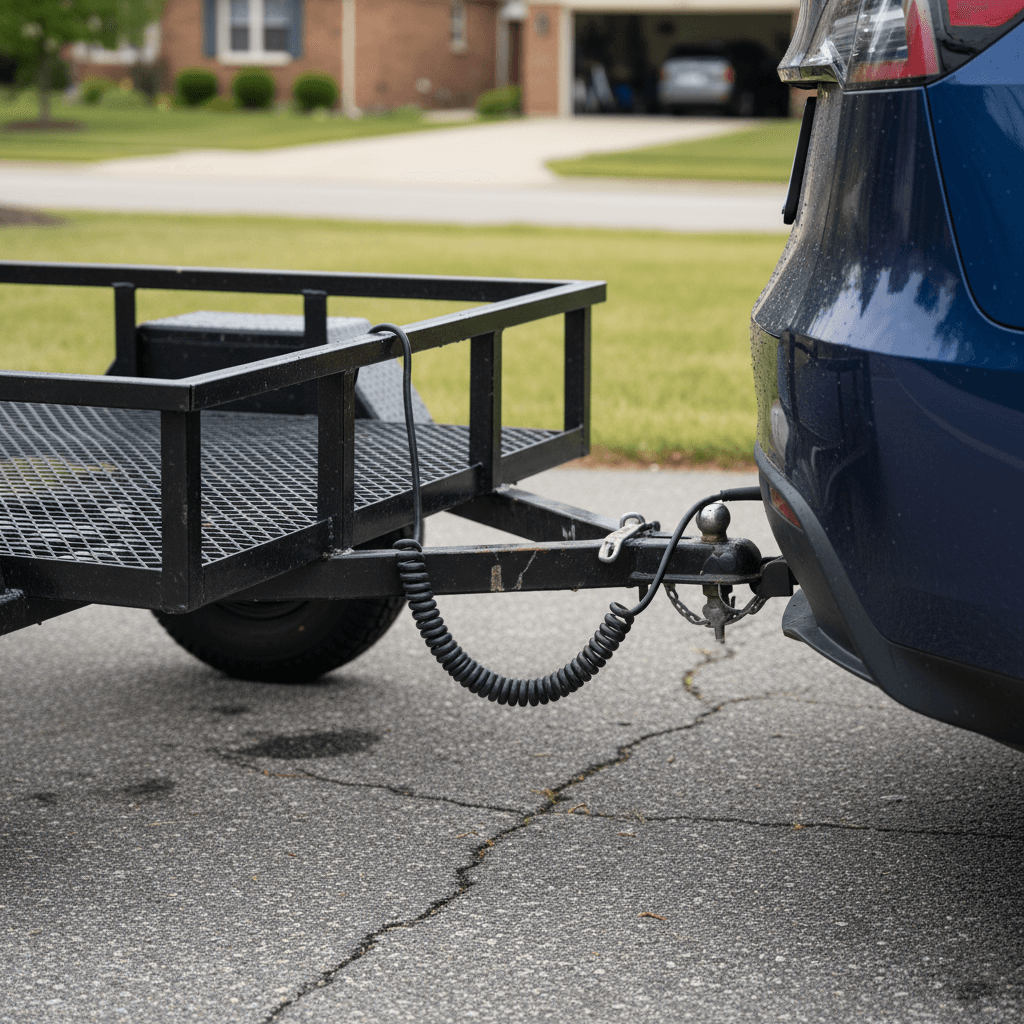
Your hitch receiver is rated to 3,500 lbs, but the <strong>ball mount and ball must also be rated</strong> for at least that much. Match the ball size (often 2") to your trailer coupler and use a drop that keeps the trailer level.
3. Set up trailer lights and wiring
Plug into the 7‑pin connector and verify running lights, brake lights, and turn signals. The Model Y will automatically enter <strong>Trailer Mode</strong> when it detects a connected trailer, adjusting stability control and disabling some driver‑assist features.
4. Add trailer brakes for heavier loads
For loaded trailers over about 1,650 lbs, Tesla recommends an <strong>independent trailer brake system</strong>. You’ll need a compatible controller and properly adjusted brakes on the trailer axles.
5. Check tire pressures for towing
The owner’s manual specifies higher tire pressures when towing, often around <strong>42 psi</strong> on 19" or 20" wheels. Use those towing pressures rather than the standard label inside the door.
6. Weigh your combination at least once
If you’re anywhere near the limits, visit a public scale to confirm the actual <strong>trailer weight and tongue weight</strong>. Guessing is for casinos, not brake systems.
Never improvise tongue weight
Driving Tips When Towing With a Model Y
Once you’re hitched up and rolling, the Model Y’s driving character changes, but mostly in your favor. The single‑pedal driving and immediate torque make low‑speed maneuvering with a trailer easier than in most gas SUVs. The flipside: more mass to manage when things go wrong.
- Slow down a notch. Towing adds mass and frontal area. Back off the left lane and keep speeds closer to 60–65 mph, especially in wind or rain.
- Extend your following distance. Double the space you’d normally leave. The Model Y’s brakes are strong, but physics is still physics.
- Take wider turns. Your trailer tracks tighter than the car. Give curbs, posts, and gas‑station islands a wide berth.
- Use regen, but don’t rely on it. Regenerative braking is wonderful, but on long downhill grades with a trailer, use your friction brakes and low speeds to avoid cooking things.
- Watch temps and weather. High heat, steep climbs, or headwinds all chip away at range. Build in extra buffer and stops when the forecast looks nasty.
- Practice backing up. Find an empty lot and spend 20 minutes learning how your trailer responds. The Model Y’s smooth throttle makes precise corrections easier than in an ICE truck.
EV towing is quietly excellent
Towing Capacity vs Cargo and Passengers
Here’s the fine print most brochures whisper instead of shout: tow rating assumes a certain number of passengers and cargo weight. Every pound you add inside the Model Y is a pound you can’t add to the trailer without exceeding the vehicle’s combined weight ratings.
Understand GCWR and payload
Automakers specify a Gross Combined Weight Rating (GCWR), the maximum allowed weight of the vehicle, passengers, cargo, and trailer all added together. They also specify a payload rating for how much weight you can carry inside the vehicle.
If you fill every seat with adults and pack the cargo area with gear, you’re cutting into the margin that makes a 3,500‑lb trailer safe and legal.
A simple mental rule
- If your trailer is near 3,500 lbs loaded, keep passengers and cargo modest.
- If you’re hauling five adults and a bunch of luggage, target a lighter trailer.
- When in doubt, choose the lighter of two trailer options, not the one that “just squeaks in” under the rating.
For borderline setups, a trip across a public truck scale is the cheapest peace of mind you can buy.
Is the Tesla Model Y a Good Tow Vehicle?
As a tow vehicle, the Model Y is a paradox. In the short term, backing your boat down the ramp, shuttling a U‑Haul trailer across town, or taking a 1,800‑lb camper to a nearby state park, it’s fantastic. As a long‑distance highway hauler with a tall RV behind it, it demands patience and a taste for route‑planning.
Pros and Cons of Towing With a Model Y
If you understand the trade‑offs, it can be a great fit.
Where the Model Y shines
- Effortless low‑speed control for parking, campsites, and boat ramps.
- Instant torque for merging and short on‑ramps, even with a trailer.
- Excellent stability control and Trailer Mode tuning.
- Near‑silent towing, you mostly hear the trailer and the wind.
Where it comes up short
- Significant range loss on the highway, especially with boxy campers.
- More frequent fast‑charging stops on long trips.
- Limited by 3,500‑lb tow rating and 350‑lb tongue weight.
- Charging logistics can be awkward at some stations with a trailer attached.
Plan your charging around trailers
FAQ: Towing With a Tesla Model Y
Frequently Asked Questions
Thinking About a Used Tesla Model Y for Towing?
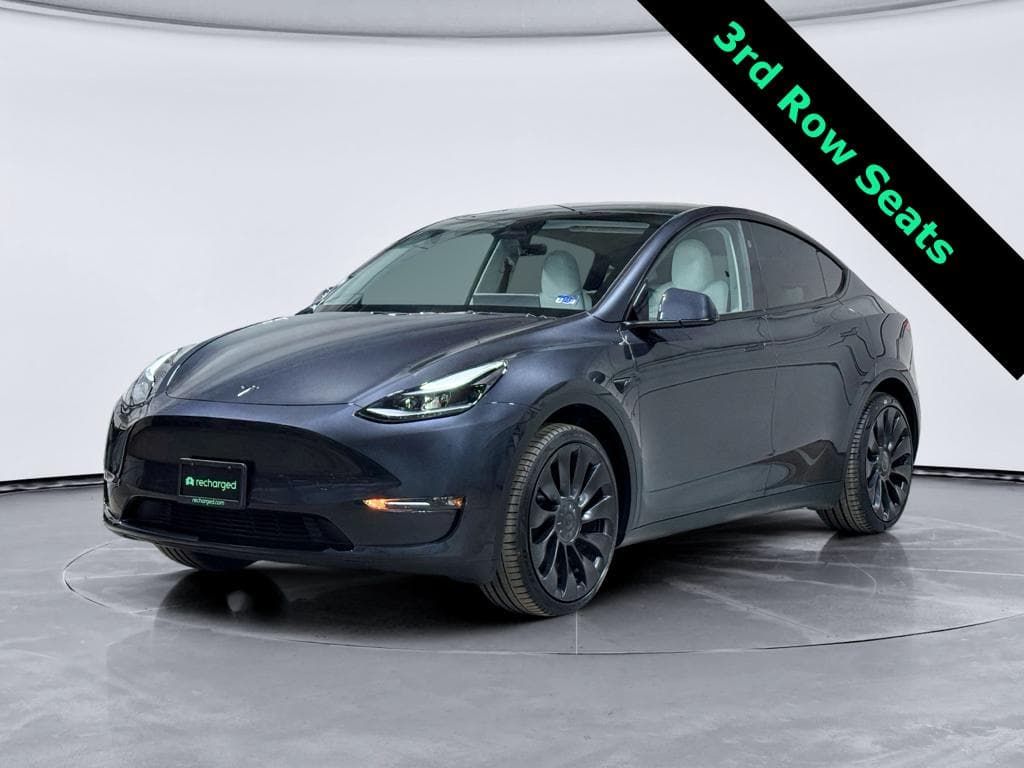
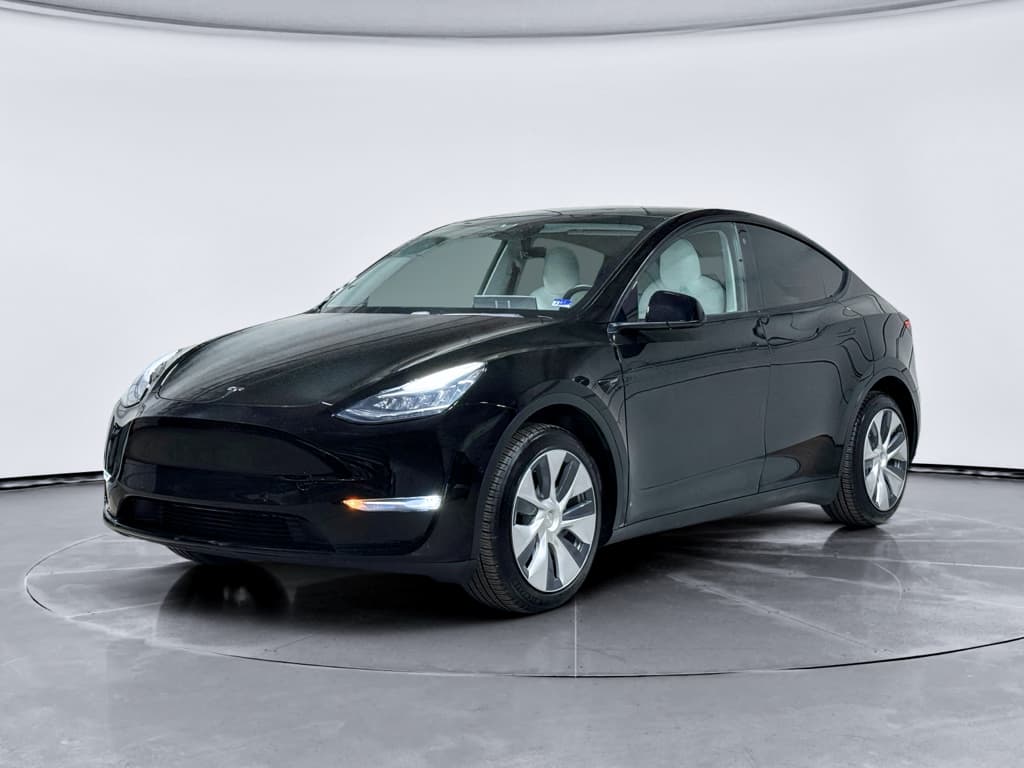
If you’re eyeing a Model Y specifically to tow a small camper or utility trailer, a used example can be a smart play: you let someone else eat the early depreciation and still get all that effortless EV torque. But towing is one of the few things that can really stress an EV’s battery and drivetrain if it’s been abused.
This is where buying from a specialist matters. Every EV sold through Recharged comes with a Recharged Score battery health report, fair‑market pricing, and EV‑savvy guidance on whether a particular Model Y is a good match for your towing plans. Our team can help you sort through trims, tow‑package availability, and real‑world range expectations before you sign anything.
So, can a Tesla Model Y tow a trailer? Absolutely, provided your trailer is modest, your expectations are realistic, and you treat the tow rating as a hard ceiling, not a suggestion. Stay within the 3,500‑lb limit, respect that 350‑lb tongue weight, plan for 40–60% range loss on serious trailers, and the Model Y transforms from family crossover into quiet, electric pack mule. For the right trailer and the right driver, it’s not a compromise at all; it’s an upgrade.