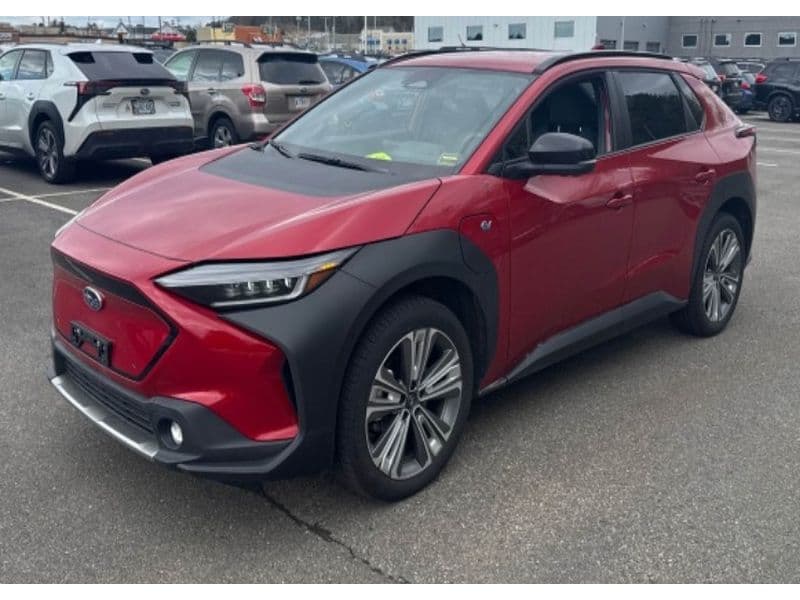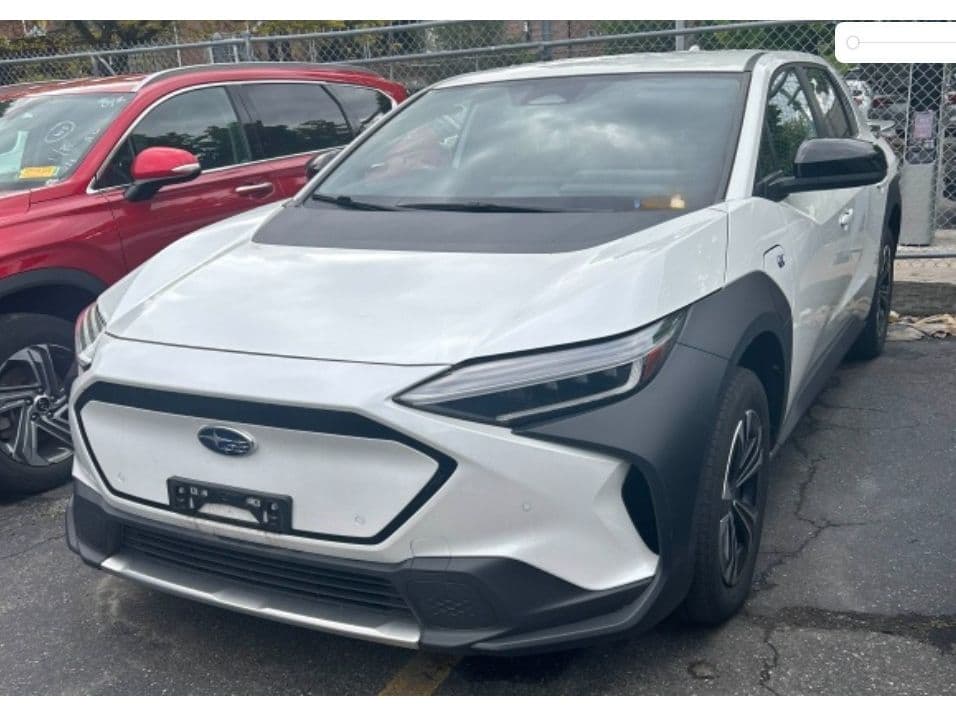
If you’re looking at a Subaru Solterra and wondering, **“Can this thing actually tow a trailer?”**, you’re not alone. Subaru markets the Solterra as an adventure-ready electric SUV, but the fine print on towing is confusing, especially when U.S. models say **“not recommended”** while some overseas versions carry an official tow rating.
Key takeaway
Short answer: can the Subaru Solterra tow a trailer?
For **U.S.‑spec Solterras (2023–2026)**, the official answer is: **Subaru does not recommend towing a trailer at all.** You won’t find a tow rating on the window sticker, and mainstream guides list towing capacity as “N/A” or “Not recommended.” Subaru dealers and documentation in the U.S. reinforce that message.
- No factory tow rating published for U.S. Solterra models as of the 2026 model year.
- No OEM tow package or 2-inch trailer hitch offered from Subaru of America; only light-duty “accessory mounts” in some cases.
- Subaru dealer and internal guidance typically treat any trailer towing as outside intended use, which can have warranty and liability implications.
So if you’re asking **“Is it officially rated to tow?”** in the U.S., the answer is **no**. If you’re asking, **“Can it physically move a small trailer?”**, the answer is more nuanced, and that’s where overseas ratings, aftermarket hitches, and real‑world use come in.
Why U.S. Solterra models aren’t rated for towing
Subaru’s decision not to rate the Solterra for towing in the U.S. isn’t about some hidden weakness in the hardware. It’s about **risk management, regulation, and market positioning**.
Why Subaru says “no towing” in the U.S.
The hardware looks capable, but the business case is trickier.
Liability & safety
U.S. automakers are conservative on towing with compact crossovers, especially new EVs. Certifying a tow rating means more testing and more ways something can go wrong if owners overload, ignore speed limits, or tow in extreme conditions.
Warranty complexity
Once you publish a tow rating, you’re on the hook for battery, motor, and driveline failures that might be aggravated by heavy trailers. Avoiding a rating keeps Subaru’s warranty exposure simpler in a brand‑new EV program.
Cost vs. demand
Most early Solterra buyers prioritize AWD traction and efficiency over heavy towing. Subaru can keep costs and complexity down by skipping U.S. certification and letting legacy models like the Outback and Ascent handle tow‑heavy use cases.
U.S. accessory mounts are not trailer hitches
Overseas tow ratings: what the platform can physically handle
To understand what a Solterra can realistically tow, it helps to look at markets where Subaru (or its twin, the Toyota bZ4X) actually publishes numbers. In Europe and Australia, for example, Solterra variants on the same basic dual‑motor AWD platform are typically rated for **around 750 kg (≈1,650 lb)** braked and unbraked, with a **tow‑ball (tongue) weight around 75 kg (≈165 lb)**.
Typical overseas Solterra towing specs (non‑U.S.)
Approximate ratings published in markets where Solterra is certified for towing.
| Specification | Typical value | What it means |
|---|---|---|
| Maximum trailer weight (braked) | ≈750 kg (≈1,650 lb) | Heaviest trailer with its own brakes the car is rated to pull. |
| Maximum trailer weight (unbraked) | ≈750 kg (≈1,650 lb) | Same threshold for simpler, unbraked utility trailers. |
| Maximum tow‑ball (tongue) weight | ≈75 kg (≈165 lb) | Maximum downward force on the hitch from the trailer coupler. |
| Max roof load | ≈80 kg (≈176 lb) | Separate limit for roof boxes, kayaks, and bikes on crossbars. |
These numbers are for guidance only; they do not override Subaru’s “no towing” stance in the U.S.
How to interpret overseas ratings
Hitches, racks, and tongue weight on a Solterra
Just because Subaru doesn’t rate the Solterra for trailer towing in the U.S. doesn’t mean you’re stuck hauling everything inside the cabin. It **does** mean you need to think differently about the hitch and what you hang off it.
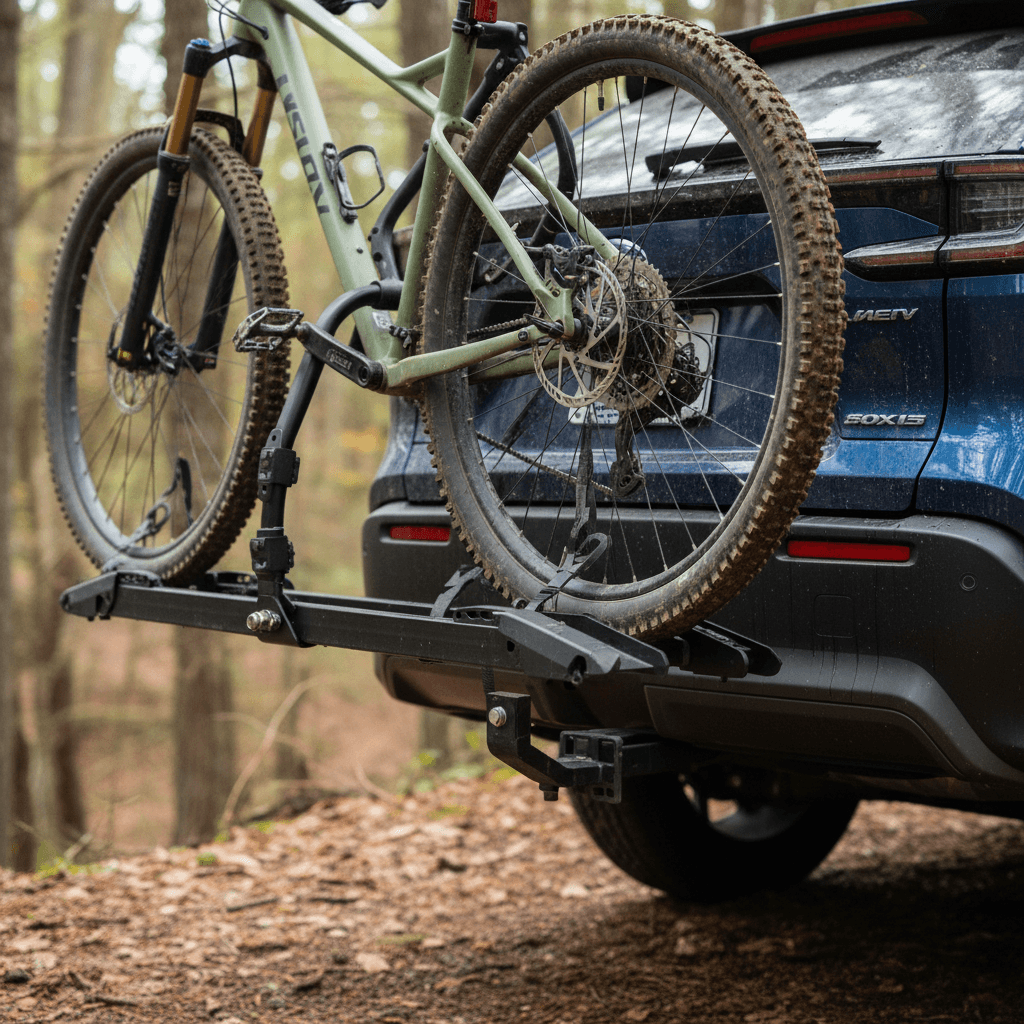
Common hitch setups on a Subaru Solterra
What most owners actually do in the U.S. market
Bike rack only
Many owners add a **1.25 or 2-inch receiver** purely for a bike rack. Tongue weight is usually limited to **100–200 lb** depending on the hitch and rack, which is plenty for 2–4 bikes but not a loaded trailer.
Cargo platform
A hitch‑mounted cargo tray can take bulky items like coolers or camping gear off the roof. Stay within the **tongue‑weight rating of the hitch and vehicle**, often 100–200 lb for Solterra‑specific receivers.
Light utility trailer (off‑label)
Some owners install a **Class II or light Class III hitch** rated ~2,000 lb and tow small utility trailers anyway. This can work physically but is **outside Subaru’s official guidance** and may create warranty and liability questions.
Don’t confuse hitch rating with vehicle rating
If you still want to tow (lightly): key scenarios and limits
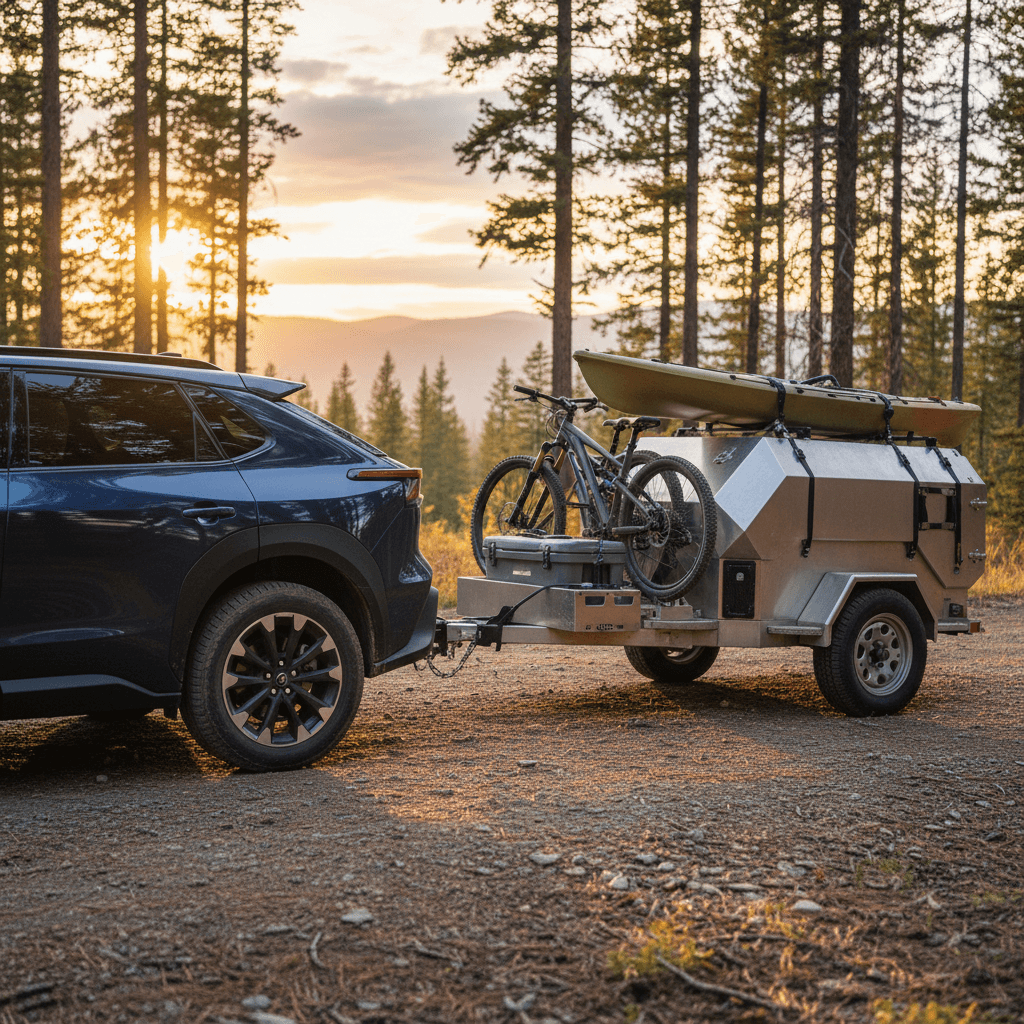
Many Solterra shoppers aren’t trying to haul a travel trailer across the Rockies; they just want to know if it can **pull a tiny utility trailer, a small kayak trailer, or a lightweight teardrop** a few times a year. Here’s how to think about that, realistically and conservatively.
Scenario 1: Tiny utility trailer for yard waste
Think a 4x6 or 4x8 open trailer with some brush or lumber, with total weight **well under 1,000 lb**.
- Keep speeds moderate and trips short.
- Use a **high‑quality hitch** installed by a shop that understands EVs.
- Stay far below the ~1,650 lb overseas benchmark and watch tongue weight (target well under 150 lb).
Risk tradeoff: Physically doable, but you’re still outside Subaru’s official recommendation in the U.S.
Scenario 2: Lightweight teardrop or camping pod
Even compact EV‑oriented campers often weigh **1,200–1,800 lb loaded**, already near or above overseas Solterra ratings.
- Expect a **30–50% range hit** at highway speeds.
- Brakes, stability, and crosswinds become bigger concerns.
- Aero drag matters more than raw weight on the highway.
Risk tradeoff: This is where I’d say the Solterra simply isn’t the right tool in North America.
A safer compromise: rack + small trailer
How towing affects Solterra range and charging stops
Even if we set the official “no towing” guidance aside for a moment, trailer towing is **range‑expensive** in any EV, and the Solterra is no exception. With a battery in the mid‑60 kWh range and EPA ratings in the low‑ to mid‑200‑mile band for early model years, you don’t have a huge buffer to start with.
What towing does to EV range (Solterra included)
On a **Solterra road trip with a small trailer**, you should plan around **shorter legs, often 100–140 miles between DC fast charges**, depending on terrain, speed, temperature, and trailer profile. That means more charging stops and more time spent planning routes around reliable fast chargers.
Cold weather makes everything worse
Warranty, insurance, and legal considerations
This is where the question shifts from “Can the Solterra tow?” to “What happens if something goes wrong while I’m towing?” In practice, that’s what Subaru’s lawyers are thinking about when they write **“SUBARU does not recommend towing a trailer with your vehicle”** into the owner’s manual.
What to think about before towing with a Solterra
1. Read your owner’s manual carefully
Look for explicit towing language for your model year. If Subaru says they do not recommend towing, assume that any trailer‑related failure could trigger warranty disputes.
2. Talk to your insurer
Some insurers treat **off‑label towing** differently, especially if a crash investigation finds you exceeded the manufacturer’s guidance. Ask up front how they’d view a Solterra towing claim.
3. Use a reputable installer
An experienced hitch shop can route wiring safely, avoid compromising the battery pack or crash structures, and size the hitch correctly. Improper drilling or mounting can create serious safety issues.
4. Keep documentation
If you do install a hitch, keep records of the parts, ratings, and installer. If a question ever comes up, you’ll want evidence that you acted reasonably and stayed within hardware limits.
5. Be honest about use
If you only ever plan to carry bikes, say so when you talk to Subaru or an installer. In many cases, a **rack‑only solution** is safer, simpler, and better aligned with Subaru’s guidance.
Lease and CPO fine print matter
Solterra vs. other EVs if towing is a priority
If towing is central to how you use a vehicle, say, you regularly pull a pop‑up camper or a pair of ATVs, the Solterra is probably **the wrong EV for that specific job** in the U.S. market. You’re fighting the manufacturer’s guidance, limited range, and a small‑SUV form factor, all at once.
Where the Solterra fits on the EV towing spectrum
Think of it as a light‑duty adventure SUV, not a dedicated tow rig.
Subaru Solterra
Best for: **AWD traction, light off‑pavement use, and carrying gear** on a rack or roof. Towing in the U.S. is off‑label and officially discouraged.
Tow‑friendly EVs
Rivian R1T/R1S, Ford F‑150 Lightning, and some larger crossovers publish **4,000–11,000+ lb ratings** and are engineered around towing use cases.
Middle‑ground crossovers
Some compact EV crossovers offer modest tow ratings (1,500–2,500 lb) and larger batteries, making them better occasional tow vehicles than the Solterra.
If you already own a Solterra and need towing only a few times a year, careful, light‑duty use may make sense. But if you’re **shopping** and towing is more than an occasional edge case, you’re better off considering EVs that advertise and support towing from the factory, or pairing a used Solterra for daily use with a separate, tow‑capable vehicle for heavier jobs.
How Recharged can help
Ready to find your next EV?
Browse VehiclesChecklist before you add a hitch or trailer to your Solterra
Pre‑hitch checklist for Subaru Solterra owners
1. Clarify your real use case
Are you actually towing a trailer, or just carrying bikes and extra cargo? For most Solterra owners, a **rack‑only hitch** is the safest, simplest answer.
2. Confirm your model year’s guidance
Pull the latest owner’s manual for your exact model year (2023–2026). Screenshot or print the towing section so you know exactly what Subaru states.
3. Choose the right hitch class
For racks and cargo platforms, a **light‑duty, vehicle‑specific receiver** is usually enough. If you insist on light towing, you’ll want a sturdier Class II/III design, but remember, that doesn’t change Subaru’s stance.
4. Check tongue‑weight math
Add up the weight of the hitch, rack/platform, bikes or cargo, and any trailer tongue load. Keep the total **comfortably below both the hitch rating and the effective 100–150 lb range** most Solterra setups use for safety.
5. Plan for wiring if you tow
Trailer lights typically require a **powered modulite harness** that isolates trailer loads from the vehicle’s sensitive electronics. Don’t splice randomly into an EV’s wiring harness.
6. Test drive with load locally
If you ever hook up a small trailer, do a short, low‑speed loop first. Listen for noises, watch temperature warnings, and check how the car brakes and regenerates before heading onto faster roads.
FAQ: Subaru Solterra towing and hitches
Frequently asked questions about Subaru Solterra towing
Bottom line: is the Subaru Solterra right for towing?
If your main question is **“Can the Subaru Solterra tow a trailer?”**, the honest answer for U.S. buyers is: **not in a way Subaru is willing to stand behind.** The platform can physically handle modest loads, overseas ratings around 750 kg make that clear, but Subaru of America has drawn a bright line and chosen not to publish a tow rating.
For most Solterra owners, the smarter play is to treat it as a **capable, efficient adventure SUV for racks and light cargo**, not a miniature tow rig. If you absolutely must tow, keep loads tiny, trips short, and expectations realistic about **range, warranty risk, and liability**.
If you’re still shopping and towing is a big part of your life, it may make more sense to **pair a used, tow‑friendly EV or hybrid with your adventure needs**, and that’s where Recharged can help. Our team can help you compare Solterra listings with other EVs, dig into real battery health and range via the Recharged Score, and figure out which setup actually works for your trailers, bikes, and road‑trip plans.