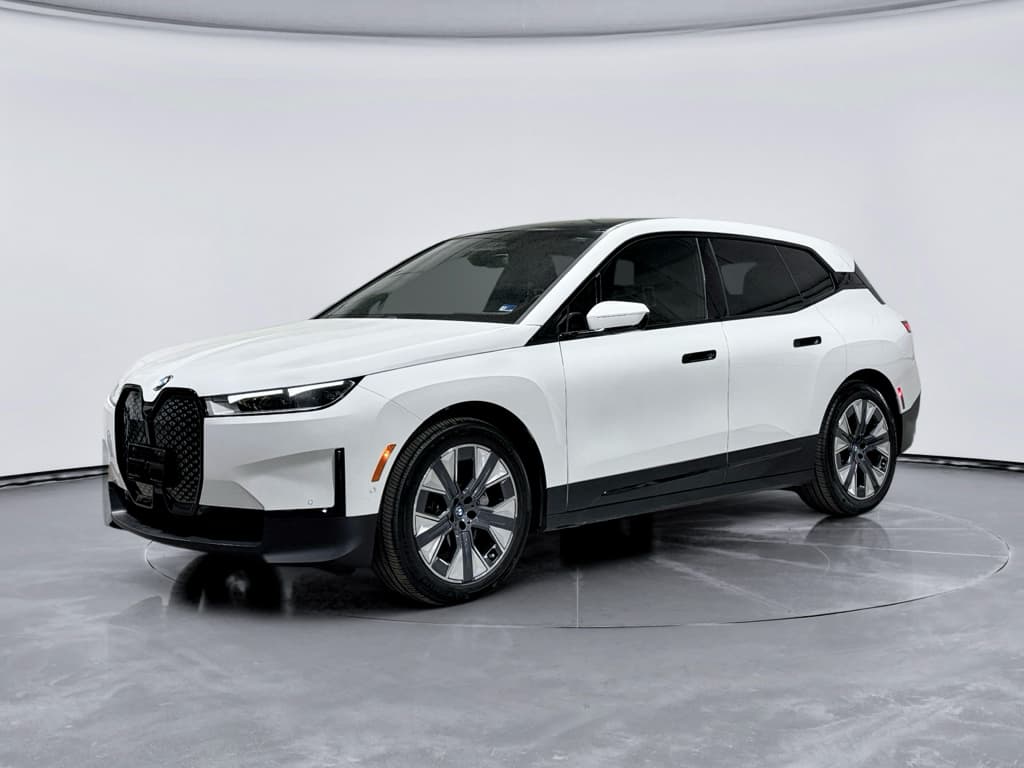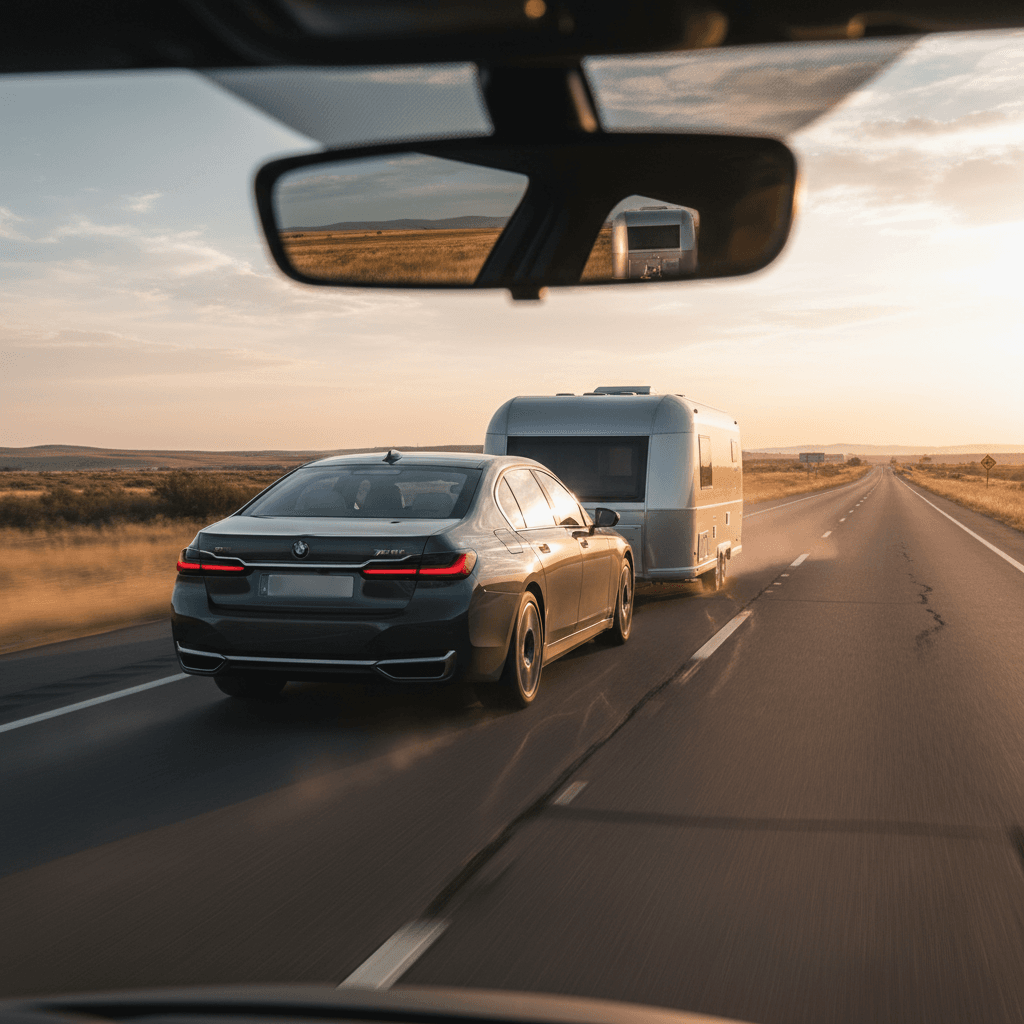
If you’re eyeing a BMW i7 and wondering, “Can this ultra-luxury electric limo actually tow a trailer?” the answer is a qualified yes, with some big asterisks. The i7 is mechanically capable of towing, and in many markets it even has an official tow rating, but how and where you use that rating really matters, especially if you’re in the U.S. or shopping used.
Short answer
Can a BMW i7 tow a trailer at all?
Under the skin, the BMW i7 xDrive60 is built on the same CLAR platform as the combustion 7 Series. It’s a heavy, long‑wheelbase sedan with air suspension, serious brakes and all‑wheel drive, exactly the bones you’d want for stable towing. That’s why in Europe and other regions, BMW offers an optional electric folding towbar and publishes factory tow ratings up to 2,000 kg (about 4,409 lbs) for braked trailers.
Where things get murky is North America. Documentation and databases often show the i7 as either “tow hitch possible” with 2,000 kg braked capacity, or “towing not recommended” and “no official tow rating” for U.S.‑spec cars. You’re not wrong if that sounds like BMW’s lawyers and engineers are wrestling in the back room.
Region matters a lot
Official BMW i7 towing capacity by market
BMW i7 xDrive60 towing numbers (factory-rated markets)
Most European and international spec sheets for the i7 xDrive60 list 2,000 kg braked and 750 kg unbraked towing capacity with the factory electrical folding towbar, plus 80 kg (176 lbs) maximum tow ball load. For a full‑size luxury EV sedan, that’s a respectable rating, think compact camper, small boat, or dual‑axle utility trailer, not a three‑row travel trailer.
By contrast, some North American guides and spec databases list the same basic car with phrases like “towing capacity: not recommended” or explicitly say the car isn’t officially rated for towing. That doesn’t mean the structure would suddenly fold like a beach chair under load; it means BMW USA has chosen not to back towing with a published rating and, potentially, with warranty coverage.
If your i7 has no published rating
Tow hitch options for the BMW i7
Common hitch paths for a BMW i7
From factory‑clean to aftermarket workarounds
1. Factory electric towbar (non‑U.S.)
In many European and overseas markets, the i7 can be ordered with a fold‑in, fold‑out electric towbar integrated into the car. This is the cleanest option, fully engineered and rated at up to 2,000 kg braked.
2. Aftermarket hidden hitches
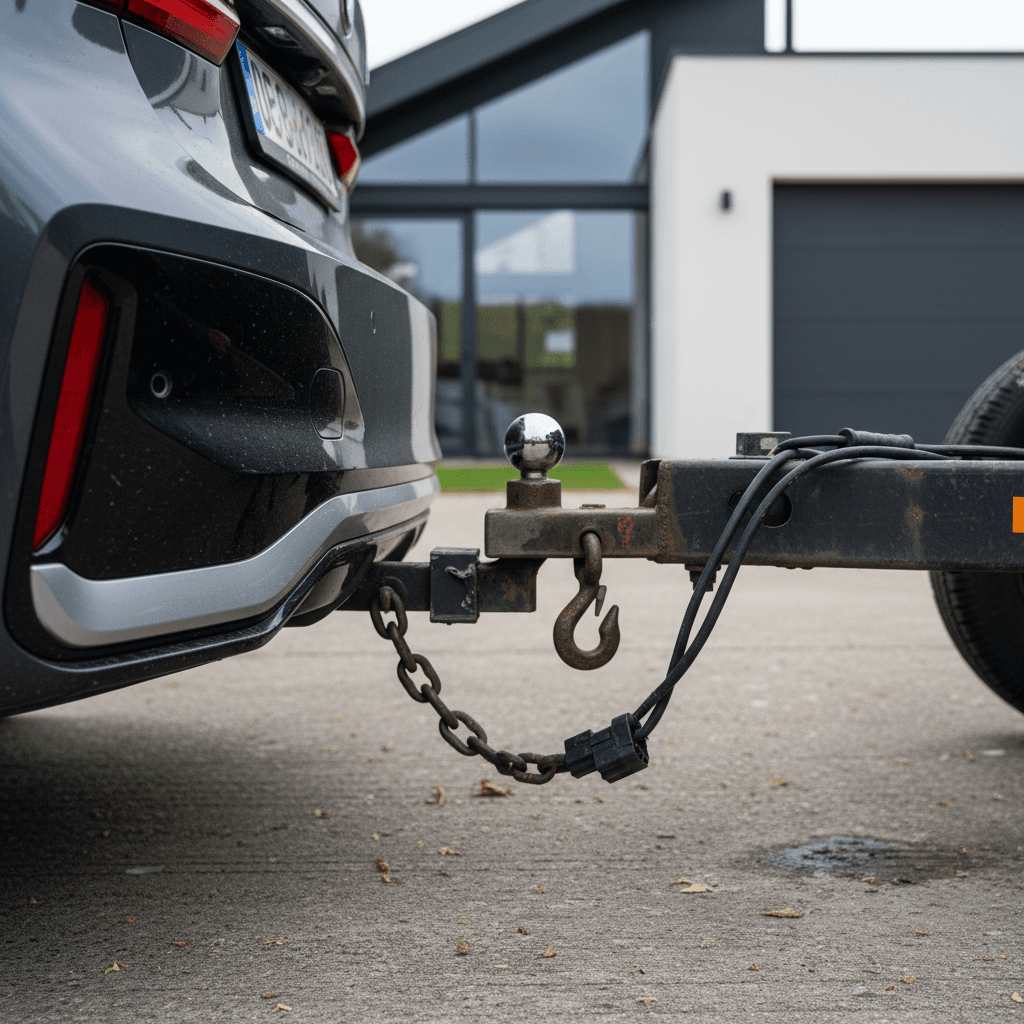
Where no factory towbar is offered (often the U.S.), some owners turn to aftermarket hidden hitches designed primarily for bike racks and light trailers. These can physically tow, but capacity is limited and may not be recognized by BMW.
3. No hitch, no tow
If your i7 has no approved hitch and no official rating, the default assumption is simple: it’s a luxury EV limo, not a tow vehicle. For many owners, that’s perfectly fine, and safer.
Check the paperwork first
From a daily‑use standpoint, a hitch on an i7 is often about bike racks and cargo platforms more than serious trailers. If that’s your use case, many hidden‑hitch suppliers publish a separate, usually higher, rating for "accessory" tongue weight than for towing. It’s critical not to confuse the two; hanging bikes is not the same as dragging a 3,500‑lb trailer through a crosswind.
How towing affects BMW i7 range
On paper, the i7 xDrive60 carries a battery of roughly 101–102 kWh usable and offers a WLTP range north of 350–380 miles depending on spec. That’s in fantasy‑land conditions: no trailer, modest speeds, and a very gentle right foot. Hook up a trailer, climb onto a U.S. interstate at 70–75 mph, and reality comes knocking.
- Light, aerodynamic trailer (small enclosed or teardrop, 1,500–2,000 lbs): expect roughly 25–40% range loss at highway speeds.
- Boxy utility trailer or small camper (2,000–3,000 lbs): 40–50% range loss is common on EVs, sometimes more in headwinds or hills.
- Heavier or taller than that: you’re into the territory where a large SUV, or a different vehicle altogether, makes more sense.
A realistic towing range example
The i7 can DC fast‑charge at up to about 195 kW under ideal conditions, which helps on road trips. But you’ll still spend more time at chargers simply because you’re burning range more quickly. And remember: pulling into a charger with a trailer attached can be awkward or impossible if the station wasn’t designed with trailers in mind.
Range‑planning checklist before you tow with an i7
1. Cut your usual range in half
When trip‑planning, start with a conservative assumption of <strong>50% of your normal highway range</strong>. You can always stretch later if conditions are better than expected.
2. Favor trailer‑friendly chargers
Look for charging stations with <strong>pull‑through layouts</strong>, extra space, or lots of empty stalls so you don’t block others while hooked up.
3. Watch speed and weather
Aerodynamic drag is merciless. Dropping from 75 to 65 mph can save huge chunks of range, especially with a tall trailer and winter temps.
4. Use the car’s trip computer
Reset trip data before you hitch up. Let the i7’s consumption readings teach you how much extra energy your specific trailer demands.
What kind of trailer can a BMW i7 realistically tow?
Numbers are one thing; sanity is another. Even if your region’s spec sheet says 2,000 kg braked, the i7 is still a low‑slung luxury sedan with long overhangs and an expensive body kit. This is not the car you drag down a rutted campground access road just to prove a point.
Realistic trailer matches for an i7 (factory‑rated markets)
Assumes a factory towbar with 2,000 kg braked capacity. Always respect GVWR, tongue weight, and local laws.
| Trailer type | Typical loaded weight | i7 suitability | Comments |
|---|---|---|---|
| 2–4 bike rack (hitch‑mounted) | Up to 150–180 lbs on hitch | Excellent | Fits well within 80‑kg tongue‑weight limit; this is the most common real‑world use. |
| Small utility trailer (landscaping, home projects) | 1,000–1,500 lbs | Good | Keep tongue weight modest; avoid overloading with stone or soil. |
| Compact boat or PWC trailer | 1,500–2,000 lbs | Good with care | Mind ramp angles; the i7’s ground clearance is modest. |
| Teardrop or ultra‑light camper | 1,800–2,500 lbs | Borderline | Feasible if under ratings and with aerodynamic design, but range hit is significant. |
| Full‑height travel trailer (20+ ft) | 3,500+ lbs | Poor | Even if technically under rating, aero drag and tongue weight make this a bad fit for an i7. |
Use these as general scenarios, not personalized recommendations.
The sweet spot
Warranty, safety, and insurance considerations
1. Warranty and BMW’s official stance
If your specific i7 configuration and market do not list a towing capacity, BMW can reasonably argue that any towing‑related damage falls outside design intent. That might affect coverage on the rear subframe, suspension, or even high‑voltage components if a failure is plausibly linked to over‑loading.
On a six‑figure EV with dense electronics and air suspension, that is not a cheap experiment.
2. Insurance and liability
Insurers care about two things: ratings and behavior. If you tow above the published capacity, or tow at all when your vehicle is listed as having no tow rating, you could give your insurer room to dispute a claim after an accident, especially if the trailer contributed.
At minimum, call your insurer and disclose your towing plans before you hitch up.
Air suspension and battery pack stress
Shopping for a used BMW i7 if you plan to tow
If you’re in the market for a used i7 and you know you’ll want a hitch, whether for bikes or a modest trailer, your due‑diligence list is longer than the average luxury‑sedan buyer’s. You’re not just buying range and leather; you’re buying structural integrity and prior‑owner judgment.
Used BMW i7 towing buyer’s checklist
1. Confirm regional tow rating
Ask for the original <strong>Monroney/window sticker</strong> or build sheet and verify whether the car was delivered with a factory towbar and a stated towing capacity in your market.
2. Inspect for aftermarket hitches
Look under the rear bumper for non‑OEM hardware. A hidden hitch isn’t necessarily bad, but you’ll want documentation of who installed it, ratings, and whether coding was done correctly.
3. Look for over‑use clues
Excess wear on rear tires, sagging suspension, paint scuffs near the hitch, or a hacked wiring harness can all hint at a previous life as an improvised tow mule.
4. Get an expert battery and structural check
Before buying, have the car evaluated. At Recharged, every EV we list gets a <strong>Recharged Score Report</strong> with verified battery health and inspection data, so you’re not guessing how hard the last owner worked the car.
5. Ask directly about towing history
A good seller should be able to tell you whether the car ever towed. If they can’t or won’t answer, assume there’s more weight in the story than they’re sharing.
How Recharged can help
BMW i7 vs electric SUVs for towing duty
Part of the confusion around towing with an i7 comes from the fact that many electric SUVs, BMW’s own iX included, advertise higher and clearer tow ratings. The hardware isn’t wildly different; what changes is ride height, packaging around the rear structure, and crucially, the intended duty cycle.
BMW i7 vs typical electric SUV as a tow vehicle
Where the luxury limo fits, and where it doesn’t
BMW i7 (luxury sedan)
- Lower ride height and overhangs, great for highway stability but easy to scrape on ramps.
- Factory tow rating up to about 2,000 kg braked in many non‑U.S. markets; ambiguous or absent ratings in the U.S.
- Best for light‑duty towing and hitch‑mounted accessories in civilized environments.
Electric SUV / crossover
- Higher ride height, shorter overhangs, and more upright stance for trailers.
- Often rated to tow 3,500–5,000+ lbs with clear guidance in North America.
- Better match for frequent towing, off‑pavement campsites, and heavier campers or boats.
If towing is something you’ll do a few weekends a year, and mostly with bikes or a petite trailer, the i7 can be a civilized accomplice. If you’re envisioning a standing reservation at KOA with a 5,000‑lb camper, you’re in electric‑SUV territory, not flagship‑sedan land.
BMW i7 towing FAQs
Frequently asked questions about towing with a BMW i7
Bottom line: Should you tow with a BMW i7?
The BMW i7 is perfectly capable of towing a modest trailer from an engineering standpoint, and in many markets it carries a perfectly respectable 2,000‑kg braked rating when ordered with a factory towbar. As a light‑duty tow vehicle for bikes, small watercraft and tidy utility trailers, it can be a quiet, composed partner, as long as you respect tongue‑weight limits and understand the hit to range.
Where things get tricky is in places, especially the U.S., where the i7 may show no official tow rating and no factory towbar option. In that context, adding an aftermarket hitch and pretending your electric limo is a pickup is a good way to stress hardware, complicate insurance, and shave years off an expensive battery‑suspension package.
If you’re towing a couple of weekends a year and you love the idea of a silent, opulent long‑range sedan, the i7 with a carefully chosen hitch can make sense. If your lifestyle is built around a trailer, you’ll be happier, and probably spend less in the long run, in an EV that was designed to drag serious weight from day one. And if you’re shopping used, a platform like Recharged can help you find an i7 whose history and battery health match the role you have in mind, on or off the hitch.