If you’re trying to make sense of the **California EV tax credit in 2026**, you’ve picked a complicated year. The big national tax break for new EVs largely vanished after late 2025, but California never stopped pushing electric. Instead of a single simple “EV tax credit,” you now have a patchwork of state grants, utility rebates, and remaining federal perks you can still tap, especially if you’re open to a **used electric vehicle**.
Quick reality check for 2026
Overview: California EV tax credit in 2026
The phrase “California EV tax credit 2026” is a bit of a misnomer. What most shoppers are really asking is, “**How much help can I still get if I buy an EV in 2026?**” In California, that help now comes less from classic tax credits and more from **point‑of‑sale rebates and grants**, plus a few lingering federal incentives for **home charging equipment**.
- Federal clean vehicle tax credits for most **new and used EVs ended for vehicles acquired after September 30, 2025**.
- California’s big statewide **Clean Vehicle Rebate Project (CVRP)** has already been phased out and replaced by income‑focused programs.
- The strongest remaining state incentives in 2026 are **Clean Cars 4 All (CC4A)** and the **Driving Clean Assistance Program (DCAP)** for qualifying buyers.
- You may still claim a **federal tax credit for installing home charging equipment** placed in service through June 30, 2026.
- Local air districts and utilities add their own rebates, especially if you live in or near major metro areas.
Think “stacking,” not “one big credit”
What happened to the federal EV tax credit?
The short version: **the window closed fast.** The Inflation Reduction Act re‑built the clean vehicle credit in 2023, then Congress changed course with new legislation in 2025. For everyday drivers in 2026, that leaves a very different picture.
Federal EV incentives as of the 2026 tax year
How federal clean vehicle and charger incentives changed heading into 2026.
| Program | Vehicles / Equipment | Status in 2026 | What it means for you |
|---|---|---|---|
| New Clean Vehicle Credit (30D) | Most new EVs and PHEVs | Ended for vehicles acquired after Sept. 30, 2025 | If you buy a new EV in calendar year 2026, you generally **can’t** claim this credit. |
| Previously Owned Clean Vehicle Credit (25E) | Used EVs / PHEVs from dealers | Ended on similar late‑2025 timeline | No standard federal tax credit for used EVs bought in 2026. |
| Commercial Clean Vehicle Credit (45W) | Fleet and business vehicles | Still available when rules met | If you buy an EV through a **business**, there may still be a credit. |
| Alternative Fuel Refueling Property Credit (30C) | Home and commercial EV charging equipment | Available through June 30, 2026 | You may still claim a **federal credit for a home charger** installed before the mid‑2026 deadline. |
Always confirm current IRS guidance before you buy, rules can change mid‑year.
You’ll still see 2025 talk about **Form 8936** for clean vehicles and Form 8911/30C for chargers, but for a personal‑use EV bought in 2026, that big federal **vehicle** number is gone. The one to watch now is the **EV charger credit**, which can still shave meaningful dollars off a home charging install if you get it done in time.
Double‑check your purchase date
California EV incentives in 2026: quick cheat sheet
Where California EV savings come from in 2026
What most California shoppers can still get in 2026
The exact mix depends on your income, location, and whether you buy new or used.
State grants & rebates
Biggest impact if you qualify.
- Clean Cars 4 All (CC4A) scrappage grants.
- Driving Clean Assistance Program (DCAP) for buyers statewide.
- Some programs pay the dealer directly, lowering your drive‑off price.
Local & utility programs
Often overlooked, very real money.
- Utility rebates for home chargers or EV purchases.
- Air district incentives in high‑pollution areas.
- Special off‑peak EV electricity rates.
Non‑cash perks
Worth hundreds a year in time and tolls.
- Clean Air Vehicle (CAV) HOV lane decals for many EVs.
- Toll discounts on some bridges and express lanes.
- Lower maintenance and fuel costs over time.
Clean Cars 4 All & Driving Clean Assistance: up to ~$12,000
When California retired its broad Clean Vehicle Rebate Project, it didn’t walk away from incentives. It **aimed them more squarely at households that feel gas prices the most**. That’s where **Clean Cars 4 All (CC4A)** and the **Driving Clean Assistance Program (DCAP)** come in.
Clean Cars 4 All (CC4A)
CC4A is run by the California Air Resources Board (CARB) and local air districts. It focuses on drivers who scrap older, higher‑polluting cars and replace them with cleaner vehicles.
- Who it targets: Lower‑income households in designated air districts (Bay Area, San Joaquin Valley, South Coast, and others as funding allows).
- What you get: Often **$5,000–$12,000** in grant funding toward a new or used EV, plug‑in hybrid, or other qualifying clean vehicle. Some regions also offer **extra money for home charging**.
- Vehicle types: New **or used** EVs from participating dealers, with caps on vehicle price and age.
Driving Clean Assistance Program (DCAP)
DCAP was designed to take the CC4A idea statewide, so drivers outside the original districts don’t get left behind.
- Who it targets: Low‑ and moderate‑income Californians, even if they don’t live in the legacy CC4A regions.
- What you get: Down‑payment assistance and grants that can reach several thousand dollars, plus access to **affordable financing** through participating lenders.
- Key twist: Instead of waiting for a tax refund, much of this help arrives as **up‑front money at the dealership or lender**.
How this looks in real life
Checklist: See if you’re likely to qualify
1. Check your income
Most programs key off **percentage of the federal poverty level** or area median income. Before you fall in love with a car, look up the latest income thresholds for your household size.
2. Confirm your ZIP code
CC4A is still tied to certain air districts. DCAP extends help statewide, but details vary. Your **ZIP code** will determine which application portal you use.
3. Verify your vehicle situation
For CC4A, you generally need to **scrap an older gasoline or diesel vehicle** that’s registered in California. You’ll have to produce proof of ownership and registration history.
4. Get pre‑approved before you shop
Many programs want you to **apply and be approved first**, then shop within their rules. Walking into a dealership first and asking questions later is how people miss out.
5. Stick to eligible vehicles & dealers
Both CC4A and DCAP limit which vehicles and dealerships qualify. In practice, that usually means working with a **participating dealer or marketplace** that understands the rules.
Other California EV benefits in 2026
The headline “EV tax credit” tends to drown out the quieter perks that still make a difference in daily life. In California, those extras stack up, especially in traffic and on toll roads.
California perks that don’t show up on your tax return
They won’t cut your purchase price, but they can cut real‑world costs and commute time.
Clean Air Vehicle (CAV) HOV decals
Qualifying EVs can still earn single‑occupancy access to many **carpool (HOV) lanes**. That’s not a tax credit, but if you battle freeway traffic, it’s practically a raise.
Toll and express‑lane savings
Some toll bridges and express lanes offer **discounted rates for clean vehicles** or carpooling. Those rules are updated often, check your local express lane operator before you assume you’ll glide through for free.
Lower running costs
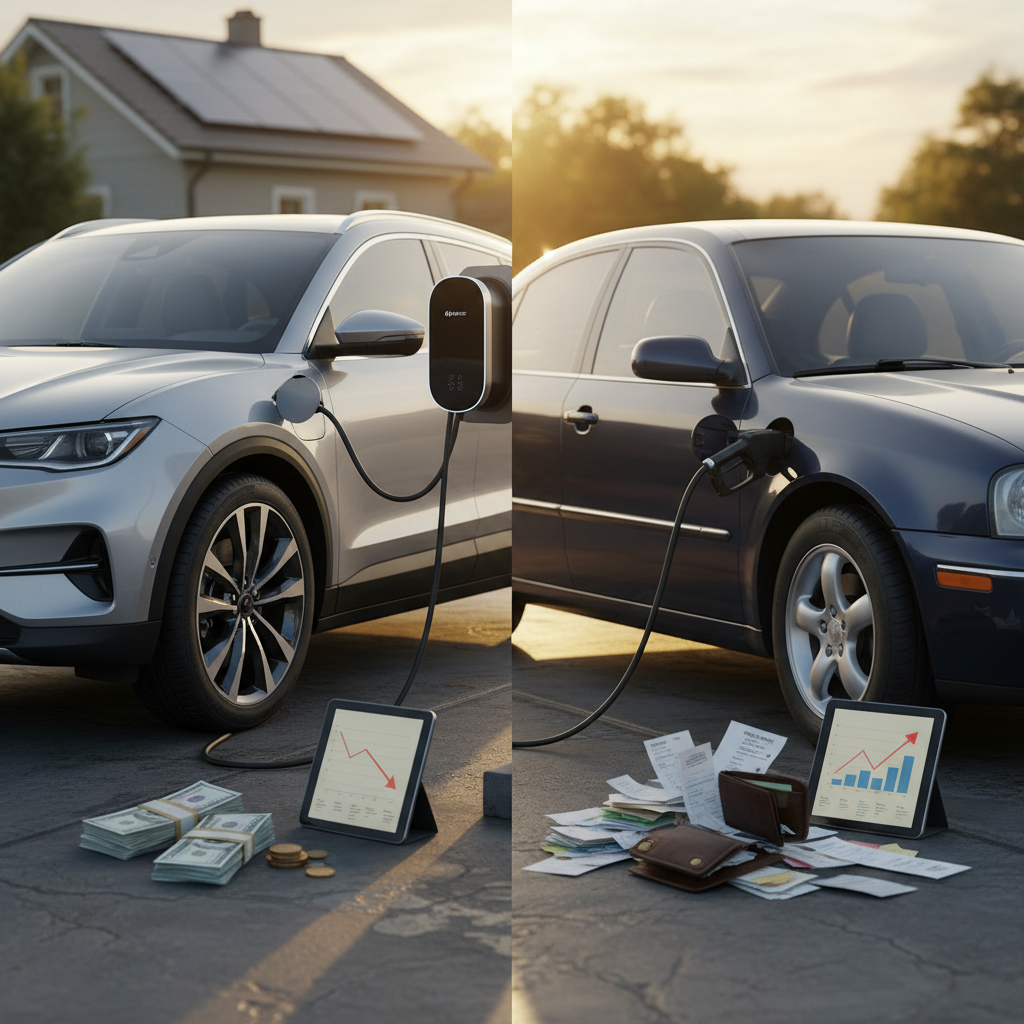
Electricity in California can be pricey, but an efficient EV on the right **time‑of‑use rate plan** can still beat gasoline costs by a wide margin, especially if you charge overnight.
Why this matters for used EVs
Local and utility EV programs to stack with state help
California’s state‑level programs grab the headlines, but the fine print, and the extra money, often lives closer to home. Utilities and regional air districts are still quietly sending out **checks and bill credits** to EV drivers.
Common local and utility EV benefits in California, 2026
Exact programs change fast, but these are the patterns you should look for with your local utility and air district.
| Type of benefit | Who offers it | Typical value | How to use it |
|---|---|---|---|
| Home charger rebate | Electric utilities (e.g., investor‑owned and municipal) | $200–$1,000 credit or rebate | Install a qualifying Level 2 charger, then submit proof of purchase and sometimes permit/inspection paperwork. |
| EV purchase or lease rebate | Some municipal utilities and community choice aggregators | $500–$4,000 depending on income & vehicle | Buy or lease an eligible new or used EV and apply online with your bill and purchase documents. |
| Time‑of‑use (TOU) EV rate plan | Most major utilities | Ongoing savings on off‑peak charging | Switch to an EV rate plan so your overnight charging is much cheaper than daytime household use. |
| Air district clean vehicle grants | Regional air quality districts | Hundreds to several thousand dollars | Check your district’s website for “Clean Cars 4 All” style grants or pilot programs targeting local pollution hotspots. |
Always search your utility’s name + “EV rebate” and your air district + “clean vehicle program” before you sign a purchase contract.
One simple search that’s worth real money
How used‑EV buyers can still benefit in 2026
If you’re shopping used, 2026 is quietly a very good year in California. The federal used‑EV credit is gone, but the **supply of lease returns and first‑generation EVs** keeps growing, and that matters more to your monthly payment than any single tax line.
Why used EVs shine in 2026
- Depreciation already happened: EVs tend to drop fastest in the first few years. You get the benefit without absorbing the early‑adopter hit.
- Battery tech is proven: We now have years of real‑world data on common models, how they age, what fails, and what doesn’t.
- State grants still apply: CC4A and DCAP can be used on qualifying used EVs, often making them much cheaper than a new economy car.
How Recharged fits into the picture
On Recharged, every used EV comes with a **Recharged Score Report**, including verified battery health and fair‑market pricing. That makes it easier to match a car to the rules of programs like CC4A, DCAP, and utility rebates.
- Filter for **California‑friendly models** that qualify for local incentives.
- Use the battery health data to stay within a program’s condition or warranty requirements.
- Lean on EV‑specialist support to navigate incentive paperwork while you shop entirely online.

2026 EV charger tax credit & home charging help
The **one major federal EV‑related tax credit that’s still standing in 2026** is the break for home charging equipment, officially the **Alternative Fuel Refueling Property Credit (Section 30C)**. It doesn’t lower your car payment directly, but it can slice a healthy chunk off the cost of installing a Level 2 charger before the program sunsets.
- Covers **qualified charging equipment** (and in some cases installation costs) placed in service through **June 30, 2026**.
- Typically worth **30% of the installed cost**, up to a cap per tax return.
- Claimed on your federal return for the year the charger is placed in service, using the appropriate IRS form.
- Can often stack with **utility charger rebates** and, in some cases, CC4A charging support.
Mind the June 30, 2026 deadline
How to stack incentives on a used EV step‑by‑step
Let’s put all of this into one road map. Say you’re a California household shopping for a reasonably priced used EV in 2026. Here’s how you make the most of what’s left.
Stacking California EV incentives in 2026
Track A: Income‑qualified households
Check CC4A or DCAP eligibility using your 2025 tax return and household size.
Apply for program pre‑approval and learn your **maximum grant amount** before you pick a car.
Shop used EVs that fit both your **budget** and the program’s **eligibility rules** (price caps, model year, clean title).
Use a marketplace like Recharged to find cars with **verified battery health**, then confirm with your program administrator or dealer that they qualify.
Close the deal using your grant as part of the down payment or point‑of‑sale rebate, and keep every document for your records.
If you own your home (or have landlord approval), schedule a Level 2 charger install before **June 30, 2026** and layer in the federal 30C credit plus any utility rebate.
Track B: Households that don’t qualify for grants
Skip the grant maze and focus on **total cost of ownership**, purchase price, financing, insurance, and energy costs.
Shop aggressively for a used EV whose price has absorbed early depreciation, think 3–5 years old, strong range, good reliability history.
Use Recharged’s **Recharged Score Report** to compare battery health and likely future range between similar cars.
Call your utility before you buy to confirm **EV rate plans** and any charger rebates you can still claim.
Install a home charger before June 30, 2026, capturing the remaining federal credit and any utility rebate.
Factor in HOV access and toll savings if you commute on crowded corridors, those time savings are part of your real‑world “return” on going electric.
Common pitfalls and how to avoid them
Avoid these expensive EV‑incentive mistakes in 2026
A little homework now beats a nasty surprise at tax time.
Counting on a federal credit that no longer exists
Plenty of dealership ads and outdated blog posts still mention the **$7,500 federal EV credit** as if nothing changed. In 2026, that’s usually wishful thinking. Before you mentally subtract $7,500 from the sticker price, verify the vehicle’s eligibility with the latest IRS guidance, or assume the answer is no.
Buying before your grant is approved
With programs like CC4A and DCAP, timing is everything. If you sign a purchase contract before your grant is officially approved, you may lose eligibility entirely. Always read the program rules and wait for a written approval or voucher number before you commit.
Choosing an ineligible vehicle
Some grants limit **MSRP, vehicle age, or even body style**. Don’t assume your dream crossover qualifies just because it plugs in. Work with a dealer or marketplace that’s used to these programs, or ask the program administrator to confirm specific VINs before you fall in love.
Ignoring charging costs and logistics
Snagging a deal on the car is only half the story. If you live in an apartment or have an older electric panel, installing a Level 2 charger can add thousands. Before you buy, talk to your landlord, electrician, and utility so you know whether the **home‑charging tax credit and rebates** will actually apply.
Watch for out‑of‑date information
California EV tax credit 2026: FAQ
Frequently asked questions about California EV incentives in 2026
Bottom line for California EV buyers in 2026
The era of a simple, widely available federal **EV tax credit** is over, for now. But California didn’t walk away from electric cars; it simply changed tactics. In 2026, the biggest wins come from **state grants for income‑qualified buyers, local utility and air‑district rebates, and the last stretch of the federal charger credit**, especially if you’re open to a well‑vetted used EV.
If you’re serious about going electric this year, treat incentives like another part of the shopping process, not an afterthought. Start with your eligibility for **Clean Cars 4 All or DCAP**, check your local utility’s EV offerings, and plan any home charging work before the **June 30, 2026** federal deadline. Then choose your car with the same care you’d use for any big purchase, battery health, price, and how it fits your daily life.
Recharged can help you stitch all of that together. With **transparent used‑EV listings, Recharged Score battery reports, EV‑savvy support, financing, trade‑in options, and nationwide delivery**, you can focus on finding a car that works for your budget while still making the most of California’s 2026 incentive landscape.