If you google “California electric car rebate 2026”, you’ll see a confusing mix of old programs, expired tax credits, and new acronyms. The old Clean Vehicle Rebate Project (CVRP) is gone, but California hasn’t walked away from EV incentives, it’s just shifted money toward income‑based and used‑EV programs. In this guide, you’ll see what’s actually available in 2026, who qualifies, and how to stack state, local, and federal benefits, especially if you’re shopping for a used EV through a transparent retailer like Recharged.
Snapshot for 2026
Overview: What “California electric car rebate 2026” really means
For years, the phrase “California electric car rebate” mostly meant the Clean Vehicle Rebate Project (CVRP), a simple post‑purchase rebate on new EVs. That program stopped accepting new applications in late 2023 and is not coming back in 2026. California’s policy makers have pivoted from “help anyone buy a new EV” toward “help the people who need it most and focus on pollution‑heavy older vehicles.” That means bigger checks for qualifying households, but more hoops to jump through, and very little for high‑income buyers of new luxury EVs.
California EV incentives in 2026 at a glance
Key California EV rebate programs active in 2026
Core ways Californians get EV money in 2026
Most rebates now flow through targeted state programs plus local utilities, not one big statewide check.
Clean Cars 4 All (CC4A)
Regional programs that pay you to scrap an older, higher‑polluting car and replace it with a cleaner option, often a new or used EV or plug‑in hybrid.
Amounts can be substantial but are limited to income‑qualified households in participating air districts.
Driving Clean Assistance Program (DCAP)
A newer, statewide expansion that builds on Clean Cars 4 All logic. DCAP focuses on first‑time and low‑income EV buyers, including used vehicles, with grants and loan assistance.
Utility & Local Rebates
Electric utilities and regional agencies offer their own rebates for EV purchases and home chargers. These are often smaller (hundreds of dollars), but easy to miss and relatively simple to claim.
Think “stacking,” not just one rebate
Clean Cars 4 All: Biggest checks, strictest rules
Clean Cars 4 All (CC4A) remains one of the most generous ways to get money for an EV in California in 2026, but it’s also the most narrowly targeted. Run through regional air quality management districts, CC4A pays low‑income residents to retire an older, dirtier car and replace it with a cleaner option, often an EV, plug‑in hybrid, or sometimes a transit or e‑bike package.
- You must live in a participating air district (for example, South Coast AQMD, Bay Area AQMD, and others).
- You must meet income limits, typically tied to a percentage of the federal poverty level.
- You must own an older gasoline or diesel vehicle that meets the program’s age and condition requirements, and you must scrap it.
- The replacement vehicle usually must be on an approved list of new or used clean vehicles, with price caps.
- Funding is finite and often released in cycles, when money is gone, applications pause until the next round.
Don’t assume your district participates
Depending on income, location, and whether you’re scrapping a vehicle, total Clean Cars 4 All incentives can exceed $10,000–$12,000 toward an EV, plus possible help with charging. For households that qualify, this can take a high‑mileage used EV from “out of reach” to “cheaper than a comparable gas car.”
Driving Clean Assistance Program: Statewide help for first-time and low-income buyers
Launched after CVRP’s sunset, the Driving Clean Assistance Program (DCAP) expands the Clean Cars 4 All model across California. The emphasis is on first‑time and low‑income EV buyers, including those purchasing used vehicles, even if they aren’t scrapping an old car.
Who DCAP is built for
- Households under specified income thresholds (varies by region and household size).
- Drivers with older, less‑efficient vehicles who want to move into a cleaner car.
- First‑time clean vehicle buyers who might struggle to qualify for favorable financing.
In 2026, policy makers are explicit: the goal is to accelerate EV adoption among drivers who’ve been left out so far, not subsidize another luxury car in a two‑Tesla household.
What you can get
- Grants toward the purchase price of a new or used EV or plug‑in hybrid.
- Additional funds if you scrap an older gas vehicle, especially in disadvantaged communities.
- Loan and down‑payment assistance to make monthly payments affordable.
- Sometimes, support for home charger installation or access to public charging.
Local administrators can layer DCAP support on top of regional programs, so the exact dollar amounts vary. In some 2026 scenarios, grants reach or exceed $12,000 for qualifying buyers.
Good news for used EV shoppers
Ready to find your next EV?
Browse VehiclesUtility & local rebates: The “quiet” money most people miss
Beyond state‑administered programs, many California drivers in 2026 can stack utility and local EV rebates on top of CC4A or DCAP. These incentives are smaller, usually in the hundreds rather than thousands, but they’re often easier to claim and less income‑restricted.
Where local EV money typically comes from
Amounts change frequently, but the structure is similar across utilities.
EV purchase / lease rebates
Some utilities and regional air districts offer rebates for buying or leasing an EV. These can apply to new or used vehicles, though amounts and eligibility vary.
Think in the range of a few hundred to a couple thousand dollars in 2026, not CVRP‑scale checks, but still meaningful.
Home charger rebates
Many California utilities offer $200–$500 discounts or rebates on qualifying Level 2 home chargers, or they provide the hardware at a discount.
These often stack with state grants tied to Clean Cars 4 All or DCAP when you install home charging.
Time‑of‑use (TOU) rate plans
Not a rebate in the check‑in‑the‑mail sense, but EV‑specific TOU electricity rates can cut your fueling cost by 50% or more if you charge off‑peak.
Over a few years, this can rival a small rebate in total savings.
How to find utility EV incentives quickly
Federal incentives in 2026 and how they stack with California rebates
On top of California’s own programs, 2026 buyers are still navigating a changing federal landscape. Several key federal supports remain in play, even as older tax credits phase down or out.
Major federal EV‑related benefits in 2026
Exact rules are complex and subject to change, but this table captures the big moving pieces most California shoppers should know about in 2026.
| Benefit | What it does in 2026 | Who it helps most | Stackable with CA rebates? |
|---|---|---|---|
| Clean Vehicle Credit (new EVs) | Continues in modified form through at least late 2025; availability in 2026 depends on federal law changes and battery sourcing rules. | Buyers of qualifying new EVs meeting price and income caps. | Often yes, but check each California program’s rules. |
| Used Clean Vehicle Credit | Provides a smaller federal tax credit for qualifying used EVs bought from dealers, subject to price and income limits. | Budget‑conscious buyers of used EVs from legitimate dealers. | Generally stackable with CA used‑EV assistance, subject to program‑level caps. |
| Home charging / refueling credit | The long‑standing federal credit for EV charging equipment is scheduled to sunset mid‑2026 under current law. | Homeowners installing Level 2 charging hardware before the phase‑out date. | Can pair with state or utility charger rebates, but credit value may be modest. |
| Auto loan interest deduction (OBB Act) | A newer federal law allows many buyers to deduct interest on qualifying auto loans, including EVs, for vehicles purchased 2025–2028. | Households financing an EV with significant interest costs. | Works alongside state rebates and grants because it’s tax‑side, not point‑of‑sale. |
Always confirm the latest IRS and Department of Energy guidance before you make a purchase decision tied to a federal incentive.
Federal timeline risk
Can you get a California rebate on a used EV in 2026?
Unlike the old CVRP, which mostly favored new cars, California’s 2026 incentive structure is very friendly to used EVs, as long as you fit the target profile. Programs like Clean Cars 4 All and Driving Clean Assistance often allow or even encourage used EV purchases, because they deliver more emissions reduction per public dollar spent.
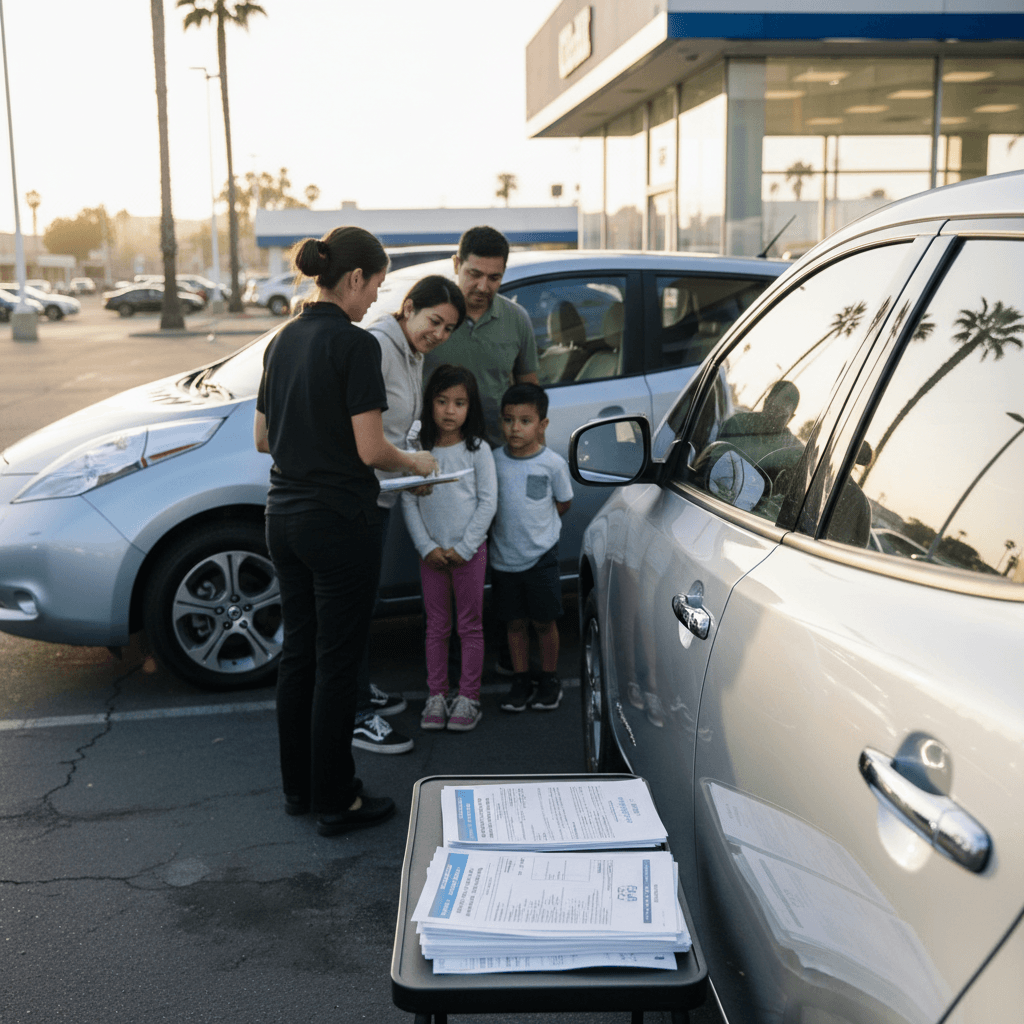
Used EV rebate checklist for California in 2026
1. Confirm you buy from an eligible seller
Many state and federal benefits require that you buy from a licensed dealer (not a private party) and that the vehicle is titled correctly. Recharged operates as a licensed retailer and marketplace, so vehicles purchased through the platform are structured to meet dealer requirements.
2. Verify program‑specific used‑EV rules
Some programs cap the purchase price of a used EV, limit age/mileage, or require a minimum battery range. Pull the latest implementation manual or FAQ for Clean Cars 4 All or DCAP before you shop.
3. Document battery health
State programs increasingly care about <strong>long‑term emissions and usefulness</strong>. Buying a used EV with a verified battery‑health report, like the Recharged Score, can strengthen your case with lenders and help ensure the car meets program expectations.
4. Line up financing that matches the program
If you’re using DCAP or similar assistance, there may be approved lenders or loan structures. Recharged’s financing partners understand EV incentives and can help you design a loan that works alongside grants.
5. Keep all purchase paperwork organized
You’ll typically need the purchase contract, registration, proof of income, proof of address, and sometimes photos or inspection forms. Treat the incentive application like a small mortgage file, not a quick coupon.
How much can you realistically save in 2026? Scenarios
The natural question behind any search for a “California electric car rebate 2026” is: “What does this do to my out‑of‑pocket cost?” Let’s walk through realistic scenarios, not fantasy stacks that almost nobody qualifies for.
Scenario 1: Low‑income driver replacing a clunker with a used EV
Think of a driver in a disadvantaged community, scrapping a 20‑year‑old sedan.
- State grant (CC4A or DCAP): $10,000–$12,000 toward a used EV.
- Utility EV rebate: $500 on the vehicle, plus $300 on a home charger.
- Federal used EV credit: Up to several thousand dollars, depending on current rules, income, and vehicle price.
On a $22,000 used EV, the effective out‑of‑pocket can fall into the high single digits, especially with low‑interest financing and off‑peak charging rates.
Scenario 2: Middle‑income buyer in 2026, no clunker to scrap
Picture a household making just above the low‑income thresholds, trading a relatively recent gas car for a newer used EV.
- State grant: Maybe a modest DCAP grant, or none if income is too high.
- Utility charger rebate: $200–$500 toward Level 2 hardware.
- Federal benefits: Potentially a used EV credit and auto loan interest deduction if the car and loan qualify.
Here, the state rebate impact might be modest, but running costs plunge. Compared to a similar gas crossover, you could save thousands on fuel and maintenance over five years, even without a giant upfront check.
Why Recharged buyers often do better
Step-by-step: How to actually claim California EV rebates
The biggest mistake people make is treating incentives as an afterthought. In 2026, you should plan your purchase around the rebate rules, not bolt them on after you’ve signed the contract. Here’s a practical sequence you can follow.
10-step roadmap to your 2026 California EV rebate
1. Map your eligibility
Start with three questions: Do you live in a participating Clean Cars 4 All district? What’s your household income and size? Do you own a scrap‑eligible gas or diesel car? This determines whether you’re aiming at CC4A, DCAP, or mainly utility/federal benefits.
2. Check current program status
Funding cycles and rules change often. Visit your air district’s CC4A page and the Driving Clean Assistance site. Confirm that applications are open, note current income and vehicle caps, and bookmark the application portals.
3. Decide new vs used, and price range
Based on your eligibility, decide whether a <strong>used EV</strong> makes more sense than new. For many 2026 buyers, targeting a well‑priced used EV in the $15,000–$30,000 range maximizes the bang per incentive dollar.
4. Get pre‑qualified for financing
Before you fall in love with a specific car, <strong>get pre‑qualified</strong>. Recharged lets you pre‑qualify with no impact to your credit, so you can see realistic monthly payments and understand how grants would change the numbers.
5. Shop only vehicles that meet program rules
Use filters on Recharged and other platforms to focus on EVs that fit program caps (price, age, range). Check that the VIN and model appear on current eligible‑vehicle lists when required.
6. Confirm incentive compatibility before signing
If you’re counting on a state grant, talk with the program administrator or dealership support staff and confirm that the specific vehicle, purchase type (cash vs finance), and timing match the rules. Capture that confirmation in writing when possible.
7. Complete the purchase with clean paperwork
Make sure your purchase contract, bill of sale, and registration reflect the exact buyer, price, and VIN you’ll use on your application. Any discrepancy is a reason for delays or denials.
8. Submit applications immediately
Don’t wait weeks. Upload your documents to Clean Cars 4 All, DCAP, and utility portals as soon as you have them. Some programs effectively operate first‑come, first‑served within each funding tranche.
9. Track approvals and timelines
Set calendar reminders to check application portals. Some programs require follow‑up documents or verifications. Missing a deadline or email request can cost you the rebate.
10. Re‑optimize your charging costs
Once you have the car, enroll in an EV‑friendly time‑of‑use plan with your utility, and if you installed a Level 2 charger, submit any final rebate paperwork. Your incentive journey doesn’t end the day you drive off the lot.
Common pitfalls that cost Californians their rebates
- Buying first, reading rules later. Many programs will not retroactively bend rules to fit a car you already bought.
- Missing income documentation. If your reported income doesn’t match tax transcripts or program definitions, approvals stall or die.
- Choosing an ineligible vehicle. Price caps, body‑type rules, and minimum range requirements can all disqualify a car that otherwise looks perfect.
- Assuming CVRP still exists. Some dealers and older blog posts still reference CVRP. In 2026, there is no open statewide CVRP‐style rebate for all buyers.
- Ignoring timing windows. Federal and state programs often have purchase‑date and application‑date limits. Missing by even a week can mean zero dollars.
Beware of “rebate included” dealer math
FAQ: California electric car rebate 2026
Frequently asked questions about California EV rebates in 2026
Is 2026 still a good year to buy an EV in California?
If you define “good” purely by the size of a simple statewide check, then the glory days of California EV rebates are behind us, CVRP is history and probably not coming back in its old form. But if you look at who the state is trying to help in 2026, a different story emerges. For low‑ and moderate‑income drivers, especially those willing to buy a well‑vetted used EV and retire an older gas car, the combination of Clean Cars 4 All, Driving Clean Assistance, local rebates, and federal benefits can still knock five figures off the effective cost of ownership.
The key is to treat incentives as part of your shopping strategy, not an afterthought. Start by mapping your eligibility, then choose a vehicle and financing path that line up with the rules. That’s where a transparent, EV‑only platform like Recharged earns its keep, every listing includes a Recharged Score battery‑health report, pricing grounded in real market data, available financing and trade‑in support, and human specialists who spend all day navigating the policies behind the metal. In a 2026 landscape defined by complexity rather than simple coupons, that kind of guidance is often worth more than the last few dollars on the sticker.