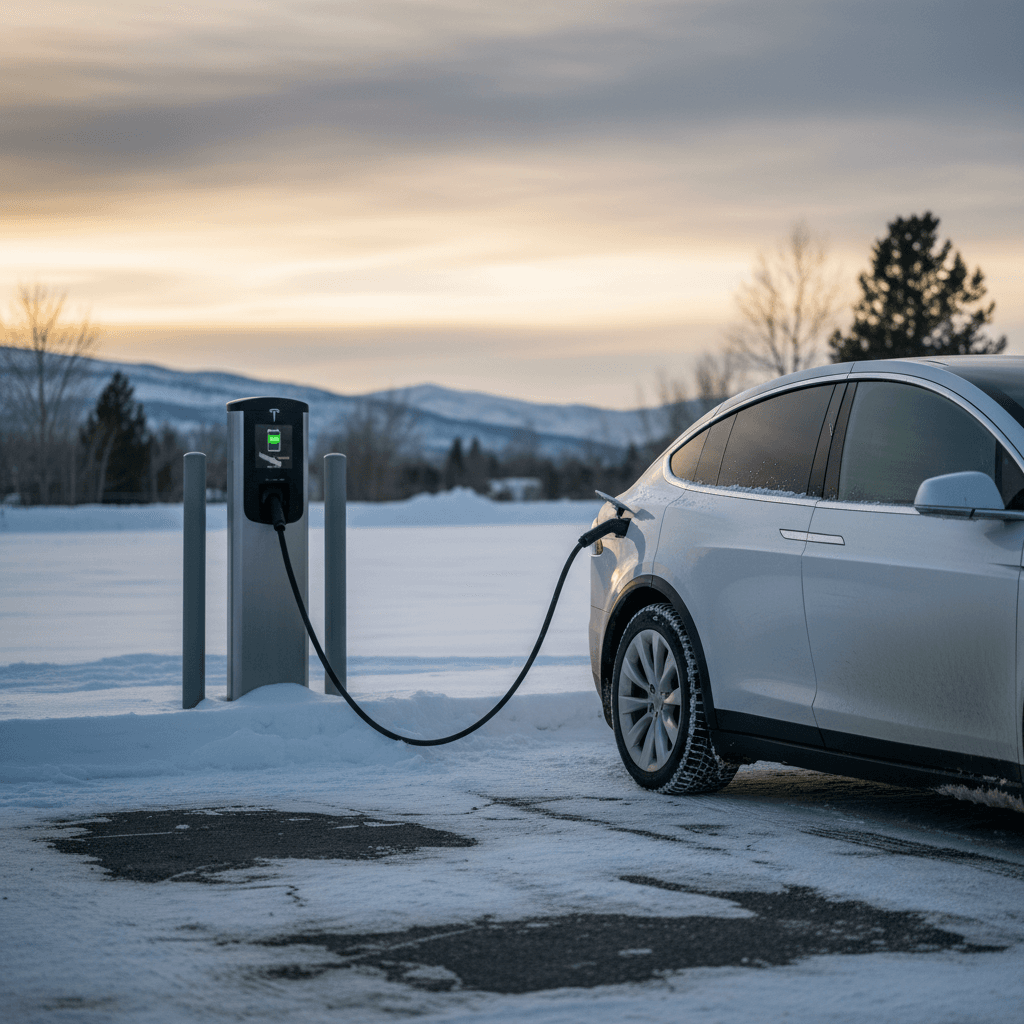
If you’re shopping for or already driving a Cadillac Lyriq, you’ve probably seen the 319–326‑mile EPA range and wondered what happens in January when it’s 20°F, the roads are wet, and the heater is cranked. Cadillac Lyriq winter range loss is real, and early data suggests it can be steeper than some rivals, but it’s also predictable and manageable if you know what to expect.
Key takeaway
Cadillac Lyriq winter range loss: the short version
- The 2025 Lyriq is EPA‑rated up to 326 miles (RWD) and 303–319 miles (AWD), depending on configuration.
- Independent winter testing of multiple EVs shows an average 20% range loss around 32°F, with some models performing much better or worse.
- In a large 2025 study, the Cadillac Lyriq retained about 72% of its rated range in freezing temps, worse than many similarly equipped EVs, including some with heat pumps.
- Real Lyriq owners report winter highway ranges in the 160–220‑mile ballpark on a full charge, depending on wheel size, speed, temperature and wind.
- The Lyriq’s Ultium battery and hardware are still well‑suited to cold climates, but you need to size your expectations (and charging stops) to winter, not the EPA label.
Don’t plan winter trips on EPA range alone
EPA range vs winter reality for the Cadillac Lyriq
Cadillac positions the Lyriq as a long‑range luxury EV SUV, and on paper the numbers back that up. For 2025, EPA‑estimated range is:
2025 Cadillac Lyriq EPA range ratings
How Cadillac’s official EPA range ratings compare across trims.
| Configuration | Drive | Battery (usable) | EPA range |
|---|---|---|---|
| Lyriq RWD (single motor) | RWD | ~102 kWh | 326 miles |
| Lyriq AWD (11.5 kW onboard) | AWD | ~102 kWh | 319 miles |
| Lyriq AWD (19.2 kW onboard) | AWD | ~102 kWh | 303 miles |
Official EPA numbers are a starting point, not what you’ll see in a cold Midwest winter commute.
Those ratings come from standardized test cycles in controlled conditions, roughly equivalent to mild weather, moderate speeds, and no accessories blasting. Real‑world range in any EV will slide up or down based on how and where you drive. In winter, three forces collide:
- Cold batteries are less efficient at accepting and delivering energy.
- Cabin heating, even with an efficient heat pump, can consume several kilowatts continuously.
- Heavier rolling resistance from cold tires, wet or snowy pavement, and higher air density at low temperatures.
For the Lyriq, that means your 319‑mile AWD rating might look more like 210–230 miles on a 25°F day with mixed highway and city driving, and closer to 180–200 miles if you’re running 75 mph into a headwind.
How much winter range loss can Lyriq drivers expect?
What recent studies show about EV winter range
Translated into numbers that matter for you, a typical Lyriq owner can expect something like this:
Sample Cadillac Lyriq winter range scenarios
Approximate expectations for a healthy battery driven from 100% down to around 5–10% state of charge.
Mild winter city driving (30–40°F)
- Mix of stop‑and‑go and 40–50 mph
- Heater at moderate setting
- RWD: ~230–250 miles usable
- AWD: ~210–230 miles usable
Typical highway winter trip (20–30°F)
- 65–72 mph steady speeds
- Dry or lightly wet pavement
- RWD: ~200–220 miles usable
- AWD: ~180–210 miles usable
Harsh cold & snow (single digits–teens)
- Snowy roads, strong heater use
- Frequent defrost, possible headwind
- RWD: ~160–190 miles usable
- AWD: ~140–180 miles usable
Plan with a buffer
Why the Lyriq can lose more range than some rivals
On paper the Cadillac Lyriq has what you’d expect from a cold‑weather‑ready EV: a big Ultium battery, liquid thermal management, and a heat‑pump‑based HVAC system. Yet in at least one major 2025 winter range study, the Lyriq landed near the bottom of the pack, retaining roughly 72% of its rated range in freezing conditions, worse than many other heat‑pump‑equipped EVs.
1. Weight and aero
The Lyriq is a large, heavy luxury SUV, often pushing well over 5,800 pounds. In cold weather, rolling resistance climbs and air is denser, so a heavier, boxier vehicle simply needs more energy per mile than a smaller crossover like a Hyundai Ioniq 5 or Tesla Model Y.
2. Thermal strategy & software
How the software prioritizes cabin comfort vs. efficiency matters. Early data suggests GM’s calibration for the Lyriq may favor warmer cabins and stronger battery conditioning, which is great for comfort and longevity but can show up as bigger winter range losses in the short term.
3. Driving patterns
Many Lyriq buyers use the car for long interstate runs at 70–80 mph, exactly the scenario where winter range loss is magnified. Hold the same speed in a compact EV on lower‑speed suburban routes and you’ll see far less of a hit.
4. Young platform, fast‑evolving software
The Lyriq rides on GM’s Ultium platform, and early model years have already seen multiple over‑the‑air updates for range estimation and charging. If you’re in a 2023–2024 Lyriq, your winter behavior today is probably better than it was at launch, and it may keep improving.
Heat pump helps, but it’s not magic
Real Cadillac Lyriq owner experiences in winter
Numbers from labs and analytics firms are useful, but what matters most is what owners actually see on their dashboards. While experiences vary, persistent themes are emerging in forums and owner groups:
- AWD Lyriq drivers with 20" wheels often report 200–230 miles in mild weather at highway speeds, and closer to 160–200 miles when temps dip well below freezing.
- Some owners see the car project 300+ miles at 100% charge, only to watch the estimate fall quickly and end a trip around 200–230 miles, a sign that the guess‑o‑meter is still learning their pattern and conditions.
- A few drivers have flagged what feels like "fake degradation", for example, 20% state of charge showing ~50 miles remaining (implying only 255 miles at 100%). In most cases, this ties back to recent low efficiency (1.7–2.2 mi/kWh) during cold highway driving rather than true battery damage.
- Owners in milder climates who mostly do suburban driving at 40–55 mph often get very close to the EPA number once weather warms and the car has a few months to learn their habits.
"My AWD Lyriq with 20" wheels gets about 200–230 miles on a full charge in mild weather at highway speeds. In extremely cold weather, I’ve seen as low as 120–160 miles."
Watch your efficiency, not just miles
Planning winter trips in a Lyriq
If you live in the Midwest, Northeast, Mountain West or Canada, the Lyriq can absolutely be a capable road‑trip vehicle, provided you size your expectations to winter reality. Here’s how to think about it.
Winter trip‑planning rules of thumb for Lyriq owners
Conservative planning gives you luxury‑car comfort without range anxiety.
1. Use 65–70% of EPA as your winter baseline
2. Space DC fast‑charge stops 120–150 miles apart
3. Budget extra time for slower winter charging
Use multi‑network trip planners
11 ways to reduce winter range loss in your Lyriq
You can’t beat physics, but you can work with it. The Lyriq gives you a modern heat‑pump HVAC system, battery preconditioning, and detailed energy data. Use them to your advantage.
Practical steps to stretch Cadillac Lyriq range in cold weather
1. Precondition while plugged in
Use the myCadillac app or in‑car settings to warm the cabin and battery <strong>before</strong> you unplug. This pulls energy from the grid instead of your pack and reduces the initial efficiency hit.
2. Rely on seat and steering wheel heaters
Heated surfaces draw far less power than blasting hot air. Set cabin temperature a few degrees lower and let seat and wheel heat keep you comfortable.
3. Dial back highway speeds
Going from 78 mph to 68 mph can save <strong>15–20% energy</strong> in cold weather. On a 200‑mile winter leg, that alone can be the difference between arriving at 15% or staring at 0%.
4. Use "Hold" or strong regen when appropriate
Maximize regenerative braking where traction allows. In snow or ice, step down regeneration if the wheels feel grabby, but don’t leave free energy on the table in normal conditions.
5. Keep tires properly inflated
Cold weather can drop tire pressure several PSI. Underinflated tires increase rolling resistance and eat into range. Check pressures monthly in winter.
6. Clear snow and ice before driving
Snow buildup on the roof and wheel wells adds weight and drag. A few extra minutes with a brush can give you a few extra miles of range.
7. Avoid short back‑to‑back trips on a cold pack
Multiple 5–10 mile drives with a cold battery are brutal for efficiency. If you can chain errands into one longer trip, your mi/kWh will improve.
8. Use eco/efficiency drive modes
If your Lyriq trim offers an efficiency‑oriented mode, use it in winter. It can soften throttle response and optimize HVAC behavior for better range.
9. Precondition before fast charging in the cold
If you’re heading to a DC fast charger, enable battery preconditioning in navigation where available so the pack is warm when you arrive, critical for good winter charging speeds.
10. Watch real‑time energy use on the display
The Lyriq’s energy screen shows how much power HVAC, drivetrain and accessories use. If the HVAC bar is towering over everything else, you’ve found your low‑hanging fruit.
11. Update software when available
GM has already pushed OTA updates that affect range estimation and thermal behavior. Staying current can improve how your Lyriq handles winter energy demands.
Winter range loss vs long‑term battery health
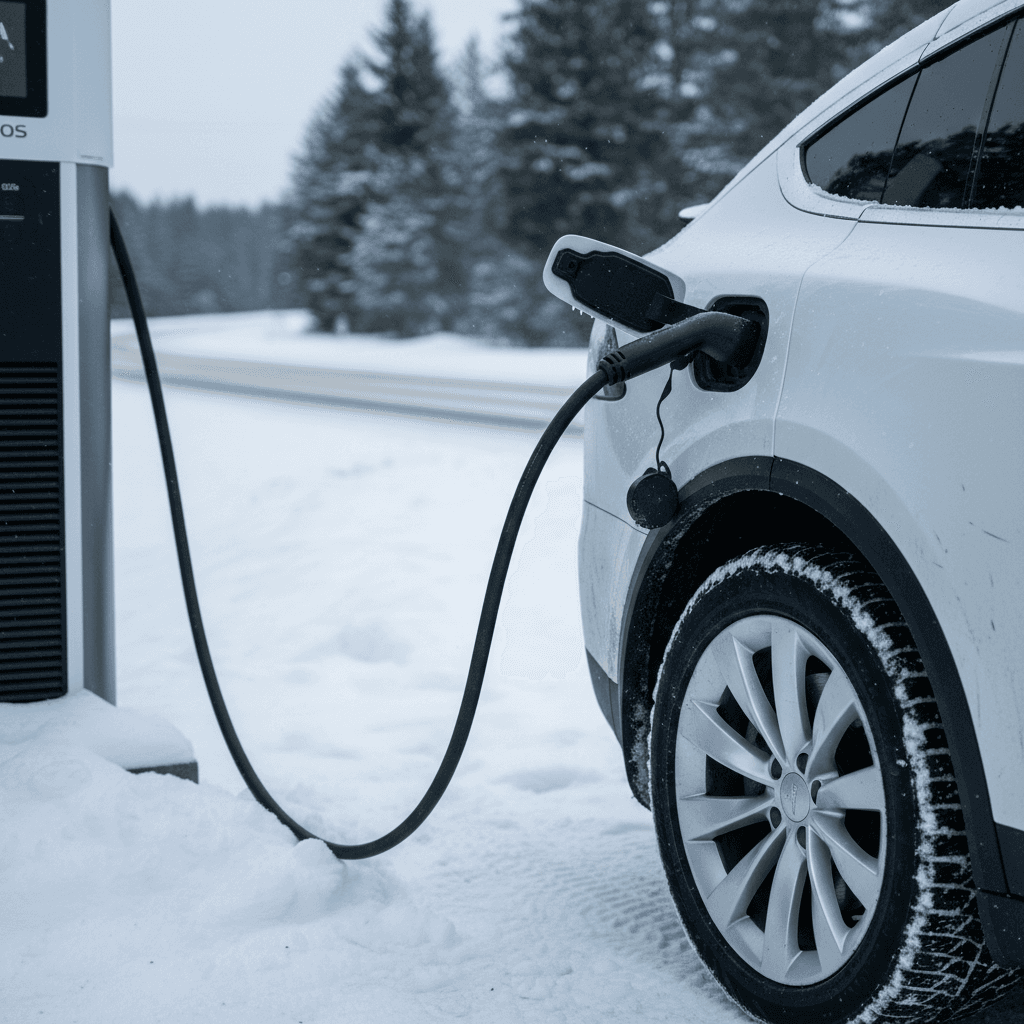
A common fear among new EV owners is that winter range loss means the battery is permanently damaged. In reality, most of what you’re seeing December through March is temporary behavior, not hard degradation.
What’s temporary
- Lower energy efficiency (mi/kWh) because of cold chemistry and HVAC load.
- More conservative state‑of‑charge buffers built into the software in cold weather.
- Slower DC fast‑charging curves until the pack warms up.
What’s long‑term degradation
- Permanently reduced usable capacity due to age, cycles, or abuse.
- Noticeably lower summer range even in mild conditions and gentle driving.
- Visible drops in capacity reported by a diagnostic scan or battery‑health report.
Why this matters for used Lyriq buyers
Ready to find your next EV?
Browse VehiclesBuying a used Cadillac Lyriq if you live in a cold climate
The Lyriq is starting to show up in meaningful numbers on the used market, which is great news for shoppers who want luxury‑SUV comfort without new‑car pricing. If you’re in the Upper Midwest, New England, or a mountain state, you’ll want to layer winter range expectations into your shopping process.
Cold‑climate checklist for used Lyriq shoppers
Questions to ask and data to look for before you buy.
Battery health and warranty
Ask for a battery‑health report or diagnostic scan. GM’s EV battery warranty typically covers 8 years/100,000 miles against excessive capacity loss, but a third‑party health report tells you where the pack sits today.
Winter usage history
Has the car spent its life in Arizona or Minnesota? Neither is a dealbreaker, but a vehicle that’s done lots of DC fast charging at high SOC or towing in heat may have a different battery story than a commuter in a mild climate.
Compare test drives
Drive the car on the same route at similar temps as your daily commute if possible. Note the mi/kWh reading and how fast the range estimate falls. Remember to mentally adjust for winter.
Home charging setup
If you’ll park indoors and have Level 2 home charging, you can precondition the Lyriq before you leave and see much milder winter range loss than someone street‑parking without a plug.
Every used EV sold through Recharged comes with a Recharged Score Report that includes verified battery health and detailed range insights. That’s especially valuable for a model like the Lyriq, where winter conditions can mask the difference between normal seasonal loss and a pack that’s genuinely underperforming.
Consider AWD vs RWD for your climate
FAQ: Cadillac Lyriq winter range loss
Frequently asked questions about Cadillac Lyriq winter range loss
The Cadillac Lyriq is a comfortable, refined EV that can absolutely handle winter duty, as long as you treat its EPA range as a summer best‑case, not a January guarantee. If you assume roughly a one‑third haircut in cold weather, lean on preconditioning and efficient heating, and plan conservative charging stops, you’ll find that the Lyriq’s winter behavior is predictable, not mysterious. And if you’re considering a used Lyriq, pairing those expectations with an objective battery‑health report, like the Recharged Score that comes with every vehicle at Recharged, can help you buy confidently, even when the thermometer is well below freezing.